Water Heater Troubleshooter
Diagnose Your Cold Water Problem
Answer these 3 questions to identify why your water heater isn't producing hot water and what to do next.
Is your water heater powered on?
What temperature is coming out?
What type of water heater do you have?
If your water heater is giving you cold water when you turn on the tap, it’s not just annoying-it’s a daily disruption. You’re not alone. In the UK, where cold showers are already a winter challenge, a water heater that won’t heat water feels like a personal betrayal. The good news? Most of the time, it’s not a full system failure. It’s usually one simple thing you can fix yourself without calling a plumber-or paying £200 for a service call.
Check the power supply first
Before you touch anything else, make sure your water heater is actually getting electricity. If you’ve got an electric tank-style heater (the most common type in UK homes), it needs 240 volts to work. Start at the fuse box. Look for a tripped circuit breaker labeled "water heater," "immersion heater," or "hot water." If it’s flipped to the middle or off position, reset it. If it trips again right away, don’t keep resetting it. That means there’s a short circuit or a faulty element, and you’ll need a professional.Some older homes use a separate isolator switch near the water heater. Make sure that’s turned on too. I’ve seen people spend hours troubleshooting the thermostat when the switch behind the cupboard had been accidentally turned off during a cleaning session.
Test the immersion heater elements
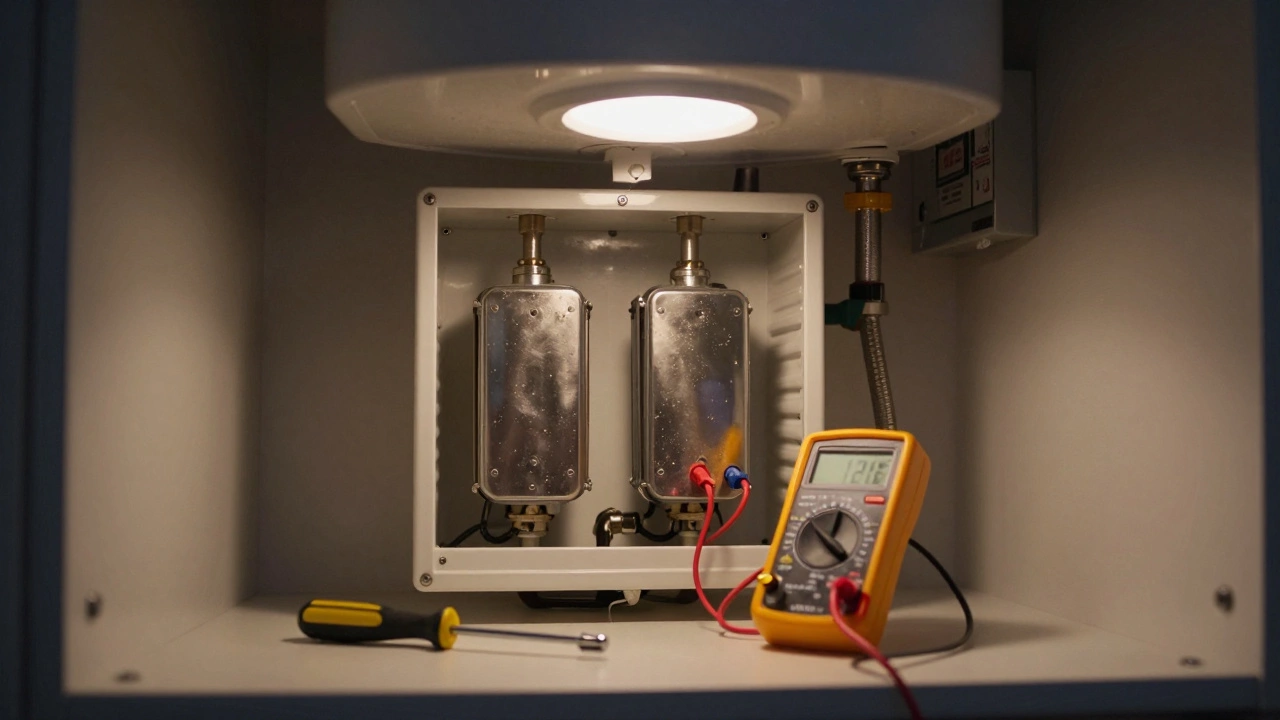
Electric water heaters use one or two immersion heating elements inside the tank. If one fails, you might get lukewarm water. If both go, you get cold. These elements don’t last forever-typically 5 to 10 years depending on water hardness.To test them, you need to turn off the power and drain some water from the tank. Remove the access panel on the side of the heater. You’ll see two metal covers (one for the top element, one for the bottom). Use a multimeter to check for continuity. Set it to ohms (Ω) and touch the probes to the two terminals on each element. If you get no reading or infinite resistance, the element is dead. Replace it. They cost around £25 and are easy to swap out if you’ve got basic tools.
Don’t forget to turn the power back off before you start. Water and electricity don’t mix. Even if the breaker is off, treat every wire as live until you’ve confirmed it with a tester.
Check the thermostat
The thermostat controls when the elements turn on. If it’s set too low-or broken-you won’t get hot water. Most thermostats are adjustable. Look for a dial behind the access panel. The ideal setting is 60°C. That’s hot enough to kill bacteria but not so hot it scalds you or wastes energy.If the thermostat is set to 40°C or lower, bump it up to 60°C and wait an hour. If that fixes it, you were just unlucky with the setting. But if it’s already at 60°C and you’re still getting cold water, the thermostat might be faulty. You can test it with a multimeter too. If it’s not sending power to the element when it should, replace it. Thermostats are cheap-under £30-and usually come with installation instructions.
Look for sediment buildup
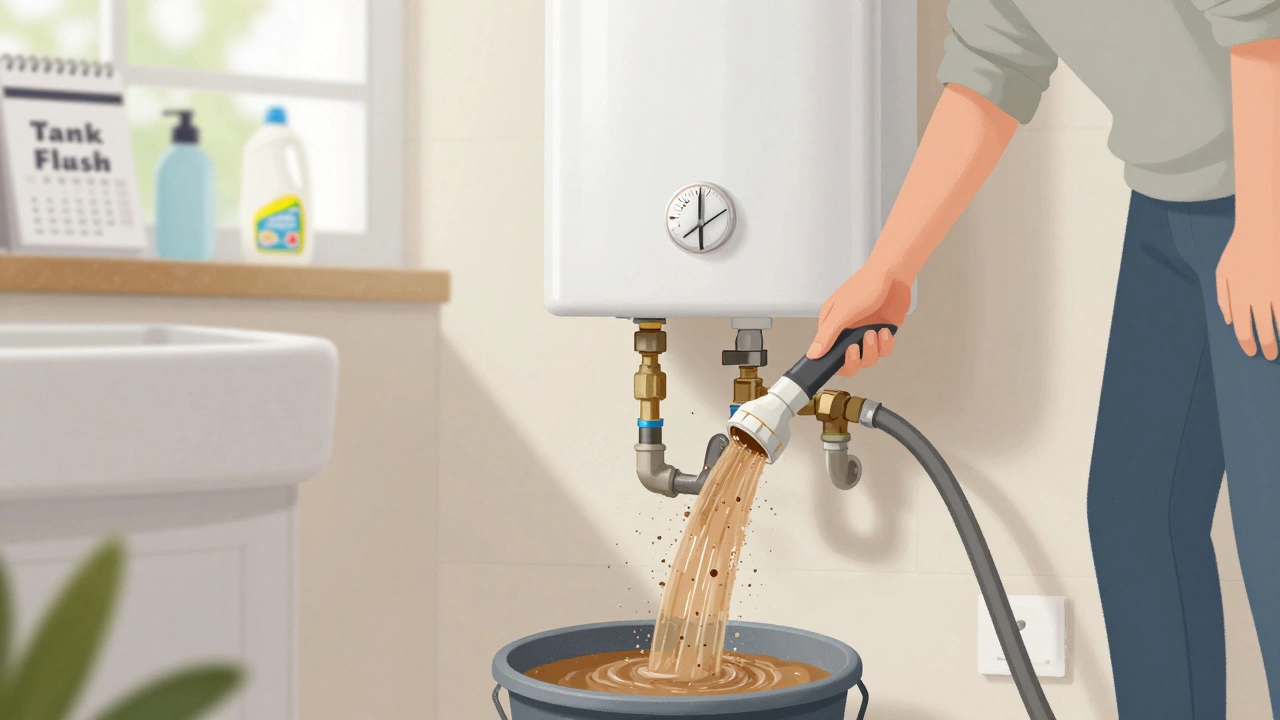
Hard water areas like Bristol, Bath, and parts of the West Country are notorious for limescale. Over time, mineral deposits build up at the bottom of the tank. This layer acts like insulation, keeping the heating element from touching the water. The element heats up, but the water stays cold.Flushing the tank solves this. Turn off the power and the cold water inlet. Attach a hose to the drain valve at the bottom and run it into a bucket or outside. Open the valve and let it drain for 10-15 minutes. You’ll see gritty, brown water come out. Keep going until it runs clear. Then close the valve, refill the tank, and turn the power back on.
Do this once a year if you have hard water. It’s the single best way to extend your heater’s life. I’ve seen tanks last 15+ years just because someone flushed them regularly. Skip it, and you’ll be replacing the whole unit in half the time.
Check the dip tube
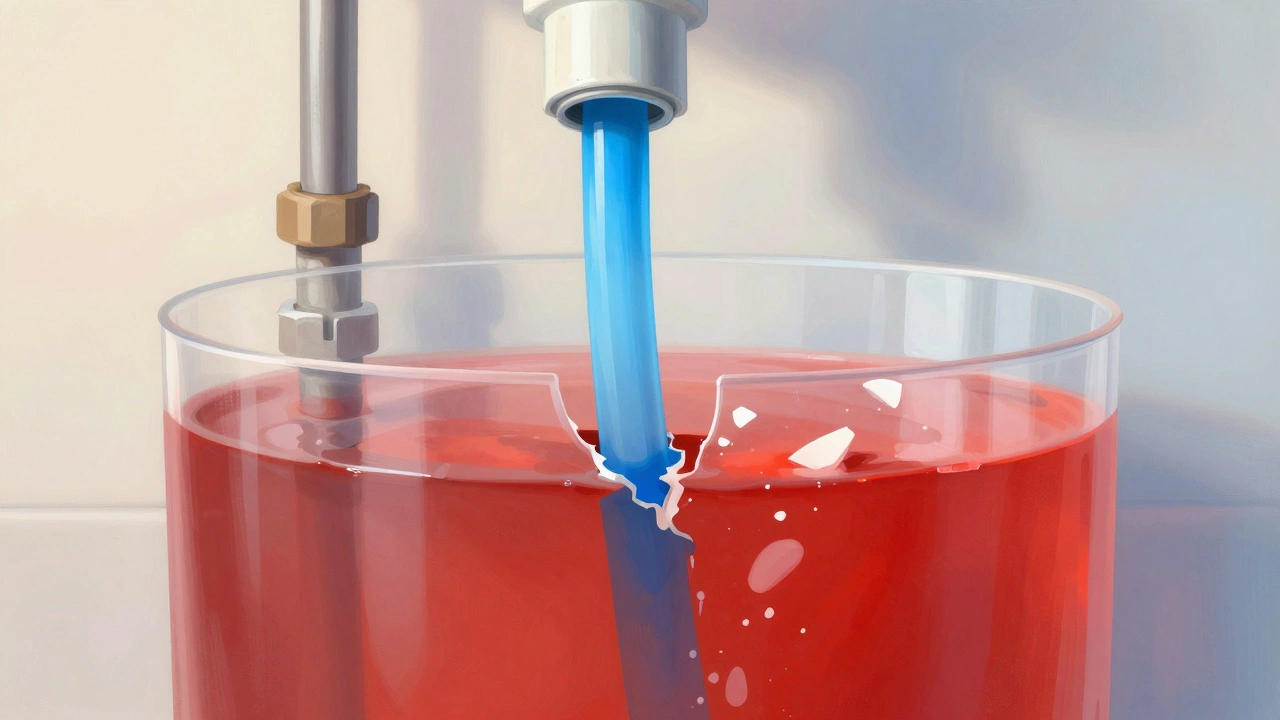
The dip tube is a long plastic pipe that sends cold water to the bottom of the tank so it can be heated. If it breaks, cold water gets sent straight to the top outlet-right where you’re drawing from. That means you get a burst of cold water right after the hot runs out.This is more common in older heaters (10+ years). Signs include sudden drops in hot water volume, or cold water coming out even when the tank has been sitting for hours. To check, you’ll need to drain the tank and remove the cold water inlet pipe. Look inside the opening. If you see white plastic fragments or a short, broken tube, that’s your problem.
Replacing the dip tube is a job for someone with plumbing experience. If you’re not confident, call a local plumber. But if you’ve replaced a showerhead or a toilet flapper before, you can handle this. A new dip tube costs under £20.
Gas water heaters: pilot light and thermocouple
If you’ve got a gas water heater (less common in UK homes, but still around in older properties or off-grid locations), the issue is likely the pilot light. If it’s out, no heat. Check the control knob. Is it set to "Pilot"? If not, turn it there. Press and hold the knob while lighting the pilot with a long match or lighter. Keep holding for 30 seconds after it ignites, then release.If the pilot won’t stay lit, the thermocouple is probably faulty. It’s a small metal rod next to the pilot flame that senses heat and keeps the gas valve open. If it’s dirty or broken, the gas shuts off. Clean it gently with sandpaper or replace it. Thermocouples cost £15-£25 and screw in easily.
When to call a professional
There are times when DIY won’t cut it. If you’ve tried all the steps above and still have cold water, it’s time to call someone. Here’s when:- You smell gas (leave immediately and call the National Gas Emergency Service on 0800 111 999)
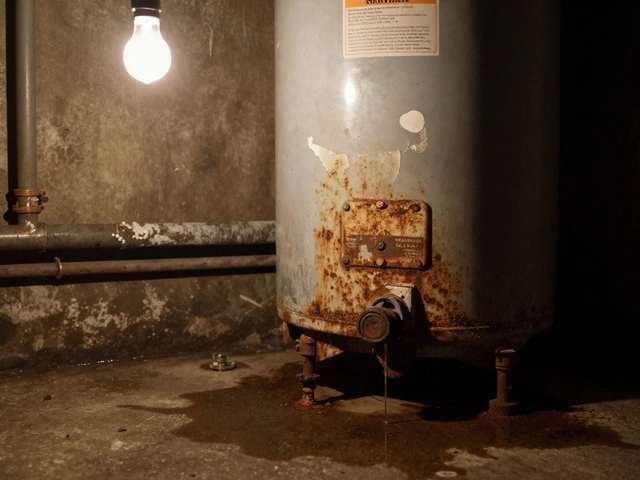
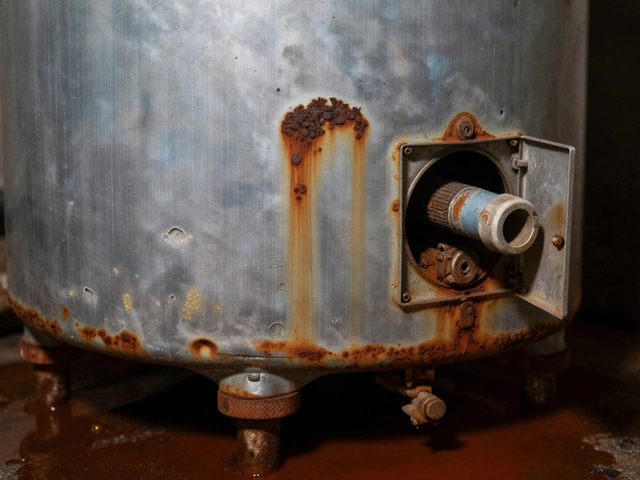
- The tank is leaking from the bottom-this usually means corrosion and a full replacement is needed
- There’s no power to the unit at all, even after resetting the breaker
- You’re uncomfortable working with electricity or gas
Water heater replacement in the UK averages £800-£1,500. If your unit is over 10 years old, it might be cheaper to replace than keep repairing. But if it’s under 8 years and you’ve fixed the element or thermostat, you’ve probably saved yourself £600+.
Prevent future problems
Once you’ve got hot water back, don’t let this happen again. Here’s how:- Flush the tank every 6-12 months, especially in hard water areas
- Set the thermostat to 60°C-no lower, no higher
- Install a water softener if you’re in a hard water zone
- Check the pressure relief valve once a year by lifting the lever-it should release a bit of water
- Write down the installation date and model number. Keep the manual. You’ll thank yourself later
Most water heater failures are predictable. They don’t just die overnight. They whisper first-slower heating, strange noises, rusty water. Listen. Fix early. Save money. Stay warm.
Why is my water heater giving me cold water even though the breaker is on?
If the breaker is on but you still have no hot water, the issue is likely a failed heating element, a faulty thermostat, or heavy sediment buildup in the tank. Test the elements with a multimeter, check the thermostat setting, and flush the tank to remove limescale. These are the top three causes in over 80% of cases.
Can a broken dip tube cause cold water from a water heater?
Yes. A broken dip tube sends cold water straight to the top of the tank instead of down to the heater. This means the water you draw comes out cold, even if the tank is full of hot water below. It’s common in older units and often mistaken for a heater failure. Replacing the dip tube fixes it.
How often should I flush my water heater?
If you live in a hard water area like Bristol, flush your tank every 6 months. In softer water areas, once a year is enough. Flushing removes mineral buildup that insulates the heating element and reduces efficiency. It also extends the life of your heater by years.
Is it safe to replace a water heater element myself?
Yes, if you follow safety steps. Turn off the power at the breaker, drain the tank, and use a multimeter to confirm no current is flowing. Replacement elements are designed for DIY. They cost under £30 and take about an hour to install. If you’re unsure about electrical work, hire a qualified electrician.
Should I replace my water heater if it’s 12 years old?
Not necessarily. A well-maintained water heater can last 15 years or more. But if it’s leaking, making loud noises, or you’ve replaced multiple parts in the last year, replacement is more cost-effective than continued repairs. Newer models are 20-30% more energy-efficient, so you’ll save on bills too.