Water Heater Failure Diagnostic
Answer these questions to determine your water heater's health status and get tailored advice. This tool helps you spot problems before they become costly emergencies.
Check for Warning Signs
Most water heaters don’t just die suddenly. They give you warnings - if you know what to look for. By the time you’re standing in a cold shower, it’s usually too late to fix it cheaply. The real question isn’t where they fail, but how you can catch it before it floods your basement or leaves you without hot water for days.
The Tank Is the First to Go
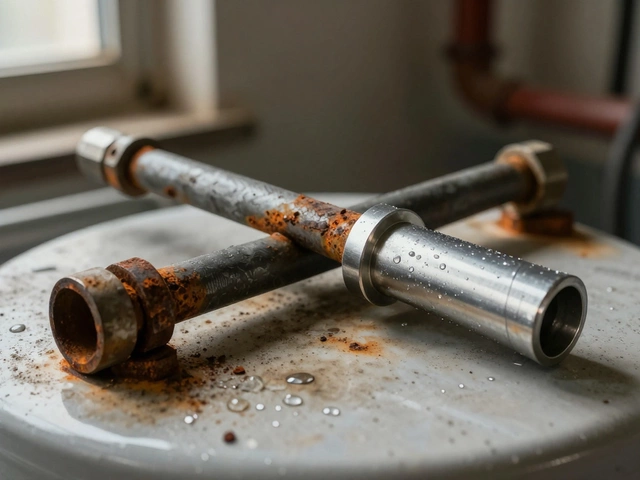
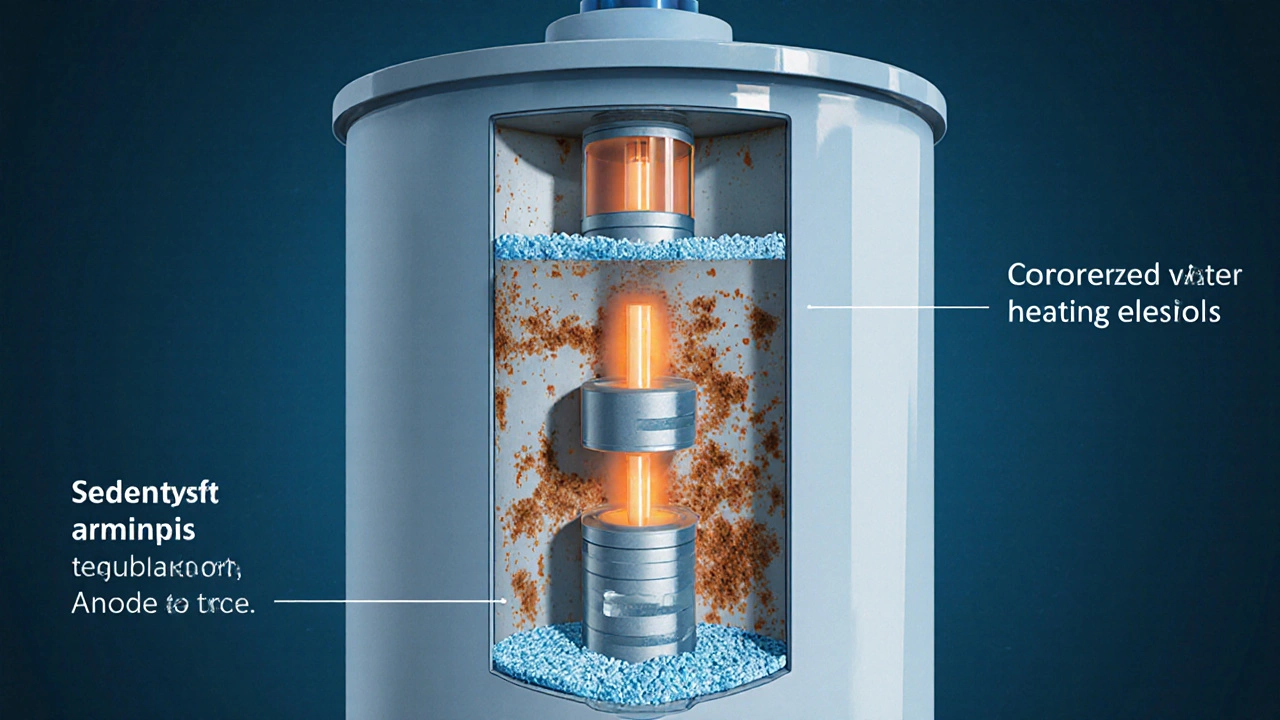
If you’ve got a traditional tank-style water heater - and most homes in the UK still do - the tank itself is the most common failure point. Corrosion eats away at the steel lining from the inside out. That’s why manufacturers install an anode rod: a sacrificial piece of metal that attracts rust instead of your tank. But when that rod wears out, usually after 3-5 years, the tank starts rusting from the inside.
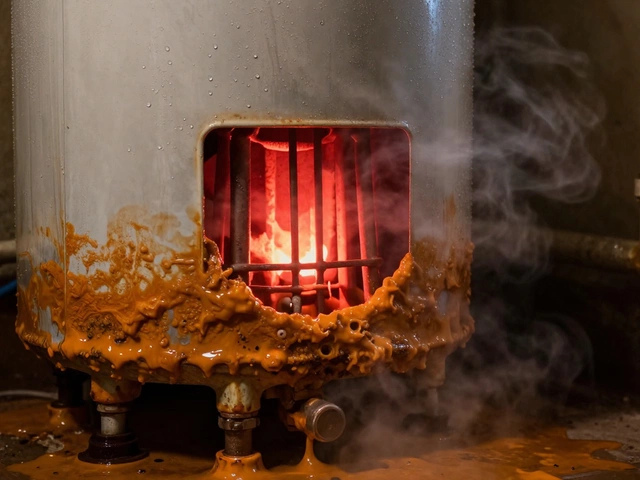
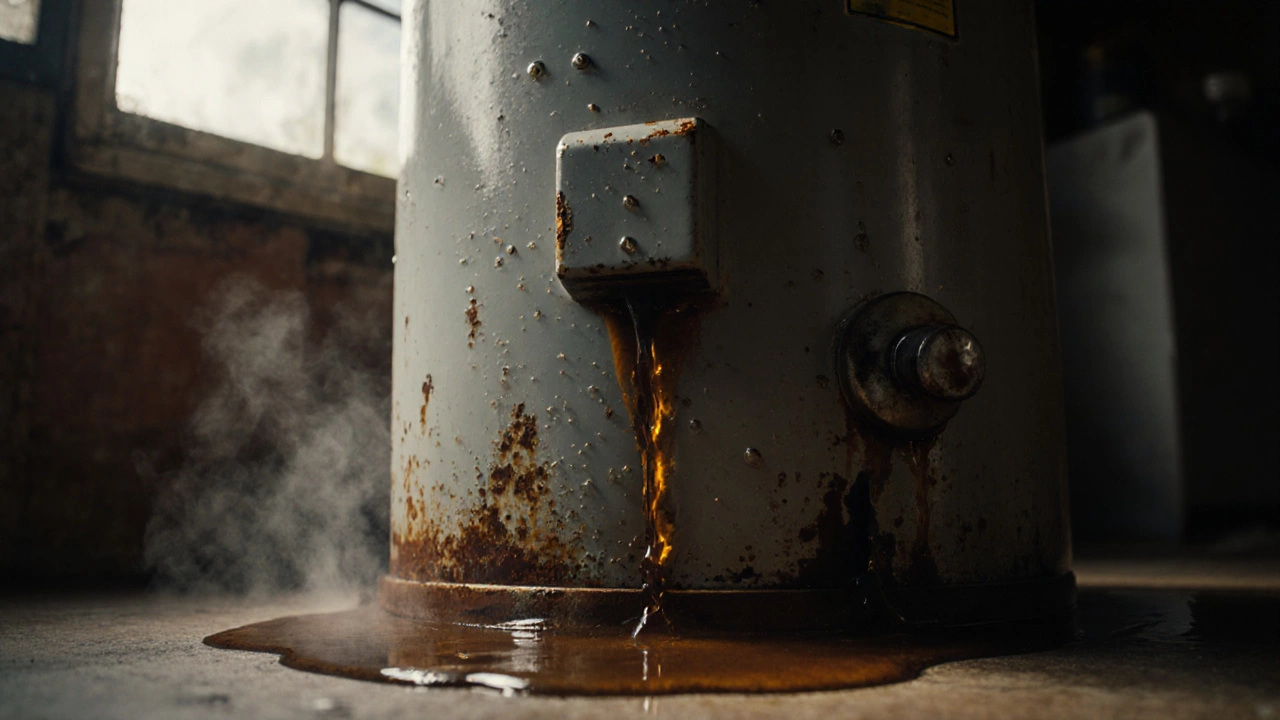
Look for discoloured water - brown, orange, or rusty-looking - when you turn on the hot tap. That’s not just dirt. It’s your tank shedding rust. A small leak under the unit? That’s not condensation. That’s the tank giving up. Once the tank corrodes through, there’s no repair. You need a full replacement. Most tank failures happen between 8 and 12 years, but a neglected unit can go as early as 5.
Heating Elements Burn Out
Electric water heaters have one or two heating elements inside the tank. These are like giant toaster coils, and they’re under constant stress. Hard water minerals build up on them over time, forcing them to work harder. Eventually, they overheat and burn out.
Signs? You get a trickle of warm water, then nothing. Or the water heats up slowly, then cools down fast. One element failing means only half the tank heats up - so you get lukewarm showers for a while before it stops completely. Replacing a heating element costs £80-£150, including labour. It’s cheap compared to replacing the whole unit. But if you’ve got a 10-year-old heater and one element failed, the other isn’t far behind.
Thermostat Trouble
The thermostat controls when the heating elements turn on and off. It’s a simple device, but it’s also the most misunderstood. Many people think their water heater is broken when the thermostat just needs recalibrating.
If your water is too hot - scalding - or not hot enough, even after you’ve turned the dial, the thermostat could be the culprit. A faulty thermostat might also cause the heater to cycle on and off nonstop, which drains energy and wears out the elements faster. Most thermostats last 8-10 years. They’re easy to test with a multimeter, and replacing one costs under £60.

Pressure Relief Valve Failure
This little valve on the side of your water heater looks unimportant. But it’s your safety net. If pressure builds up inside the tank - from overheating or blocked pipes - the valve opens to release steam and water. If it’s stuck shut, your tank could explode. If it’s stuck open, you’ll get constant dripping.
Test it every six months: lift the lever slightly. You should hear a rush of water and steam. If nothing happens, or if it drips after you let go, replace it. A new valve costs £15-£25. Don’t ignore this. A failed valve is one of the most dangerous signs your water heater is about to become a hazard.
Mineral Build-Up and Sediment
Hard water is common across the UK. That means calcium and magnesium are always settling at the bottom of your tank. Over time, this sediment builds up into a thick layer. It insulates the heating elements, making them work harder. It also causes strange noises - popping, rumbling, or banging - when the heater turns on.
Sediment doesn’t break the heater immediately, but it kills efficiency. A tank clogged with sediment can use 30-50% more energy. Flushing the tank once a year removes most of it. It’s a 30-minute job: turn off the power, connect a hose to the drain valve, and let it run until the water clears. Do it once, and you’ll extend your heater’s life by 3-5 years.
Leaks from Fittings and Pipes
Not every leak comes from the tank. Sometimes it’s the inlet or outlet pipes, the drain valve, or the temperature-pressure relief valve’s connection. These are common, especially in older units with worn-out rubber washers or corroded fittings.
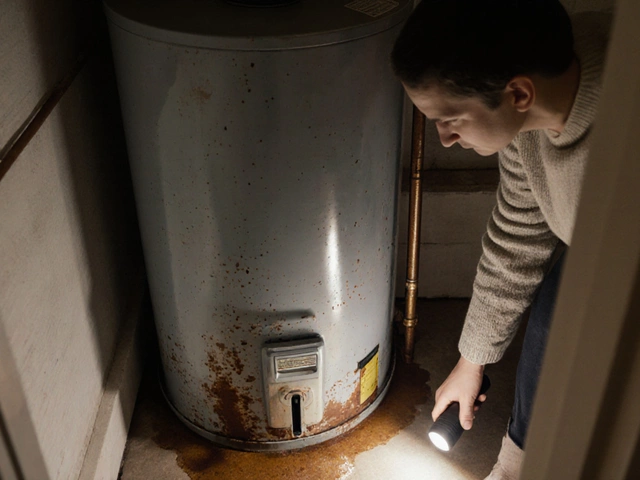
Check the base of the heater weekly. A small puddle? Wipe it dry and watch. If it comes back, trace it. Is it dripping from the top? That’s likely the cold water inlet. From the bottom? Could be the drain valve. A loose pipe fitting can be tightened. A worn washer can be replaced. These fixes cost under £40 and take under an hour. Don’t assume every leak means the tank is done.
Age Is the Silent Killer
Most water heaters last 8-12 years. After 10, even if everything seems fine, you’re playing Russian roulette. Manufacturers don’t guarantee them past 10 years for a reason. The tank’s lining is thinning. The anode rod is gone. The seals are brittle. The elements are tired.
Here’s a simple rule: if your heater is over 8 years old and you’re having any problem - even a small one - it’s time to start thinking about replacement. Waiting until it fails means you’ll be stuck with emergency repairs, higher bills, and the risk of flooding. A new unit costs £800-£1,500 installed. But it’s cheaper than repairing a dying unit and far cheaper than fixing water damage to your floor, walls, or furniture.
What to Do When It Fails
If your water heater stops working, turn off the power first. For electric, flip the breaker. For gas, turn the knob to “off.” Then shut the cold water inlet valve. Open a hot tap to relieve pressure. Don’t try to fix it yourself if you’re not sure. Water and electricity don’t mix. Call a qualified plumber or heating engineer.
When you’re replacing it, consider switching to a combi boiler if you don’t have one. They’re more efficient, take up less space, and don’t have a tank to corrode. If you stick with a tank, go for one with a longer warranty - 10 years minimum - and ask for a replacement anode rod to be installed at the same time.
Prevention Is Cheaper Than Repair
You don’t need to wait for disaster. Here’s a simple checklist to keep your water heater alive:
- Flush the tank once a year - removes sediment
- Test the pressure relief valve every six months - ensures safety
- Check for leaks under the unit weekly - catches small problems early
- Replace the anode rod every 3-5 years - prevents tank corrosion
- Set the temperature to 60°C - hot enough to kill bacteria, cool enough to save energy
- Replace units over 8 years old before they fail - avoid emergencies
These steps cost less than £100 a year. A single major repair or flood can cost £2,000 or more. It’s not just about saving money. It’s about not waking up to a flooded kitchen because your 12-year-old heater finally gave out at 3 a.m.
Why does my water heater make popping noises?
Popping or rumbling sounds are caused by sediment buildup at the bottom of the tank. Water gets trapped under the sediment and boils, creating steam bubbles that pop. Flushing the tank usually fixes it. If the noise returns quickly, your water is too hard - consider installing a water softener.
Can I repair a leaking water heater tank?
No. Once the tank itself is leaking, corrosion has eaten through the steel. Patching or sealing it won’t hold. It’s a safety risk and a waste of money. Replacement is the only reliable fix.
How often should I replace the anode rod?
Every 3 to 5 years, depending on your water hardness. In hard water areas like the Midlands or parts of Wales, replace it every 2-3 years. The rod looks like a thick metal rod with threads. If it’s more than half eaten away, it’s time for a new one.
Is it worth repairing a 10-year-old water heater?
Only if it’s a minor fix - like a thermostat or heating element. But if the tank is leaking, the anode rod is gone, or you’re dealing with sediment, it’s not worth it. A new unit will save you money on energy and prevent emergencies. Think of it as insurance.
What’s the best type of water heater for a UK home?
For most homes, a combi boiler is the best choice. It heats water on demand, doesn’t need a tank, and saves space. If you need a tank, choose a 120-litre model with a 10-year warranty and a replaceable anode rod. Avoid cheap units - they cost less upfront but fail faster.