Water Heater Anode Rod Health Checker
Check Your Anode Rod Condition
Your anode rod is the first component to fail in water heaters. This tool helps determine if your rod needs replacement based on your water heater's age, water hardness, and visible condition.
Results will appear here after checking
Most people don’t think about their water heater until the hot water stops coming out. Then it’s panic mode-cold showers, frustrated kids, a laundry pile growing by the minute. The truth? Water heaters don’t just wear out randomly. They fail in predictable ways, and knowing what breaks most often can save you time, money, and a lot of stress.
The Anode Rod Is the First to Go
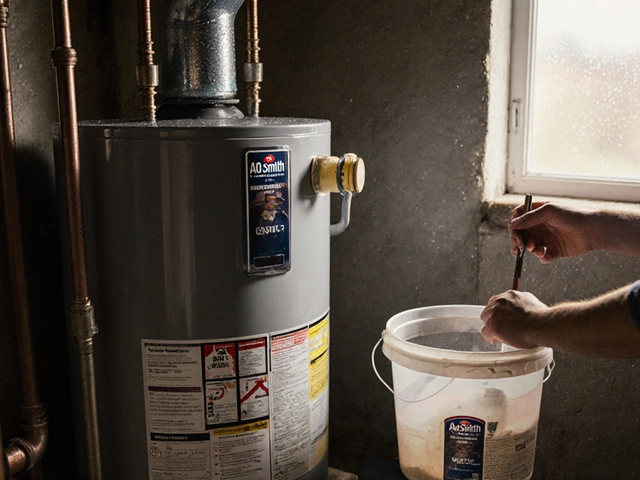
The anode rod is the unsung hero of your water heater. It’s a metal stick, usually made of magnesium or aluminum, hanging inside the tank. Its job? To attract corrosive elements in the water so they eat the rod instead of your tank. It’s sacrificial. And it doesn’t last forever.
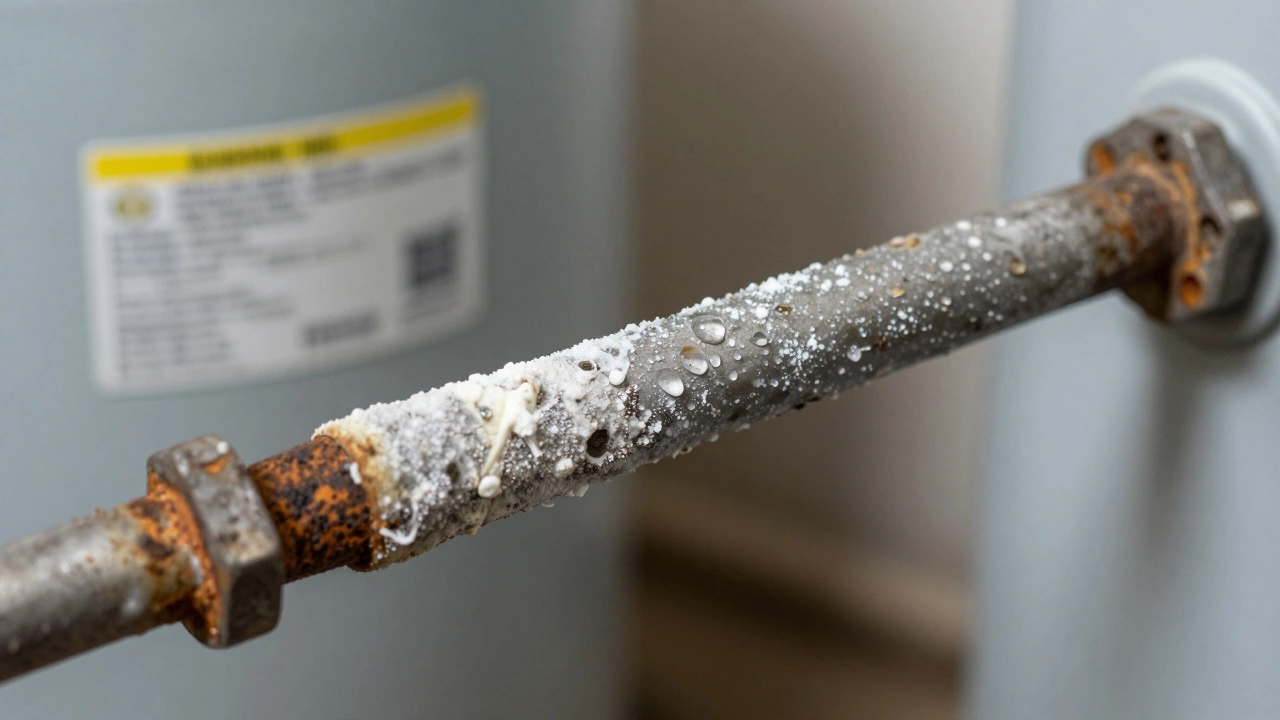
Most anode rods last 3 to 5 years. In areas with hard water, like much of the UK, they can go in as little as 2 years. If you’ve never checked yours, it’s probably gone. And when it’s gone, the tank starts rusting from the inside. That’s when you get rusty water, strange smells, or worse-a tank that leaks without warning.
Check it every two years. If it’s less than half an inch thick or covered in calcium crust, replace it. It costs £20. Not replacing it could mean a £600 tank replacement.
Heating Elements Burn Out
If you’ve got an electric water heater, the heating elements are the next most common failure. There are usually two: one at the top, one at the bottom. The top element heats the water first. If it dies, you might get lukewarm water for a few minutes, then nothing. If the bottom one fails, you get a small amount of hot water, then cold.
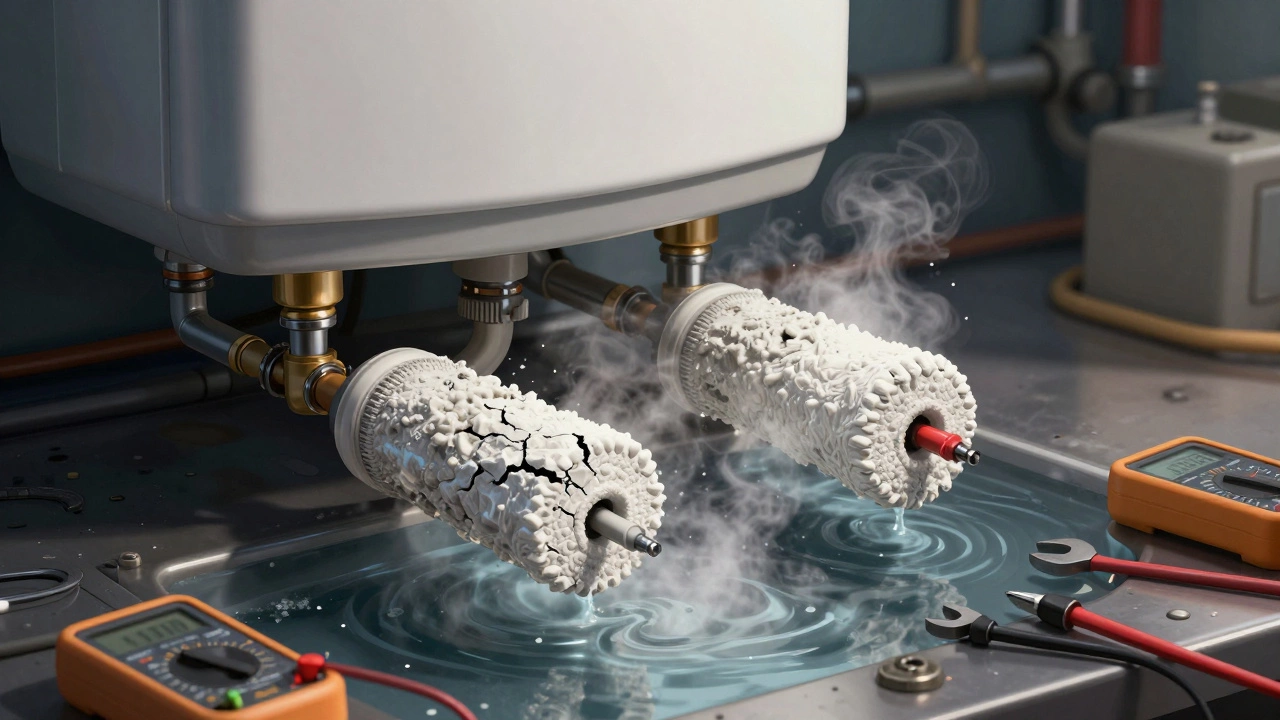
These elements don’t just stop working-they get coated in mineral scale from hard water. That forces them to work harder, overheat, and eventually crack. You can test them with a multimeter. If there’s no continuity, they’re dead. Replacing one costs £30-£50. Doing it yourself takes under an hour if you turn off the power and drain the tank.
Electric water heaters in hard water areas fail faster. If you’ve had to replace elements more than once in five years, consider installing a water softener. It’s a bigger upfront cost, but it’ll extend the life of your heater by years.
The Thermostat Goes Haywire
Thermostats control temperature. If yours is faulty, you might get water that’s too hot-or not hot enough. Sometimes it’s not the thermostat itself, but the wiring. Loose connections, corrosion, or a power surge can fry the control board.
Signs of a bad thermostat: water suddenly too hot (scalding), the heater won’t turn on, or it runs non-stop. If you’ve replaced the elements and it still doesn’t heat properly, the thermostat is the likely culprit. Most electric models have two thermostats-one for each element. They’re cheap to replace (£15-£30), but you need to be careful. Turn off the power at the breaker. Even with the tank drained, live wires can still shock you.
Gas water heaters don’t have electric thermostats. They use a gas valve and thermocouple. If the pilot light won’t stay lit, that’s usually the thermocouple. It’s a simple fix: clean the tip or replace it. New ones cost under £20.
Tank Corrosion and Leaks
This is the big one. When the anode rod dies and no one replaces it, the tank starts rusting from the inside. You might not notice until you see water pooling under the heater. Or worse-you hear a hiss, and then it’s flooding your utility room.
Most water heater tanks last 8 to 12 years. After that, corrosion is inevitable. But a tank that’s leaking from the bottom? It’s not repairable. You can’t patch a rusted steel tank. It’s done. The only fix is replacement.
Check for signs early: discoloured water (brown or reddish), a metallic smell, or a slow drip from the pressure relief valve. If you’re over 10 years old and you’ve never flushed the tank, you’re already in danger zone.
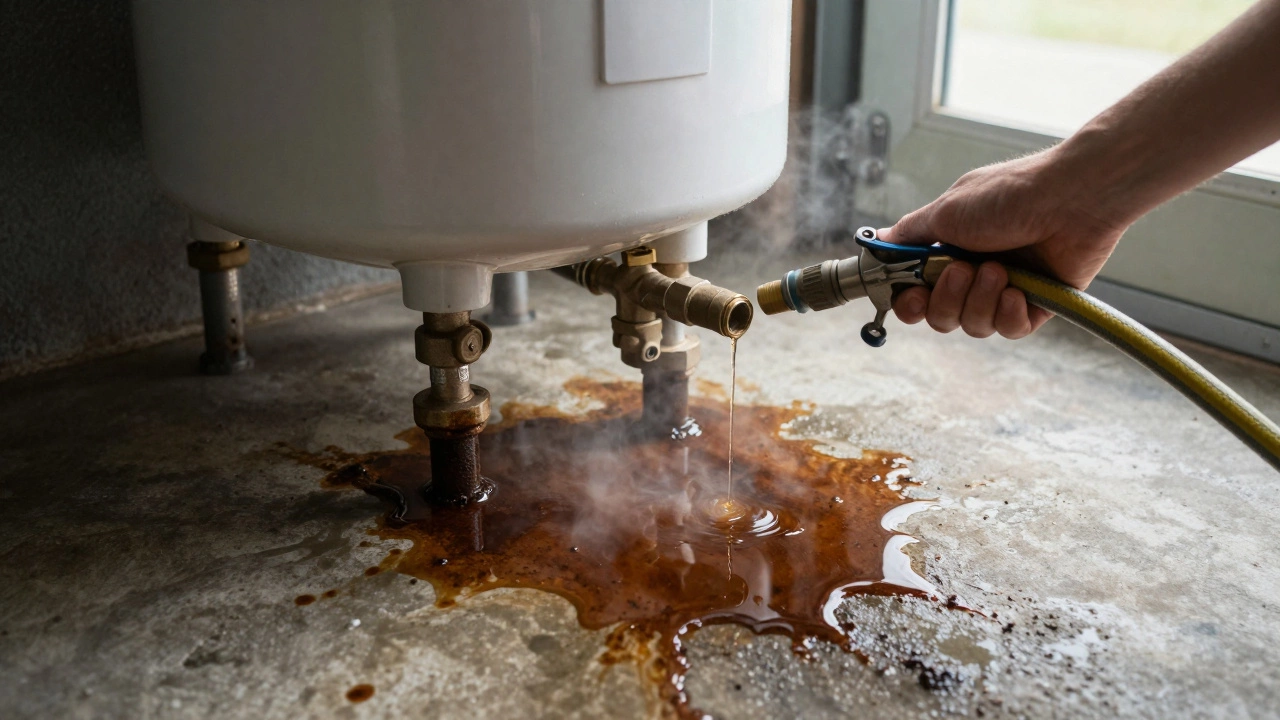
Flushing your tank once a year removes sediment. Sediment doesn’t just reduce efficiency-it traps heat and causes the bottom of the tank to overheat and crack. It’s a simple job: turn off the power, attach a hose to the drain valve, and let it run until the water clears. Takes 20 minutes. Saves thousands.
Pressure Relief Valve Failure
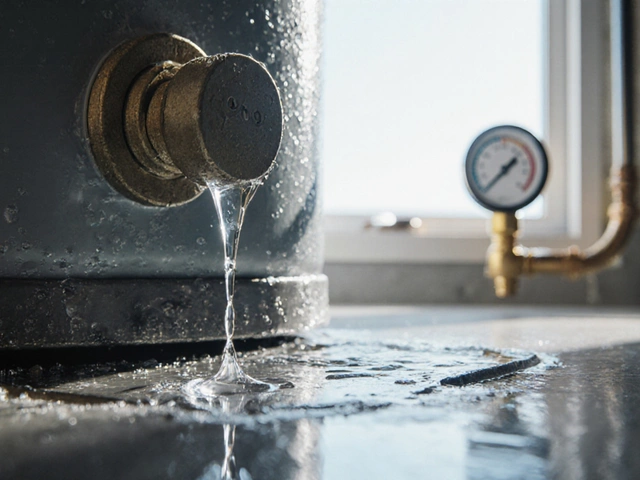
The pressure relief valve is a safety feature. It opens if pressure or temperature gets too high. It’s not meant to leak. If you see water dripping from the pipe sticking out the side of your heater, that valve is either faulty or your system is under too much pressure.
Test it every six months. Lift the lever. Water should gush out. If it doesn’t, or if it drips after you let go, replace it. It’s a £15 part. Don’t ignore this. A stuck valve can lead to tank explosion. Yes, it’s rare-but it happens. And it’s not pretty.
High water pressure in UK homes (over 3 bar) can stress the valve and tank. If you’re not sure what your pressure is, a plumber can check it in 10 minutes. Most homes should run between 1.5 and 2.5 bar.
Mineral Build-Up Slows Everything Down
Hard water leaves behind limescale. It builds up on the bottom of the tank, around the heating elements, and inside pipes. It’s not just a nuisance-it’s a silent killer.
Scale acts like insulation. Your heater has to work twice as hard to heat the same amount of water. That means higher bills and shorter lifespan. In hard water areas, a heater without regular flushing can lose 30-40% of its efficiency in just five years.
Signs of scale: longer wait times for hot water, louder operation (banging or popping sounds), and lower water pressure from taps. The fix? Flush the tank annually. For heavy scale, use a descaling solution designed for water heaters. Vinegar works, but commercial descalers are stronger and faster.
What to Do When It Breaks
If your water heater fails, here’s what to do right away:
- Turn off the power (electric) or gas supply (gas heater).
- Shut off the cold water inlet valve.
- Drain the tank if it’s leaking.
- Check the anode rod, elements, and thermostat if you’re comfortable doing it.
- If you’re not sure, call a qualified plumber. Don’t risk electrical shock or flooding.
Most failures are preventable. The biggest mistake people make? Waiting until the water goes cold before doing anything. By then, the damage is done.
Prevention Is Cheaper Than Repair
Here’s a simple checklist to keep your water heater running for 15+ years:
- Flush the tank once a year.
- Check the anode rod every two years.
- Test the pressure relief valve every six months.
- Keep the area around the heater dry and clear.
- Set the temperature to 60°C. Higher wastes energy and speeds up corrosion.
- Consider a water softener if you’re in a hard water area.
Water heaters are simple machines. They don’t break because they’re old. They break because they’re neglected. Fix the small things early, and you’ll never be stuck with a cold shower on a January morning.
Why does my water heater make popping sounds?
Popping or banging sounds are caused by mineral buildup-limescale-on the bottom of the tank. When water heats up, it gets trapped under the scale and boils, creating noise. Flushing the tank removes the sediment and usually fixes it. If the noise continues after flushing, the heating element may be damaged from overheating.
How often should I replace my water heater?
Most water heaters last 8 to 12 years. If yours is over 10 years old and you’re having frequent issues, replacement is usually more cost-effective than repair. New models are 20-30% more efficient. Also, older tanks are more likely to leak without warning. Replacing before failure avoids water damage.
Can I fix a leaking water heater?
If the leak is from a valve, pipe, or fitting, yes-you can replace the part. But if water is coming from the tank itself, especially from the bottom, it’s rusted through. No patch or sealant will work. You need a new tank. Trying to repair a corroded tank is a waste of money and risky.
Is it cheaper to repair or replace a water heater?
If the repair costs more than half the price of a new unit, replace it. For example, if a new heater is £700, don’t spend £400 on elements and a thermostat if your tank is 12 years old. New models save money on energy bills, and you avoid the risk of sudden failure. Also, many manufacturers offer rebates on energy-efficient models.
Why does my hot water run out so fast?
This usually means the lower heating element has failed (in electric models), or the dip tube is broken (in gas models). The dip tube sends cold water to the bottom of the tank. If it cracks, cold water mixes with hot water at the top, making it feel like you’re running out faster. Replacing the dip tube costs under £30 and takes an hour.