Anode Rod Replacement Calculator
How Often Should You Replace Your Anode Rod?
This calculator estimates your anode rod replacement schedule based on your water hardness and heater age. Replacing your anode rod is the single most effective way to prevent costly water heater failure.
Recommended Replacement Frequency:
Important Notes
- Hard water: Replaces every 1-2 years (faster corrosion)
- Soft water: Replaces every 3-5 years
- Never replace anode rods more than 3 years apart even in soft water areas
- Check immediately if: Smelly water, discolored water, or strange noises
Most people don’t think about their water heater until it stops working. By then, it’s often too late to save it. One of the biggest reasons water heaters fail isn’t rust on the tank - it’s a forgotten anode rod. This simple, cheap part is the reason your water heater lasts 10 years instead of 3. But how often should you replace it? The answer isn’t one-size-fits-all. It depends on your water, your heater, and whether you’ve ever checked it at all.
What even is an anode rod?
The anode rod is a long metal stick, usually made of magnesium, aluminum, or zinc, that hangs inside your water heater tank. Its job? To rot away instead of your tank. It’s a sacrificial part - it attracts corrosive elements in the water, like minerals and oxygen, and eats them up. While the rod corrodes, your steel tank stays intact. It’s like a bodyguard that takes the bullet so you don’t have to.
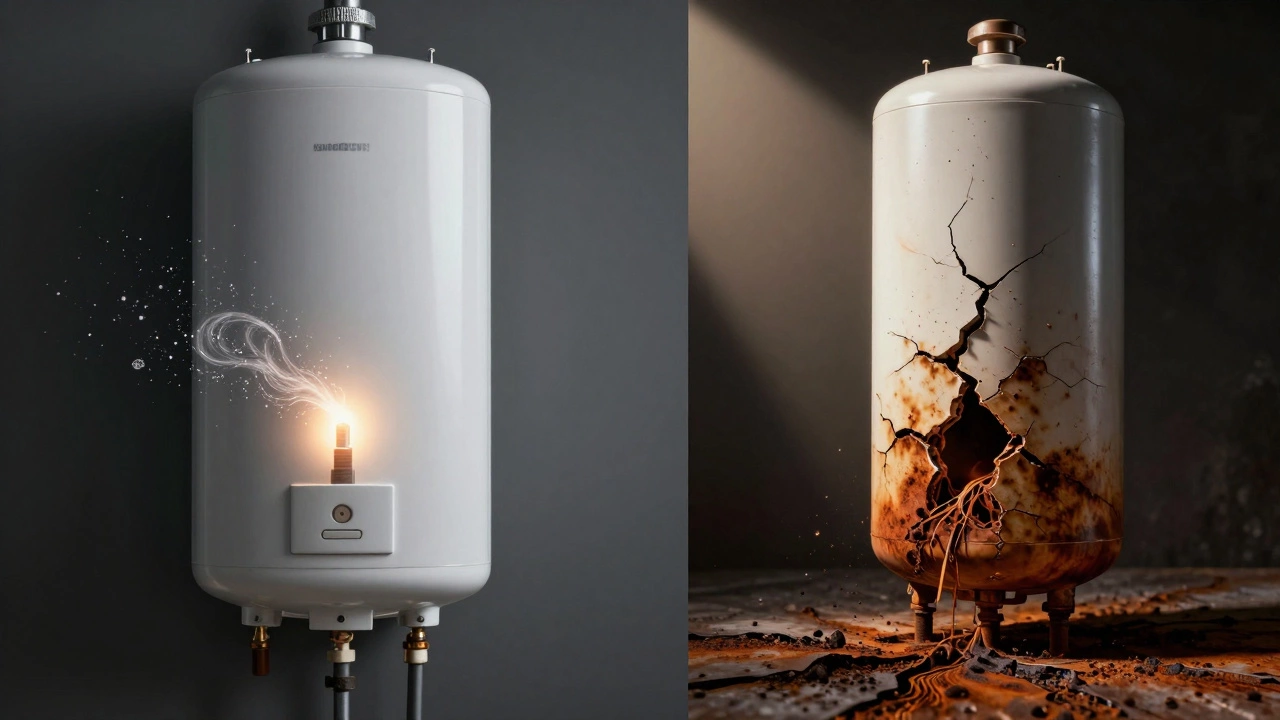
Without it, the inside of your tank starts rusting from the inside out. Once that happens, leaks follow. And once a tank leaks, you’re not repairing it - you’re replacing it. That’s a £600 to £1,200 job. The anode rod? It costs £20 to £40. You can swap it yourself in under an hour.
How often should you replace it?
Most manufacturers say to check the anode rod every 1 to 3 years. But that’s just a starting point. The real answer? It depends on your water.
If you live in an area with hard water - like much of the UK - your anode rod will wear out faster. Hard water has more dissolved minerals, especially calcium and magnesium. These minerals make the water more conductive, which speeds up the corrosion process. In hard water areas, you might need to replace the rod every 1 to 2 years.
If you have soft water, the rod lasts longer. You might get 3 to 5 years out of it. But even then, don’t wait until it’s gone. By the time you notice a smell or discoloured water, the rod is already spent - and your tank might be starting to rust.
Here’s a simple rule: if you’ve never checked your anode rod, do it now. Even if your heater is only 3 years old, it could already be half-dead inside.
Signs your anode rod is done
You don’t need a tool to know when it’s time. Here are the red flags:
- Smelly water - especially a rotten egg smell. That’s hydrogen sulfide gas, caused by bacteria feeding on a depleted anode rod.
- Discoloured water - rusty brown or orange water from the tap means the tank is corroding.
- Strange noises - popping or rumbling sounds mean sediment has built up because the rod is gone and corrosion is accelerating.
- Age of the heater - if your water heater is over 5 years old and you’ve never replaced the rod, assume it’s already compromised.
These aren’t just inconveniences. They’re warnings. Smelly water might be gross, but rust in your tank is a ticking time bomb.
How to check and replace it yourself
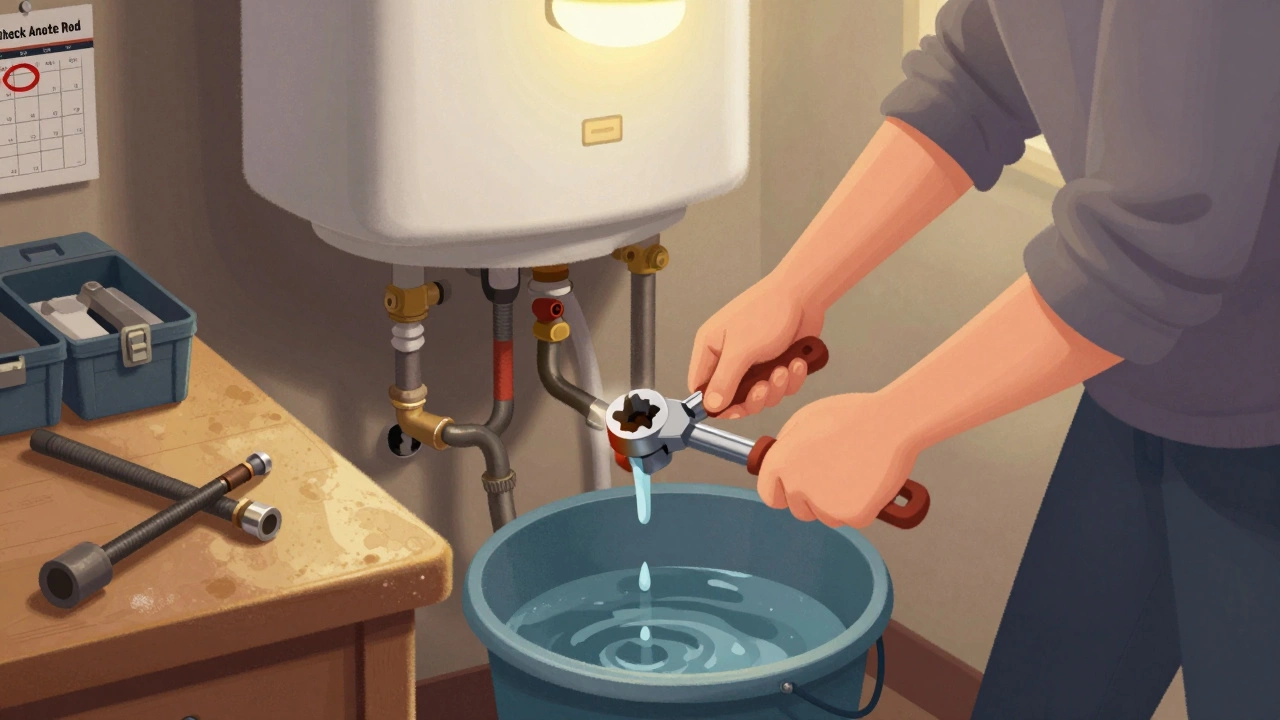
You don’t need to be a plumber. Here’s how to do it:
- Turn off the power. For electric heaters, flip the breaker. For gas, turn the dial to "pilot".
- Turn off the cold water supply to the tank.
- Open a hot water tap somewhere in the house to relieve pressure.
- Drain a few gallons from the tank using the drain valve at the bottom. You don’t need to empty it all - just enough to get the water level below the anode rod.
- Locate the anode rod. It’s usually on top of the tank, under a hex-shaped cap. It might be hidden under a plastic cover.
- Use a 1-1/16 inch socket or wrench to unscrew it. It’s often tight - you might need a breaker bar or a long pipe for leverage.
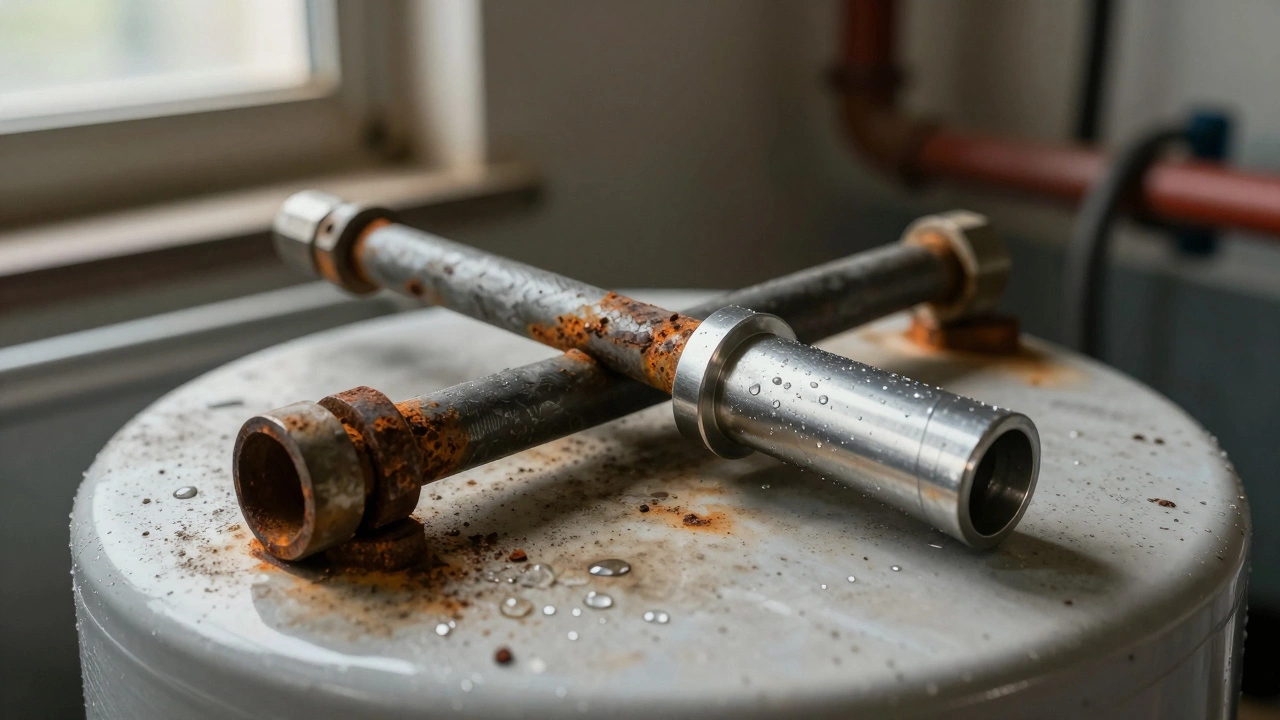
- Inspect it. If it’s thinner than a pencil, covered in chunks, or you can see the steel core, it’s done.
- Replace it with a new one. Choose magnesium for most homes. If you have soft water or smell issues, go for aluminum-zinc.
- Screw it back in tightly. Reconnect the water and power. Open the cold water valve and let the tank refill. Wait for air to purge from the hot taps.
It takes about 90 minutes. You’ll save £150 in labour if you hire someone. And you’ll extend your heater’s life by years.
What type of anode rod should you use?
There are three main types:
- Magnesium - the most common. Works best in hard water. Corrodes faster but offers the best protection.
- Aluminum - cheaper and lasts longer in soft water. Doesn’t work as well in hard water.
- Aluminum-zinc - designed to fight that rotten egg smell. Good if you’ve had odour problems before.
If you’re unsure, go with magnesium. It’s the safest bet for UK water conditions. Avoid "hybrid" or "powered" anodes unless you’re in a very specific situation. Stick with the simple, proven kind.
Why most people ignore it - and why that’s a mistake
Water heater manufacturers don’t tell you about the anode rod. Why? Because if you replace it every 2 years, you might never need to buy a new heater. That’s bad for their business.
Most homeowners think, "It’s just a rod. It’ll last forever." But water heaters aren’t like fridges or washing machines. They’re under constant stress - hot water, pressure, minerals, rust. The anode rod is the only thing standing between you and a flooded basement.
I’ve seen homes where the tank was shot at 7 years old because the rod was never checked. I’ve seen others that are still working at 18 years because someone swapped the rod every 2 years. The difference? One hour of work every couple of years.
What happens if you don’t replace it?
If you skip the anode rod, here’s what happens:
- Within 2-4 years: corrosion starts inside the tank.
- By year 5: rust flakes start mixing with your hot water.
- By year 7-8: pinhole leaks appear. Water drips from the bottom.
- By year 10: the tank fails completely. Water floods your utility room.
That’s not just a repair. That’s a mess. Wet drywall. Warped flooring. Mold. Insurance claims. Stress. And a new heater that costs more than your annual electricity bill.
Replacing the anode rod isn’t maintenance - it’s insurance.
Pro tips for longer heater life
- Flush your tank annually. Sediment buildup speeds up corrosion and makes your heater work harder.
- Set your thermostat to 120°F (49°C). Higher temps accelerate corrosion and waste energy.
- Install a water softener if you have very hard water. It helps the anode rod last longer.
- Keep a spare anode rod on hand. They’re cheap. You don’t want to wait for delivery when your heater is leaking.
Water heaters don’t die suddenly. They die slowly - and you can stop it.
How often should I replace the anode rod in my water heater?
Check your anode rod every 1 to 3 years. Replace it if it’s more than 50% corroded, thinner than a pencil, or if you can see the steel core. In hard water areas like most of the UK, replace it every 1 to 2 years. In soft water areas, you might get 3 to 5 years.
Can I replace the anode rod myself?
Yes. You don’t need to be a plumber. Turn off the power and water, drain a few gallons, unscrew the old rod with a socket wrench, and screw in the new one. It takes about 90 minutes and costs under £50 in parts. You’ll save £150+ on labour.
What happens if I don’t replace the anode rod?
Your water heater tank will start rusting from the inside. You’ll get smelly or discoloured water, strange noises, and eventually, leaks. Once the tank rusts through, you’ll need a full replacement - costing £600 to £1,200. Replacing the anode rod costs £20 to £40.
Which type of anode rod is best for UK water?
Magnesium is the best choice for most UK homes because it works well in hard water. If you have a rotten egg smell, try aluminum-zinc. Avoid aluminum in hard water areas - it doesn’t protect as well.
Does flushing the water heater help the anode rod last longer?
Yes. Sediment buildup traps minerals and heat, making corrosion worse. Flushing your tank once a year removes this buildup and helps the anode rod work more efficiently. It also improves efficiency and reduces noise.
If you’ve got a water heater older than 5 years and you’ve never checked the anode rod, do it this weekend. It’s the single most cost-effective thing you can do to keep your hot water running - and your home dry.