Extractor Fan Installation Cost Calculator
This calculator shows estimated costs for extractor fan installation based on UK market rates and service requirements. Costs vary by location and specific conditions.
When you’re remodeling a bathroom or upgrading your kitchen, one question keeps popping up: Do plumbers install extractor fans? It seems logical-they handle pipes, water, and drainage. But extractor fans? That’s about air, electricity, and ventilation. The answer isn’t simple, and getting it wrong could mean a leaky ceiling, mold growth, or even a fire hazard.
Plumbers and Extractor Fans: What’s the Connection?
Plumbers are trained to move water in and out of your home. They install sinks, toilets, showers, and connect pipes to mains or septic systems. But extractor fans? They don’t deal with water. They move air. And air doesn’t flow through pipes the way water does.That said, plumbers often end up involved in extractor fan installations-especially in bathrooms. Why? Because the fan needs to vent to the outside, and that often means running a duct through a wall or roof. If the duct runs near plumbing vents, or if it requires cutting through a wall with existing pipes, plumbers know how to work around them safely. They’ve got the tools and experience to make clean, watertight penetrations.
But here’s the catch: installing the fan itself? That’s electrical. The fan motor needs to be wired into your home’s circuit. It needs a switch, possibly a timer, and sometimes a humidity sensor. That’s not plumbing. That’s electrical work. And in most places, only licensed electricians are allowed to do that legally.
When a Plumber Can Handle It (and When They Can’t)
Some plumbers offer full extractor fan installation services. But that doesn’t mean they’re qualified to wire it. Many have partnered with electricians or hired one on-call. Others have taken extra training and hold dual certifications. Before you hire anyone, ask:- Are you licensed to do electrical work?
- Will you be pulling a permit for the installation?
- Do you handle both the ductwork and the wiring?
If they say yes to all three, great. But if they say, “I’ll install the fan, you get an electrician for the wiring,” then you’re being honest-and that’s better than getting a half-job.
Here’s a real example: A homeowner in Manchester hired a plumber to install a new bathroom extractor fan. The plumber cut the hole in the ceiling, ran the duct through the loft, and sealed it against moisture. But he didn’t wire it. The homeowner tried plugging it into a standard outlet. The fan ran fine, but the circuit tripped every time the bathroom got steamy. The real issue? No dedicated circuit. No overload protection. No code compliance. That’s when they called an electrician-and paid twice as much to fix it.
Electricians Are the Real Experts for Wiring
Electricians are trained to understand load calculations, circuit protection, and building codes for ventilation systems. In the UK, Part F of the Building Regulations requires extractor fans in bathrooms and kitchens to be properly installed and ventilated to the outside. The fan must be connected to a circuit that can handle its power draw-usually a 13-amp fused spur or a dedicated circuit.Electricians also know how to install:
- Timers that keep the fan running after you leave the room
- Humidity sensors that turn the fan on automatically
- Backdraft dampers that stop cold air from coming back in
- Noise-reducing mounts that prevent vibration from echoing through walls
Plumbers might know how to run the duct. But only an electrician can make sure the fan turns on when it should-and doesn’t become a fire risk.
What About Kitchen Extractor Fans?
Kitchen fans are trickier. They handle grease, steam, and sometimes smoke. Many are built into hoods above stoves. These are often hardwired into the kitchen’s electrical system and require ducting through cabinets or walls.Plumbers rarely touch kitchen extractor fans unless the duct runs through a wall that also has a water pipe. Even then, they’ll usually coordinate with an electrician. Most kitchen extractor fans are installed by kitchen fitters or electricians who specialize in appliance installations.
One common mistake? People think kitchen fans don’t need to vent outside. They install recirculating models with charcoal filters. These trap grease but don’t remove moisture. That leads to condensation, peeling paint, and mold behind cabinets. If you’re replacing a fan, always go for an external vent. It’s the only way to truly control humidity.
Who Should You Call?
Here’s a simple rule:- Call a plumber if you’re replacing an existing fan and just need to re-route the duct through a wall or roof, especially if plumbing is nearby.
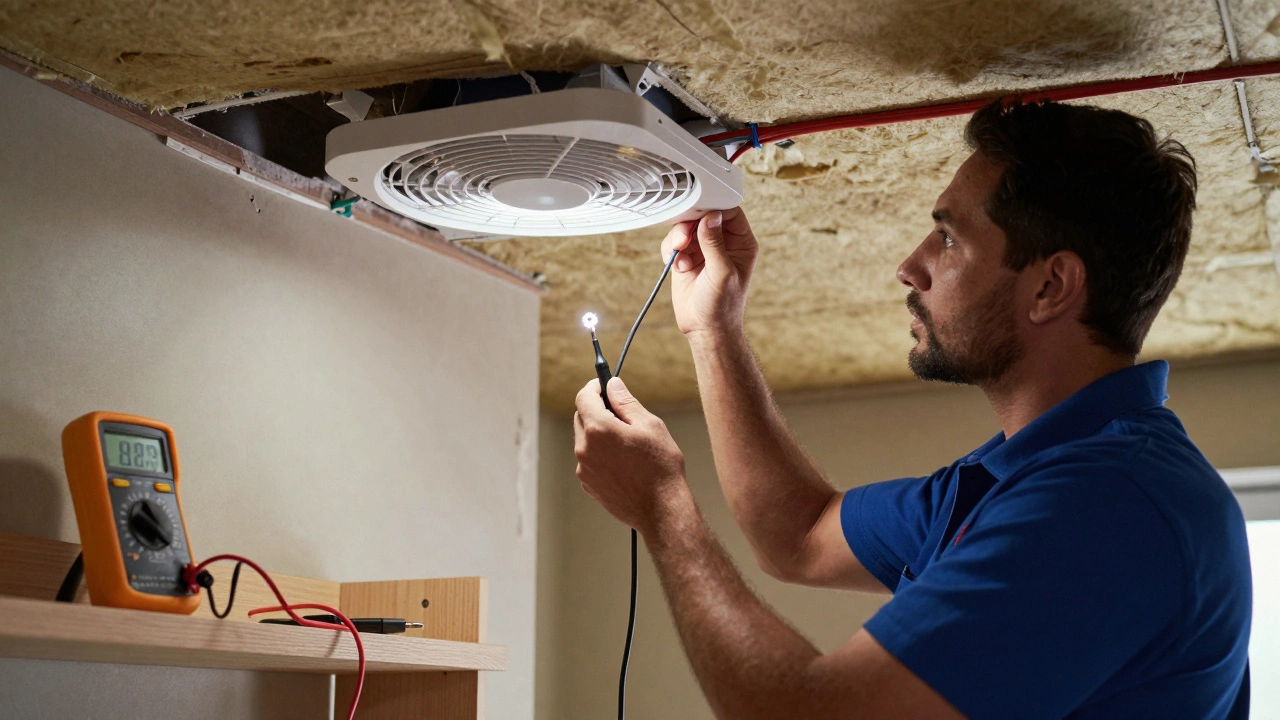
- Call an electrician if you’re installing a new fan, moving it to a new location, or need wiring done.
- Call a specialist if you’re installing a high-end, smart, or commercial-grade extractor fan. These often require specific mounting, control systems, and noise ratings.
Many companies now offer combined services. You can book a single appointment where a plumber handles the ductwork and an electrician handles the wiring-all under one quote. That’s the cleanest, safest option.
What Happens If You DIY?
You can buy an extractor fan for under £50. You can cut a hole in the wall. You can plug it in. But if it’s not wired correctly, you’re risking:- Electrical overload and tripped breakers
- Mold growth from poor ventilation
- Fire from overheated wires
- Invalidated home insurance if damage occurs
In 2024, the UK’s Electrical Safety First charity reported over 2,300 house fires linked to faulty electrical installations in bathrooms and kitchens. Many of those involved DIY extractor fan wiring. Don’t be a statistic.
How to Spot a Qualified Installer
Not everyone who says they install extractor fans knows what they’re doing. Here’s how to check:- Ask for their Part P certification (UK) or equivalent local electrical license.
- Check if they’re registered with TrustMark or a similar government-backed scheme.
- Ask for photos of past installations-especially the wiring inside the wall or ceiling.
- Make sure they offer a written guarantee on both the work and the fan.
Reputable companies will show you their certification. If they hesitate or say, “I’ve been doing this for 20 years,” that’s not enough. Regulations change. Standards evolve. Experience doesn’t replace certification.

Cost Comparison: Plumber vs Electrician vs Combined
Here’s what you’re likely to pay in late 2025 for a standard extractor fan installation in a UK home:
| Service Provider | Typical Cost Range | Includes Ductwork? | Includes Wiring? | Permit Filed? |
|---|---|---|---|---|
| Plumber Only | £80-£150 | Yes | No | No |
| Electrician Only | £120-£200 | No | Yes | Yes |
| Combined Service (Plumber + Electrician) | £180-£300 | Yes | Yes | Yes |
Combined services cost more upfront, but they’re faster, safer, and legally compliant. You only need one visit. One invoice. One guarantee.
What to Do If Your Fan Isn’t Working Right
If your extractor fan is noisy, doesn’t turn on, or leaves moisture behind, it’s not necessarily broken. Here’s what to check first:- Is the duct blocked? Grease and dust build up over time. Clean it with a vacuum and brush.
- Is the switch working? Test it with a multimeter or replace it with a basic toggle switch.
- Is the fan wired to a timer? If so, the timer might be faulty.
- Is the fan the right size? A 10-watt fan won’t clear steam from a large bathroom. Look for CFM (cubic feet per minute) ratings-aim for at least 15 CFM per square meter of bathroom space.
If you’re unsure, don’t guess. Call a professional. A 15-minute diagnostic visit from an electrician or a qualified installer can save you hundreds in water damage later.
Final Answer: Do Plumbers Install Extractor Fans?
Plumbers can install the ductwork and handle the physical mounting of extractor fans-but they cannot legally wire them unless they’re also licensed electricians. The safest, most reliable approach is to hire a team that does both. Or hire an electrician who works with a trusted plumber. Don’t let cost tempt you into cutting corners. A properly installed extractor fan prevents mold, saves energy, and protects your home’s structure. That’s worth paying for.Can I install an extractor fan myself?
Technically, yes-but only if you’re qualified. If you don’t have an electrical license, you can’t legally wire the fan in most countries. Even if you plug it into a socket, you’re violating building codes. Most home insurance policies won’t cover damage from DIY electrical work. It’s not worth the risk.
Do I need a permit to install an extractor fan?
In the UK, yes-if you’re installing a new fan or modifying the electrical circuit. This falls under Part P of the Building Regulations. A certified electrician will handle the permit. If you DIY, you’ll need to notify your local building control office. Failure to do so can affect your home sale later.
What’s the difference between a bathroom and kitchen extractor fan?
Bathroom fans are designed to remove moisture and odors. Kitchen fans handle grease, smoke, and higher heat. Kitchen fans often have higher CFM ratings and include grease filters. Bathroom fans are quieter and usually have humidity sensors. Never use a bathroom fan in the kitchen-it won’t last, and it won’t clean the air properly.
How long does an extractor fan last?
Most extractor fans last 8 to 12 years with regular cleaning. The motor wears out faster if the duct is clogged or the fan runs constantly. If your fan is over 10 years old and making noise, it’s time to replace it. Newer models are quieter, more energy-efficient, and come with smart features like timers and motion sensors.
Why does my extractor fan run all the time?
If your fan runs non-stop, the humidity sensor might be stuck, or the timer is faulty. It could also be wired incorrectly-some fans are set to run for 10-20 minutes after the light is turned off. Check the manual. If it’s still running after that, turn off the power and call an electrician. Constant operation wastes energy and wears out the motor.