If your hot water suddenly turns cold, or you hear strange noises coming from the tank, you’re not alone. In Bristol, where winters get chilly and households rely on steady hot water, water heater failures are one of the most common emergency repairs we see. Most of the time, it’s not a mysterious breakdown-it’s one of a few predictable problems that show up again and again. Knowing what usually fails on a water heater can save you time, money, and a lot of cold showers.
Heating Elements Burn Out
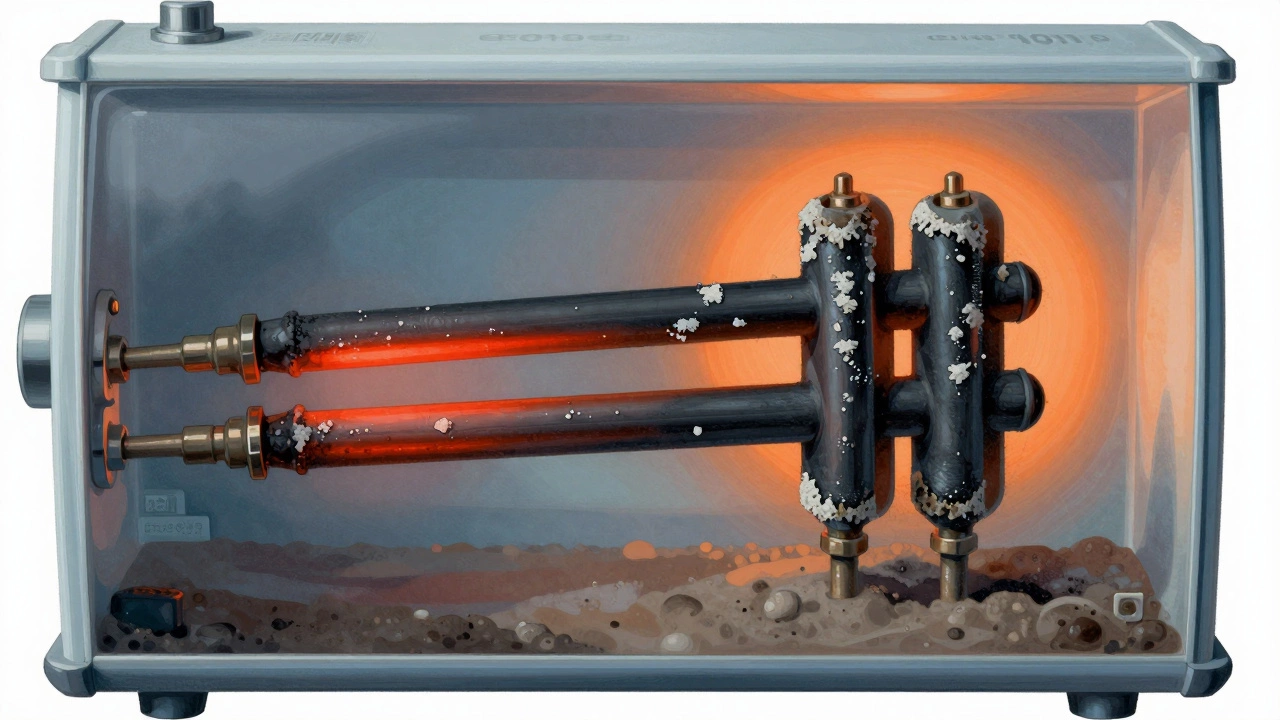
The most common reason electric water heaters stop working is a failed heating element. These are the metal rods inside the tank that heat the water. Over time, mineral buildup from hard water coats them, causing them to overheat and eventually break. You won’t always see signs before it happens-sometimes the element just stops working overnight.
Here’s how to tell: if only the top half of your tank is hot, the upper element is likely dead. If no hot water comes out at all, both elements may have failed. Most electric water heaters have two elements, and they work in sequence. Replacing one is usually straightforward, but if both are gone, it’s often cheaper to replace the whole unit-especially if it’s over 10 years old.
Thermostat Malfunctions
The thermostat controls when the heating elements turn on and off. If it’s faulty, your water might be too hot, too cold, or fluctuate unpredictably. A broken thermostat doesn’t always mean a full replacement. Sometimes it’s just mis-calibrated or covered in corrosion from moisture leaks.
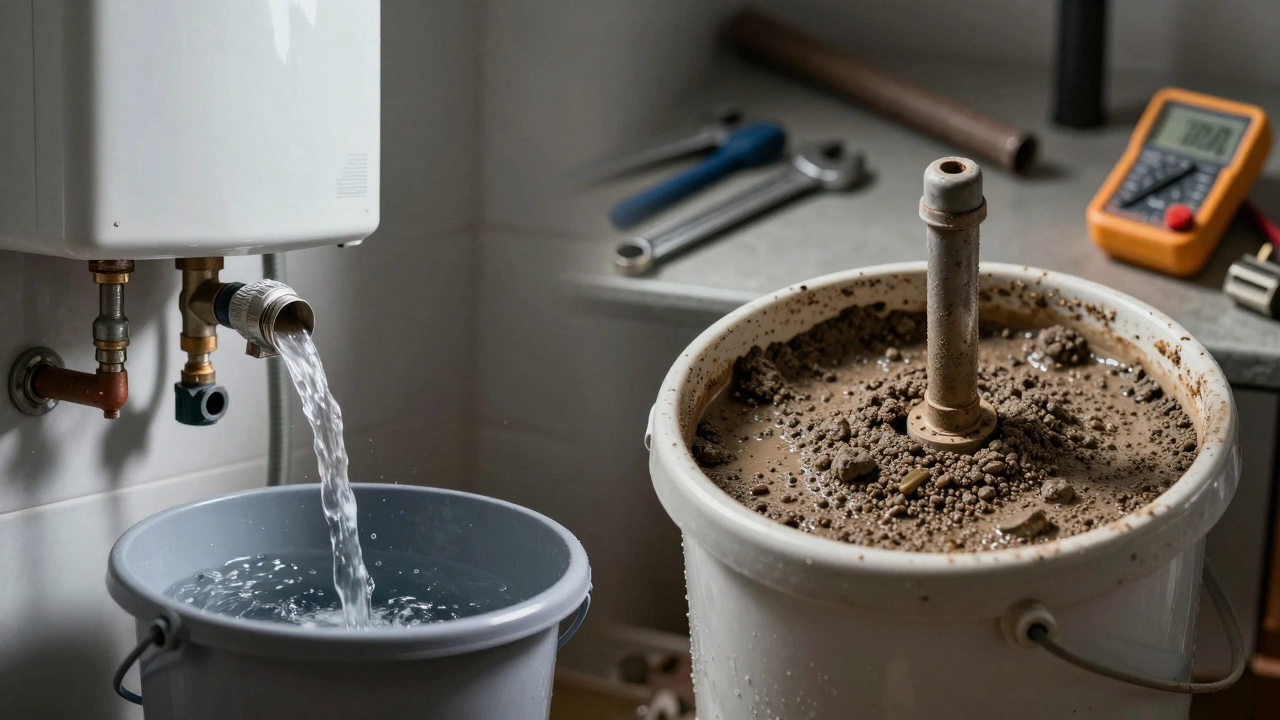
Check your thermostat settings first. Most manufacturers recommend 50°C (122°F) for safety and efficiency. If your water is scalding hot or barely warm despite the dial being set correctly, the thermostat is probably the culprit. You can test it with a multimeter, but if you’re not comfortable with electrical work, call a professional. A faulty thermostat can also cause the heating element to burn out faster by keeping it on too long.
Corrosion and Tank Failure
Water heater tanks are made of steel lined with glass to resist rust. But that lining can crack over time, especially if the anode rod-a sacrificial metal rod that attracts corrosion-isn’t replaced. Once the tank starts rusting from the inside, it’s only a matter of time before it leaks.
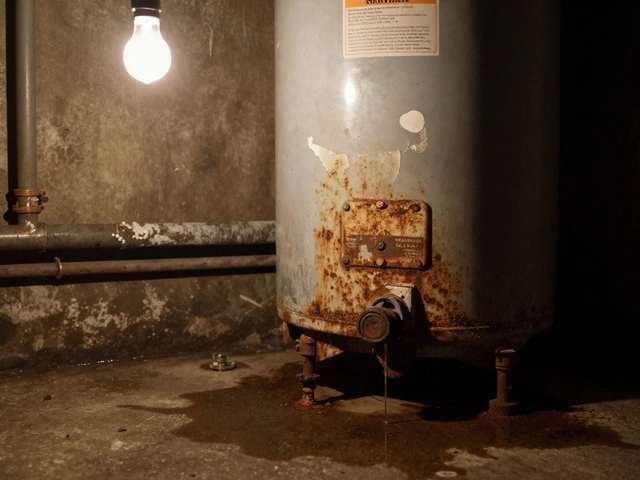
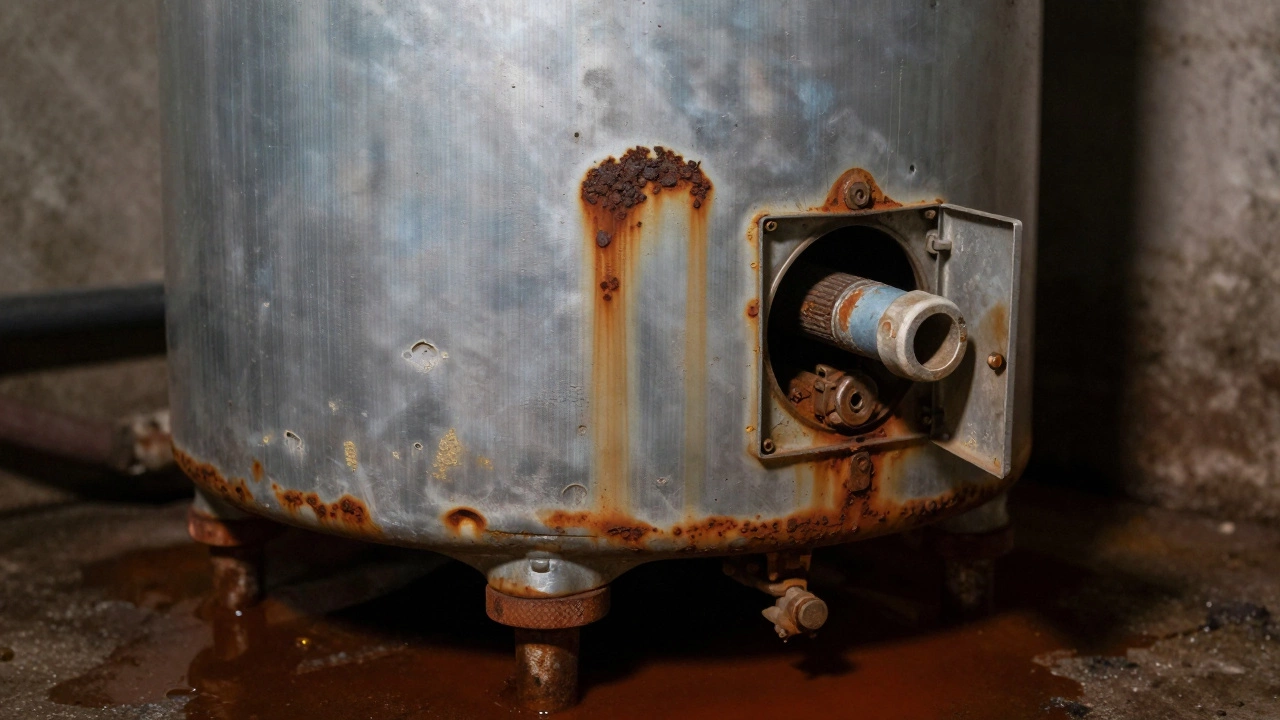
If you notice rust-colored water, a puddle under the tank, or a metallic smell when you run hot water, corrosion is likely the issue. A small leak might seem fixable, but once the tank corrodes, patching it won’t last. Most tanks last 8-12 years. If yours is older and showing signs of rust, replacement is the only reliable fix. Waiting too long can lead to a sudden flood, especially during winter when pipes are under more stress.
Anode Rod Degradation
The anode rod is the unsung hero of your water heater. Made of magnesium, aluminum, or zinc, it slowly corrodes instead of your tank. It’s designed to die so your tank doesn’t have to. But most homeowners never check it.
Every 3-5 years, you should have the anode rod inspected. If it’s more than half eaten away or covered in calcium buildup, it’s no longer protecting your tank. Replacing it costs under £50 and takes an hour. Skipping this simple step is the #1 reason water heaters fail early. In areas with hard water-like much of the UK-the rod wears out even faster.
Pressure Relief Valve Failure
This small valve on the top or side of the tank is a safety feature. It opens automatically if pressure builds too high, preventing the tank from exploding. If it’s stuck closed, you’re at risk. If it’s stuck open, you’ll get constant dripping.
A leaking pressure relief valve doesn’t always mean it’s broken. Sometimes it’s just flushing out sediment. Try lifting the lever briefly-if water flows and then stops, it’s working. If it keeps dripping, the valve needs replacing. Don’t ignore this. A failed valve is a silent hazard. In the UK, building regulations require this valve to be functional. If it’s not, your system isn’t compliant.
Sediment Buildup
Hard water leaves behind minerals like calcium and magnesium. Over time, these settle at the bottom of the tank as sediment. That sludge acts like insulation, making your heater work harder to warm the water. It causes noise-loud popping or rumbling sounds-and reduces efficiency by up to 30%.
Flushing your tank once a year removes most of this buildup. Turn off the power or gas, attach a hose to the drain valve, and let it run until the water clears. If you’ve never done this, your tank might be full of sediment. Many people think their heater is just old, but cleaning it out can restore performance and extend its life by years.
Gas Burner Issues (Gas Water Heaters)
If you have a gas water heater, the burner assembly is the most common failure point. Dust, soot, or moisture can clog the burner ports or prevent the pilot light from staying lit. A yellow flame instead of a steady blue one means incomplete combustion-and that’s dangerous. It can produce carbon monoxide.
Check the burner regularly. If the flame looks uneven or flickers, clean the burner or replace the thermocouple. The thermocouple is a safety sensor that shuts off the gas if the pilot goes out. If it’s faulty, the heater won’t stay lit, even if the pilot is working. Gas systems need professional servicing every 1-2 years. Never attempt to adjust gas lines yourself.
Electrical Problems in Electric Models
Electric water heaters rely on a circuit breaker, wiring, and a high-limit switch. If the breaker trips repeatedly, there’s a short circuit or ground fault. Loose wires, damaged insulation, or moisture intrusion can cause this. You might smell burning plastic or see scorch marks near the control panel.
Don’t just reset the breaker. That’s a band-aid. Find the root cause. A faulty high-limit switch can also shut off power if the water overheats. This is often triggered by a failed thermostat. If your heater keeps turning off after heating up, the switch may be stuck. Replacing it requires disconnecting power and testing components-best left to a qualified electrician.
When to Repair vs. Replace
Not every problem means a new heater. But some signs make replacement the smarter choice:
- Your heater is over 10 years old
- You’ve had multiple repairs in the last two years
- There’s visible rust on the tank or base
- It takes longer than 30 minutes to heat water
- Energy bills have gone up noticeably
Modern water heaters are 20-30% more efficient than models from 10 years ago. A new unit might cost £800-£1,500 installed, but you’ll save £100-£200 a year on bills. Plus, you avoid the stress of another breakdown.
For minor issues-a bad element, a leaky valve, or a dirty burner-repairing makes sense. But if the tank itself is compromised, you’re just delaying the inevitable.
Prevention Tips That Actually Work
Here’s what you can do to keep your water heater running longer:
- Flush the tank once a year-do it in spring before winter hits
- Check the anode rod every 3 years
- Set the temperature to 50°C (122°F)-hotter increases scale and risk
- Install a water softener if you have hard water
- Inspect the pressure relief valve every 6 months
- Keep the area around the heater dry and well-ventilated
These steps don’t cost much, but they add years to your heater’s life. In Bristol’s damp climate, moisture and mineral buildup are constant threats. Staying on top of maintenance is cheaper than emergency calls.
Water heaters don’t fail randomly. They fail because of neglect. Most problems develop slowly. If you pay attention, you’ll see the warning signs before the water goes cold.