Most people don’t think about their water heater until it stops working. Then suddenly, cold showers, delayed laundry, and a frustrated household make it impossible to ignore. If your water heater gave up in the middle of winter, you’re not alone. But here’s the truth: sediment buildup is the number one reason water heaters fail - not age, not poor installation, not faulty wiring. It’s the quiet, invisible killer hiding at the bottom of your tank.
How sediment destroys your water heater
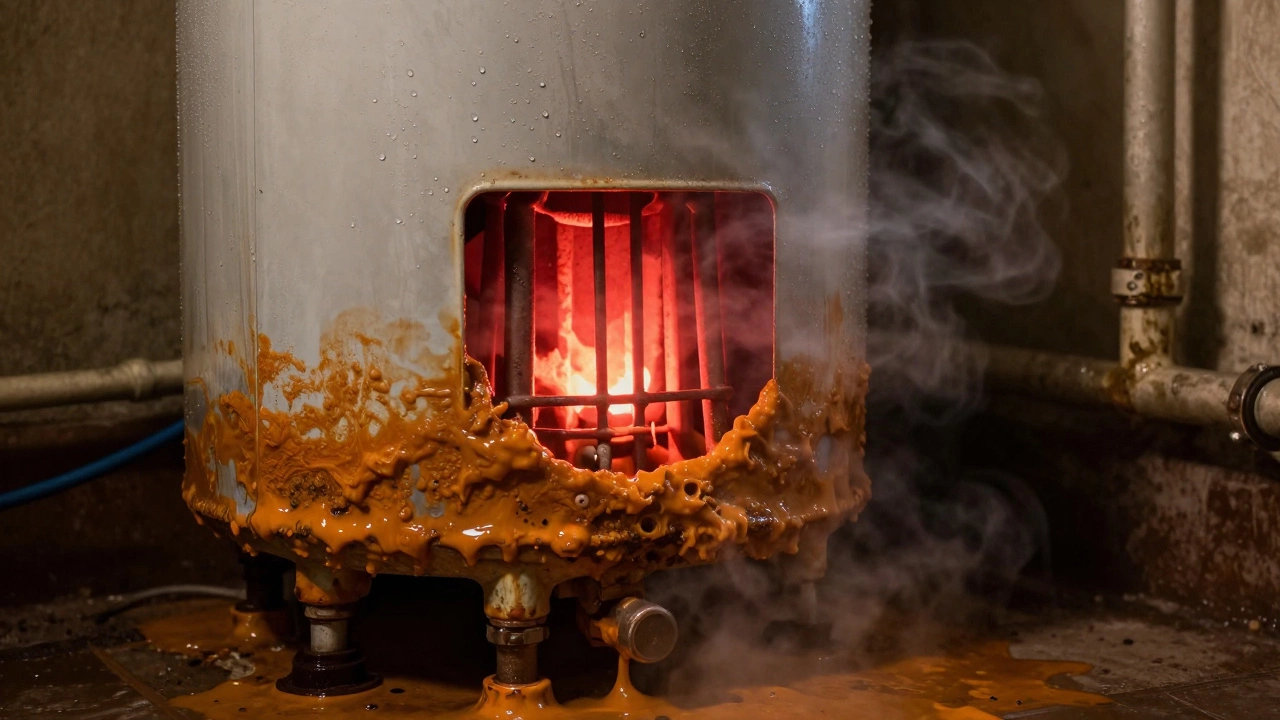
Hard water is common across the UK, especially in areas like Bristol, where limestone and chalk geology mean minerals like calcium and magnesium dissolve into the water supply. Over time, these minerals don’t just stay in solution - they drop out and settle at the bottom of your tank. Think of it like sand accumulating in a bucket left outside in the rain. Except this sand isn’t harmless. It forms a thick, insulating layer between the heating element and the water.That layer forces your heater to work harder. Every time the thermostat calls for heat, the element has to burn longer to push warmth through the sediment. That extra strain wears out the element faster. It also causes overheating spots on the tank’s metal lining. Eventually, the metal weakens, rusts, and leaks. A single inch of sediment can increase energy use by over 20%. That’s why your bills creep up even when you haven’t changed your habits.
Why the anode rod matters more than you think
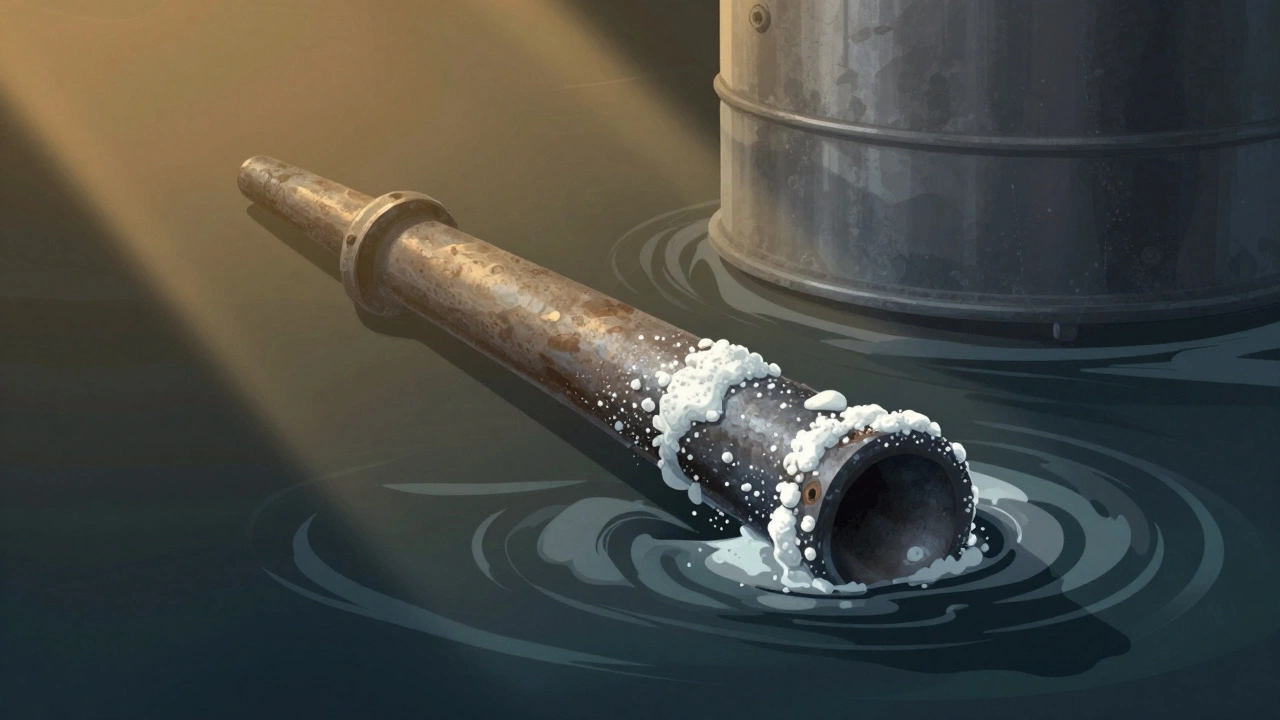
The anode rod is your water heater’s first line of defense. It’s a sacrificial metal rod - usually made of magnesium, aluminum, or zinc - that hangs inside the tank. Its job is simple: attract corrosive elements in the water so they attack the rod instead of the steel tank. Think of it like a bodyguard taking the bullet for the VIP.But here’s the catch: the anode rod doesn’t last forever. In hard water areas, it can be completely consumed in as little as two years. Most homeowners never check it. By the time the rod is gone, the tank starts rusting from the inside. You’ll see rusty water, a rotten egg smell (hydrogen sulfide gas reacting with the tank), or sudden leaks. Replacing the anode rod every 3-5 years can extend your water heater’s life by up to 10 years. It’s cheap - under £50 - and often done in under an hour by a plumber.
Thermostat and element failures are symptoms, not causes
When a water heater stops heating, people assume the thermostat or heating element is broken. And yes, those parts do fail. But they’re rarely the root problem. More often, they’re the result of sediment or corrosion.For example, if sediment builds up around the lower element, it overheats and burns out. You replace it - and it burns out again in six months. Why? Because the sediment is still there. Same with thermostats. If the tank’s bottom is coated in mineral sludge, the thermostat reads the wrong temperature. It thinks the water is hot when it’s not. So it keeps running, overworking the system.
Replacing elements or thermostats without cleaning the tank is like putting a new battery in a car with a clogged fuel line. It might run for a while, but the real issue remains.
Pressure and temperature relief valve - the silent guardian
Every water heater has a pressure relief valve near the top. It’s designed to open if pressure or temperature gets too high. Most people never check it. But if it’s stuck closed or clogged with mineral deposits, it can’t release excess pressure. That leads to dangerous overpressure, which can rupture the tank or cause leaks at joints.Test it once a year. Lift the lever on the valve. You should hear a rush of water and steam. If nothing happens, or if water drips afterward, the valve needs replacing. Don’t wait for it to fail. That’s when you get flooded.
What age really means - and when to replace
Most water heaters last 8-12 years. But that’s not a countdown clock. A well-maintained unit can hit 15 years. A neglected one might die at 5.Signs your heater is beyond repair:
- Water that’s rusty or smells like rotten eggs
- Leaking from the bottom of the tank (not the pipes)
- Strange noises like popping or banging (from sediment boiling)
- Longer heating times or inconsistent hot water
- Age over 10 years with no maintenance history
If you see two or more of these, replacement is smarter than repair. Modern tankless heaters or heat pump models are 30-50% more efficient. You’ll save money long-term, even with the upfront cost.
How to prevent failure before it happens
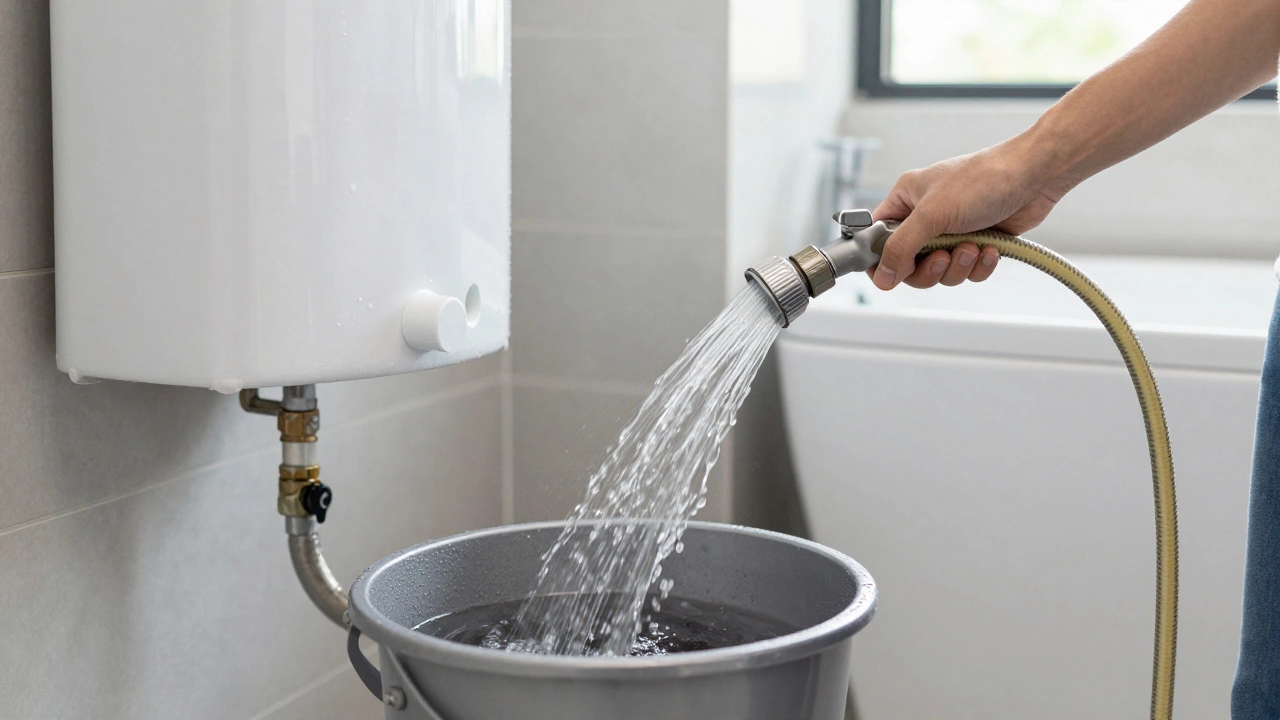
The good news? Most water heater failures are preventable. Here’s what actually works:- Flush the tank annually. Attach a hose to the drain valve and run water into a bucket or drain for 5-10 minutes. You’ll see sediment come out. Keep going until the water runs clear.
- Check the anode rod every 2-3 years. If it’s coated in calcium or less than half its original thickness, replace it.
- Test the pressure relief valve yearly. Don’t assume it works.
- Set the thermostat to 120°F (49°C). Higher temps speed up mineral buildup and increase scalding risk.
- Install a water softener if you have hard water. It’s not cheap, but it protects everything - not just your heater.
One homeowner in Bristol flushed their tank once a year for 14 years. Their 2010 model is still working. Another ignored it for 7 years - then got a flooded kitchen. The difference? A few hours of maintenance each year.
What to do when it fails
If your water heater dies:- Turn off the power at the circuit breaker.
- Shut off the water supply valve above the heater.
- Drain the tank if it’s leaking - use the drain valve and a hose.
- Call a qualified plumber. Don’t try to fix it yourself unless you’re trained.
Don’t panic. Water heater failure is common. But with the right steps, you can avoid it - or at least know exactly what went wrong and how to fix it next time.
Is sediment the only cause of water heater failure?
No, but it’s the most common. Other causes include a failed anode rod, corrosion from untreated hard water, a faulty pressure relief valve, or thermostat and element wear. However, sediment is the hidden factor behind 70% of premature failures. It accelerates all the other problems by forcing components to overwork.
How often should I flush my water heater?
Once a year is ideal for most homes. If you live in a hard water area like Bristol, do it every 6 months. Flushing removes the mineral sludge that builds up at the bottom of the tank. It’s quick, cheap, and prevents overheating, leaks, and efficiency loss. You don’t need a plumber - just a garden hose and a bucket.
Can I replace the anode rod myself?
Yes, if you’re comfortable with basic tools. First, turn off power and water. Drain a few gallons to reduce pressure. Use a socket wrench to remove the old rod. Replace it with a new magnesium or aluminum rod (check your manual). Reinstall, refill, and turn everything back on. It takes under an hour. If you’re unsure, a plumber can do it for £60-£90 - far cheaper than replacing the whole tank.
Why does my water smell like rotten eggs?
That smell usually comes from hydrogen sulfide gas, produced when bacteria react with sulfur in the water and the anode rod. It’s more common in water heaters with magnesium rods and hard water. Solutions include flushing the tank, replacing the rod with an aluminum-zinc one, or raising the thermostat to 140°F for a few hours to kill bacteria (then lower it again). If the smell returns, the anode rod may be fully degraded.
Should I upgrade to a tankless water heater?
It depends. Tankless heaters save energy and last 20+ years, but they cost £1,500-£3,000 installed. If your current heater is under 8 years old and well-maintained, repair or flush it. If it’s older than 10, leaking, or you’re upgrading your home, tankless is a smart long-term investment. Also, consider a heat pump water heater - it’s 3x more efficient than standard electric models and works well in UK homes.