Oven Element Tester
⚠️ Important Safety Notice: Always unplug the oven or turn off the circuit breaker before testing. Never work on a live circuit. If you're unsure about electrical work, contact a professional.
Enter your multimeter reading in ohms (Ω) to determine if your oven element is working properly. The article states that a good element typically reads between 20-120 ohms.
Element Visualization
If your electric oven isn’t heating up properly, or if it’s taking forever to cook food, the problem might be simpler than you think. More often than not, it’s not the thermostat, the control board, or a wiring issue-it’s the heating element. And the good news? You can check it yourself without calling a technician. Most electric ovens have one or two heating elements: a bottom one for baking and a top one for broiling. If one of them isn’t working, your oven won’t perform as it should.
What a bad heating element looks like
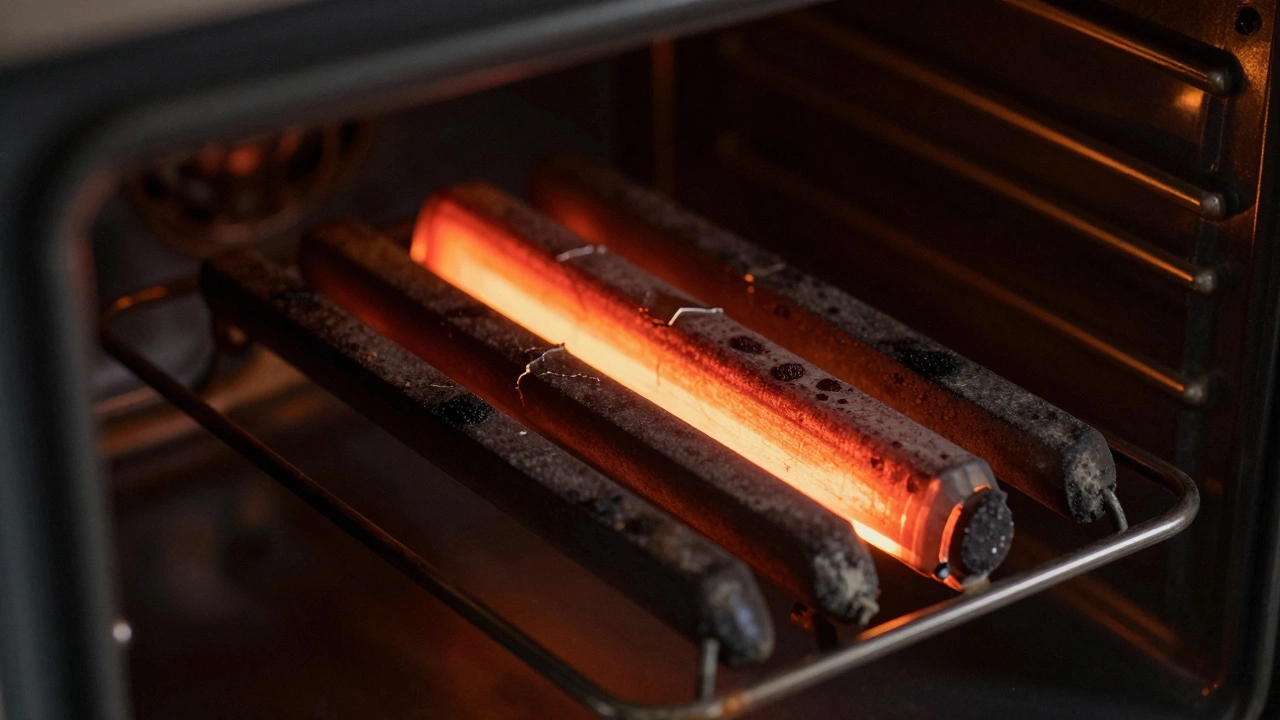
A healthy heating element glows bright orange-red when the oven is on. If you turn the oven to 350°F and wait five minutes, you should see even, consistent glowing across the entire element. If you see dark spots, sections that don’t glow at all, or visible cracks and bulges, that element is done. You might also notice the oven taking longer to heat up, food cooking unevenly, or the oven shutting off early because it can’t reach the set temperature.
Some people mistake a bad element for a faulty thermostat. But here’s the difference: if the oven heats up at all-even slowly-the thermostat is probably fine. If it doesn’t heat at all, or only heats in one spot, the element is the likely culprit.
Visual inspection: the first thing to check
Before you touch anything, unplug the oven or turn off the circuit breaker. Safety first. Once it’s off, open the oven door and look at the bottom element. Is it sagging? Are there bubbles or holes in the metal? Have you seen any sparks or heard a popping sound when you turned the oven on? These are clear signs of failure.
Check the top element too, if your oven has one. Broil mode uses this one, so if broiling doesn’t work but baking does, the top element is probably dead. Look for discoloration-white patches or blackened areas mean the element’s internal wire has burned out. Some elements look fine from the outside but are broken inside. That’s why you need to test it.
Testing the element with a multimeter
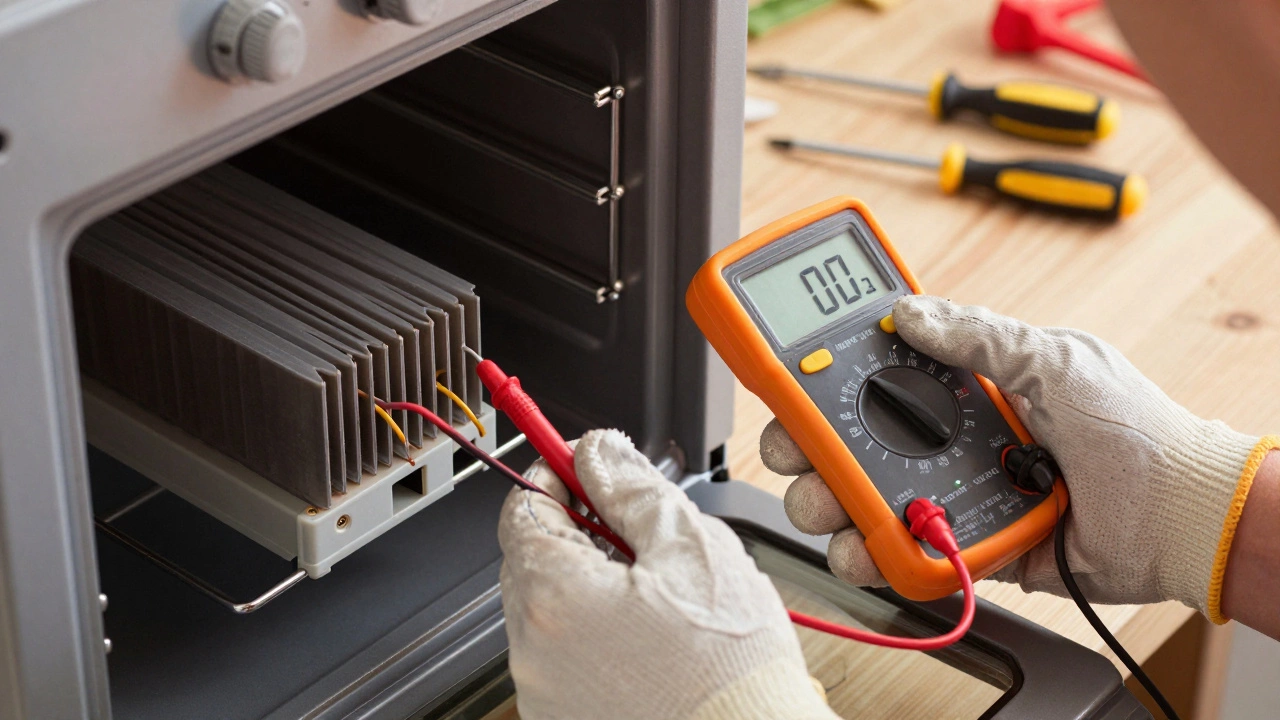
Visual checks are a good start, but they don’t tell the whole story. The only way to be sure is to test for continuity using a multimeter. You don’t need to be an electrician-this is a simple DIY test.
First, disconnect the power. Then, remove the element. Most are held in place by two screws on the back wall of the oven. Pull the element out just enough to access the terminals. Don’t yank the wires-just pull the element forward until the terminals are free.
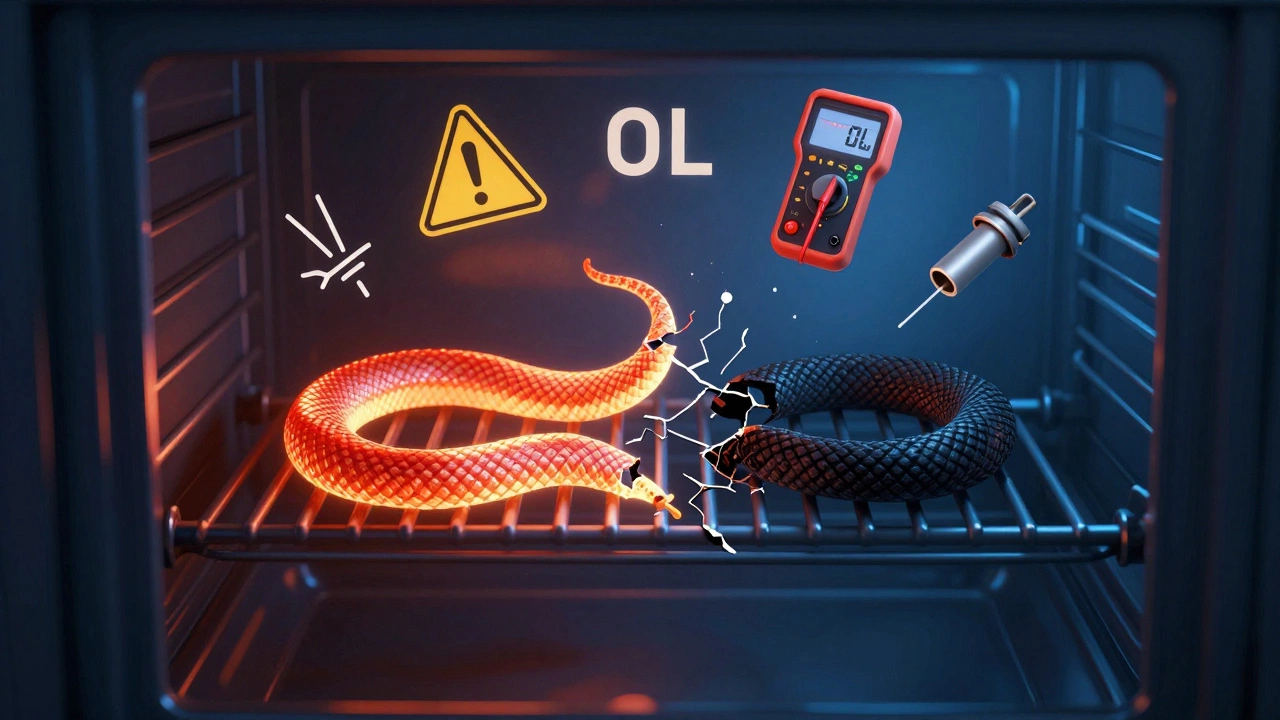
Set your multimeter to the ohms setting (Ω). Touch one probe to each terminal on the element. A good element will show a reading between 20 and 120 ohms, depending on the model. If the multimeter reads zero (no resistance), the element is shorted. If it reads “OL” or infinite resistance, the element is open-meaning the circuit is broken. Either way, it needs replacing.
Some people skip this step and just assume the element is bad because the oven isn’t working. But a faulty thermostat, relay, or wiring connection can also cause the same symptoms. Testing confirms the issue before you buy a new part.
Common mistakes people make
Many homeowners replace the element without testing it first. That’s a waste of money. I’ve seen people spend £60 on a new element, only to find out the real problem was a blown fuse on the control board. Always test first.
Another mistake: assuming the element is fine because it looks okay. A broken internal wire won’t always show on the surface. That’s why the multimeter test matters. Also, don’t forget to check the wiring. Loose or burnt wires at the terminal block can mimic a bad element. If the element tests fine but still doesn’t work, inspect the connections. Look for melted insulation or corrosion.
And never plug the oven back in while you’re working on it. Even when turned off, the oven’s circuit can still carry live voltage. Always shut off the breaker at the fuse box.
What to do if the element is bad
If your tests confirm a bad element, you’ll need to replace it. Start by noting the make and model of your oven. Most elements are model-specific. You can find the model number on a sticker inside the oven door, on the back, or in the user manual. Take a photo of the old element and its terminals before removing it. That helps when ordering the right replacement.
Most hardware stores and online retailers like Screwfix or Amazon sell oven elements. Prices range from £25 to £70, depending on the brand and size. Generic replacements often work just as well as OEM parts and cost less.
Replacing it is straightforward: disconnect the old one, connect the new one the same way, secure the screws, and plug the oven back in. Turn the power on and test it. Within five minutes, you should see the element glowing evenly.
When to call a professional
You don’t need to call someone for a bad element. But if you’re uncomfortable working with electricity, if the oven still doesn’t work after replacing the element, or if you find damaged wiring, melted insulation, or signs of arcing, stop. That’s when you need a certified technician.
Also, if your oven is over 15 years old, consider whether a full replacement makes more sense. Older ovens are less energy-efficient and often have parts that are hard to find. A new oven might cost £400-£800, but you’ll save on bills and avoid future repairs.
Preventing future failures
Heating elements don’t last forever-they typically last 5 to 10 years. But you can extend their life. Avoid slamming the oven door. The shock can crack the element’s internal coil. Don’t use harsh cleaners on the element itself. Water and chemicals can corrode the metal over time. Wipe spills gently with a damp cloth when the oven is cool.
Also, make sure your oven is properly ventilated. If it’s built into a tight cabinet with no airflow, heat builds up and shortens the element’s life. Keep the area around the oven clear.
And if you notice your oven taking longer to heat up, don’t ignore it. That’s often the first warning sign. Catching a failing element early means you can replace it before it stops working completely.
Can a bad oven element cause a fire?
Yes, but it’s rare. A cracked or damaged element can arc or spark, especially if it’s touching the oven wall or if wires are loose. If you see sparks, smell burning plastic, or notice smoke, turn off the power immediately and don’t use the oven. Replace the element or call a technician. Regular inspections and not ignoring early signs reduce fire risk.
Why does my oven heat unevenly?
Uneven heating is often caused by a failing heating element. If one part of the element doesn’t glow, heat won’t distribute evenly. It can also happen if the oven fan (in convection ovens) is broken or if the racks are blocking airflow. But if the bottom element is partially dead, you’ll notice food browning more on one side or the bottom being undercooked.
How long should an oven element last?
Most electric oven elements last between 5 and 10 years. Heavy use, frequent high-temperature baking, or physical damage can shorten that. If your oven is older than 10 years and the element has failed, it’s worth considering a full replacement rather than another repair.
Can I use the oven if one element is broken?
Technically, yes-but you shouldn’t. If the bottom element is broken, you can still use the broil function, but baking will be slow and uneven. If the top element is broken, you can bake but can’t broil. However, running the oven with a damaged element can strain other components and increase your electricity bill. It’s safer and more efficient to replace it.
Is it cheaper to repair or replace the oven?
If your oven is under 8 years old and the only issue is the heating element, repair is almost always cheaper. A new element costs £30-£60, plus maybe £50 for a technician if you don’t do it yourself. If your oven is 12+ years old, has other problems, or uses a lot of energy, a new model might be more cost-effective. Modern ovens use 20-30% less electricity and have better temperature control.