Oven Heating Problem Diagnosis Tool
What's happening?
Most Likely Cause
If your oven won’t heat up, it’s not just inconvenient-it’s a daily hassle. You preheat, you set the timer, you even double-check the temperature dial… and still, nothing. No glow, no warmth, no smell of baking bread. It’s not just the meal that’s ruined. It’s your whole evening. The good news? Most of the time, this isn’t a sign your oven is dead. It’s usually one simple thing that’s gone wrong-and you can often fix it yourself.
Heating Element Failure
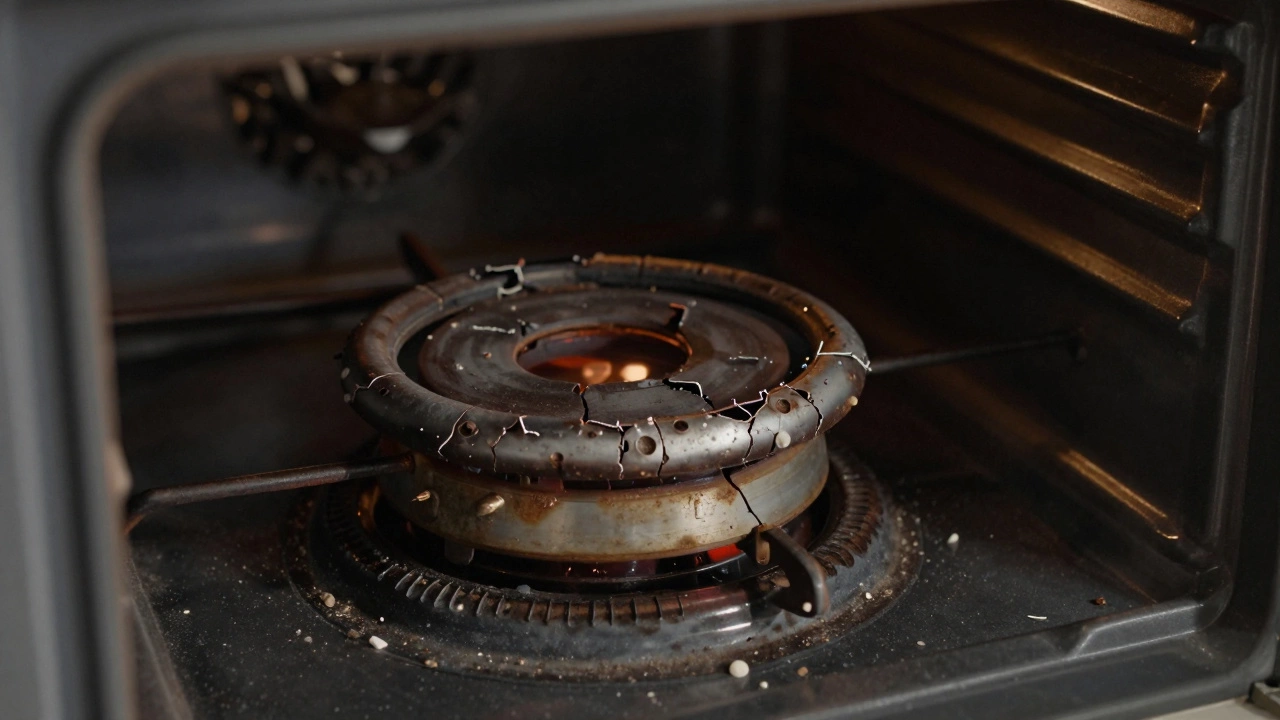
The most common reason an oven won’t heat up is a broken heating element. In electric ovens, there are usually two: one on the bottom for baking, and one on the top for broiling. If the bottom element is dead, your oven won’t bake. If both are dead, you’ll get no heat at all.
Look inside your oven. The heating element should glow bright orange when it’s working. If it’s dark, cracked, or has visible blisters or holes, it’s gone. A broken element doesn’t always make noise or trigger an error code. Sometimes it just stops working silently.
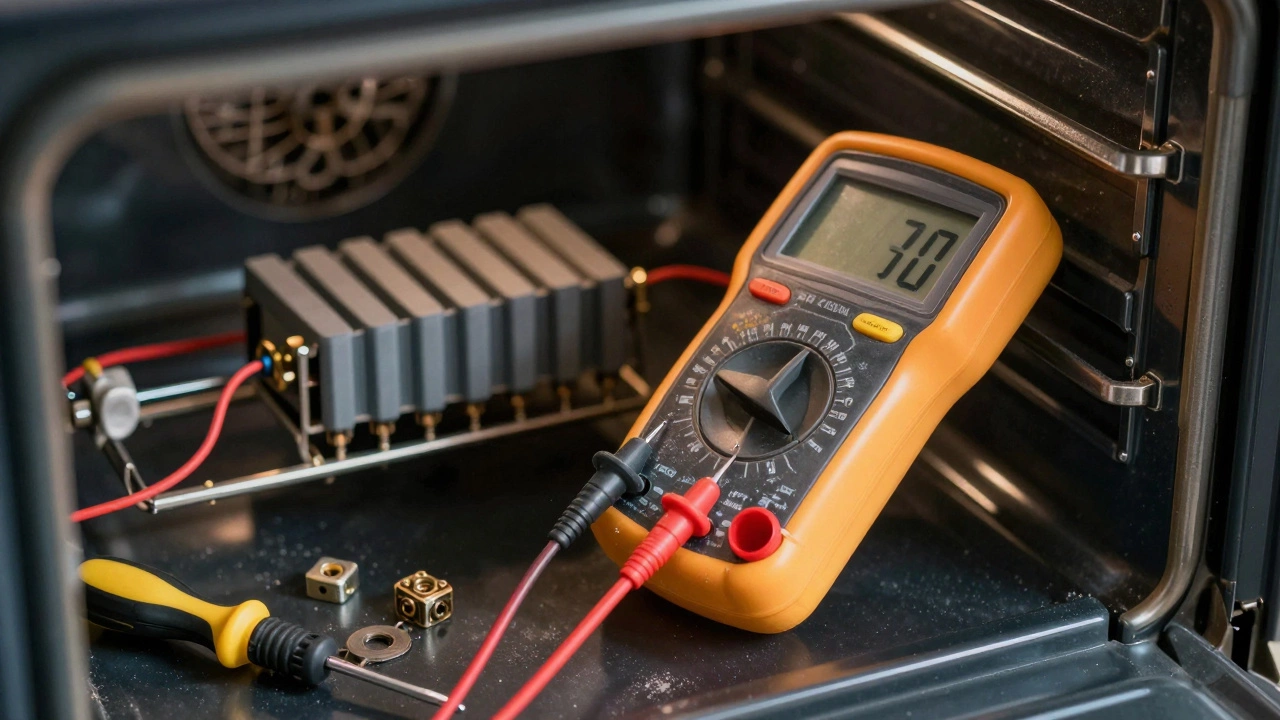
You can test it with a multimeter. Set it to ohms (Ω), turn off the power, and touch the probes to the terminals on the back of the element. If you get no reading or infinite resistance, the element is dead. Replacement elements cost between £30 and £60, depending on your oven model. Most are easy to swap out with just a screwdriver and a bit of patience.
Thermostat or Temperature Sensor Problems
Your oven’s thermostat or temperature sensor tells the control board when to turn the heating element on and off. If it’s faulty, it might think the oven is already hot-even when it’s not.
Signs of a bad thermostat: the oven heats up slowly, overheats, or doesn’t reach the set temperature. You might notice food cooking unevenly or taking way longer than it should. In modern ovens, the temperature sensor is usually a thin metal probe near the back wall. If it’s bent, corroded, or touching the oven wall, it gives false readings.
To check it, disconnect power and remove the sensor. Use a multimeter to measure resistance. At room temperature (around 20°C), it should read between 1,000 and 1,100 ohms. If it’s way off, or shows no reading, replace it. Sensors cost £20 to £40 and are usually held in with two screws.
Broken Igniter (Gas Ovens Only)
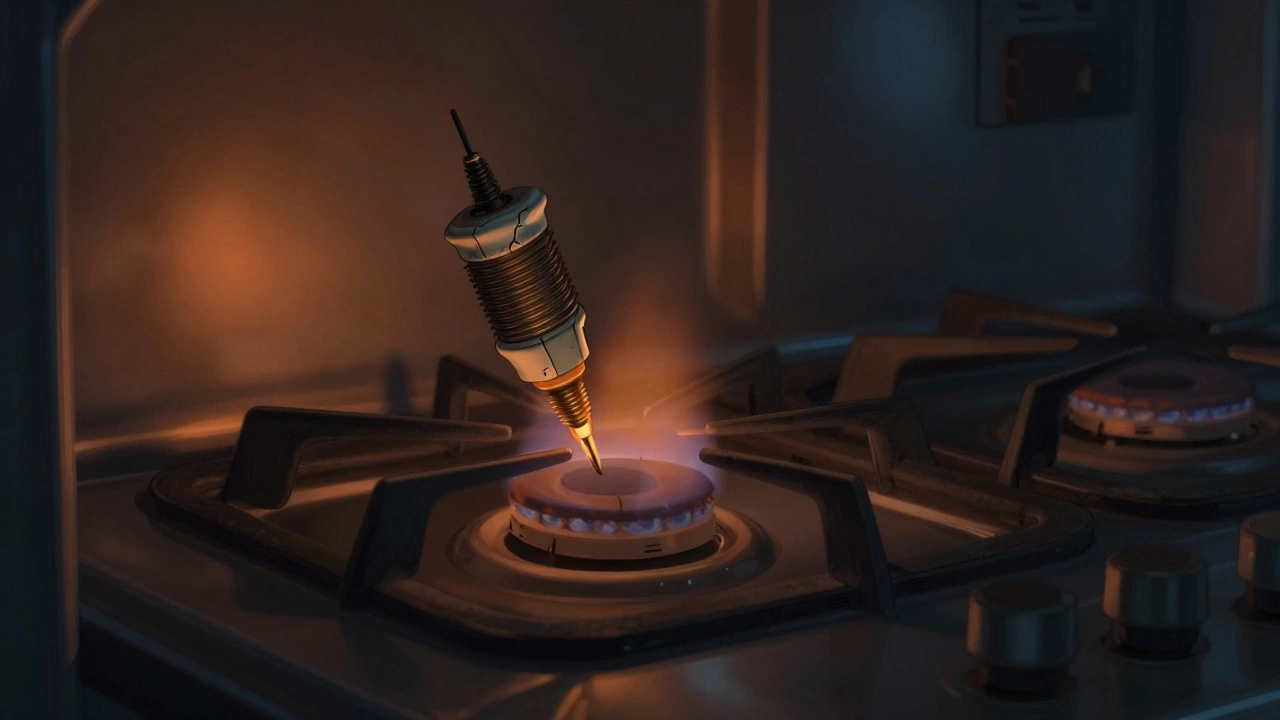
If you have a gas oven and it won’t heat up, the issue is likely the igniter. Unlike electric ovens, gas ovens don’t use heating elements. Instead, they rely on a small ceramic igniter that glows and sparks to light the gas.
A weak igniter might glow but not get hot enough to open the gas valve. You’ll hear a faint click, see a dim orange glow, but no flame. A good igniter glows bright yellow-orange within 30 seconds. If it takes longer or doesn’t glow at all, it’s failing.
Replacing a gas oven igniter is straightforward. Turn off the gas, remove the oven bottom panel, unplug the old igniter, and swap in the new one. Make sure you get the right model-igniters aren’t universal. Prices range from £25 to £50. If you’re uncomfortable working with gas, call a Gas Safe registered engineer.
Faulty Control Board or Relay
If the heating element and sensor are fine, the problem might be deeper: the control board. This is the brain of your oven. It sends power to the heating elements based on what you set on the dial or touchscreen.
A faulty relay on the board can stop power from reaching the element-even if everything else works. Signs include: the oven display works, the fan runs, but no heat. Sometimes, the oven will heat intermittently, or only on certain settings.
Testing a control board requires more skill. You need to check voltage output at the element terminals while the oven is on. If there’s no power, but the board isn’t showing error codes, the board is likely the culprit. Replacement boards cost £80 to £200, depending on the brand. For most people, this is a job for a professional. But if you’re handy and your oven is older, replacing the board can save you from having to buy a whole new appliance.
Tripped Thermal Fuse
Many ovens have a thermal fuse-a safety device that cuts power if the oven overheats. It’s usually located near the heating element or vent. If your oven overheated because of a blocked vent or a faulty thermostat, the fuse might have blown.
A blown thermal fuse won’t reset. Once it’s gone, it’s gone. The oven won’t heat at all. You won’t see any warning lights. The only way to know is to test it with a multimeter. If there’s no continuity, the fuse is dead.
Thermal fuses cost £5 to £15. Replacing one is easy, but it’s important to find out why it blew in the first place. If you just replace the fuse without fixing the root cause-like a blocked vent or a failing thermostat-it’ll blow again. Always check the oven’s airflow and clean the vents before replacing the fuse.
Power Supply Issues
Before you start taking your oven apart, check the basics. Is the oven plugged in? Is the circuit breaker tripped? Electric ovens often run on a 240-volt circuit, which uses two breakers. If one trips, the oven might still have power for the lights and display-but not enough to heat up.
Go to your fuse box and check the double-pole breaker for the oven. If it’s tripped, turn it all the way off, then back on. If it trips again, there’s a short somewhere. Don’t keep resetting it. Call an electrician.
Also, check the outlet or hardwired connection. If the oven is plugged in, try plugging something else in to see if the socket works. If it’s hardwired, make sure the connections behind the oven are tight. Loose wires can cause intermittent heating or no heat at all.
What to Do If Nothing Works
If you’ve checked the element, sensor, igniter, fuse, and power-and your oven still won’t heat-there’s a chance it’s time to replace it. Older ovens (over 12 years) often have parts that are no longer made. Repair costs can approach 60% of a new unit’s price. At that point, upgrading makes more sense.
But don’t rush. Before you buy a new oven, get a professional diagnosis. Some repair technicians offer free or low-cost diagnostic checks. They’ll tell you if it’s worth fixing or if you’re better off replacing it. In the UK, many local appliance repair shops offer this service without charge if you hire them for the fix.
Preventing Future Problems
Keeping your oven in good shape isn’t hard. Clean the vents and filters every few months. Don’t line the bottom of the oven with foil-it blocks airflow and can cause overheating. Use the self-clean function sparingly-it puts stress on the heating elements and sensors.
Also, avoid slamming the oven door. That jolt can loosen wires or damage the temperature sensor. And if you notice the oven taking longer to heat up, don’t ignore it. Early signs like slow preheating often mean a failing part is on its way out.
A little maintenance goes a long way. Most ovens last 15 to 20 years. You don’t need to replace yours just because it’s old. You need to replace it when the cost of repairs outweighs the value.