If your extractor fan suddenly went quiet - no hum, no spin, just silence - you’re not alone. In UK homes, especially in kitchens and bathrooms, these fans are the silent heroes pulling out steam, smells, and moisture. But when they die out of nowhere, it’s not just annoying. It’s a risk. Damp builds up. Mold creeps in. And that’s when you realize how much you relied on something you never thought about until it broke.
Check the power first - it’s simpler than you think
Before you start taking the fan apart, make sure it’s actually getting electricity. A lot of ‘dead’ fans are just stuck because the circuit breaker tripped or the pull cord switch failed. In older homes, especially in Bristol where many properties date back to the 1970s, the wiring behind extractor fans often runs through a simple pull switch. That switch wears out. The contacts get corroded. It looks fine from the outside, but inside? It’s broken.Here’s how to test it: go to your fuse box and look for the circuit labeled ‘kitchen’ or ‘bathroom’. If it’s switched off, flip it back on. If it trips again right away, stop. That’s a sign of a short circuit - don’t keep resetting it. Call an electrician.
If the breaker’s fine, try plugging a lamp or phone charger into the same outlet (if it’s a plug-in fan). If that doesn’t work, the problem’s in the wiring. If it does work, the fan itself is the issue.
Listen for a click - the capacitor might be dead
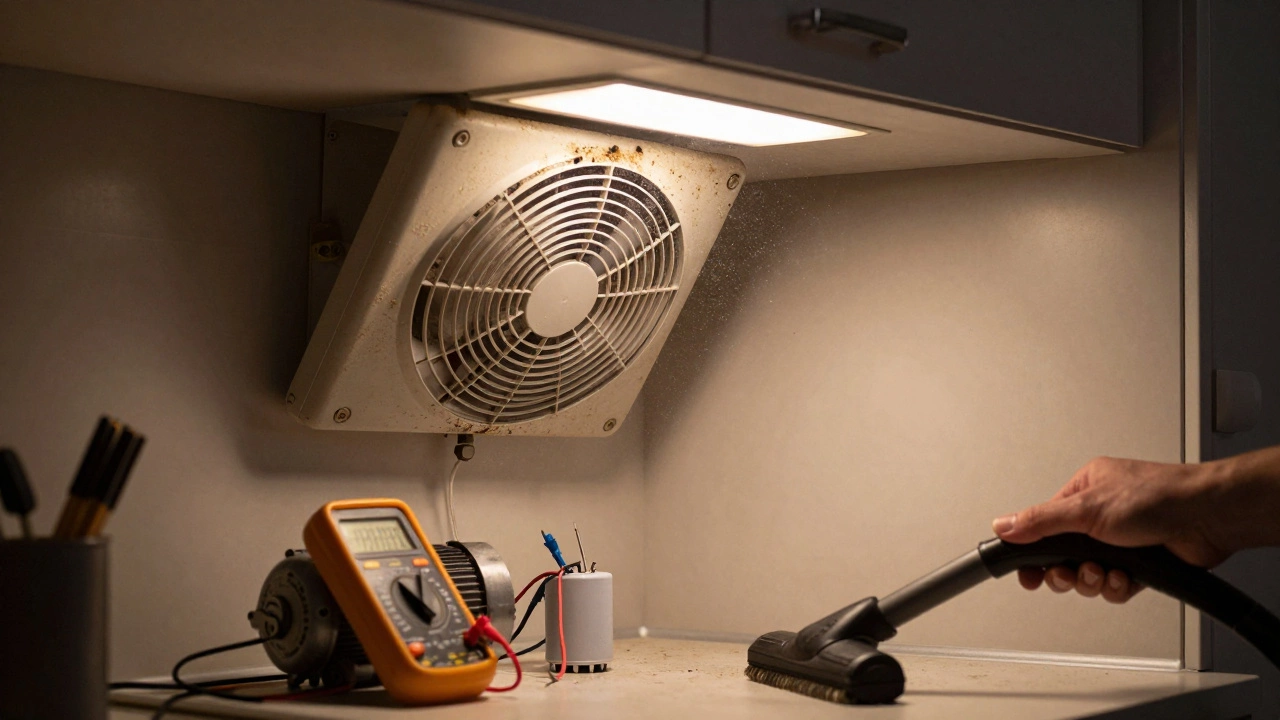
Many extractor fans, especially the newer ones, use a small capacitor to help the motor start. It’s a tiny cylindrical component, usually white or silver, tucked next to the motor. When it fails, the fan won’t spin - but you might hear a faint click when you turn it on. That click? That’s the relay trying to engage, but the motor can’t get enough kick to turn.You can test this with a multimeter if you’ve got one. Set it to capacitance mode and touch the probes to the capacitor’s terminals. If the reading is way below the value printed on the side (like 2.5µF or 4µF), it’s dead. Even if it reads okay, capacitors can fail under load. They’re cheap - under £5 - and easy to replace. Just take a photo of the wiring before you disconnect anything. Reconnect the new one exactly how the old one was wired.
Check for blocked airflow - dust is the silent killer
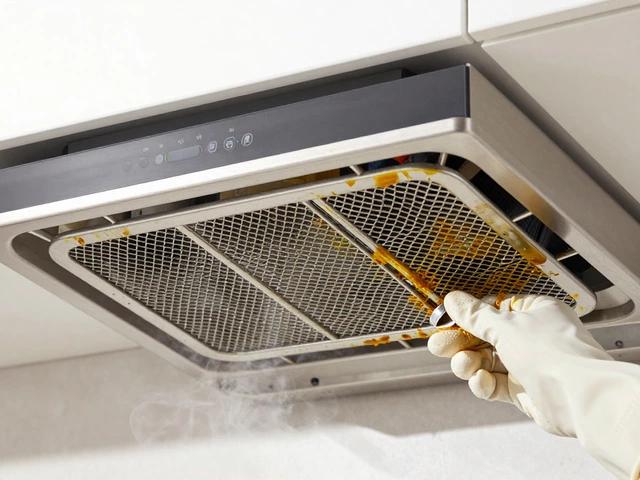
A fan doesn’t need to be broken to stop working. Sometimes it’s just suffocating. Over time, grease, dust, and hair build up inside the housing and on the blades. In kitchens, this is especially bad. You might not see it, but the fan’s trying to push air through a clogged tunnel. That puts extra strain on the motor. Eventually, it overheats and shuts down as a safety feature.Turn off the power. Remove the front grille - most snap off with a gentle twist or pry. Use a vacuum with a brush attachment to clean the blades and the inside of the housing. For greasy buildup, wipe it down with warm soapy water and a cloth. Don’t soak the motor. Let everything dry completely before reassembling. This fixes nearly 30% of ‘dead’ fans in homes over five years old.
Spin the blades by hand - is the motor seized?
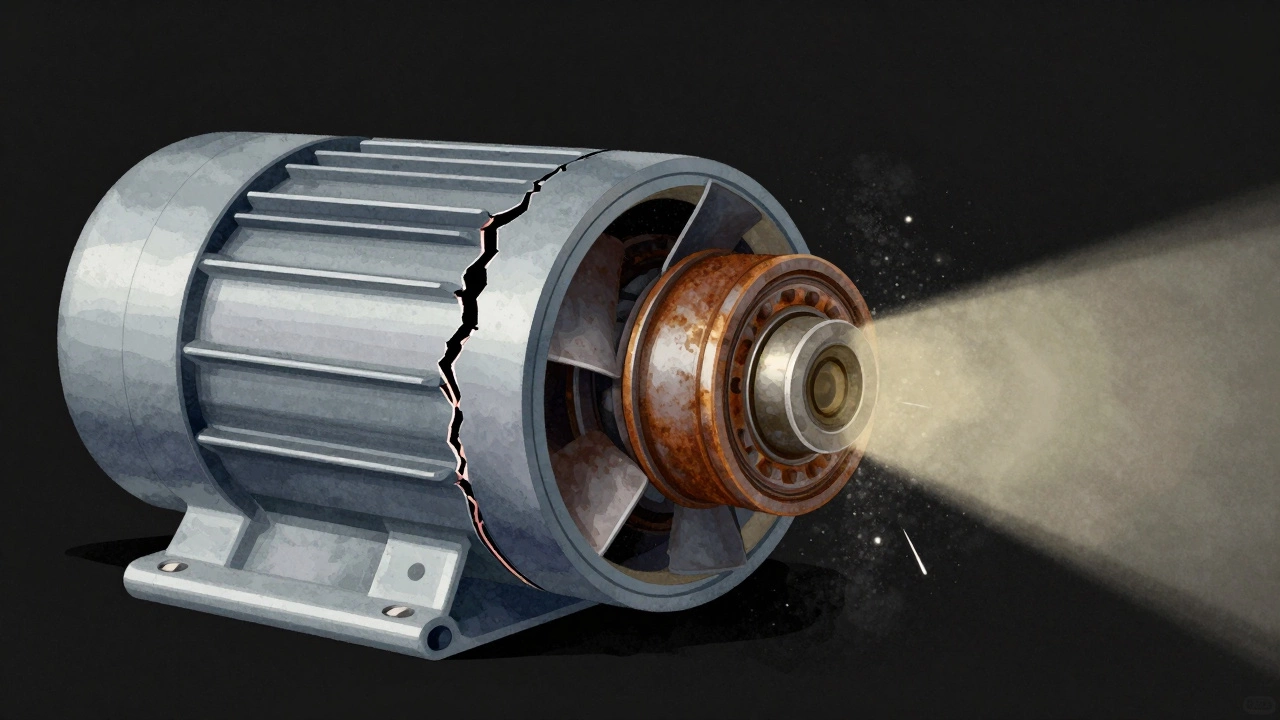
After you’ve cleaned the fan, try turning the blades with your fingers. If they won’t budge, the motor bearings are seized. This happens when moisture gets in - common in bathrooms without proper ventilation. The metal parts rust, the lubricant dries out, and the shaft locks up.If the blades spin freely, move on. If they don’t, you’ve got two choices: replace the whole fan unit, or try to lubricate it. For lubrication, you’ll need to open the motor casing. That’s not easy on most modern fans - they’re glued or clipped shut. If you’re handy, use a drop of lightweight oil (like 3-in-1) on the shaft ends. Don’t overdo it. Then try spinning it again. If it turns, reassemble and test. If it still won’t move, replacement is your only option.
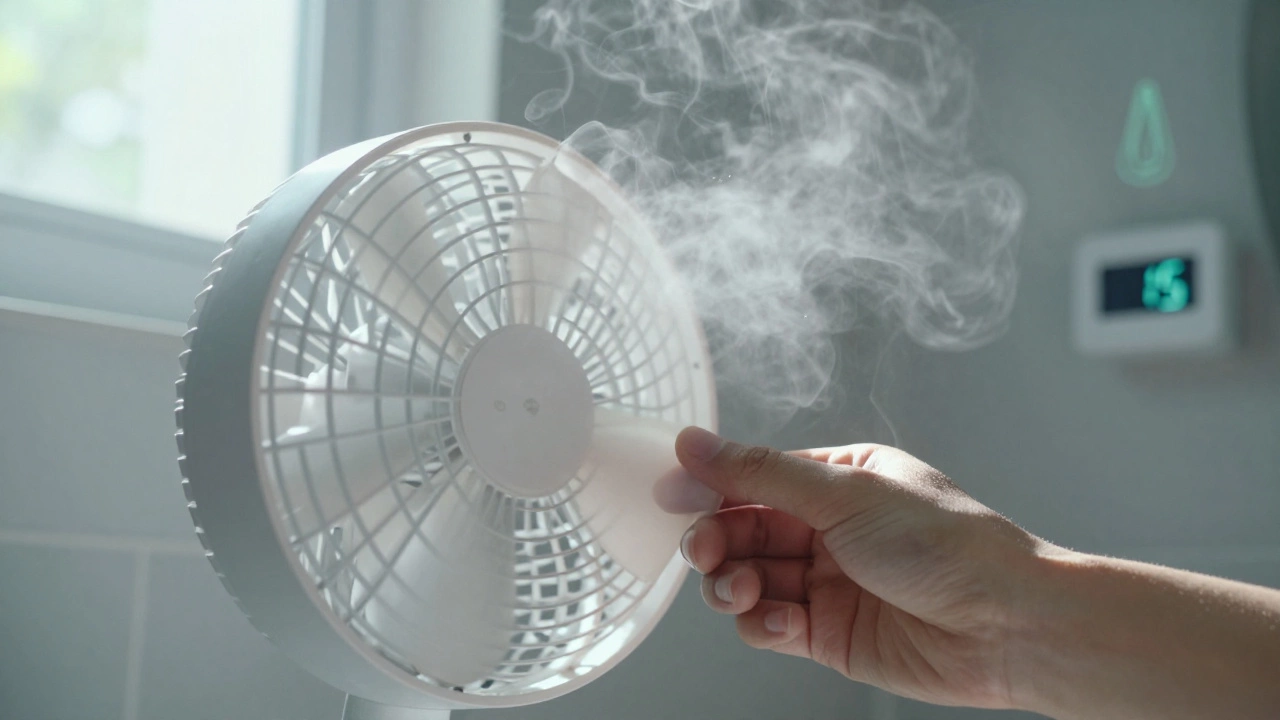
Motor failure - when it’s time to replace
If you’ve checked the power, tested the capacitor, cleaned the dust, and the blades won’t spin - the motor is dead. These motors aren’t repairable. They’re sealed units. Even if you could open them, the windings are burned out. You can’t rewind them like a power tool motor.Modern extractor fans are cheap and efficient. You can buy a decent 100mm wall-mounted fan for under £40. Look for ones with a timer function - they keep running for 10-15 minutes after you turn off the light. That’s a big help in bathrooms. Brands like Vent-Axia, Manrose, and Xpelair are reliable and widely available in the UK.
When replacing, match the size (usually 100mm or 125mm), the airflow rating (measured in litres per second - aim for at least 15 L/s for bathrooms, 20+ for kitchens), and the mounting type. Old fans often have a round hole. New ones come with a square flange. You might need to cut the plasterboard slightly to fit it. Don’t force it.
Prevent it from happening again
Once you’ve fixed or replaced the fan, make sure it lasts. Here’s how:- Run the fan for at least 15 minutes after showering or cooking - even if the steam is gone.
- Clean the grille every three months. Dust builds up faster than you think.
- Check the external vent outside. If it’s blocked by leaves, bird nests, or ice in winter, the fan can’t breathe. Clear it out once a year.
- If you’re replacing the fan, go for one with a humidity sensor. It turns on automatically when moisture rises. No more forgetting to switch it on.
Most extractor fans last 8-12 years. If yours died before five, it was probably poorly installed, overworked, or never cleaned. Don’t assume it’s normal for them to fail early. Fix it right, and it’ll outlive your kitchen cabinets.
Why does my extractor fan make a humming noise but not spin?
A humming noise means the motor is getting power but can’t start. The most common cause is a failed capacitor - it’s not giving the motor the initial boost it needs. Replace the capacitor first. If that doesn’t fix it, the motor bearings may be seized or the windings burned out.
Can I replace an extractor fan myself?
Yes, if you’re comfortable turning off the power and handling basic wiring. Most modern extractor fans plug into a junction box or have simple terminal blocks. You don’t need to rewire your house. Just match the size, airflow, and voltage. If you’re unsure about the wiring, or if the fan is hardwired into a fused spur, get a qualified electrician. Safety comes first.
How do I know if my fan needs a new motor or a full replacement?
If the fan is over 8 years old, or if the housing is cracked, warped, or rusted, replace the whole unit. Motors aren’t sold separately for most extractor fans - they’re built into the assembly. Even if you could replace just the motor, the cost is nearly the same as a new fan. Plus, newer models are quieter, more efficient, and come with better warranties.
Is it safe to use a fan that stopped working suddenly?
No. A fan that stops suddenly could be a sign of an electrical fault - overheating, short circuit, or failing insulation. Continuing to use it or repeatedly resetting the breaker can lead to fire risk. Turn off the power at the fuse box and diagnose the issue before using it again.
What’s the difference between a bathroom and kitchen extractor fan?
Kitchen fans need higher airflow (20-30 L/s) to handle grease and smoke, while bathroom fans work fine at 15-20 L/s. Kitchen fans also need grease filters - bathroom ones don’t. Some kitchen fans are rated for higher temperatures. Never use a bathroom fan in a kitchen - it’ll clog fast and overheat. Always check the manufacturer’s rating before installing.