Washing Machine Replacement Calculator
Washing Machine Health Assessment
This calculator helps you determine whether it's worth repairing your washing machine or if you should replace it based on age, repair costs, and energy savings. Follow the steps to get your personalized recommendation.
Recommendation
Important Note: This calculator is based on UK washing machine data and typical repair costs. It assumes an average electricity cost of £0.28 per kWh and water cost of £1.50 per cubic meter. Newer A+++ models typically use 35-45 liters per cycle.
Most people assume their washing machine will last forever-until it stops mid-cycle, leaks all over the floor, or starts making a noise like a jet engine. If you’ve ever stared at a broken washer and wondered, How many years is a washing machine good for?-you’re not alone. The truth is, there’s no single answer. But there are clear patterns, signs, and hard facts that tell you when your machine is nearing the end-and when it’s still worth fixing.
What’s the Average Lifespan of a Washing Machine?
A typical washing machine in a UK household lasts between 8 and 12 years. That’s the range most manufacturers and repair technicians agree on. But this isn’t a guarantee. Some machines die at 5 years. Others keep going past 15. What makes the difference? Usage, maintenance, build quality, and water hardness.
According to data from the UK’s Appliance Repair Association, machines bought between 2015 and 2020 lasted an average of 9.3 years. Machines from premium brands like Miele, Bosch, or Siemens often hit 12-14 years with proper care. Budget models under £300? Many don’t make it past 7.
Why does this matter? Because replacing a washing machine isn’t cheap. A new one costs £400-£1,200. If yours is 9 years old and the drum bearing is gone, you might be better off replacing it. But if it’s 5 years old and the pump just needs clearing? Fixing it makes sense.
Signs Your Washing Machine Is Wearing Out
Don’t wait for it to explode. Watch for these warning signs:
- Excessive vibration or loud banging during spin cycle-this usually means the drum bearings are worn. You’ll hear a grinding or rumbling sound, especially at high speeds.
- Water leaks from the bottom or around the door seal. A small drip might seem harmless, but it often means the tub seal or hose is failing. Water damage to your floor or cabinet can cost more than the machine.
- Clothes still dirty after a full cycle. This isn’t always about detergent. It can mean the drum isn’t spinning properly, or the water inlet valve is clogged.
- Unusual smells-mildew or burning plastic. Mildew means water isn’t draining properly. Burning plastic? That’s often an overheating motor or wiring issue.
- Error codes you can’t clear. Modern machines show codes like E10, E20, or F01. If the same code keeps coming back after resetting, it’s not a glitch-it’s a failing part.
These aren’t just annoyances. They’re symptoms of internal wear. Most of these issues stem from one thing: time. Bearings wear down. Rubber seals dry out. Motors lose torque. Electronics get corroded by moisture.
What Shortens a Washing Machine’s Life?
Even the best machines don’t last long if you treat them poorly. Here’s what kills them faster:
- Overloading-stuffing 10kg of clothes into a 7kg machine strains the motor, drum, and suspension. It’s the #1 cause of premature breakdowns.
- Using too much detergent-suds build up, clog pipes, and leave residue that corrodes seals and hoses. You don’t need a whole capful. Half is enough for most loads.
- Hard water-if you live in Bristol or anywhere with hard water, limescale builds up inside the drum and pipes. It reduces efficiency and wears out heating elements faster. Use a descaling agent every 3 months.
- Skipping maintenance-cleaning the filter, checking hoses, and running a hot empty cycle with vinegar or a dedicated cleaner takes 10 minutes. Do it once a month, and you’ll double your machine’s life.
- Placing it on uneven ground-if the machine wobbles, the shock absorbers and suspension rods wear out quickly. Level it with a spirit level. It’s free and saves thousands.
One technician in Bristol told me he sees the same three machines every year: the one under the sink that’s always overloaded, the one with the clogged filter nobody checks, and the one that’s been sitting in a damp garage since 2012. None made it past 6 years.
When Is Repair Worth It?
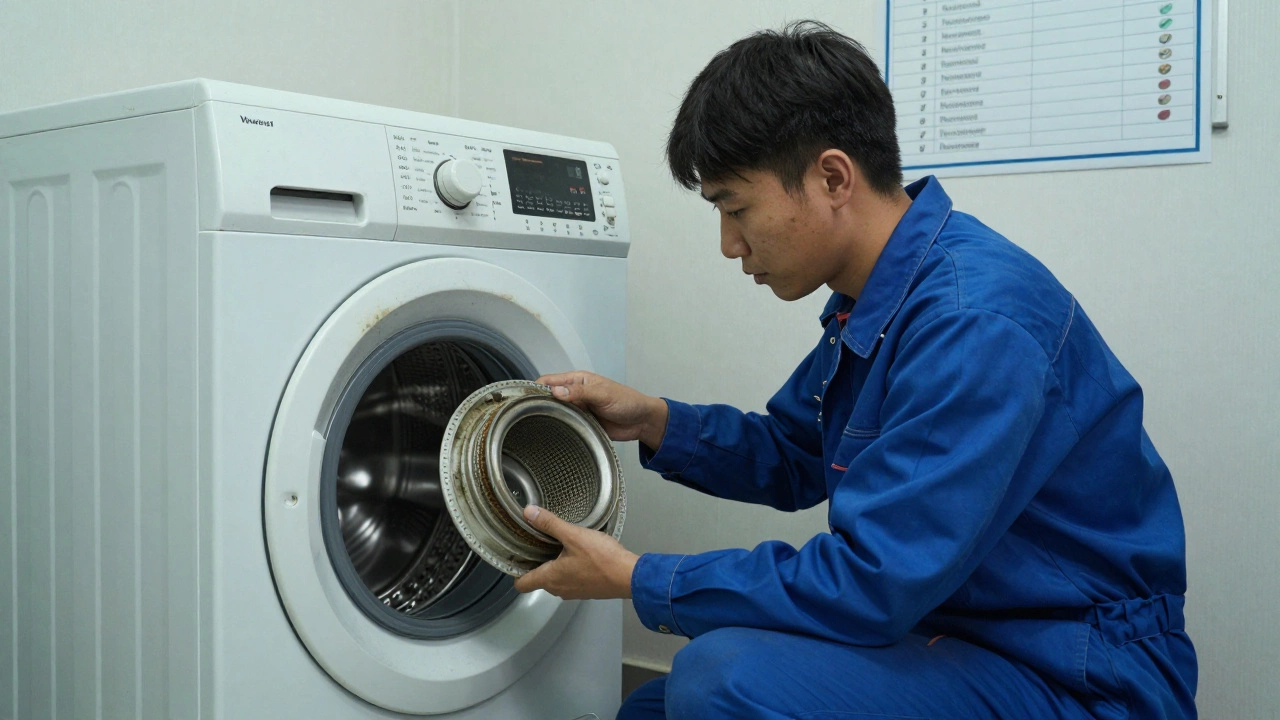
Here’s a simple rule: if the repair cost is less than half the price of a new machine, and your washer is under 8 years old, fix it.
Common repairs and their typical costs:
| Problem | Repair Cost | Parts Life Expectancy |
|---|---|---|
| Drum bearing replacement | £120-£200 | 5-8 years after repair |
| Pump replacement | £80-£150 | 7-10 years after repair |
| Door seal replacement | £50-£90 | 3-5 years after repair |
| Control board failure | £150-£300 | Varies-often signals end of life |
| Heating element failure | £90-£140 | 5-7 years after repair |
Control board failures are the red flag. They’re expensive and often mean other components are failing too. If your machine is over 8 years old and the control board dies? Walk away. Replacing it is like putting a new engine in a 15-year-old car-it might work, but the rest is crumbling.
How to Make Your Washing Machine Last Longer
You don’t need to be a technician to extend your machine’s life. Just follow these four habits:
- Run a hot empty cycle once a month with white vinegar or a washing machine cleaner. This clears limescale, soap residue, and bacteria.
- Empty the filter every 2 months. It’s usually behind a small door at the front bottom. You’ll find coins, socks, lint-sometimes even a child’s toy. Clogged filters cause leaks and pump failure.
- Don’t leave wet clothes in the drum. Damp fabric breeds mould and stresses the door seal. Take them out within 30 minutes of the cycle ending.
- Check the hoses every 6 months. Look for cracks, bulges, or mineral deposits. Replace them every 5 years, even if they look fine. Most leaks happen because of old hoses, not the machine itself.
One homeowner in Clifton replaced her hoses after 6 years-just because she read it online. Two months later, her neighbour’s machine flooded the whole flat because the hoses burst. She didn’t have to pay for a new floor.
When to Just Buy a New One
It’s not failure that tells you to replace your machine-it’s cost, convenience, and efficiency.
Replace your washer if:
- It’s older than 10 years and needs a major repair (bearing, pump, control board)
- It uses more than 50 litres of water per cycle (new models use 35-45)
- It’s not Energy Star rated (A+++ now standard)
- You’re spending more than £100 a year on repairs
- You’re tired of waiting for it to finish-modern machines are 30% faster
Today’s washing machines are smarter, quieter, and use less water and electricity. A new A+++ model can save you £40-£60 a year on bills. That adds up. If your machine is 10+ years old, the energy savings alone can pay for a new one in 3-5 years.
Also, consider reliability. Newer machines come with 2-5 year warranties. Repairs on older machines? No guarantee. You pay, it works for a few months, then breaks again. That’s not a fix-it’s a gamble.
Final Thought: It’s Not Just About Years
How many years is a washing machine good for? It’s not just about time. It’s about how you treat it. A well-maintained machine can outlive its warranty by years. A neglected one dies before its time.
If yours is 7 years old and running fine? Keep cleaning the filter. If it’s 11 and constantly breaking? Don’t chase one more repair. Buy new. The money you save on bills, water damage, and frustration will pay for it many times over.
Your washing machine isn’t magic. It’s a machine. Treat it like one, and it’ll treat you right.
How long should a washing machine last on average?
On average, a washing machine lasts between 8 and 12 years. Premium brands like Bosch or Miele often last longer, while budget models may only last 5-7 years. Usage, maintenance, and water hardness greatly affect lifespan.
Is it worth repairing a 10-year-old washing machine?
Generally, no. If your machine is 10 years or older and needs a major repair-like a new drum bearing, control board, or pump-it’s usually more cost-effective to replace it. Repair costs can reach half the price of a new machine, and older models are less energy-efficient. Plus, newer machines come with warranties and better performance.
What are the most common washing machine problems?
The most common issues are leaking water, loud noises during spin (often worn drum bearings), failure to drain, error codes that won’t clear, and clothes coming out still dirty. These are usually caused by worn seals, clogged filters, limescale buildup, or failing motors.
How often should I clean my washing machine filter?
Clean the filter every two months. It’s located at the front bottom of the machine and collects lint, coins, and debris. A clogged filter can cause leaks, poor drainage, and pump failure. Always unplug the machine before cleaning it.
Does hard water shorten a washing machine’s life?
Yes. Hard water causes limescale buildup inside the drum, pipes, and heating element. This reduces efficiency, increases energy use, and can cause the heating element to burn out faster. Use a descaling product every 3 months if you live in a hard water area like Bristol.
Can overloading a washing machine break it?
Absolutely. Overloading strains the motor, drum bearings, and suspension system. It’s one of the top reasons washing machines fail early. Always follow the manufacturer’s load limit-usually printed inside the door or in the manual. When in doubt, load less.