Gas Oven Igniter Symptom Checker
Check for Igniter Issues
Select the symptoms you're experiencing to determine if your igniter might be failing. This tool identifies common igniter problems based on the symptoms described in the article.
Select symptoms and click "Check Symptoms" to see your diagnosis.
If your gas oven won’t light, it’s tempting to blame the gas supply or the control panel. But more often than not, the real culprit is a worn-out igniter. These little devices don’t last forever, and when they fail, they don’t always go out with a bang-they just stop doing their job quietly. Knowing the signs of a bad igniter can save you time, money, and a lot of frustration.
It Takes Too Long to Ignite
A healthy gas oven igniter should light the gas within 30 to 45 seconds after you turn the oven on. If you hear the gas hissing but the flame doesn’t appear for a full minute or longer, that’s a red flag. The igniter is getting weak. It’s still heating up, but not enough to open the gas valve. You’ll smell gas, maybe even see a faint glow, but no flame. That’s not normal. That’s a sign the igniter is losing its ability to draw enough current.
You Smell Gas But No Flame Appears
This is one of the most dangerous symptoms. If you smell gas but the oven doesn’t light, the gas valve is opening-but the igniter isn’t getting hot enough to ignite it. This means gas is leaking into your kitchen. A working igniter should light the gas the moment it flows. If it doesn’t, you have a buildup of unburned gas. That’s a fire hazard. Turn off the oven and the gas supply. Don’t try to light it manually. Call a technician.
The Igniter Glows But Doesn’t Ignite the Gas
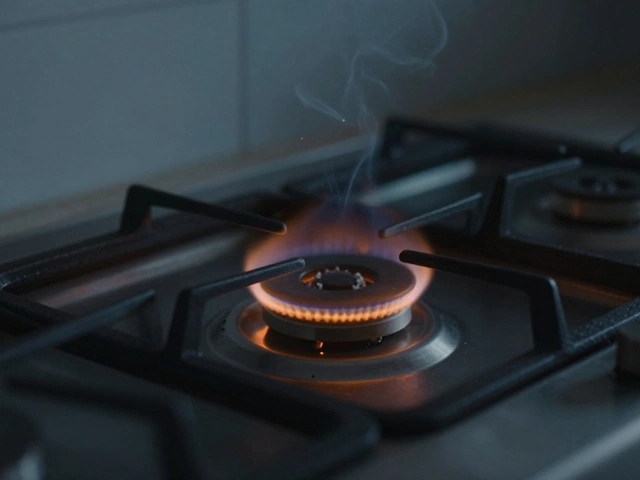
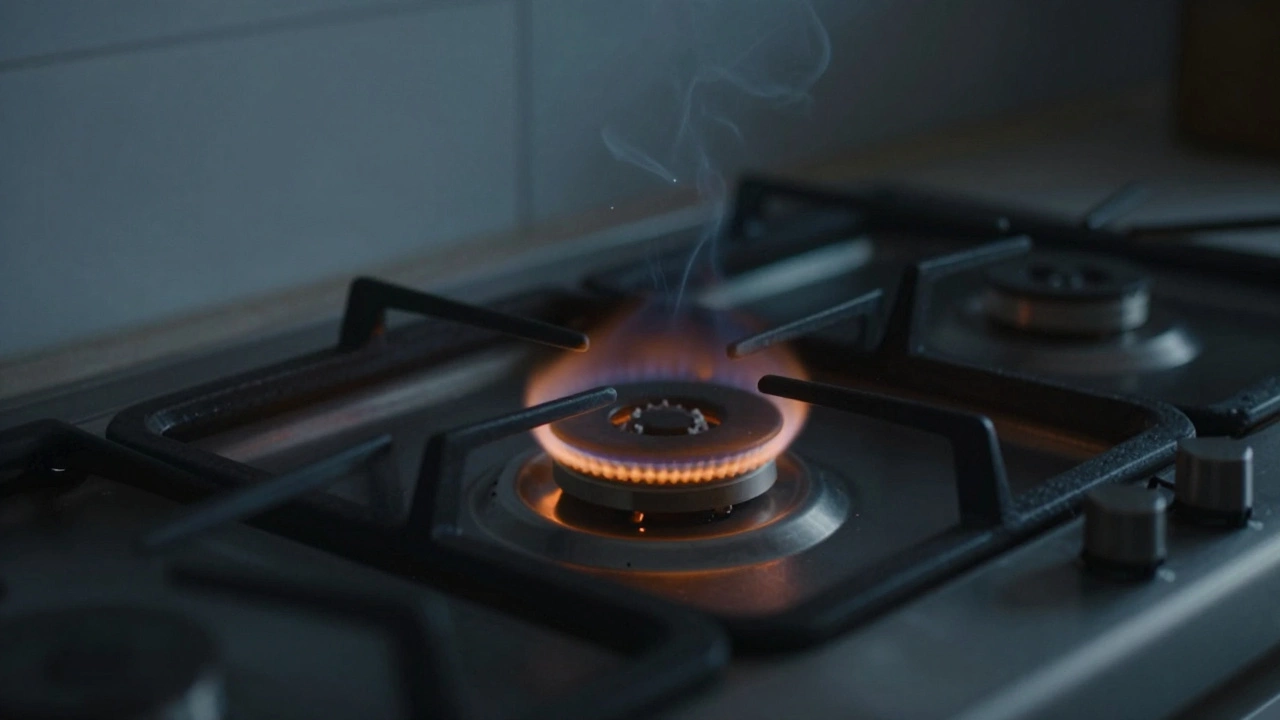
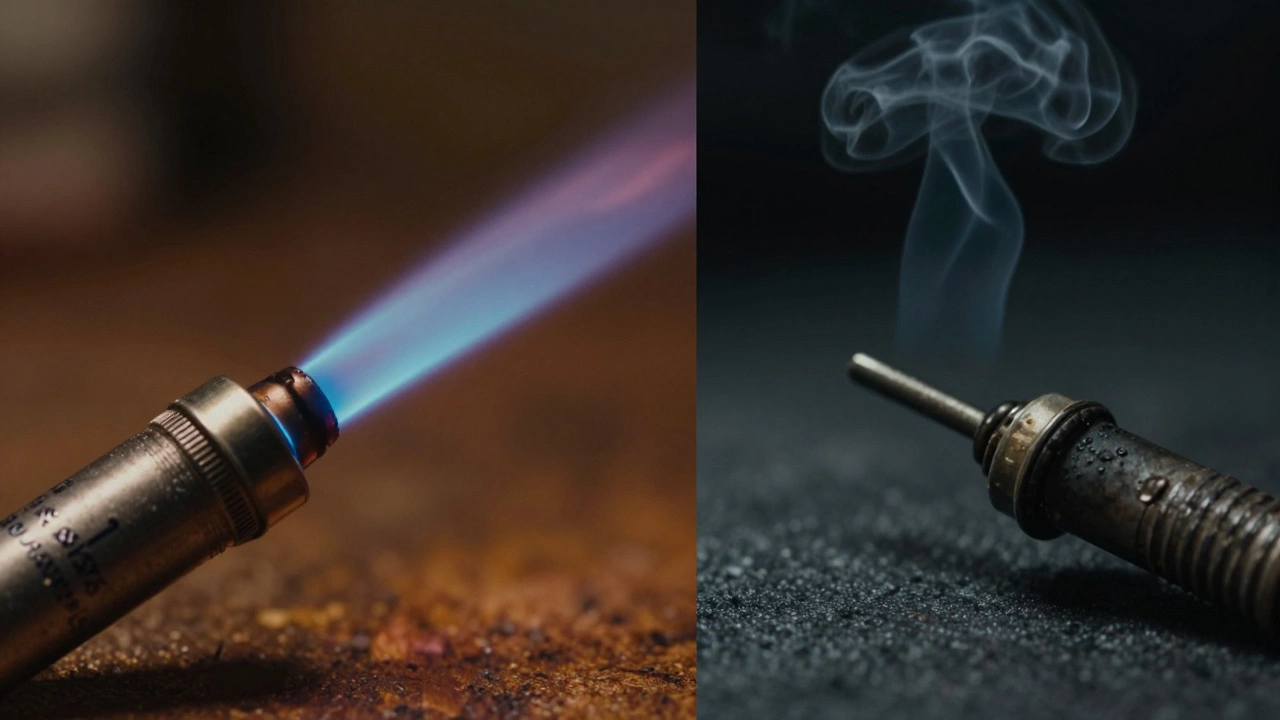
Here’s a common scenario: you turn the oven on, and you see a bright orange glow inside the burner area. You wait. You wait longer. Still no flame. The igniter is glowing, but it’s not hot enough. A good igniter reaches about 1,800°F to open the gas valve. A failing one might only hit 1,200°F. That’s not enough. You’ll see the glow, hear the gas, and wonder why it’s not working. The answer? The igniter is worn out.
Intermittent Ignition
Some igniters don’t die all at once. They get worse over time. One day, the oven lights on the first try. The next day, it takes three or four attempts. Sometimes it works. Sometimes it doesn’t. That inconsistency is classic. It means the igniter is barely hanging on. It might work when the oven is warm. It might fail when it’s cold. That’s not reliability-it’s a countdown to failure.
High Energy Bills Without Better Heating
If your gas bill keeps climbing but your oven still takes forever to preheat, the igniter could be to blame. A weak igniter causes the gas valve to stay open longer while it waits for the burner to light. That means more gas is being wasted. You’re paying for gas that never gets burned. It’s not your thermostat. It’s not the oven’s insulation. It’s the igniter letting gas escape without igniting it.
Clicking Sounds Without Glow
Some older ovens have spark igniters that click like a lighter. If you hear clicking but see no glow at all, that’s a different problem-probably the spark module or wiring. But modern gas ovens use glow bar igniters, which don’t click. If you have one of those and you hear no sound and see no glow, the igniter might be completely dead. No glow means no heat. No heat means no gas flow. It’s a broken circuit.
Uneven Baking or Burner Flames
Even if your oven lights, a weak igniter can still cause problems. You might notice one burner lights fine, but the other doesn’t. Or the flame is weak and yellow instead of crisp blue. A healthy igniter ensures consistent gas flow. A failing one causes uneven ignition. That leads to uneven baking. Your cookies burn on one side. Your roast is raw in the middle. That’s not your recipe-it’s your igniter.
How Long Do Gas Oven Igniters Last?
Most glow bar igniters last between 5 and 10 years. That depends on how often you use the oven. If you bake daily, you’re looking at 5 to 7 years. If you only use it for holidays, it might last longer. But age isn’t the only factor. Moisture, grease buildup, and power surges can shorten its life. If your oven is older than 7 years and you’re seeing any of these symptoms, don’t wait. Replace the igniter before it leaves you without heat.
What Happens If You Ignore It?
Ignoring a bad igniter doesn’t just mean you can’t bake cookies. It can lead to bigger problems. Gas buildup can trigger safety shutoffs, locking your oven entirely. Repeated attempts to light it can wear out the gas valve. In rare cases, it can cause a small explosion if gas accumulates and finally ignites. That’s why you don’t want to delay. Replacing an igniter costs between $50 and $150. Repairing a damaged gas valve? That’s $300 to $600.
How to Test It Yourself
You don’t need a multimeter to spot a bad igniter. Here’s a simple check:
- Turn the oven on and watch the bottom of the burner area.
- Wait 60 seconds. If there’s no glow, the igniter is dead.
- If you see a glow but no flame after 90 seconds, the igniter is too weak.
- Smell gas? Turn off the oven and gas supply immediately.
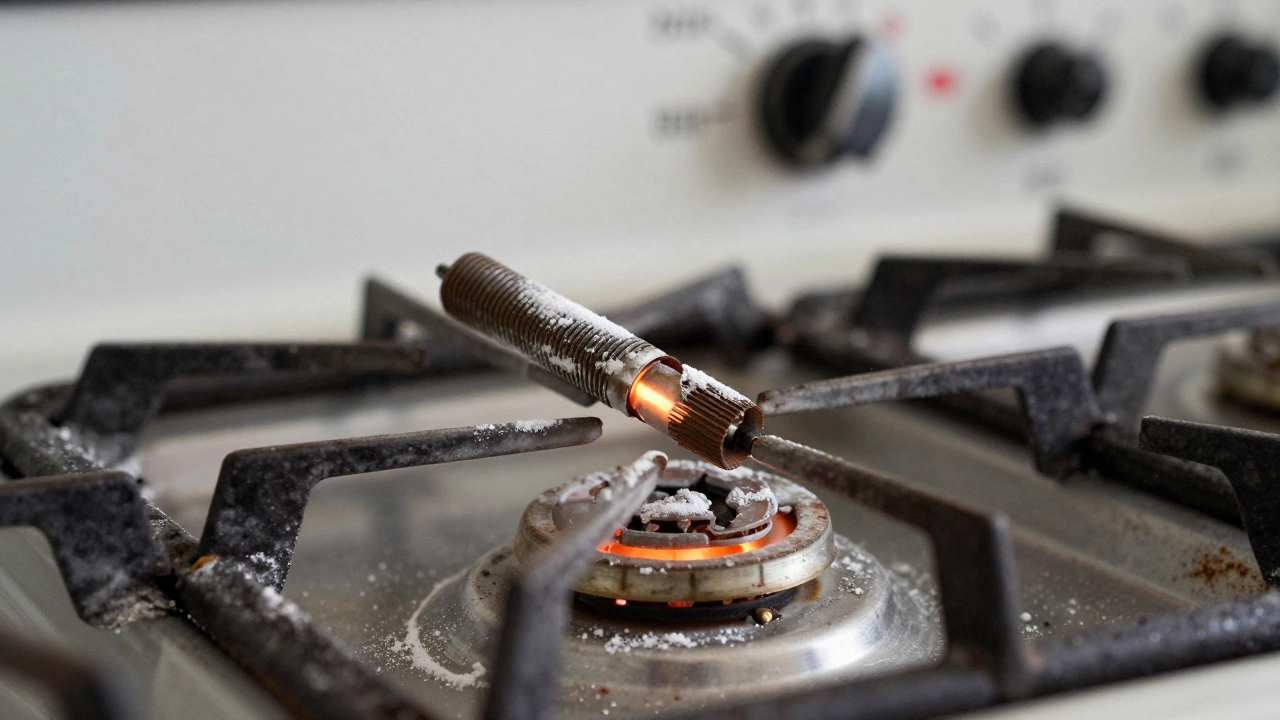
For a more precise test, you can remove the igniter and check for cracks or broken pieces. A good igniter is solid and unbroken. A bad one looks brittle, cracked, or has a white powdery coating-signs of overheating.
Replacement Is Simple
Replacing a gas oven igniter is one of the easiest repairs you can do. You don’t need to replace the whole oven. Just unplug the unit, shut off the gas, remove the bottom panel, unplug the old igniter, and swap in the new one. Most replacements take under 30 minutes. Make sure you get the right model. Igniters aren’t universal. Check your oven’s model number and match the part number. A mismatch won’t work.
Prevention Tips
- Clean your oven regularly. Grease buildup can insulate the igniter and cause overheating.
- Don’t use the self-clean cycle too often. High heat wears out igniters faster.
- Keep the area around the igniter dry. Moisture from steam or spills can corrode the wiring.
- Replace the igniter proactively if your oven is over 7 years old and you notice slow lighting.
Can a bad igniter cause a gas leak?
Yes. If the igniter fails to ignite the gas, the gas valve may stay open, releasing gas into your kitchen. This is dangerous. If you smell gas and the oven doesn’t light, turn off the gas supply and ventilate the room. Don’t attempt to light it manually. Call a professional.
Why does my oven glow but not light?
The igniter is glowing but not hot enough to open the gas valve. A working igniter must reach 1,800°F. A weak one only heats to 1,200°F or less. This is a classic sign of wear. Replace the igniter-it’s not worth risking gas buildup.
How much does it cost to replace a gas oven igniter?
The igniter itself costs between $25 and $60. Labor, if you hire someone, adds $75 to $150. But if you’re comfortable with basic tools, you can replace it yourself in under 30 minutes. Many parts come with clear instructions and plug-in connectors.
Is it safe to use the oven if the igniter is failing?
Not for long. A failing igniter increases the risk of gas buildup. Even if it lights sometimes, the inconsistency means gas may leak before ignition. It’s not worth the risk. Replace it as soon as you notice symptoms like long ignition times or gas smells.
Do all gas ovens have the same type of igniter?
No. Most modern gas ovens use a glow bar igniter, but older models may use spark igniters. The shape, size, and electrical connection vary by brand and model. Always match the part number from your oven’s manual or model tag. Using the wrong one won’t work and could damage the gas valve.