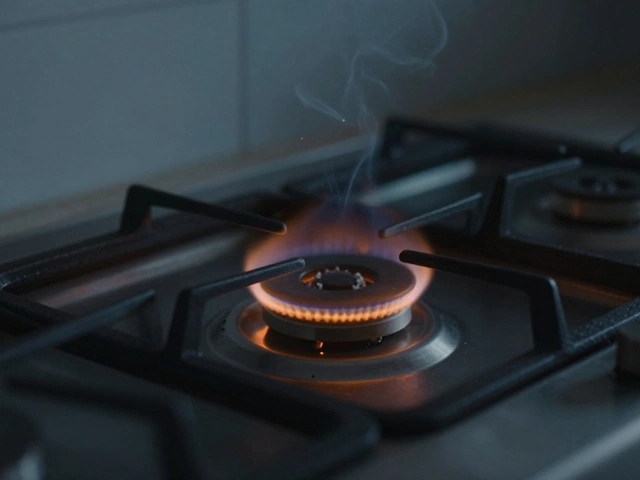
Gas Oven Repair Decision Tool
How to use: Select the symptom your oven is exhibiting to see the recommended action and safety level.
Diagnosis
Select a symptom to see the analysis.
Quick Takeaways
- Most gas oven issues are caused by worn-out igniters or faulty thermostats.
- Simple fixes like cleaning burners are DIY-friendly.
- Anything involving gas line leaks or internal valve replacements requires a certified professional.
- Repairing is usually cheaper than replacing unless the chassis is severely rusted or the control board is obsolete.
The Common Culprits Behind Oven Failures
When an oven stops working, it usually isn't a total system collapse. Most of the time, a single component has given up the ghost. Gas Oven Repair is the process of diagnosing and replacing specific mechanical or electrical components within a gas-powered cooking appliance to restore its heating functionality. One of the most frequent failures is the Igniter. This is the part that glows hot to light the gas. If you hear a clicking sound but no flame appears, or if the oven takes forever to warm up, the igniter is likely cracked or burnt out. These parts are designed to wear out over time, much like a lightbulb. Then there is the Thermostat. If your cake is burnt on the bottom but raw in the middle, or if the oven is wildly inconsistent with temperatures, the thermostat is likely miscalibrated or broken. It's the brain that tells the gas valve when to open and close.DIY Fixes vs. Professional Intervention
You might be wondering if you can handle the repair yourself. The answer depends entirely on where the problem lies. If the issue is simply a clogged burner, you can fix that with a toothbrush and some vacuuming. Dust and food debris often block the small ports where gas flows, causing an uneven flame or a "clicking" or "popping" sound. However, the moment you smell gas-that distinct rotten-egg scent-you stop everything. That's a leak in the Gas Line. Attempting to fix a gas leak without the proper pressure-testing equipment is incredibly dangerous. You need a technician who understands the specific PSI (pounds per square inch) requirements of your appliance to ensure the seal is airtight.| Issue | Difficulty | Who Should Fix It? | Typical Part Needed |
|---|---|---|---|
| Clogged Burner Ports | Low | Homeowner | None (Cleaning tools) |
| Failed Igniter | Medium | Handy Homeowner / Pro | Glow Plug / Igniter Element |
| Temperature Inaccuracy | Medium | Professional | Thermostat Probe |
| Gas Smell / Leak | High | Certified Gas Engineer | Sealant / New Coupling |
| Control Board Error | High | Professional | PCB / Control Module |
When Is It Actually Time to Buy a New Oven?
Repairing is usually the smart financial move, but there is a tipping point. If your oven is over 15 years old and the Control Board (the electronic brain) dies, you might find that the part is no longer manufactured. Spending 300 pounds on a part that doesn't fit perfectly or requires a custom workaround is a waste of money. Another red flag is structural decay. If the inner lining of the oven is rusted through or the door seal is so warped that heat escapes constantly, you're fighting a losing battle. A new oven will be significantly more energy-efficient, which saves you money on your monthly bills in the long run.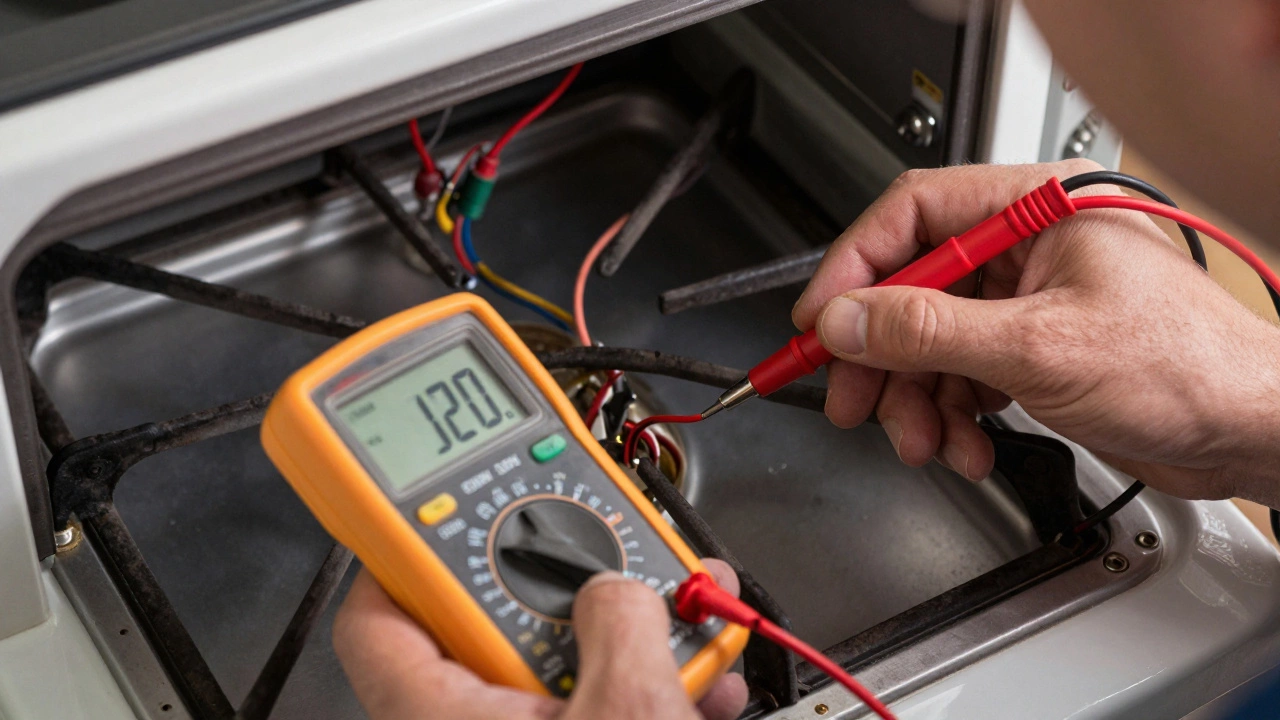
How the Repair Process Works
If you call a pro, they won't just start swapping parts. A proper repair follows a specific sequence to avoid wasting your money on unnecessary components.- Visual Inspection: They'll look for obvious signs of wear, such as charred wires or a cracked igniter element.
- Multimeter Testing: A technician uses a Multimeter to check for electrical continuity. This tells them if electricity is actually reaching the igniter. If the multimeter shows "open," the part is dead and needs replacement.
- Gas Flow Verification: They check if the Gas Valve is opening. If the igniter glows but no gas flows, the valve is likely stuck or faulty.
- Testing and Calibration: Once the part is replaced, they'll use an oven thermometer to ensure the internal temp matches the dial.
Avoiding Common Gas Oven Pitfalls
Many people try to "hack" their oven when it starts acting up. For instance, some people try to use a lighter to manually ignite a burner when the igniter fails. Please, don't do this. This can cause a buildup of gas in the oven cavity, leading to a small explosion when the flame finally catches. It's not worth the risk for a 20-minute shortcut. Another mistake is ignoring the oven vent. Most gas ovens have a vent to let out moisture and excess heat. If you block this with foil or oversized baking sheets, you can cause the oven to overheat, which puts unnecessary stress on the Thermal Fuse. Once that fuse blows, the oven shuts down completely as a safety measure.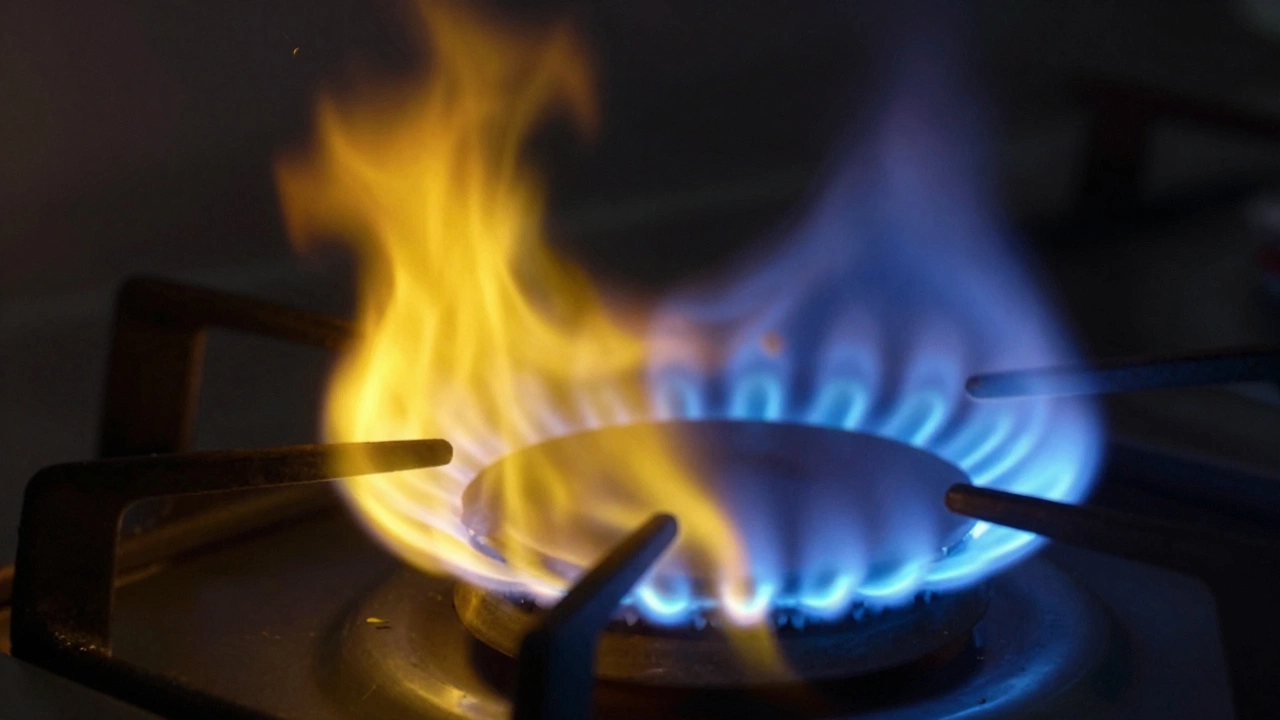
The Role of Gas Safety Regulations
In the UK, gas work isn't just about skill; it's about legality. Working on gas appliances without being Gas Safe Registered is not only dangerous but often illegal. These engineers are trained to spot "silent killers" like carbon monoxide leaks. Carbon monoxide is a byproduct of incomplete combustion. If your oven flame is yellow instead of a crisp blue, it's a sign that the gas isn't burning cleanly. This can happen if the air-to-gas ratio is off. A professional will adjust the air shutter to ensure a clean, blue flame, preventing toxic gas from seeping into your kitchen.Why does my gas oven click but not light?
This is usually a sign that the igniter is failing or the burner ports are clogged. The "clicking" is the spark attempting to ignite the gas, but if the gas isn't flowing or the spark isn't strong enough, the flame won't catch. Check for debris in the burners first; if that's clear, you likely need a new igniter.
Can I replace the oven igniter myself?
Yes, if you are comfortable with basic electrical work and can safely disconnect the power and gas supply. However, it involves handling fragile ceramic components and electrical wiring. If you aren't confident, it's safer to hire a professional to avoid damaging the gas valve.
How do I know if my gas oven is leaking?
The most obvious sign is a smell similar to rotten eggs. You might also notice a hissing sound near the gas connection. If you suspect a leak, turn off the main gas supply immediately, open all windows, and call a Gas Safe registered engineer.
Why is my oven flame yellow instead of blue?
A yellow flame indicates incomplete combustion, meaning the oven isn't getting enough oxygen. This can be caused by dust in the burner or an improperly adjusted air shutter. This is a safety concern as it can produce carbon monoxide, so it should be checked by a pro.
Is it cheaper to repair or replace a gas oven?
For most common parts like igniters or thermostats, repair is significantly cheaper. However, if the oven is very old (15+ years) and requires a new control board or has a rusted chassis, replacement is often more cost-effective due to energy savings and the availability of parts.