Boiler Repair vs. Replace Calculator
Current Costs
Analysis Results
Enter your figures to see the financial comparison.
Key Takeaways for Your Decision
- A 20-year-old boiler is well past the average 10-15 year lifespan.
- Repairing a critical part like the heat exchanger is rarely cost-effective.
- Newer condensing boilers can cut gas bills by 30% or more compared to old non-condensing models.
- Parts for ancient models are increasingly hard to find, leading to longer downtime.
- Replacement is usually the smarter financial move when repair costs exceed 25% of a new unit's price.
The Reality of Boiler Longevity
When we talk about boiler repair is the process of fixing a malfunctioning central heating boiler to restore heat and hot water, we have to look at the math of aging. Most heating engineers will tell you that a standard boiler lasts between 10 and 15 years. If yours is hitting the 20-year mark, you aren't just dealing with old age; you're dealing with a miracle of survival.
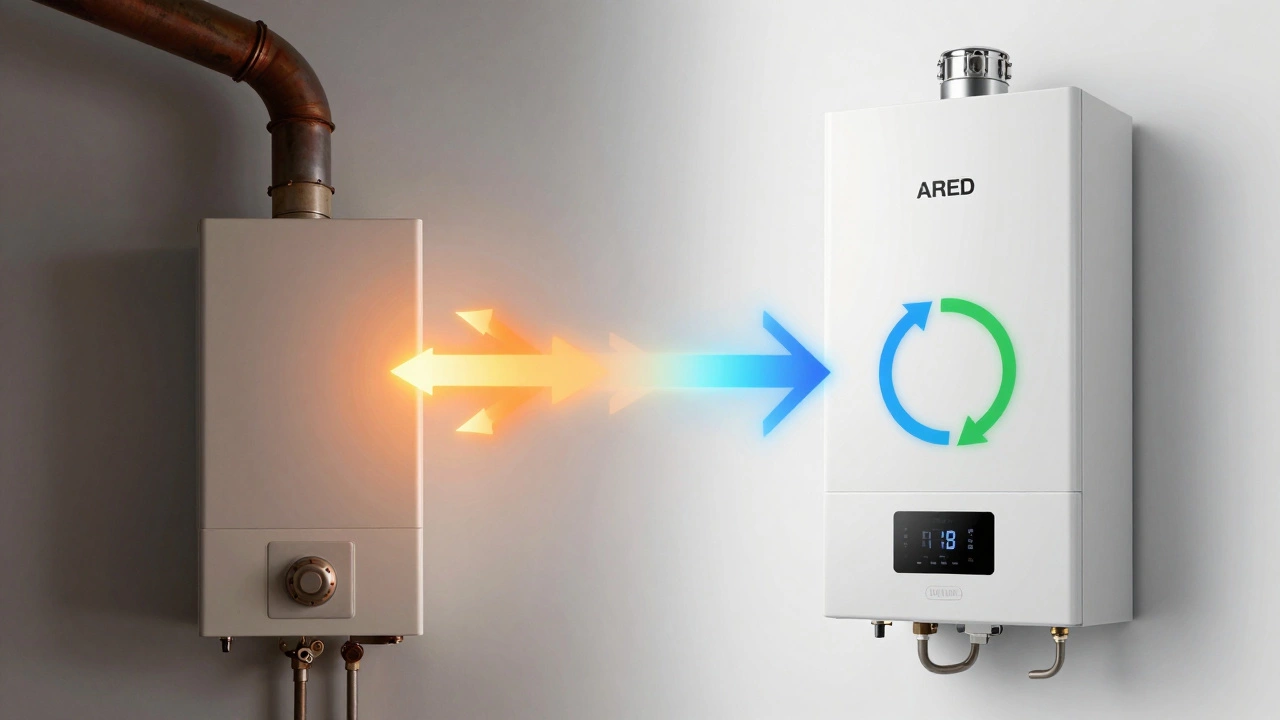
In the UK, boilers from 20 years ago were often non-condensing models. These systems are essentially thermal suitcases that leak a huge amount of heat up the flue. Modern units use a different process to capture that waste heat. By sticking with a 20-year-old unit, you are essentially paying a "inefficiency tax" every single month on your energy bill. It is not just about whether the machine works, but how much it costs you to keep it running.
When Repairing Actually Makes Sense
There are a few scenarios where a quick fix is a no-brainer. If the problem is a simple Thermocouple failure or a blown fuse, you're looking at a cheap part and an hour of labor. If the cost to get the heat back on is under £150 and the boiler has been reliable until now, a repair is a reasonable short-term patch.
This approach works if you are planning to move house soon or if you are in a financial pinch and cannot afford a full installation right now. However, you must understand that fixing a leak in a 20-year-old heat exchanger is like patching a tire on a car with a rusted-out chassis. You might fix the immediate leak, but the metal is fatigued. Another leak will likely appear six inches away within a few months.
The High Cost of Inefficiency
Let's get concrete about the money. An old G-rated boiler might only be 60% to 70% efficient. This means 30% of the gas you pay for is literally disappearing into the sky. A modern Condensing Boiler is a high-efficiency heating system that recovers heat from exhaust gases and typically operates at over 90% efficiency.
If your annual gas bill for heating is £1,200, switching to a modern system could potentially save you £300 to £400 a year. Over five years, that is £2,000 in savings alone, even before you consider the increased reliability and the peace of mind that comes with a manufacturer's warranty. When you add the cost of recurring repairs for an old unit, the "cheap" option of repairing starts to look incredibly expensive.
| Feature | 20-Year-Old Unit | Modern A-Rated Unit |
|---|---|---|
| Average Efficiency | 60% - 75% | 92% - 98% |
| Parts Availability | Scarce/Refurbished | Readily Available |
| Warranty | None | 5 - 12 Years |
| Monthly Operating Cost | High | Low |
| Environmental Impact | High CO2 Emissions | Significantly Lower |
Red Flags That Mean "Replace Now"
If your engineer mentions any of the following parts needing replacement, stop and think twice. Replacing a Heat Exchanger-the core component where the heat transfer happens-is almost never worth it on an old unit. It is the most expensive part and usually signifies that the boiler's internal structure is failing.
Similarly, if you have a PCB (Printed Circuit Board) failure, you are gambling. While a new board might fix the error code, the electronic components on the rest of the machine are still two decades old. You are essentially putting a new brain into a body that is falling apart. Also, keep an eye out for "intermittent" faults. If your boiler shuts down randomly once a week, you are spending more in diagnostic call-out fees than the actual repair costs.
The Environmental and Safety Angle
Beyond the money, there is the issue of safety. While a well-maintained old boiler is generally safe, the risk of Carbon Monoxide leaks increases as components corrode and seals degrade. Modern boilers have far more sophisticated safety shut-off valves and monitoring systems that simply didn't exist in the early 2000s.
Furthermore, the UK government and local councils are pushing heavily toward decarbonization. While moving to a Heat Pump might be a leap too far for some, moving from a 20-year-old gas guzzler to a high-efficiency boiler is a massive win for your carbon footprint. You are reducing the amount of methane and CO2 entering the atmosphere every single time you turn the dial.
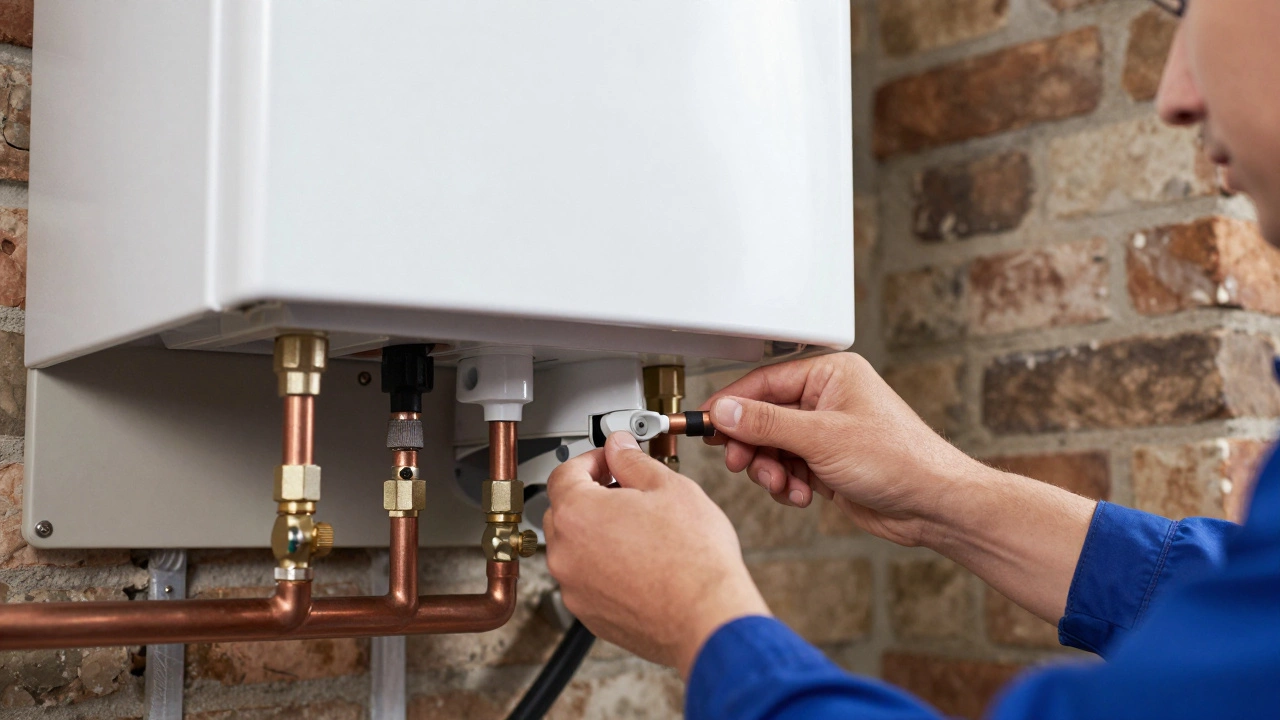
Decision Matrix: Repair or Replace?
Still not sure? Use this simple rule of thumb: the 25% rule. If the cost of the repair is more than 25% of the cost of a new, equivalent boiler, replace it. For example, if a new installation costs £2,500 and your repair quote is £700, you are crossing that line. You are paying nearly a third of the cost of a new machine for a part that doesn't improve the overall efficiency or lifespan of the unit.
Consider also the "Cascade Failure" effect. In an old system, the stress of one part failing often puts pressure on another. You replace the pump this month, and next month the diverter valve gives up because it's been working twice as hard to compensate for the old pump. It becomes a cycle of endless spending with no end date.
Will a new boiler actually save me money on gas bills?
Yes, significantly. Older non-condensing boilers lose a lot of heat through the flue. Modern condensing boilers capture this heat and reuse it to warm the water. Depending on the efficiency gap, users often see a 20% to 40% reduction in their heating bills.
Can I just replace the boiler and keep my old radiators?
In most cases, yes. As long as your pipework is in decent condition and not riddled with sludge, a new boiler can be plumbed into your existing radiator system. However, an engineer will likely recommend a system flush to remove debris and ensure the new boiler operates efficiently.
How long does it take to install a new boiler?
A straightforward swap-out usually takes one to two days. If the boiler is being moved to a different location or if the pipework needs significant upgrading, it can take three to five days. Most engineers can provide temporary heating solutions if the work spans a weekend.
Is it dangerous to keep using a 20-year-old boiler?
It isn't inherently "dangerous" if it is serviced annually by a Gas Safe registered engineer. However, the risk of component failure and carbon monoxide leaks is statistically higher than with a new unit. Always have a working carbon monoxide detector in the room with your boiler.
What is a 'system flush' and do I need one?
A system flush involves cleaning out the sludge, rust, and debris that builds up inside your radiators and pipes over decades. If you install a high-efficiency boiler without flushing the system, the old sludge can clog the new, smaller heat exchangers, potentially voiding your warranty and reducing efficiency.
Next Steps and Troubleshooting
If you've decided to replace your unit, your first step should be getting three independent quotes from Gas Safe registered engineers. Don't just go for the cheapest; ask about the warranty period and whether the installation includes a system flush.
If you are choosing to repair for now, schedule a full service immediately. Ensure the engineer checks the flue integrity and the pressure relief valve. This won't make the boiler new, but it will reduce the chance of a catastrophic failure in the middle of a cold snap. If you notice a sudden drop in water pressure or brown-colored water leaking from the unit, stop using it and call a professional immediately, as these are signs of internal corrosion that cannot be simply "patched."