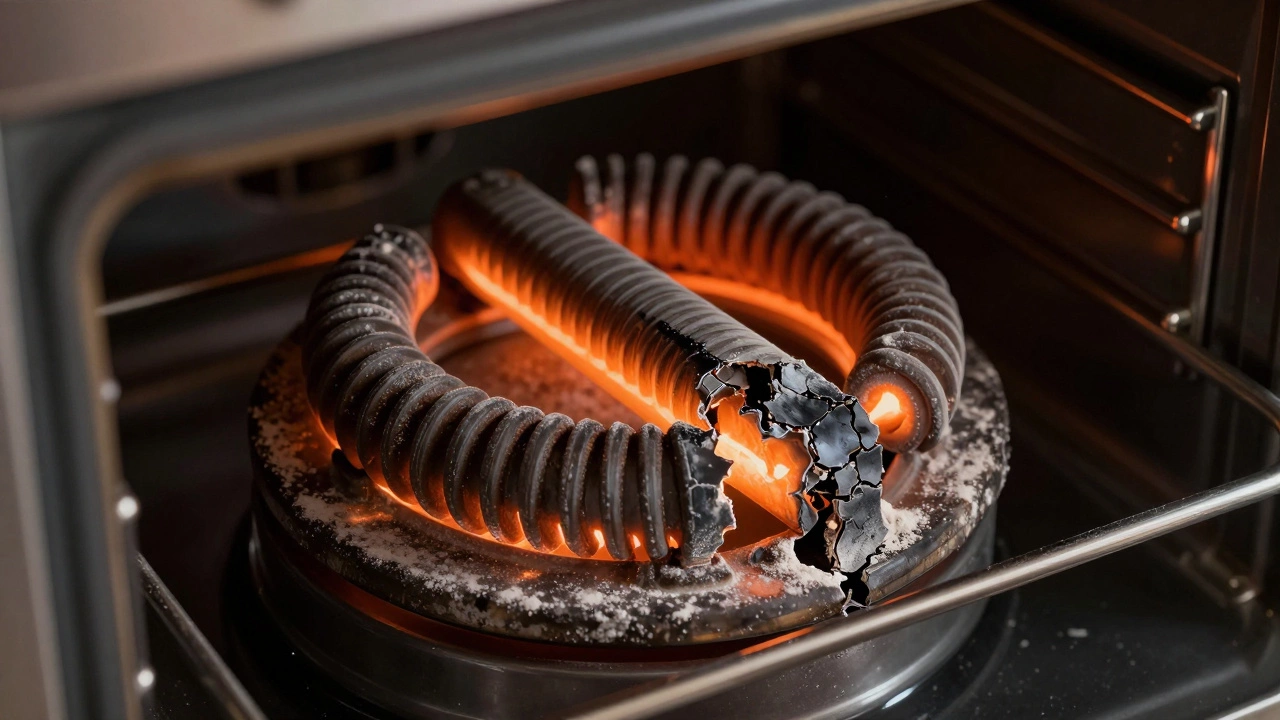
If your oven won’t heat up, or it’s taking forever to cook food, the heating element might be the culprit. It’s one of the most common reasons electric ovens stop working-and it’s usually an easy fix. But how do you know for sure it’s the element and not something else? You don’t need a technician to tell you. With a few simple checks, you can diagnose a blown oven element yourself.
What a blown oven element looks like
The heating element in your oven is a metal coil, usually at the top or bottom of the oven cavity. When it’s working right, it glows bright orange when the oven is on. If it’s blown, it won’t glow at all-or it might glow unevenly, with dark spots or sections that stay black.Look closely. A healthy element is smooth and even. A blown one often has visible breaks, bulges, or cracks. Sometimes the metal is melted or separated in one spot. You might even see white powder or scorch marks around the broken area. These are clear signs the element has failed.
Check the oven’s behavior
A blown element doesn’t always show visible damage. Sometimes it looks fine but just doesn’t work. Pay attention to how your oven behaves:- The oven doesn’t heat at all, but the light and fan still work.
- The top element works, but the bottom one doesn’t (or vice versa).
- You hear a faint buzzing or clicking sound when you turn the oven on, but no heat comes out.
- Food cooks unevenly-burnt on top, raw on the bottom-because only one element is working.
If your oven has separate top and bottom elements and only one isn’t working, that’s a strong clue the problem is isolated to that element. If neither works, the issue might be the thermostat, control board, or power supply-but start with the element.
Turn off power and inspect
Before you touch anything, turn off the power. Unplug the oven or flip the circuit breaker. You’re dealing with 240 volts-this isn’t something to risk.Remove the oven racks. Look at the bottom element first. It’s the most likely to fail because it’s used more often and gets hotter. Now look at the top element. If you can’t see it clearly, open the oven door and look from above. Some ovens have a panel covering the top element-you may need to remove it. Check the owner’s manual for instructions.
Look for any of these signs:
- Broken or sagging wire
- Blistered or discolored metal
- Gap in the coil where the metal has snapped
- Blackened or charred insulation around the mounting points
If you see any of these, the element is blown. Replace it.
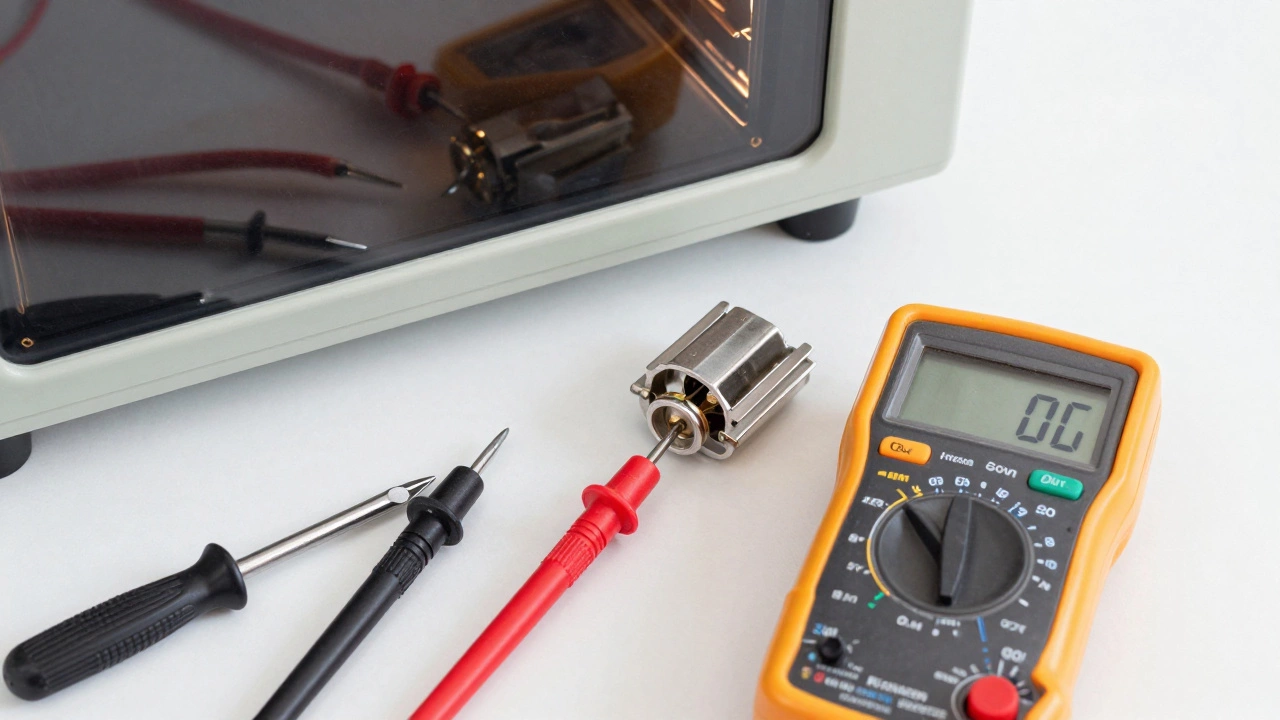
Use a multimeter to test for continuity
If you’re not sure what you’re seeing, a multimeter gives you a definitive answer. You don’t need to be an electrician to use one.First, disconnect the power again. Then remove the element from the oven. Usually, you just need to unscrew the two terminals on the back and pull it out. Don’t force it-wires can be brittle.
Set your multimeter to the lowest ohms (Ω) setting. Touch one probe to each terminal on the element. If the reading is between 20 and 120 ohms, the element is good. If it shows ‘OL’ (open loop) or no reading at all, the element is blown. Zero ohms means there’s a short, which is also bad.
Test both the top and bottom elements if you’re unsure which one failed. One might still be working even if the oven isn’t heating properly.
Other possible causes
Before you buy a new element, rule out other issues:- Thermostat: If the oven turns on but doesn’t reach the right temperature, the thermostat might be faulty. But if it doesn’t heat at all, the thermostat is less likely to be the problem.
- Control board: Modern ovens have digital controls. If the display works but the oven won’t heat, the board might not be sending power. This is harder to diagnose without tools.
- Thermal fuse: Some ovens have a safety fuse that cuts power if the oven overheats. If it’s blown, the oven won’t heat at all. It’s usually located near the heating element or vent.
- Power supply: Check the circuit breaker. If it’s tripped, reset it. Also check the outlet or hardwired connection-some ovens have a separate fuse inside the junction box.
If the element tests fine and the power is good, the problem is likely deeper. But 80% of the time, it’s the element.
Replacing the element
Replacing a blown element is straightforward. Take the old one to an appliance parts store or look up the model number online. Most ovens use standard elements, but the size and wattage matter. Match the wattage (usually 2,500 to 3,500 watts) and the shape.Install the new one the same way you removed the old one. Tighten the terminals securely but don’t over-torque them. Reconnect power, turn on the oven, and watch. The new element should glow evenly within a minute.
Don’t forget to clean up any debris or grease that may have built up around the old element. That can cause future problems.
How long do oven elements last?
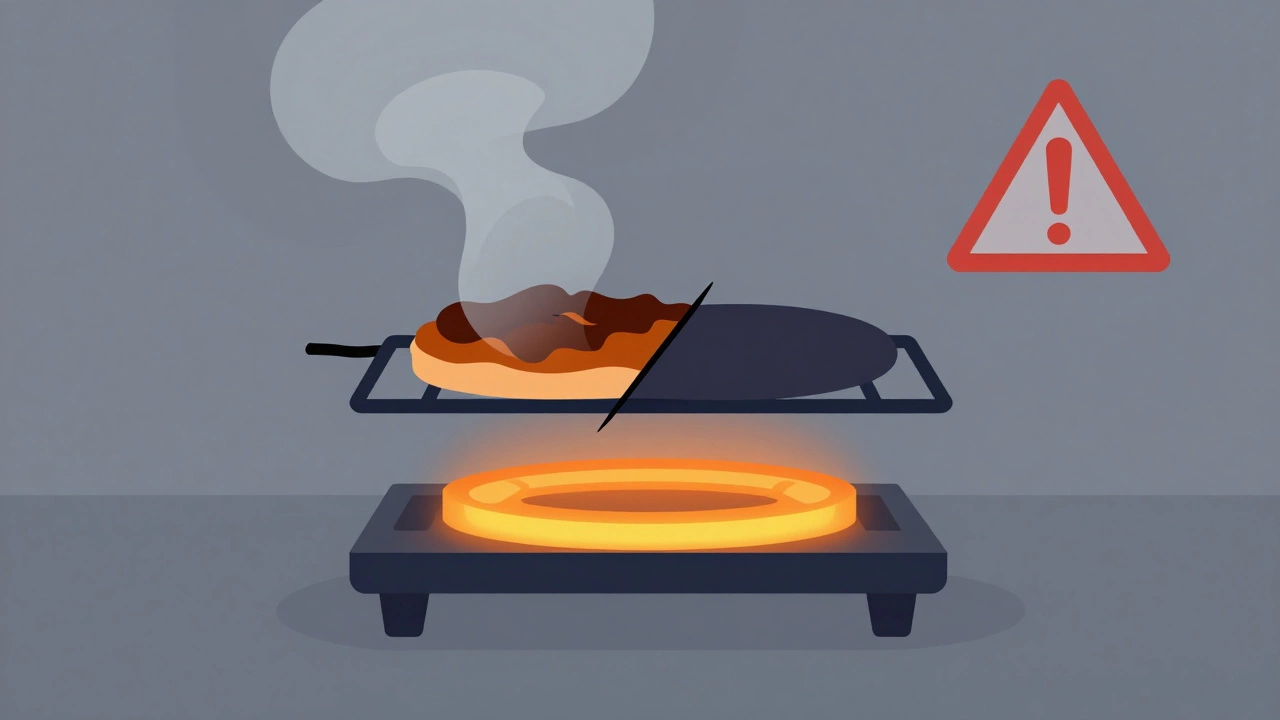
A good oven element lasts 5 to 10 years, depending on use. Frequent high-heat baking, broiling, or cleaning with harsh chemicals can shorten its life. If you notice your oven taking longer to preheat or heating unevenly, it’s not just getting old-it’s starting to fail.Some people wait until the element completely dies. Others replace it at the first sign of trouble. If you’re cooking a lot and rely on your oven daily, replacing a weak element early can save you from a ruined meal-or a broken appliance.
What to do if you’re still unsure
If you’ve checked the element, tested it with a multimeter, ruled out the fuse and power, and it still won’t heat, it’s time to call a professional. But don’t assume it’s expensive. Most appliance repair techs charge $75 to $150 for a diagnostic visit, and replacing the element is usually under $200 total.Don’t keep using a faulty oven. A failing element can overheat surrounding parts, damage the oven cavity, or even cause a fire. It’s not worth the risk.
Prevent future failures
To make your oven element last longer:- Avoid spraying oven cleaner directly on the heating elements.
- Use the self-cleaning function sparingly-it’s extremely hot and stresses the element.
- Keep the oven clean. Grease buildup can cause hot spots and shorten element life.
- Don’t leave the oven on for hours at high heat unless you’re cooking.
A little maintenance goes a long way. Your oven element doesn’t need much, but it does need respect.
Can I still use my oven if one element is blown?
You can, but you shouldn’t. If the bottom element is blown, your oven might still work on broil mode-but broiling isn’t safe for most cooking. Food will burn on top and stay raw underneath. If the top element is blown, baking becomes uneven and slow. It’s inefficient and risks undercooking food. Replace the element before using the oven again.
Why does my oven element glow in spots but not fully?
That’s a classic sign of a failing element. The metal is thinning in certain areas due to overheating or corrosion. Those spots get hotter and burn out faster, creating dark patches. Even if it still glows, it’s on its way out. Replace it before it breaks completely.
Is it cheaper to repair or replace the whole oven?
Replacing a heating element costs $20 to $100 for the part and $100 to $200 with labor. A new oven starts at $500 and goes up from there. Unless your oven is over 12 years old or has other major issues, repairing the element is almost always the better choice.
Can a blown element cause a fire?
Yes, if it’s severely damaged. A cracked or melted element can arc or spark, especially if grease or debris is nearby. If you smell burning plastic or see smoke, turn off the power immediately and don’t use the oven again until it’s repaired.
Do gas ovens have heating elements?
No. Gas ovens use a gas burner and igniter to heat. If your gas oven isn’t heating, the issue is the igniter, gas valve, or thermostat-not a heating element. This guide only applies to electric ovens.