Water Heater Troubleshooting Diagnostic Tool
Answer a few questions about your water heater's behavior to identify the most likely culprit.
Quick Signs Your Thermostat is Failing
Before you grab your toolkit, look for these red flags. If your water is lukewarm even though the dial is turned up, or if you're suddenly running out of hot water much faster than usual, the thermostat is a prime suspect. A common giveaway is "temperature swinging," where the water is boiling hot one minute and cold the next. This happens when the thermostat fails to "trip" at the right temperature, causing the heating element to run too long or not long enough.
Another telltale sign is a complete lack of heat. If you have an electric tank and the Heating Element is still functional, but the water stays cold, the thermostat likely isn't sending the signal to start heating. It's like a light switch that's broken; no matter how many times you flip it, the light stays off.
Key Takeaways for Diagnosis
- Cold water despite power supply usually means a failed thermostat or element.
- Scalding water suggests a thermostat that won't shut off (dangerous).
- Inconsistent temperatures point to a drifting calibration or failing sensor.
- A tripped circuit breaker can sometimes be caused by a shorted thermostat.
Understanding How the Thermostat Works
In a standard electric tank, you usually have two thermostats. One is the upper thermostat, which controls the top element and acts as the "master" switch. The lower thermostat manages the bottom element. They use a Bimetal Strip is a strip made of two different metals that bends as it heats up, breaking the electrical circuit when a specific temperature is reached. This physical movement is what tells the electricity to stop flowing.
If the bimetal strip warps or the electrical contacts inside the housing corrode, the system fails. For instance, if the contacts weld together, the heater will never stop running, leading to boiling water and a high electricity bill. If the strip snaps or the contact points oxidize, the circuit stays open, and your water stays cold.
Step-by-Step: Testing Your Thermostat with a Multimeter
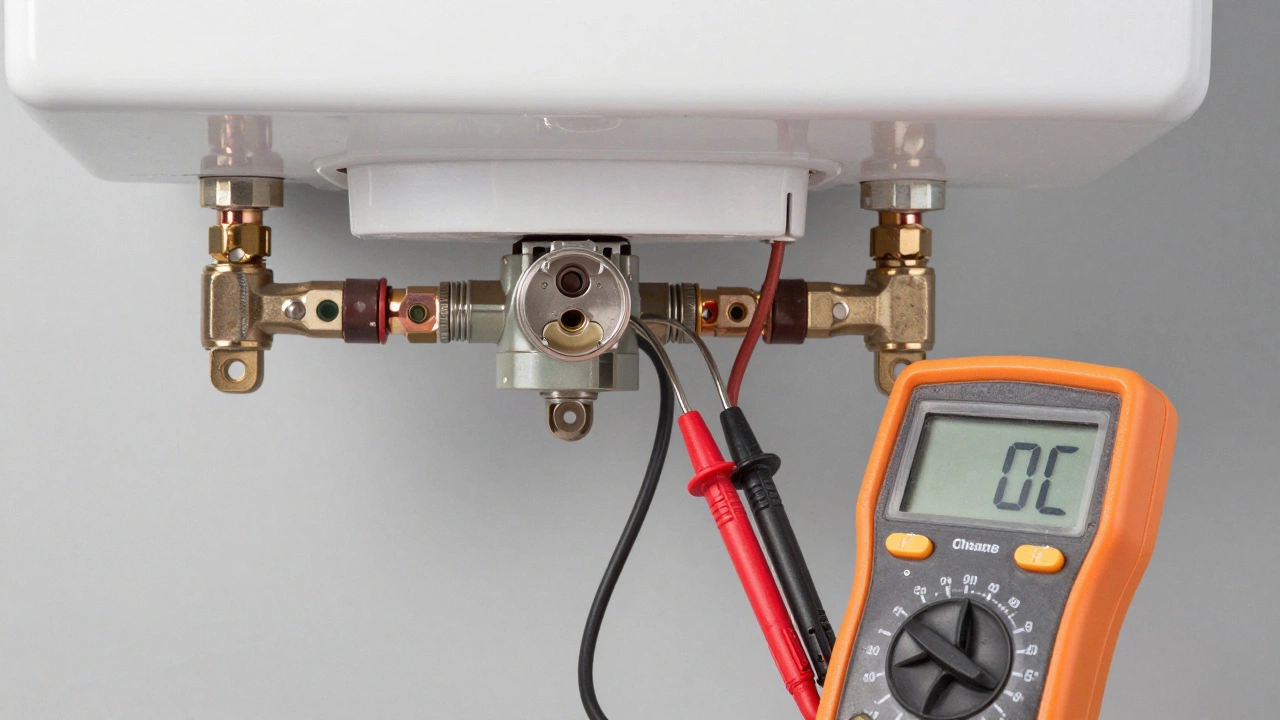
To know for sure if the part is bad, you need a Multimeter is an electronic measuring instrument that can measure voltage, current, and resistance. You cannot guess this with your eyes; you need to see if electricity is actually passing through the component. Water heater repair starts with safety, so before you touch anything, turn off the power at the main circuit breaker. Never work on a live heater.
- Access the panel: Remove the upper and lower access covers. You'll need to pull out the plastic insulation first.
- Inspect for damage: Look for burn marks or a "burnt plastic" smell. If the thermostat housing looks charred, it's dead.
- Test for Continuity: Set your multimeter to the lowest Ohms (Ω) setting or the continuity beep mode.
- Check the probes: Remove the wires from the thermostat terminals. Place one probe on each terminal.
- Interpret the results: If the thermostat is "closed" (meaning it should be calling for heat) and the meter shows "OL" (Open Loop) or doesn't beep, the internal connection is broken. The thermostat is bad.
- The "Hot" Test: If the water is scalding, you can carefully warm the thermostat with a hairdryer. If the multimeter still shows continuity while the thermostat is hot, it means the switch isn't opening when it should. That's a failed unit.
Common Causes of Thermostat Failure
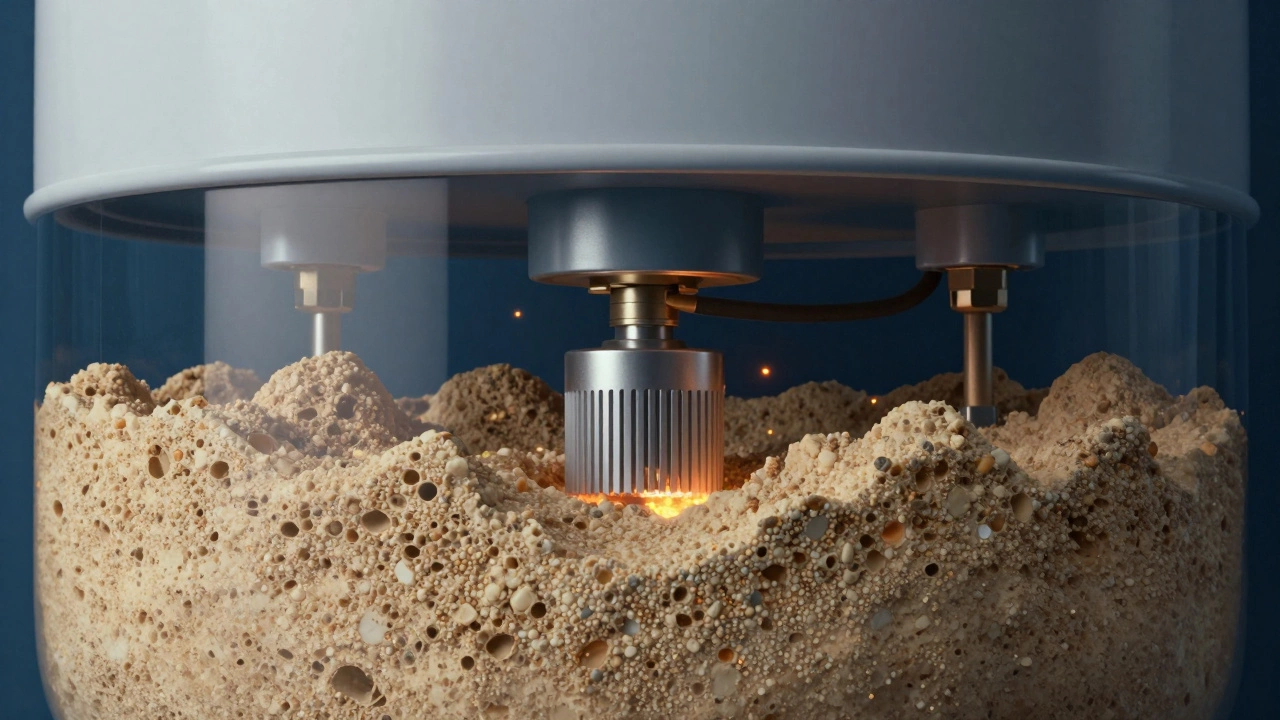
Why do these things break? The biggest enemy is Sediment Build-up is the accumulation of minerals like calcium and magnesium at the bottom of the tank. When sediment wraps around the thermostat's probe, it insulates the sensor. The thermostat "thinks" the water is colder than it actually is because it's only reading the temperature of the sludge, not the water. This leads to overheating.
Electrical surges are another culprit. A power spike can weld the contacts shut. Also, simply the age of the unit plays a role; the bimetal strip loses its tension over a decade of heating and cooling cycles, leading to inaccurate readings.
| Symptom | Likely Thermostat Issue | Likely Element Issue |
|---|---|---|
| Totally Cold Water | Broken circuit / No signal | Burned out coil (open circuit) |
| Lukewarm Water | Incorrect temperature setting/calibration | Partial failure or sediment coating |
| Scalding Water | Contacts welded shut (won't trip) | Rarely the cause |
| Tripped Breaker | Short circuit in the housing | Internal ground fault (leaking current) |
Replacing the Thermostat: Pro Tips
If your test proves the thermostat is dead, replacing it is a straightforward task, but there are a few pitfalls. First, always replace both the upper and lower thermostats if the unit is over 10 years old. If one has failed, the other is likely close behind. Using a mix of a new and an old thermostat can sometimes lead to uneven heating.
When installing the new part, make sure the wires are seated tightly. Loose connections create resistance, which generates heat and can actually melt the new thermostat's plastic housing. If you see any corrosion on the wires, snip the ends and strip them back to clean copper before reconnecting.
Check your Anode Rod is a sacrificial rod that corrodes to protect the tank from rusting while you have the panels off. If the rod is gone, your tank is rusting, and no amount of thermostat replacing will save a leaking tank.
Avoiding Future Failures
To keep your thermostat from dying prematurely, flush your tank once a year. This removes the mineral buildup that confuses the sensors. A quick drain and refill can extend the life of your components by years. Also, don't crank the temperature to the maximum setting just because you want "more" hot water. Setting it to 120°F (49°C) is the sweet spot-it's hot enough for cleaning and showering but doesn't put excessive stress on the thermostats or risk burning your skin.
Can a bad thermostat cause my water heater to leak?
Indirectly, yes. If the thermostat fails in the "on" position, the water can reach boiling point. This increases the internal pressure of the tank significantly. While the T&P (Temperature and Pressure) valve should release this, constant overheating can weaken the tank's seams or cause the valve to leak incessantly.
Why is my water heater clicking constantly?
That clicking is the sound of the thermostat snapping the circuit open and closed. If it's happening every few seconds, the thermostat might be "hunting" for the right temperature because the sensor is blocked by sediment or the thermostat itself is malfunctioning.
Do I need a professional to replace a thermostat?
If you are comfortable turning off a circuit breaker and using a screwdriver, it's a DIY-friendly job. However, if you aren't sure how to verify the power is off or feel uncomfortable around 240V electricity, call a licensed electrician or plumber. High voltage is dangerous.
How long do water heater thermostats usually last?
Most quality thermostats last between 8 and 12 years. Their lifespan depends heavily on how often the water is flushed and the hardness of your local water supply. Hard water leads to faster sediment buildup, which kills thermostats sooner.
Can I just adjust the thermostat to fix cold water?
You can try turning the dial up, but if the water remains cold, the thermostat is likely not closing the circuit. If you turn it up and the water becomes scalding without stopping, the thermostat is definitely broken and needs immediate replacement for safety.
Next Steps and Troubleshooting
If you've replaced the thermostat and you still have no hot water, your next move is to test the heating elements themselves. Use the same multimeter to check for "continuity" and "grounding" on the elements. A common scenario is that a failed thermostat caused the element to overheat and burn out, or vice versa.
For those with gas heaters, the process is different. You'll be looking for a Gas Control Valve is a device that regulates the flow of gas to the burner based on the water temperature. If the pilot light is on but the burner isn't igniting, the thermocouple or the thermostat within the gas valve is the likely culprit.