Boiler Service Cost & Savings Calculator
Enter your details below to see the financial impact of skipping your annual boiler service.
Your Details
Your boiler is the heart of your home's comfort, but it’s also a high-pressure machine that needs regular attention. Most homeowners in the UK assume they only need to call an engineer when something breaks, but that approach can lead to expensive repairs and even dangerous gas leaks. The short answer to how often you should service your boiler is: once a year. But why exactly? And what happens if you skip that check?
In this guide, we’ll break down the legal requirements, the practical benefits, and the signs that your system needs help sooner than scheduled. Whether you have a combi boiler or a system boiler, keeping up with maintenance is the cheapest way to protect your investment.
Why Annual Service Is the Gold Standard
For most domestic properties in the UK, annual boiler servicing is the recommended interval for maintaining safety and efficiency in residential heating systems. This isn't just a suggestion from sales reps trying to upsell you; it’s backed by engineering logic. Over twelve months, tiny particles of carbon build up on the heat exchanger, water pressure fluctuates, and seals can dry out. A professional inspection catches these issues before they turn into breakdowns.
If you have a landlord-tenant agreement, the rules are stricter. Under the Housing Act 2004, landlords must ensure gas appliances are safe. While there is no strict law forcing tenants to pay for annual services unless specified in the tenancy agreement, most reputable landlords require it to keep their insurance valid. For owner-occupiers, it’s about protecting your warranty. Many manufacturers void their extended warranties if you can’t prove you had regular checks done by a qualified technician.
What Actually Happens During a Service?
A standard service isn’t just a quick look-over. It involves a series of specific checks that take anywhere from 30 to 60 minutes. Here is what a Gas Safe registered engineer is a certified professional authorized to install, maintain, and repair gas appliances in the UK. will do:
- Clean the burner and fan: Removing soot buildup ensures complete combustion, which improves efficiency and reduces carbon monoxide risk.
- Check flue operation: They verify that exhaust gases are being vented correctly outside, preventing backflow into your home.
- Test safety controls: Pressure valves, thermostats, and flow sensors are tested to ensure they trip correctly if something goes wrong.
- Inspect the heat exchanger: This is the core component. Cracks here cause leaks and inefficiency. Early detection saves you from replacing the whole unit.
- Measure efficiency: Using a combustion analyzer, they calculate how much fuel is actually being used versus wasted. A well-serviced modern condensing boiler should achieve over 90% efficiency.
You should receive a service report after the visit. Keep this document. If you ever sell your house, having a trail of service records adds value and reassures buyers that the heating system has been cared for.
Signs You Need Urgent Attention (Before the Next Year)
While annual servicing is the baseline, certain symptoms mean you shouldn’t wait until your next scheduled appointment. Ignoring these red flags can lead to costly emergency call-outs or safety hazards.
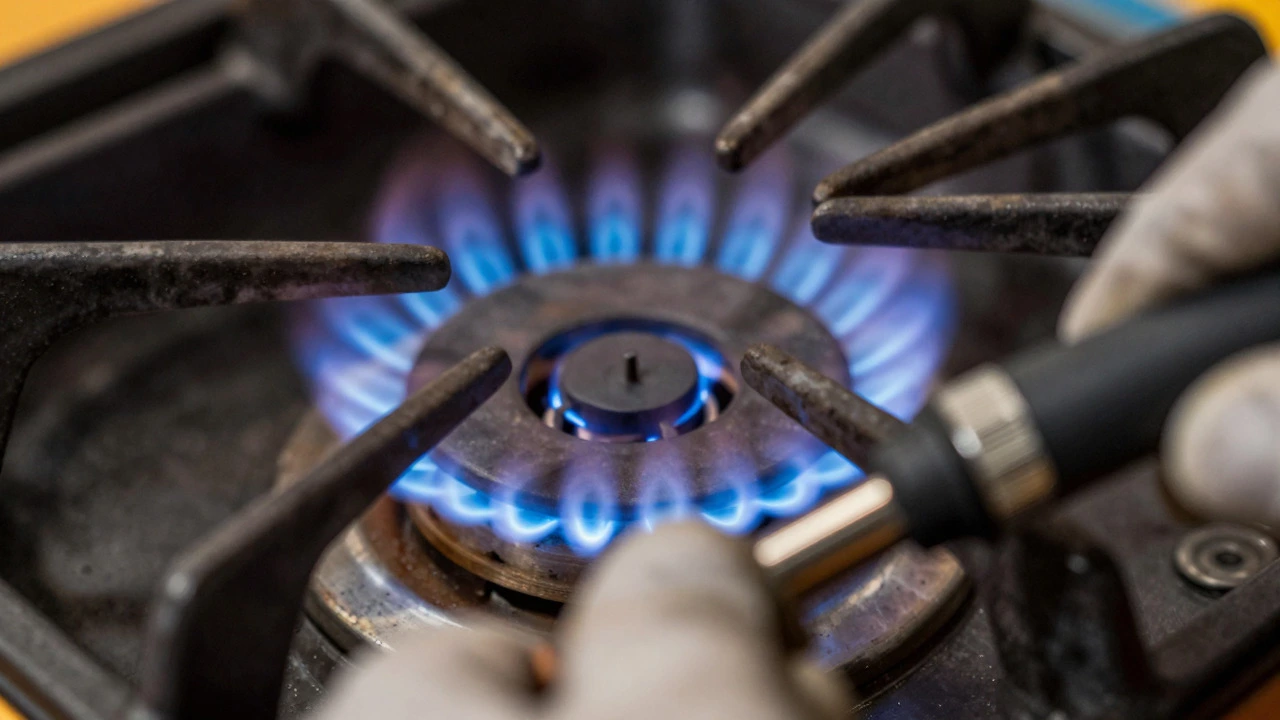
- Yellow flame instead of blue: A healthy gas burn produces a crisp blue flame. A yellow or orange flame indicates incomplete combustion, often due to dirt or air leaks. This increases carbon monoxide production.
- Loud banging or gurgling noises: These sounds usually point to kettling (limescale buildup) or trapped air in the system. Both reduce efficiency and strain the pump.
- Dropping water pressure: If your pressure gauge drops below 1 bar frequently, you may have a leak. Small leaks today become major pipe bursts tomorrow.
- Higher energy bills without usage change: If your consumption spikes while your habits stay the same, your boiler is likely working harder to produce the same heat because it’s becoming inefficient.
- Frequent cold spots: Radiators that stay cold at the top might indicate low flow rates or a failing pump, which a service can diagnose.
If you notice any of these, book an engineer immediately. Don’t try to fix it yourself unless you know exactly what you’re doing, as gas work requires certification.
Combi vs. System Boilers: Does the Type Matter?
The type of boiler you have slightly influences maintenance needs, though the annual rule remains the same. Let’s compare the two most common types in UK homes.
| Feature | Combi Boiler | System Boiler |
|---|---|---|
| Water Storage | No tank (instant hot water) | Cylinder + Tank (stored hot water) |
| Limescale Risk | Higher (direct mains water) | Moderate (closed loop) |
| Additional Checks | Flow rate, heat exchanger integrity | Cylinder condition, immersion heater |
| Typical Service Duration | 30-45 mins | 45-60 mins |
| Common Failure Point | Heat exchanger cracks | Cylinder corrosion |
Combi boilers are more sensitive to hard water because they pull directly from the mains. In areas like Bristol, where water hardness varies, descaling during a service is crucial. System boilers, which use a sealed cylinder, are slightly more forgiving regarding limescale but require checking the cylinder for internal corrosion, which can contaminate your hot water supply.
Costs and Savings: The Math Behind Servicing
Many people hesitate to book a service because of the upfront cost. In the UK, a standard boiler service typically costs between £70 and £100. However, looking at the long-term savings makes the decision easy.
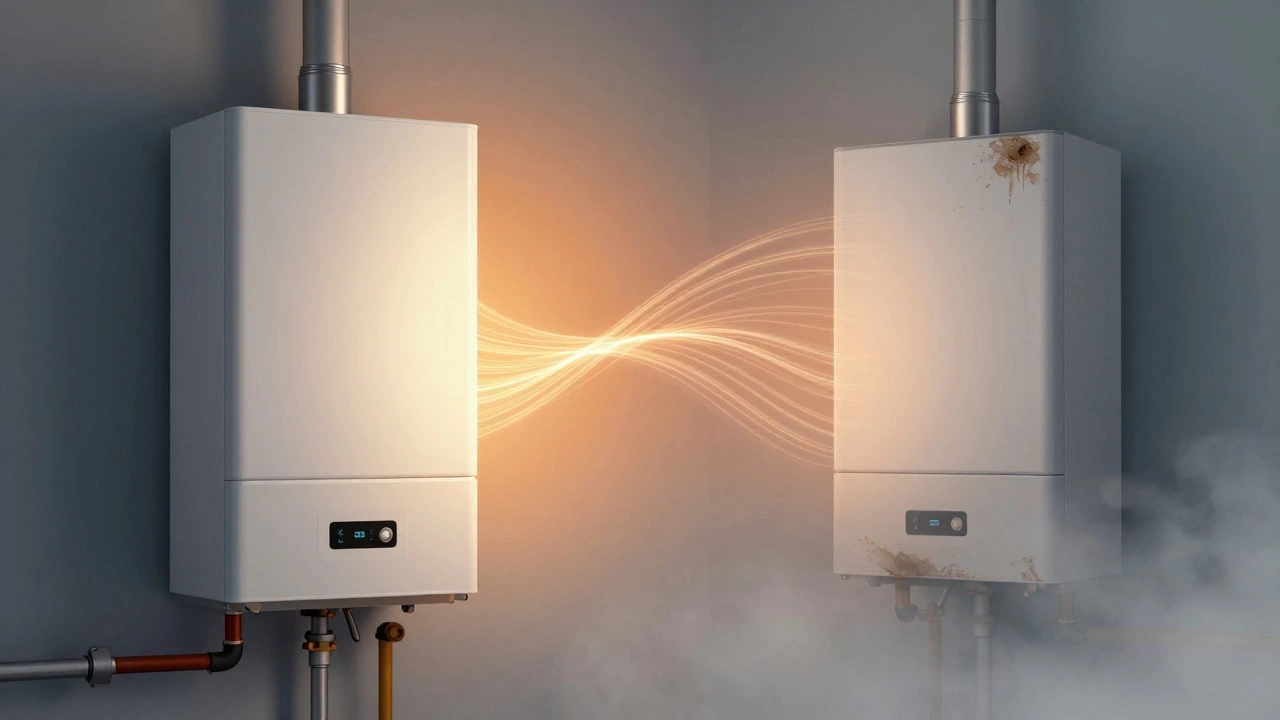
First, efficiency gains. An unserviced boiler can lose 10-20% of its efficiency. If you spend £1,500 a year on gas, a 15% loss means you’re wasting £225 annually just on poor performance. One service pays for itself within a year if it restores peak efficiency.
Second, avoiding breakdowns. Emergency call-outs cost significantly more-often double the price of a planned service. Plus, if a small seal fails and floods your floor, the damage restoration costs will dwarf the service fee many times over.
Third, extending lifespan. A well-maintained boiler can last 15-20 years. Neglecting it might cut that life down to 10-12 years, forcing you to replace the unit five years earlier than necessary.
Choosing the Right Engineer
Not all technicians are created equal. Always hire a Gas Safe Registered Engineer is a mandatory requirement for anyone working on gas appliances in Great Britain. Check their ID card before they start work. The card should be current and show their registration number.
Ask for reviews specifically mentioning punctuality and communication. A good engineer explains what they found, shows you the problem if it exists, and gives you clear options rather than pushing immediate replacements. If an engineer tells you your boiler is "dangerous" without showing you the fault, ask for proof. Transparency is key.
Frequently Asked Questions
Is a boiler service legally required for homeowners?
No, there is no law forcing owner-occupiers to service their boilers annually. However, it is strongly recommended to maintain warranty validity and ensure safety. Landlords, however, must ensure gas safety under the Housing Act 2004.
How long does a typical boiler service take?
Most standard services take between 30 and 60 minutes. Complex systems or those requiring descaling may take longer. If an engineer stays for several hours, ask what additional work is being performed.
Can I service my boiler myself?
You can perform basic checks like topping up pressure or bleeding radiators, but full servicing requires specialized tools and knowledge. Only Gas Safe engineers should open the boiler casing to avoid voiding warranties or causing safety risks.
What happens if I skip a service for two years?
You increase the risk of breakdowns and carbon monoxide exposure. Limescale buildup accelerates, reducing efficiency. Some manufacturers may void your warranty if service intervals were missed, leaving you responsible for full repair costs.
Does the age of the boiler affect service frequency?
Older boilers (over 10 years old) may benefit from semi-annual checks or closer monitoring, especially if they have had past repairs. Newer boilers generally stick to the standard annual schedule unless issues arise.