Repair vs. Replace Calculator
Use this tool to get a data-driven recommendation based on industry standards regarding boiler lifespan and repair economics.
Enter your details to see if you should fix or buy new.
Imagine it’s a freezing Tuesday night in January. The radiator clicks off, the house drops ten degrees in an hour, and you realize your central heating is dead. Your first thought isn’t about thermodynamics or pressure valves; it’s simple: who can fix this right now? You need someone qualified, safe, and fast. But if you’ve never dealt with home heating systems before, the titles flying around online-plumber, heating engineer, gas technician-can feel like a confusing maze.
The short answer is that you need a Gas Safe registered engineer. In the UK, no one else is legally allowed to work on gas boilers. But there is more to the role than just holding a license. Understanding what these professionals actually do, how they differ from general plumbers, and what qualifications protect your home will save you money and, more importantly, keep you safe.
The Legal Requirement: Why "Gas Safe" Matters More Than Experience
In the United Kingdom, working on gas appliances is strictly regulated. This isn’t just bureaucracy; it’s a safety mandate born from decades of carbon monoxide poisoning incidents and gas explosions. Before 2014, you might have heard of CORGI (Council for Registered Gas Installers). That organization no longer exists. Today, the only legal body is Gas Safe Register.
If a person claims to be a "qualified plumber" but cannot show you their Gas Safe ID card, they are not legally permitted to touch your boiler. Even if they have twenty years of experience fixing sinks and toilets, gas work requires specific, tested competencies. A standard plumber deals with water flow and drainage. A Gas Safe engineer deals with combustion, ventilation, and explosive gases.
Can a regular plumber fix my boiler?
No. While many plumbers are also Gas Safe engineers, a standard plumbing qualification does not allow anyone to work on gas appliances. Always check for the Gas Safe ID card before allowing anyone to work on your boiler.
Heating Engineer vs. Plumber: What Is the Difference?
You might wonder why some people call themselves "heating engineers" while others say "plumbers." The distinction lies in specialization. A general plumber installs pipes, fixes leaks, and connects taps. They understand water pressure and gravity. A heating engineer, however, understands heat exchange, condensation, flue gases, and electronic controls.
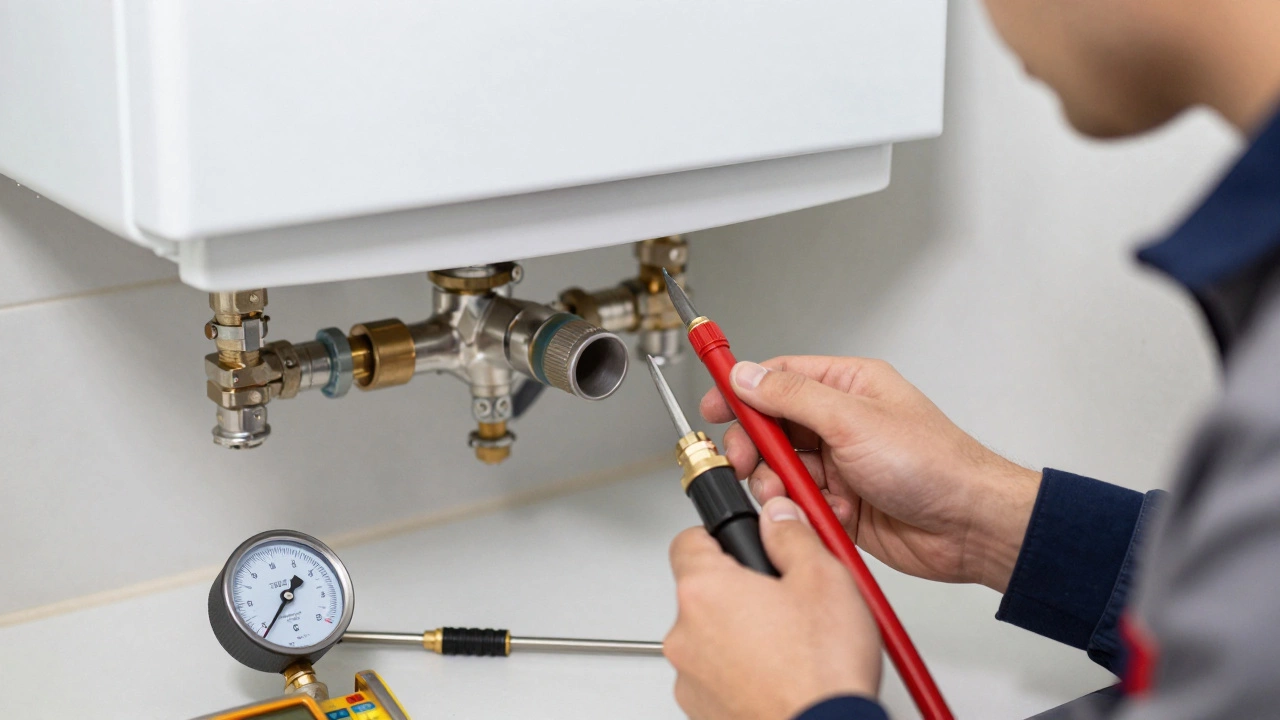
When your boiler breaks, it is rarely a simple pipe burst. It is often a faulty ignition module, a leaking heat exchanger, or a blocked condensate pipe. These issues require diagnostic tools that go beyond a wrench and tape measure. Heating engineers use manometers to measure gas pressure, flue gas analyzers to check carbon monoxide levels, and multimeters to test electrical components within the boiler system.
| Feature | General Plumber | Heating Engineer (Gas Safe) |
|---|---|---|
| Primary Focus | Water supply, drainage, bathrooms | Central heating, hot water generation, gas safety |
| Legal Certification | None required for basic work | Gas Safe Registration mandatory |
| Tools Used | Pipe wrenches, plungers, sealants | Flue gas analyzers, manometers, multimeters |
| Risk Level | Low (water damage) | High (fire, explosion, carbon monoxide) |
What Qualifications Does a Boiler Technician Need?
Becoming a Gas Safe engineer is not something you learn over a weekend. It is a rigorous process involving formal education and practical assessment. Most technicians start with an apprenticeship or a college course in Plumbing and Heating. From there, they must pass specific competency tests set by Accredited Certification Bodies (ACBs).
The key qualification codes you should look for are G1, G2, CEN67, and HRC1. These codes appear on the back of their Gas Safe ID card.
- G1: Installation and servicing of gas fires and cookers.
- G2: Servicing of gas boilers (this is essential for annual maintenance).
- CEN67: Installation and repair of gas combination boilers (combi boilers).
- HRC1: Installation and repair of gas storage hot water cylinders.
The Diagnostic Process: How Experts Find the Fault
When a professional arrives at your door, they don’t just guess. They follow a logical troubleshooting path. First, they check the basics: is there power? Is the gas supply turned on? Is the pressure gauge in the correct range (usually between 1 and 1.5 bar)? Often, a simple reset or pressure top-up solves the issue, saving you hundreds of pounds.
If the basics check out, they move to diagnostics. They will listen to the pump to ensure it is circulating water. They will check the flame sequence using a specialized camera or sensor. They will inspect the condensate pipe, which frequently freezes in winter and causes the boiler to lock out. By isolating variables-electrical, mechanical, and hydraulic-they pinpoint the exact component failure. This systematic approach prevents unnecessary part replacements and ensures the repair lasts.
Why Annual Servicing Beats Emergency Repairs
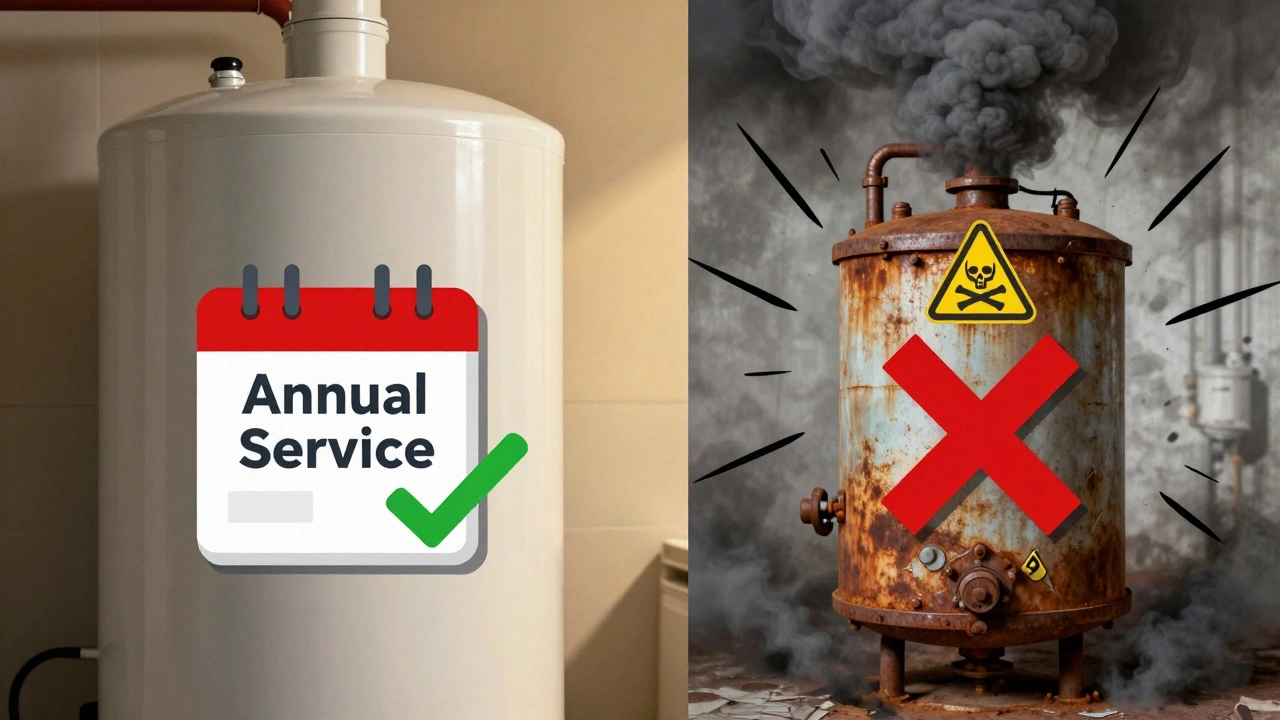
Many homeowners only think about their boiler when it breaks. This is a costly mistake. A boiler is a complex machine with moving parts, electronics, and high-temperature combustion chambers. Over time, soot builds up, seals degrade, and efficiency drops. An annual service by a Gas Safe engineer cleans these components, checks for dangerous carbon monoxide leaks, and verifies that the boiler is operating at peak efficiency.
A well-maintained boiler uses less gas, lowering your energy bills. More importantly, it reduces the risk of sudden breakdowns during the coldest months. Think of it like changing the oil in your car. You don’t wait for the engine to seize; you service it regularly to prevent catastrophic failure. For boilers, this means scheduling a check-up every twelve months, regardless of whether anything seems wrong.
Red Flags: Who to Avoid When Hiring Help
Not everyone advertising "cheap boiler repairs" is acting in your best interest. Be wary of engineers who refuse to show their Gas Safe ID card upon arrival. Legitimate professionals carry this card and are happy to display it. Also, avoid anyone who pressures you into immediate, expensive upgrades without explaining the technical necessity. If a technician suggests replacing your entire boiler when a simple valve replacement would suffice, get a second opinion.
Another red flag is a lack of insurance. Reputable engineers hold public liability insurance, which protects you if they accidentally damage your property during the repair. Always ask for proof of both Gas Safe registration and insurance coverage before work begins. This small step can save you from significant financial and safety risks.
Next Steps for Homeowners
If your boiler is currently working, take note of its age and model. Check if you have a record of annual services. If not, schedule one immediately. If your boiler has broken down, locate the nearest Gas Safe registered engineer through the official Gas Safe website. Do not rely solely on search engine ads, as these can sometimes lead to unverified contractors. Verify the engineer’s registration number personally. By taking control of your boiler’s maintenance, you ensure warmth, safety, and peace of mind for your household.
How much does a boiler repair cost?
Costs vary widely depending on the fault. A simple reset or pressure adjustment might be free or included in a call-out fee (£50-£80). Minor part replacements like a thermostat or diverter valve can cost £150-£300. Major repairs involving heat exchangers or circuit boards can exceed £500. Always request a fixed quote before authorizing work.
How long does a boiler last?
With proper annual servicing, a modern gas boiler typically lasts between 10 and 15 years. After this period, efficiency drops significantly, and repair costs often outweigh the benefit of keeping the old unit. Consider replacement if your boiler is over 15 years old or requires frequent repairs.
Is it safe to use a boiler without a flue?
Absolutely not. All gas boilers must have a properly installed flue to expel toxic combustion gases, including carbon monoxide, outside the home. Using a boiler without a flue is extremely dangerous and illegal. If your flue is damaged or missing, turn off the boiler and contact a Gas Safe engineer immediately.
What should I do if I smell gas near my boiler?
If you smell gas, treat it as an emergency. Turn off the gas supply at the meter if safe to do so. Open all windows and doors to ventilate the area. Do not operate any electrical switches or create sparks. Leave the building immediately and call the National Gas Emergency Service on 0800 111 999 from a neighbor’s phone.
Do I need a new boiler if mine keeps breaking?
Frequent breakdowns are a strong indicator that your boiler is nearing the end of its life. If you have had more than two major repairs in the past year, or if the cost of a single repair exceeds £300, it is usually more economical to replace the unit. New boilers are also significantly more energy-efficient, reducing long-term running costs.