Kitchen Extractor Fan Lifespan Calculator
Enter Your Fan Details
Your Results
Estimated Remaining Lifespan:
Recommendations:
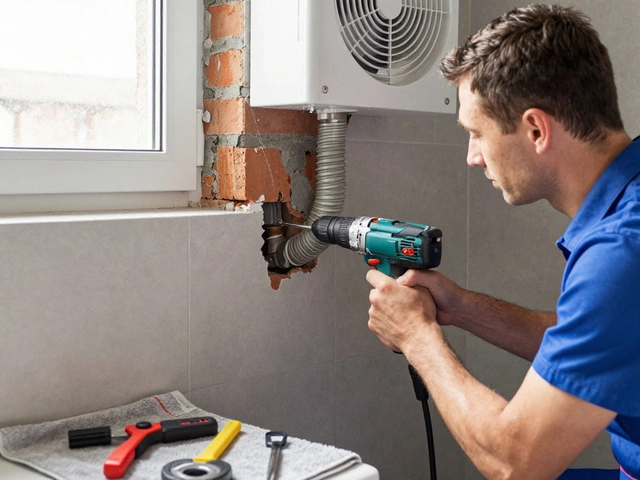
Most people don’t think about their kitchen extractor fan until it stops working-or worse, starts making a noise like a dying lawnmower. If you’ve noticed your fan is louder than usual, isn’t pulling steam away from the hob, or just seems to be running but doing nothing, you’re probably wondering: how long do kitchen extractor fans last? The answer isn’t simple. It depends on the brand, how often you use it, and whether you’ve cleaned it at all since you bought it.
Typical Lifespan of a Kitchen Extractor Fan
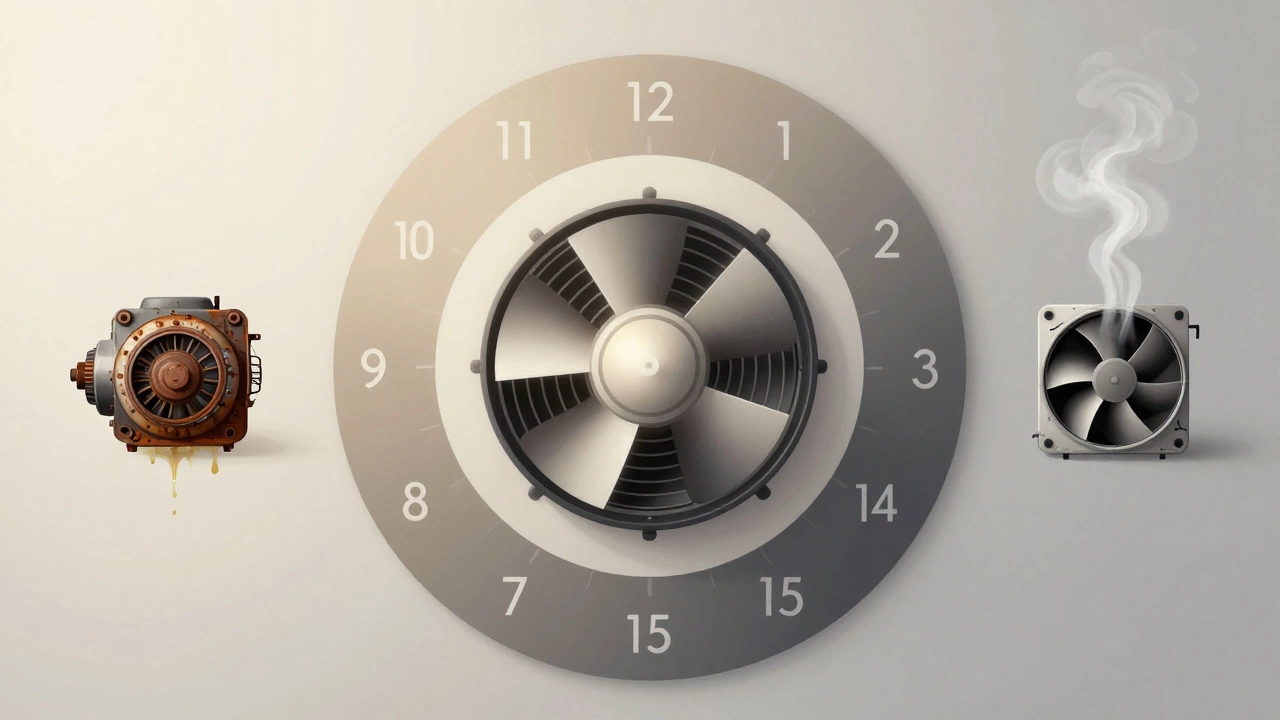
On average, a kitchen extractor fan lasts between 10 and 15 years. That’s the sweet spot for most mid-range models sold in the UK over the last decade. Cheaper units, especially those built into budget cooker hoods, often start struggling after 6 to 8 years. High-end models with better motors and quieter bearings can push past 15 years-if they’ve been well looked after.
Here’s what actually kills these fans over time:
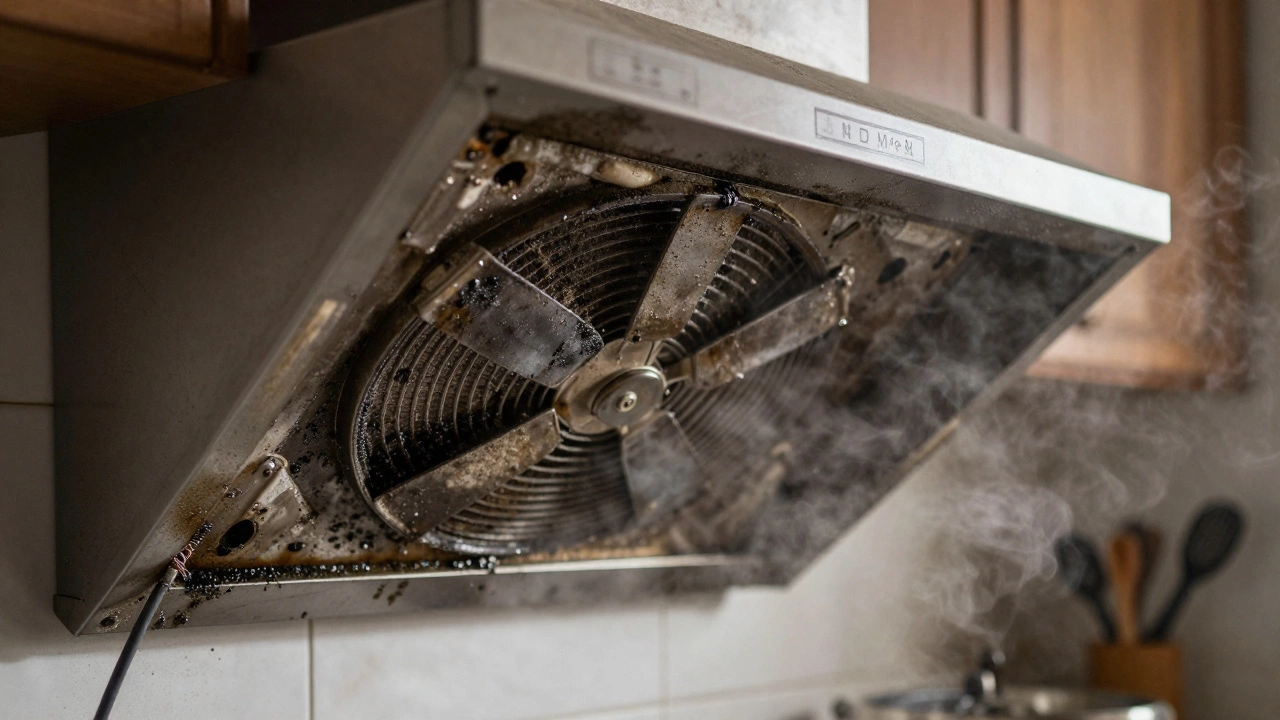
- Grease buildup clogging the motor and blades
- Dust and debris in the ducting
- Moisture rusting internal components
- Constant use without cleaning
- Low-quality motors that overheat
One study from the UK’s Building Research Establishment found that extractor fans in homes where cooking happened daily-especially frying or wok cooking-showed a 40% higher failure rate after 8 years compared to homes with lighter use. That’s not a fluke. Grease is the silent killer.
Signs Your Extractor Fan Is Reaching the End
You don’t need a technician to tell you when it’s done. Look for these red flags:
- It’s louder than ever. A sudden increase in noise-buzzing, grinding, rattling-is usually the motor bearings wearing out. You can’t oil them. They’re sealed.
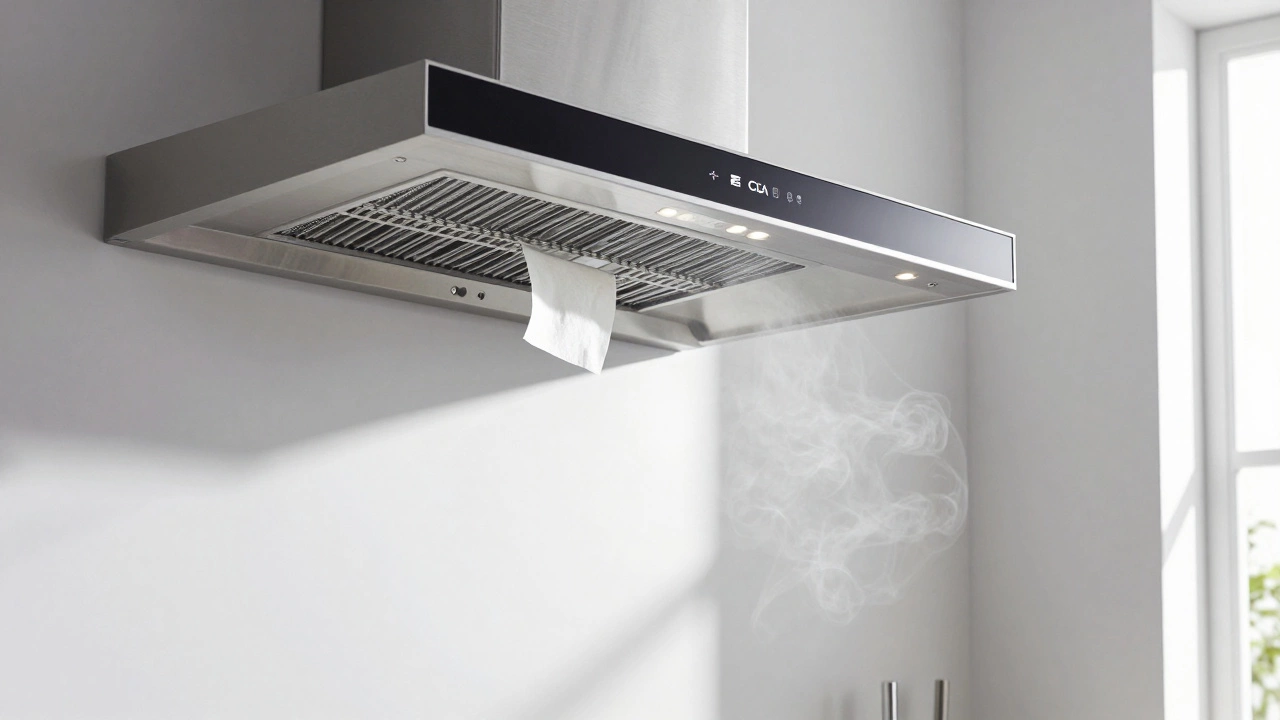
- It doesn’t pull air anymore. Hold a piece of tissue paper near the grille. If it doesn’t stick or barely moves, the fan isn’t generating enough suction. That’s either a failing motor or a blocked duct.
- It smells like burning. A faint plastic or hot metal smell means the motor is overheating. Turn it off. Don’t use it again until you’ve checked it.
- The lights flicker when it turns on. This suggests the fan is drawing too much current, which can trip breakers or damage your wiring.
- It turns on by itself. Faulty switches or moisture damage in the control panel can cause this. It’s a sign the electronics are failing.
If you’ve got two or more of these symptoms, your fan is on borrowed time. Replacing the motor might seem like a fix, but unless you’re handy with electricals and know exactly what parts fit your model, it’s rarely worth it.
Why Cleaning Matters More Than You Think
Most extractor fans die from neglect, not age. A fan that’s cleaned every 3 months can easily hit 15 years. One that’s never cleaned? It’s lucky to make it to 8.
Grease doesn’t just stick to the filter. It coats the motor, the blades, the ducting, and even the fan housing. Over time, that thick, sticky layer forces the motor to work harder. It heats up. It wears out faster. And when the grease hardens, it can warp plastic parts or jam the blades entirely.
Here’s what to do:
- Turn off the power at the wall.
- Remove the metal grease filter. Soak it in hot, soapy water for 20 minutes. Scrub with a brush. Rinse and dry completely.
- Wipe down the inside of the hood with a damp cloth and white vinegar. Vinegar cuts grease without leaving residue.
- Check the ducting. If it’s flexible plastic or foil, and you can see grease buildup inside, it’s time to replace it. Rigid metal ducting lasts longer and is easier to clean.
- Do this every 3 months if you cook daily. Every 6 months if you cook 2-3 times a week.
Most people skip this. They think, “It’s still running.” But running poorly is worse than not running at all-it’s wasting electricity and slowly killing the unit.
Repair vs Replace: What Makes Sense?
Should you fix it or just buy a new one? Here’s the hard truth:
If your fan is under 8 years old and the issue is just a noisy motor or a broken switch, a repair might be worth it. A qualified technician can replace the motor or control board for around £80-£150. But if it’s older than 10 years, the cost of parts and labour often equals or exceeds the price of a new unit.
Here’s a quick decision tree:
- Under 8 years old + minor issue? Repair. Find a local appliance technician who specialises in extractor fans.
- Over 10 years old? Replace. Even if it still works, the motor is likely near the end. New models are quieter, more efficient, and come with better filters.
- Smells like burning or sparks? Turn it off. Don’t risk fire. Replace immediately.
- It’s a built-in hood with no removable filter? Replace. Those are rarely serviceable.
Also, consider this: modern extractor fans use 30-50% less energy than models from 10 years ago. If your current fan is sucking up extra electricity because it’s struggling, replacing it pays for itself in lower bills over time.
What to Look for in a New Extractor Fan
If you’re replacing it, don’t just grab the cheapest one on sale. Look for these features:
- Extraction rate (m³/h): For a standard UK kitchen, aim for at least 100 m³/h. For larger kitchens or open-plan spaces, go for 150-200 m³/h.
- Noise level: Look for 50 dB or lower. Anything above 60 dB is distracting.
- Filter type: Metal grease filters are best. Carbon filters for recirculating models should be replaceable-don’t buy ones with permanent filters.
- Energy rating: A-rated or higher. Avoid G-rated models-they’re inefficient and will cost more to run.
- Brand reliability: Bosch, Siemens, Zanussi, and CDA have strong track records in the UK. Avoid no-name brands from online marketplaces.
Also, make sure the new unit fits your existing ducting. If you’re switching from recirculating to extracting (venting outside), you’ll need to install a new duct. That adds £150-£300 to the cost. But it’s worth it-venting outside removes moisture and odours completely. Recirculating fans just filter the air and return it. They’re never as effective.
Real-World Example: Bristol Kitchen
A homeowner in Bristol replaced their 12-year-old extractor fan after it started clicking and smelled like burnt plastic. The unit was a cheap model from a DIY chain. The motor had seized. The duct was clogged with grease that looked like hardened tar. They replaced it with a CDA 60cm extractor hood with a 180 m³/h extraction rate, metal filters, and a 52 dB noise rating. Cost: £280 installed. They now cook with the hood on all the time-no more foggy windows, no lingering smells, and it’s quieter than their old fridge.
That’s the difference between ignoring it and acting before it fails.
Final Thoughts: Don’t Wait for the Crash
Kitchen extractor fans aren’t glamorous. They’re out of sight, out of mind. But they’re one of the most important safety and comfort features in your kitchen. A working fan stops condensation, prevents mould, and removes harmful fumes from gas hobs.
If your fan is over 10 years old, start planning for a replacement. Clean it regularly. Listen for changes. Don’t wait for the motor to smoke. A little maintenance now saves you a messy, expensive surprise later.
And if you’re not sure whether yours is still good? Take the tissue test. If it doesn’t stick, it’s time to call someone-or start shopping.
How often should I clean my kitchen extractor fan?
Clean the grease filter every 3 months if you cook daily, or every 6 months if you cook occasionally. Wipe down the inside of the hood with vinegar and water at the same time. Check the ducting annually for grease buildup-especially if it’s flexible plastic. Dirty ducts reduce efficiency and can be a fire hazard.
Can I repair my extractor fan instead of replacing it?
You can repair it if it’s under 8 years old and the issue is a simple part like a switch or fan blade. But if the motor is failing, or the unit is over 10 years old, replacement is usually cheaper and more reliable. Most manufacturers don’t sell replacement motors for older models, and labour costs often match the price of a new unit.
Is it better to vent outside or recirculate air?
Venting outside is always better. Recirculating fans only filter grease and odours-they don’t remove moisture. That means steam stays in your kitchen, leading to condensation, damp, and mould over time. Extracting to the outside keeps your kitchen dry and clean. If you’re replacing your fan, choose an extracting model unless you live in a flat with no external wall access.
What’s the average cost to replace a kitchen extractor fan?
A basic extractor fan unit costs £100-£250. Installation by a professional runs £100-£200, depending on whether you need new ducting. If you’re switching from recirculating to extracting, expect to pay £150-£300 extra for duct installation. High-end models with smart features can cost £500+, but most homes don’t need them.
Do extractor fans need servicing?
They don’t need annual servicing like boilers, but they do need regular cleaning. Most failures are caused by grease buildup, not mechanical breakdown. If you clean the filter and hood every few months, you’ll extend the life of your fan by years. If you notice strange noises, smells, or poor airflow, get it checked before it stops working completely.