Freezer Troubleshooting Assistant
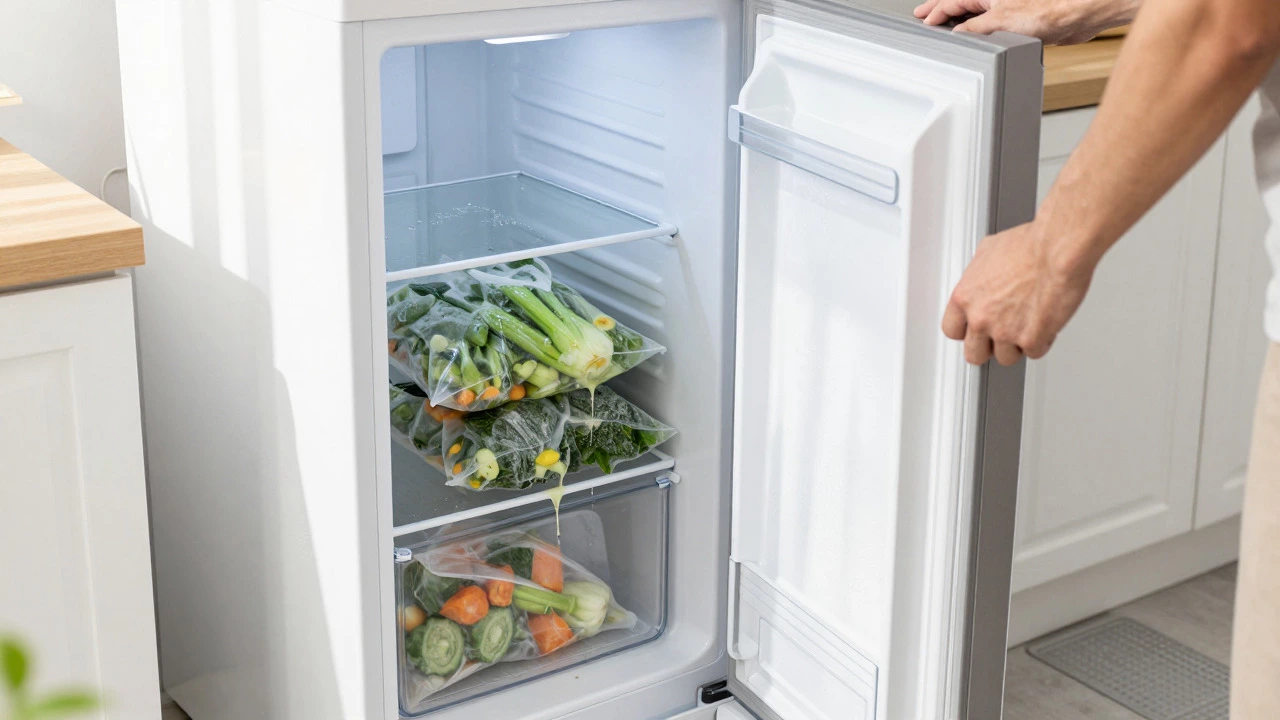
Imagine opening your freezer door to grab a bag of frozen peas for dinner, only to find them thawed into a soggy mess. It’s a nightmare scenario that hits hard because you aren’t just losing electricity; you are losing food. Panic is the natural first reaction, but before you call a technician or throw away expensive meat, take a breath. Most freezer repairs are simple fixes that address common mechanical or electrical failures rather than total system collapse. In many cases, the problem isn't a broken compressor but something as simple as a dirty coil or a stuck switch.
You don't need to be an engineer to diagnose these issues. By following a logical troubleshooting path, you can often restore your appliance to working order in under an hour. This guide walks you through the most common reasons freezers quit, how to test them yourself, and when it actually makes sense to pay for professional help.
Immediate Damage Control: Save Your Food First
Before you grab a screwdriver, you need to stabilize the situation. If your freezer has been off for more than two hours, bacteria can start growing on perishable foods. Here is how to minimize loss:
- Keep the door closed: Every time you open the freezer, warm air rushes in and accelerates melting. Only open it when necessary.
- Check the temperature: Use a food thermometer if you have one. If the internal temperature is above 40°F (4°C) for more than two hours, discard raw meat, poultry, seafood, eggs, and leftovers. Frozen foods with ice crystals or that feel like 40°F or below can usually be refrozen safely.
- Transfer to coolers: If you have dry ice or lots of ice packs, move the food there. Grouping items together helps them stay cold longer because they act as insulation for each other.
Step 1: Check the Basics Before You Assume It's Broken
It sounds obvious, but the majority of "broken" appliances are simply unplugged or switched off. We’ve all been there. Start with the power supply. Ensure the plug is firmly seated in the outlet. Try plugging another device, like a lamp, into that same socket to confirm the outlet is live. If the lamp doesn’t work, you have an electrical issue with your home wiring, not the freezer.
Next, look for a reset button. Many modern frost-free freezers are appliances that use automatic defrost cycles to prevent ice buildup, requiring periodic electronic resets. These units often have a small red button near the thermostat or on the control panel. Pressing this can restart the control board if it has locked up due to a power surge.
If your freezer is part of a refrigerator unit, check the damper. The damper is a small flap inside the fridge section that lets cold air from the freezer flow into the fresh food compartment. If this gets stuck closed, the freezer might get too cold while the fridge warms up, triggering sensors that shut down the cooling cycle entirely. Gently try to move the damper blade with your hand to see if it moves freely.
Step 2: Listen and Look for Signs of Life
Once you know it has power, engage your senses. Stand quietly next to the freezer and listen. Do you hear a hum? A click? Or complete silence?
A steady hum usually means the compressor is the heart of the refrigeration system that circulates coolant to remove heat from the interior. is running. If it’s humming but not cooling, the issue is likely airflow or refrigerant-related. Complete silence suggests an electrical failure-either the thermostat isn’t telling the compressor to turn on, or the start relay has failed.
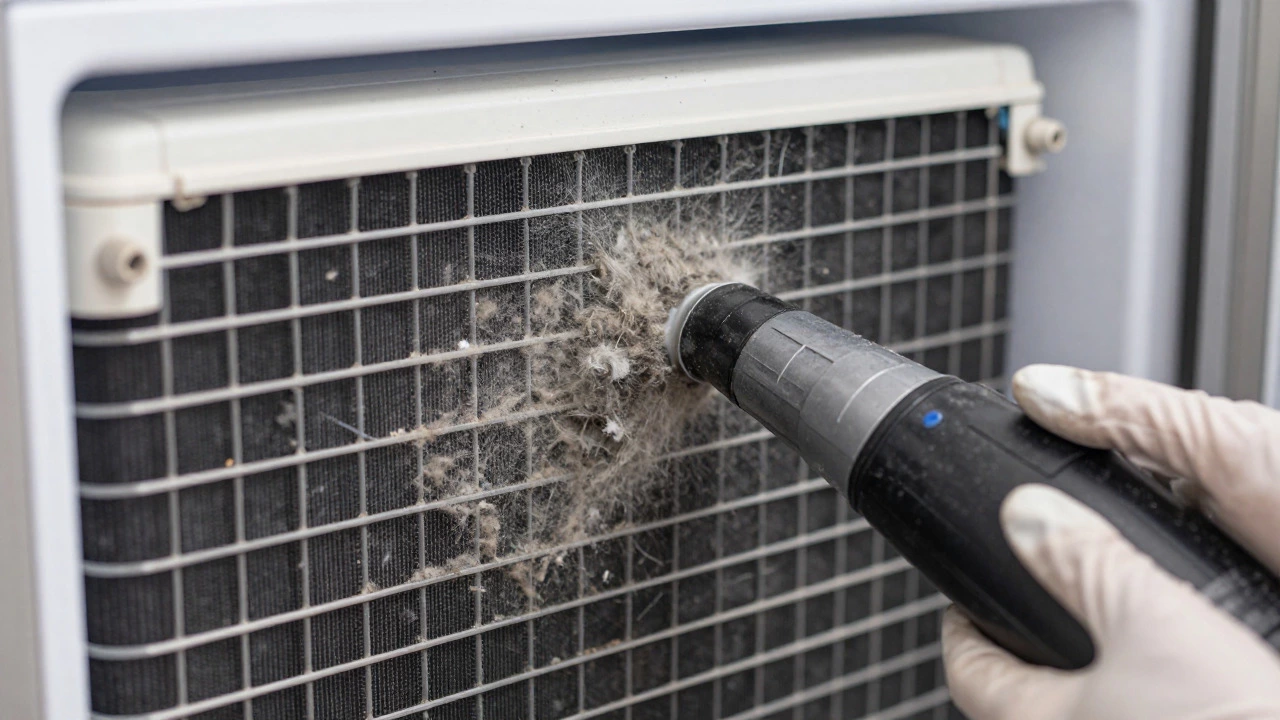
Look at the back or bottom of the unit. Are the condenser coils covered in thick layers of dust, pet hair, and debris that insulate the coils and prevent heat dissipation.? Dirty coils are the number one cause of poor performance. When coils are clogged, the compressor has to work overtime to pull heat out. Eventually, it overheats and shuts off to protect itself. Vacuuming these coils every six months can extend the life of your appliance by years.
Step 3: Diagnose Common Mechanical Failures
If the basics check out, we need to look deeper. Here are the three most frequent culprits for a non-cooling freezer.
The Defrost System Failure
In frost-free models, ice builds up on the evaporator coils during normal operation. To stop this, a defrost heater periodically an electric heating element that melts accumulated ice on the evaporator coils to maintain airflow. turns on. If the heater, the timer that controls it, or the sensor that tells the system when to melt the ice fails, ice will build up until it blocks all airflow. The freezer stops cooling, even though the compressor is running.
The Test: Unplug the freezer. Remove the back panel inside the freezer compartment. Look at the metal coils behind it. If they are buried under a thick layer of ice, you have a defrost problem. You can manually defrost it with a hairdryer (keep it moving to avoid melting plastic) to see if cooling returns. If it does, you’ll need to replace the defrost heater, thermostat, or control board.
The Start Relay Issue
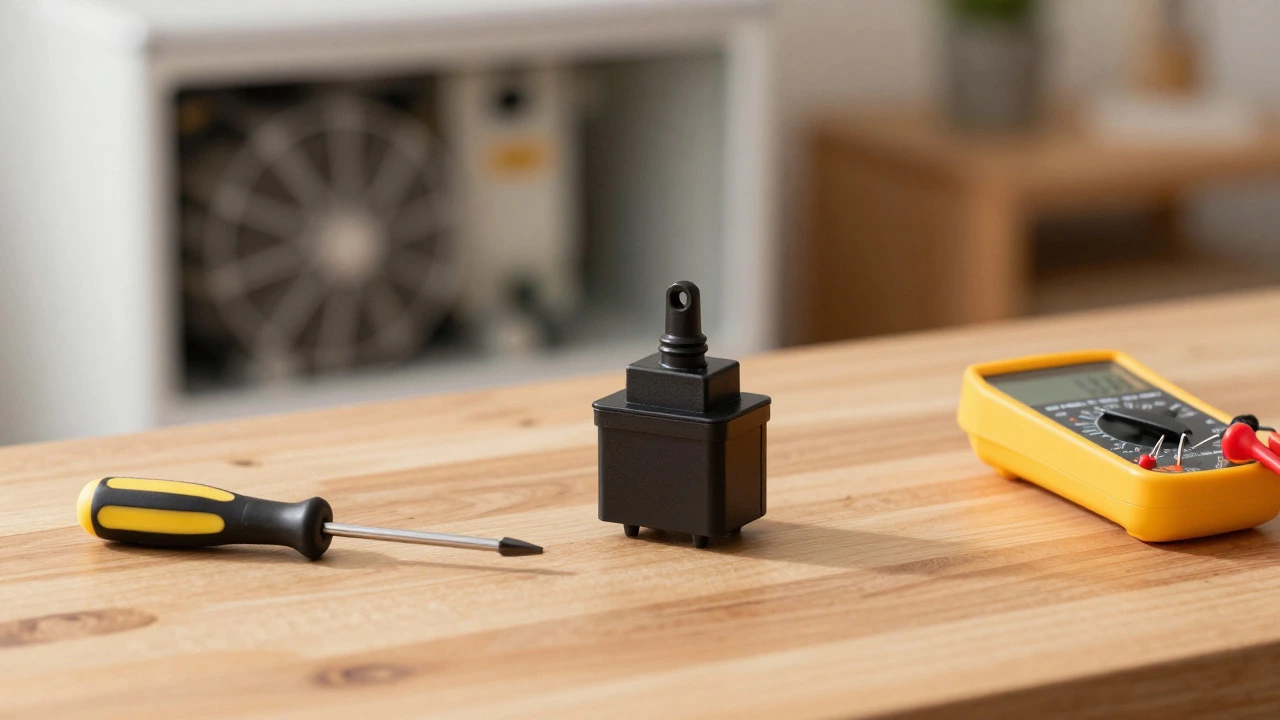
The start relay is a small electrical component that provides the initial boost needed to start the compressor motor. located on the back of the unit, attached to the compressor. It looks like a small black box. If this clicks repeatedly but the compressor never starts, or if it feels hot to the touch, it’s likely dead. This is a cheap and easy fix. You can buy a universal relay online for under $20 and swap it out in minutes.
The Thermostat or Control Board
If the freezer is always cold or never cold, the brain of the operation is malfunctioning. Older units use mechanical thermostats. Newer ones use digital control boards. If the display is blank, check the fuse or circuit breaker first. If power is present but the board is unresponsive, the board may need replacement. For mechanical thermostats, you can test continuity with a multimeter. If there’s no continuity when the dial is turned up, the thermostat needs replacing.
| Symptom | Likely Cause | Difficulty Level |
|---|---|---|
| No power, no lights | Tripped breaker, bad cord, or blown fuse | Easy |
| Compressor hums but won't start | Failed start relay or overload protector | Medium |
| Ice buildup on back wall | Broken defrost heater or timer | Medium |
| Warm air blowing from vents | Clogged condenser coils or low refrigerant | Hard |
| Loud buzzing noise | Failing compressor or loose fan blade | Hard |
When to Call a Professional vs. DIY
Knowing when to stop tinkering is just as important as knowing how to fix things. If you’ve cleaned the coils, checked the power, and replaced the start relay, but the unit still doesn’t cool, you might be looking at a sealed system issue. This involves the compressor or refrigerant lines.
Refrigerant leaks require specialized tools and EPA certification to handle legally. Compressor replacements are labor-intensive and often cost nearly as much as a new unit. If your freezer is more than 10 years old, the math rarely favors repairing a major component. Instead, focus on preventative maintenance for your new appliance.
Preventative Maintenance Tips
To keep your freezer running smoothly for years, adopt these habits:
- Clean coils quarterly: Pull the unit away from the wall and vacuum the coils at the back or underneath.
- Check door seals: Close the door on a dollar bill. If you can pull it out easily, the gasket is worn and letting warm air in. Replace it immediately.
- Maintain temperature: Keep the freezer at 0°F (-18°C). Using a standalone thermometer ensures accuracy since built-in dials are often estimates.
- Avoid overpacking: Air needs to circulate around food. Overcrowding forces the compressor to run constantly.
How long can a freezer stay off before food spoils?
A full freezer will hold its temperature for about 48 hours if the door remains closed. A half-full freezer lasts about 24 hours. Perishables like meat and dairy should be discarded if they rise above 40°F for more than two hours.
Is it worth repairing an old freezer?
If the repair cost exceeds 50% of the price of a new energy-efficient model, it is usually better to replace it. Modern freezers use significantly less electricity, which pays for the upgrade over time.
Why is my freezer making a loud buzzing noise?
Buzzing often indicates a failing compressor or a loose fan blade hitting the housing. Check for obstructions in the fan area first. If the noise persists, the compressor may be nearing the end of its life.
Can I use a hairdryer to defrost my freezer?
Yes, but use caution. Keep the dryer moving to avoid melting plastic panels or damaging wiring. Never use sharp objects to chip away ice, as this can puncture the refrigerant coils.
What causes ice buildup on the floor under the freezer?
This is usually a clogged defrost drain. Melted ice has nowhere to go and spills onto the floor. Locate the drain tube (usually at the back of the freezer compartment) and clear it with warm water or a pipe cleaner.