
Quick Summary: What You Need to Know
- A boiler failure usually stops hot water production, but some systems with storage tanks may keep water for a short while.
- Partial failures (like a faulty diverter valve) can leave you with heating but no hot water, or vice versa.
- Common culprits include low water pressure, failed thermocouples, or broken pumps.
- Safety first: If you smell gas or see leaking water, shut off the supply immediately and call a professional.
How Your Boiler Actually Makes Hot Water
To understand why the water goes cold, we need to look at the gear involved. Most modern homes use a Combi Boiler is a compact heating system that combines a central heating boiler and a geyser into one unit, heating water instantly on demand. In these systems, there is no tank. When you turn the tap, the boiler fires up, heats the water on the fly, and sends it to your shower. If the internal ignition fails, you get cold water instantly.
Older homes often have Regular Boilers which are systems that rely on a separate hot water cylinder to store heated water. Here, the boiler heats the water in the cylinder, and the cylinder stores it. If this type of boiler breaks, you might still have hot water for an hour or two because the tank is already warm. Once that stored heat is gone, however, the taps go cold.
When You Have Heating But No Hot Water
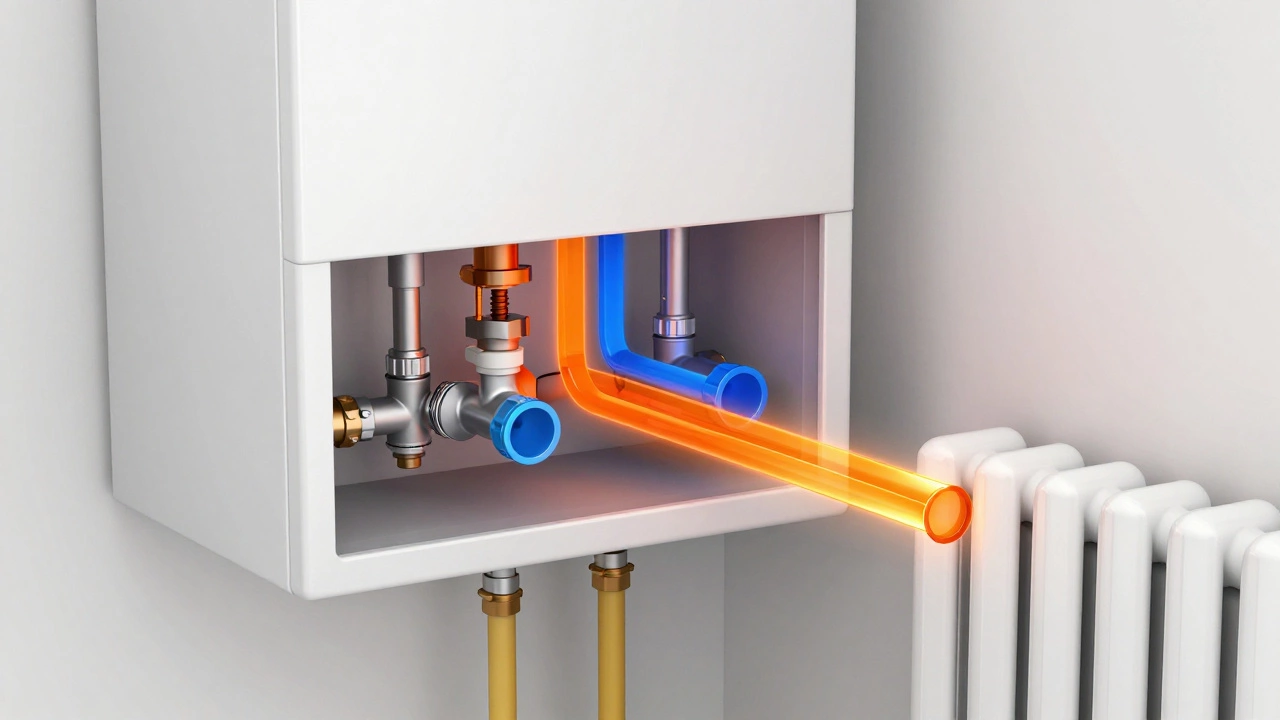
It is a strange feeling when your radiators are toasty but your shower is freezing. This usually points to a specific part failure rather than a complete system crash. The most common offender is the Diverter Valve, which is a mechanical component that directs the flow of hot water either to the radiators or to the hot water outlet. If this valve gets stuck in the 'heating' position, the boiler keeps pumping warmth into your floors and walls, but never sends it to your taps.
Another possibility is a failed Thermostatic Mixing Valve. This part blends hot and cold water to ensure you don't scald yourself. If it fails or gets clogged with limescale, it might block the hot water flow entirely, making it seem like the boiler is broken when the heating is actually working perfectly. This is a classic "phantom" boiler failure where the heat source is fine, but the delivery is blocked.
When You Have Hot Water But No Heating
Flip the script: you can have a steaming hot bath, but your living room feels like a fridge. This is often a sign that the boiler is working, but the distribution is failing. In many cases, this is caused by Air Locks, which are pockets of air trapped in the heating pipes that prevent water from circulating through the radiators. Since the hot water for your taps usually takes a shorter, more direct path, it stays working while the wider heating loop is blocked.
You might also be dealing with a failed Pump. The pump is responsible for pushing the heated water around the house. If the pump dies, the boiler can still heat the water inside itself (providing enough for a tap), but it can't push that water through the long miles of piping leading to your radiators. If you hear a loud grinding noise coming from the boiler, the pump is likely the culprit.
| Symptom | Possible Cause | Urgency | Fix Complexity |
|---|---|---|---|
| No Heat, No Hot Water | Power failure, Gas cut, Pilot light out | High | Low to Medium |
| Heat OK, Water Cold | Diverter Valve, Plate Heat Exchanger | Medium | Medium (Pro needed) |
| Water OK, Heat Cold | Pump failure, Air lock, Thermostat | Medium | Low to Medium |
| Intermittent Hot Water | Limescale buildup, Sensor failure | Low | Medium |
The Most Common Culprits for Total Failure
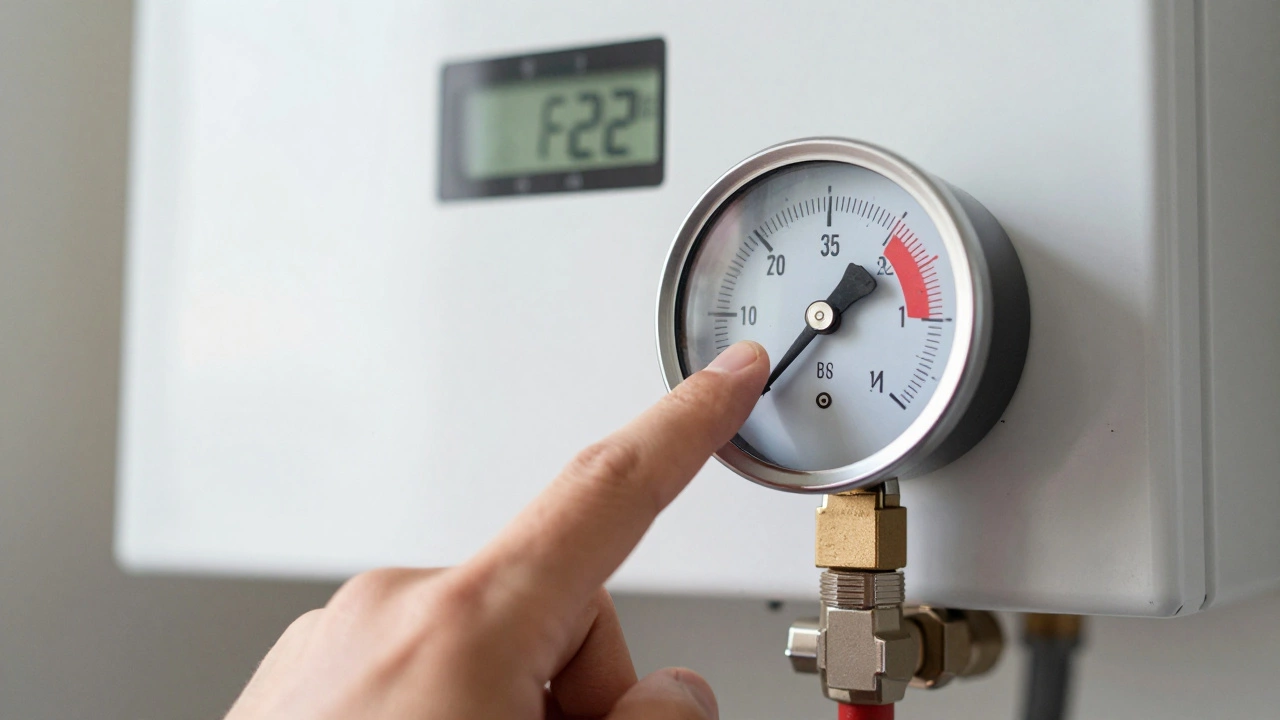
If everything is dead, you're likely looking at a failure in the "brain" or the "heart" of the system. One of the most frequent reasons for a total shutdown is Low Water Pressure. Most boilers have a safety switch that shuts the whole system down if the pressure drops too low (usually below 1 bar). This prevents the boiler from overheating or damaging its internal components. If you see a pressure gauge in the red zone, you don't necessarily have a broken boiler; you just have a thirsty one that needs topping up via the filling loop.
Then there is the Thermocouple. This is a small sensor that detects if the pilot light is lit. If the thermocouple fails, it tells the boiler that there is no flame, and for safety reasons, the boiler shuts off the gas supply. You'll know this is the problem if you can't get the boiler to stay ignited for more than a few seconds. While it sounds technical, it's a relatively simple part to replace, though it requires a certified engineer for safety.
Finally, let's talk about the PCB (Printed Circuit Board). This is the computer that controls everything. If a power surge hits or a component burns out, the PCB stops sending signals to the pump and the burner. At this point, the boiler is essentially a very expensive piece of wall art. There is no DIY fix for a fried PCB; it requires a full replacement.
Immediate Steps to Take Before Calling an Engineer
Before you spend £80 on a call-out fee, run through this quick checklist. You'd be surprised how often the "broken" boiler is actually just a minor glitch.
- Check the Power: Is the boiler plugged in? Did a fuse trip in your consumer unit? Check your electricity board first.
- Inspect the Pressure Gauge: Look for the dial on the front. If it's below 1.0 bar, use your filling loop to bring it back up to roughly 1.5 bar.
- Check for Error Codes: Does the display show a code like "F22" or "E11"? Look these up in your manual. It tells you exactly where the problem is, which prevents engineers from guessing and overcharging you.
- The Reset Button: Sometimes the system just needs a reboot. Hold the reset button for 5 seconds and see if the flame icon reappears.
- Check Your Gas: Check if other gas appliances (like your hob) are working. If they aren't, you might have a supply issue with the grid rather than a broken boiler.
Avoiding Future Breakdowns
The best way to ensure you don't wake up to a cold shower is a yearly Boiler Service. During a service, an engineer clears out Limescale-the chalky mineral buildup common in hard water areas-which can clog the heat exchanger and make your hot water feel lukewarm. They also check the gas pressure and clean the burner, which keeps the system efficient.
If you live in a hard water area, consider installing a magnetic filter. This device catches sludge and metallic debris before they reach the pump, extending the life of your system by years. Neglecting this is like never changing the oil in your car; eventually, the friction and grime will cause a mechanical failure.
Can I still get hot water if my boiler is flashing a red light?
Usually, no. A flashing red light typically indicates a "lockout" state, meaning the boiler has detected a critical error (like a complete loss of pressure or an ignition failure) and has shut down all functions for safety. You will likely have no heating and no hot water until the fault is cleared.
Why is my hot water only warm, not hot?
This is often caused by a partially blocked heat exchanger or a failing thermistor (temperature sensor). Limescale buildup is the most common cause, as it creates a barrier between the flame and the water, preventing the water from reaching its maximum temperature.
Is it safe to try and fix a boiler myself?
You can safely check the pressure gauge and perform a system reset. However, you should NEVER open the boiler casing or touch gas valves. In the UK, it is illegal and dangerous to perform gas work without being a Gas Safe registered engineer. Gas leaks or carbon monoxide poisoning are lethal risks.
How long does it take for a boiler to heat water after a restart?
For combi boilers, hot water should be available within 30 to 60 seconds of turning the tap. For system or regular boilers, it depends on whether the cylinder was already warm. If the tank is cold, it can take 20 to 40 minutes to heat enough water for a shower.
Why does my boiler make a loud banging noise when heating water?
This is often called "kettling." It happens when limescale builds up inside the heat exchanger, creating steam bubbles that collapse violently. It's a sign that your boiler needs a chemical descale or a professional service immediately to prevent the heat exchanger from cracking.
Next Steps and Troubleshooting
If you've tried the reset and the pressure is fine, but you're still cold, your path depends on your symptoms. If you have heating but no hot water, call your engineer and specifically mention the diverter valve; this helps them bring the right parts on the first visit. If the whole system is dead and the display is blank, check your fuse box before calling anyone.
For those with older systems, if the water is lukewarm, try bleeding your radiators to ensure the pump isn't struggling against air pockets. If you smell gas-even a faint scent of rotten eggs-do not flip any light switches or use a phone near the boiler. Exit the house and call the National Gas Emergency service immediately.