Water Heater Reset Safety Guide
What type of water heater do you have?
Select the option that best describes your unit.
Electric Tank
Standard storage tank with heating elements. Usually has access panels on the front.
Gas Storage Tank
Uses natural gas or propane for combustion. Has a pilot light or electronic ignition system.
Tankless Electric
Compact unit with digital controls. Heats water on demand without a storage tank.
Tankless Gas
Gas-powered on-demand system. Typically has LED indicators and error codes.
You step into the shower, expecting warmth, but get blasted by ice-cold water instead. Panic sets in. You check the thermostat, fiddle with the knobs, and maybe even press that little red button hidden behind the access panel. Still nothing. The next logical thought is: "Do I need to kill the power at the fuse box first?" It’s a valid question, especially when you’re dealing with high-voltage electricity and scalding hot water.
The short answer is yes. For most standard electric water heaters, turning off the circuit breaker is not just recommended-it’s mandatory for your safety before you touch anything inside the unit. But it gets a bit more complicated if you have a gas model or a specific type of digital control system. Let’s break down exactly what you need to do, why it matters, and how to avoid electrocuting yourself while trying to fix a simple reset issue.
Why Electricity and Water Don't Mix (And Why You Should Care)
Before we talk about switches, let's talk about physics. A standard residential electric water heater runs on 240 volts. That is enough voltage to stop your heart instantly. Unlike a 120-volt outlet where you might only touch one wire, a 240-volt system involves two "hot" wires. If you accidentally bridge them-or worse, touch one while standing on a wet floor-the result is catastrophic.
When you reset a water heater, you aren't just pressing a button. You are often accessing internal components like the heating elements or the thermocouple. These parts sit directly in contact with water tanks. Even if the tank is sealed, moisture can accumulate on terminals over time. Turning off the circuit breaker ensures that zero current flows through those wires. It is the single most important step in the process. Skipping it saves you thirty seconds but risks your life.
Electric vs. Gas: Does the Rule Change?
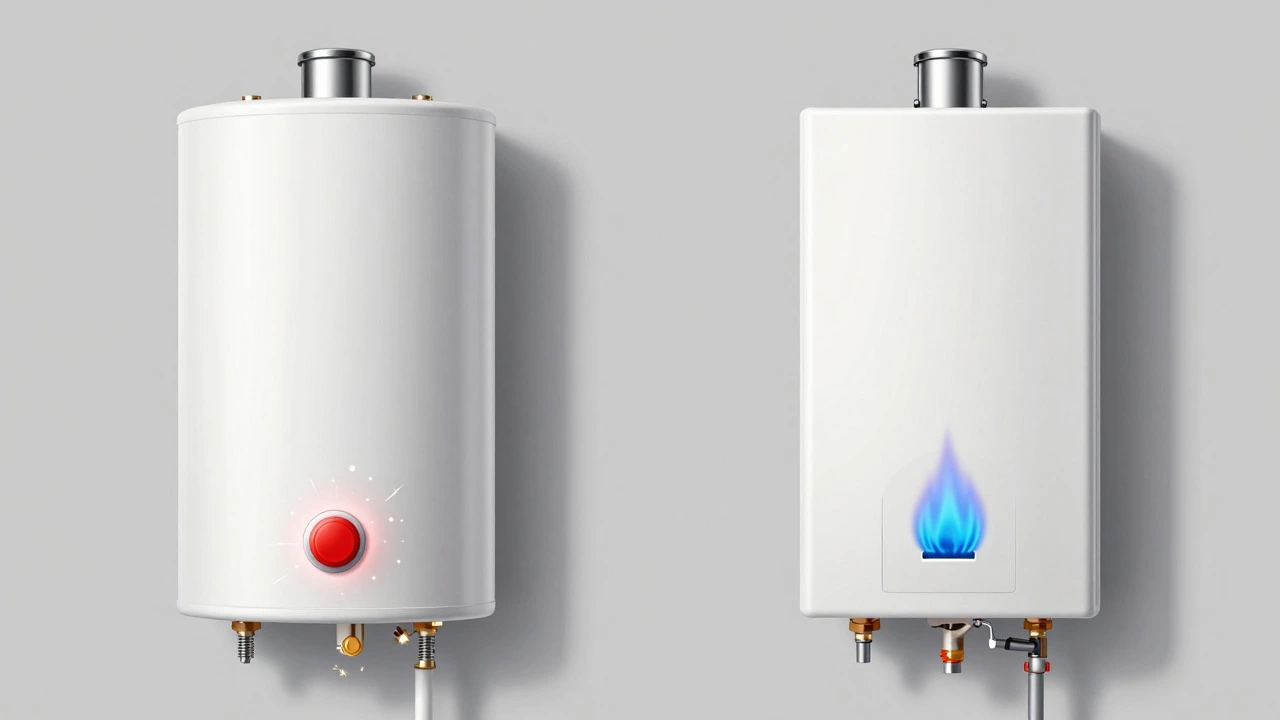
The rule about the breaker depends entirely on what fuels your tankless water heater or storage tank. Most homes use either electric resistance heating or natural gas/propane combustion. The reset procedures differ significantly between the two.
| Heater Type | Turn Off Main Breaker? | Primary Reset Method | Risk Level |
|---|---|---|---|
| Standard Electric Tank | Yes | Press High-Limit Switch (Red Button) | High (Electrocution) |
| Gas Storage Tank | No (Usually) | Relight Pilot / Check Thermocouple | Medium (Burns/Gas Leak) |
| Tankless Electric | Yes | Check Error Codes / Reset Board | High (Electrocution) |
| Tankless Gas | No | Cycle Power to Control Board | Low |
If you have an electric unit, the breaker is non-negotiable. If you have a gas unit, you generally don't need to cut the main electrical supply unless you are replacing the control board itself. Gas heaters use low-voltage electronics for ignition sensors, which are much safer to handle. However, always verify your specific model's manual, as some hybrid models blur these lines.
Step-by-Step: How to Safely Reset an Electric Water Heater
Let’s assume you have a standard electric storage tank. This is the most common scenario where people ask about the breaker. Here is the exact sequence you should follow to reset the thermal cutoff switch safely.
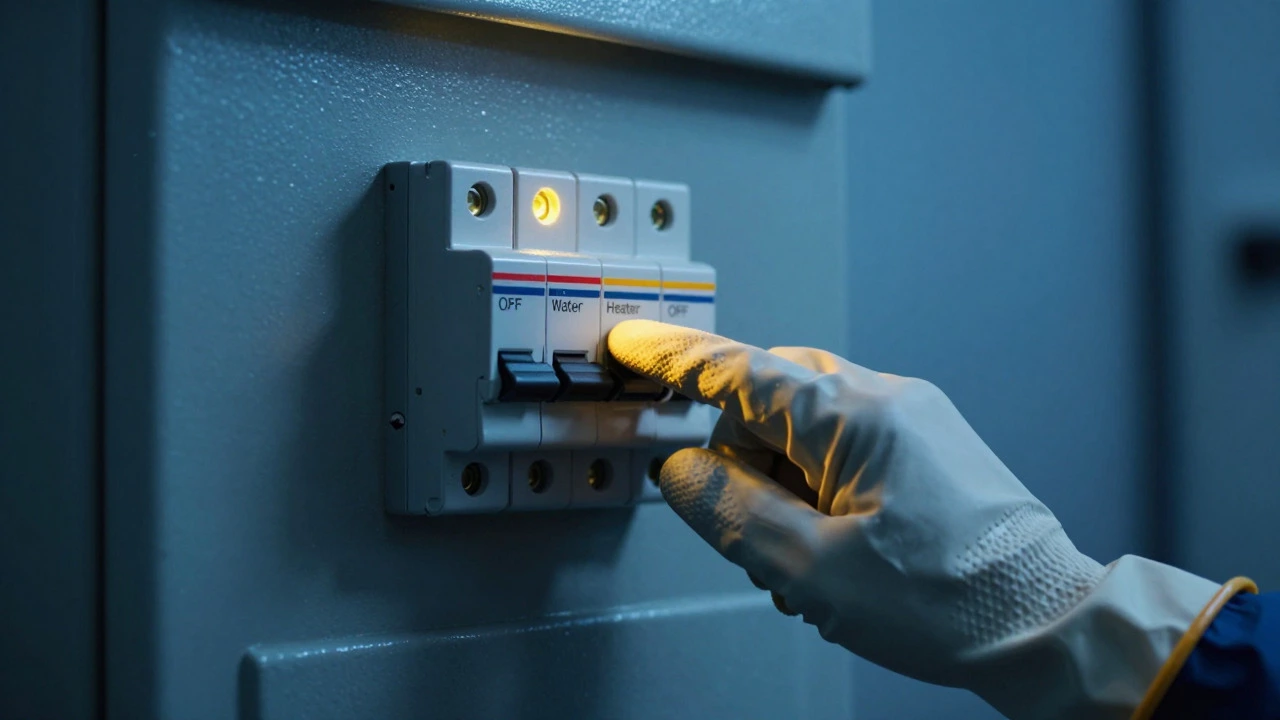
- Locate the Circuit Breaker: Go to your main electrical panel. Look for the double-pole breaker labeled "Water Heater." Flip both switches to the OFF position. If there is no label, turn off every breaker until the water heater display (if any) goes dark or the hum stops.
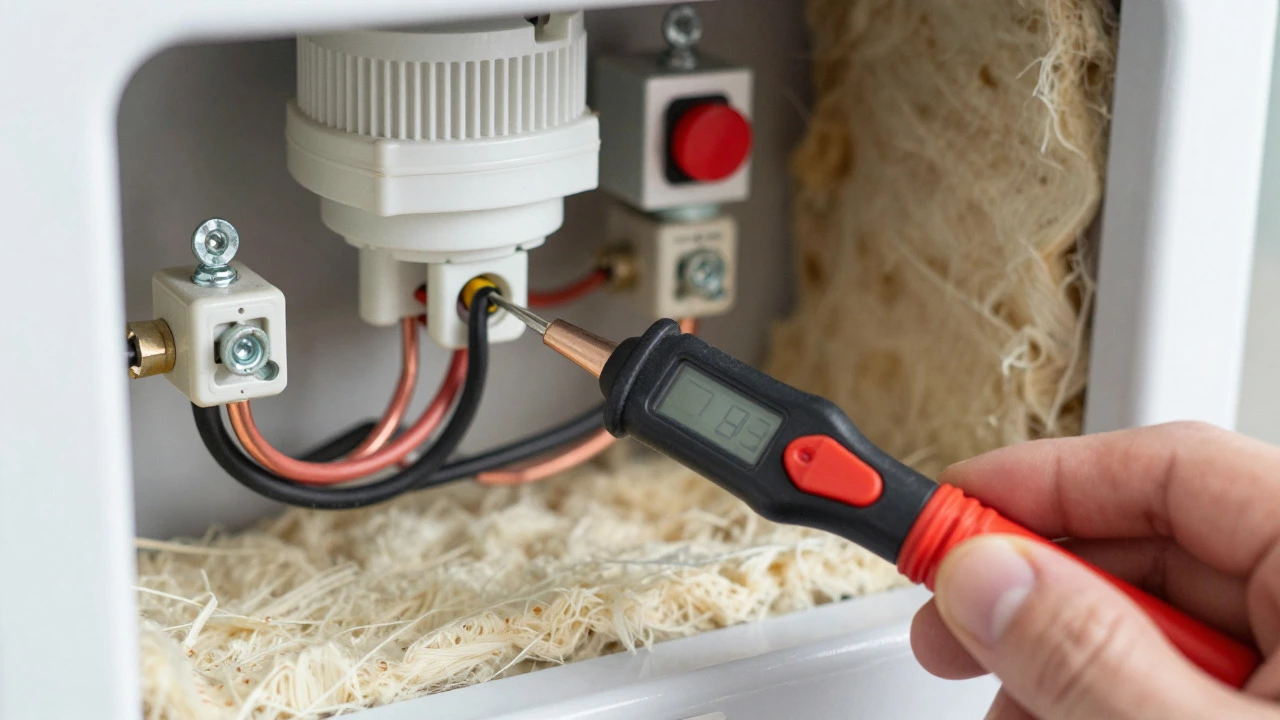
- Verify Zero Energy: This is the pro tip most DIYers skip. Use a non-contact voltage tester on the wires entering the top of the water heater. Touch the probe near the terminals. If it beeps or lights up, you still have live power. Do not proceed until it reads zero.
- Remove the Access Panels: Unscrew the metal covers on the front of the tank. There are usually two-one for the upper element and one for the lower. Pull back the fiberglass insulation carefully; it’s itchy and messy.
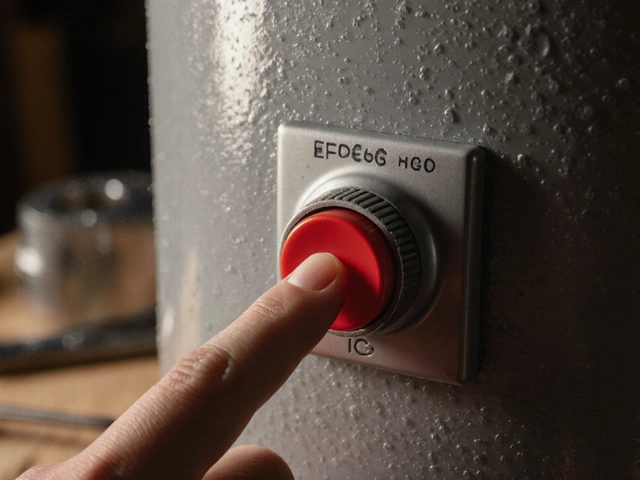
- Find the Red Button: Behind each panel, look for a small red button mounted on the thermostat housing. This is the thermal cutoff switch. If it has popped out, your heater experienced an overheating event.
- Press the Reset Button: Firmly press the red button. You might hear a click. Do this for both the upper and lower thermostats if they are accessible.
- Reassemble and Restore Power: Replace the insulation and screw the panels back on tightly. Go back to the breaker box and flip the switch back ON. You should hear the elements start to hum shortly after.
Notice that step 2? Verifying zero energy. That is why you turned off the breaker. Without that dead silence from the voltage tester, you are guessing. And in electrical work, guessing is expensive.
What If the Reset Button Keeps Tripping?
You’ve done everything right. You killed the power, pressed the button, restored the juice, and waited. An hour later, the breaker trips again, or the red button pops out once more. Congratulations, you have a deeper problem. Pressing the reset button is a temporary bandage, not a cure.
There are three main culprits for repeated tripping:
- Failed Heating Element: Over time, the magnesium coating on the heating element can degrade, causing it to short out against the tank. When this happens, the element draws too much current, triggering the breaker or the thermal cutoff. You’ll likely need to replace the element.
- Stuck Thermostat: The thermostat regulates the temperature. If its internal bimetallic strip fails, it might keep sending power to the element even after the water reaches boiling point. This causes the water to superheat, triggering the safety cutoff. Replacing the thermostat is usually required here.
- Sediment Buildup: In hard water areas, minerals settle at the bottom of the tank. This sediment insulates the lower heating element from the water. The element gets hotter than it should because it can’t transfer heat efficiently. Eventually, it overheats and trips the safety switch. Flushing the tank might solve this without part replacement.
If you find yourself resetting the button more than twice in a day, stop. Call a professional. Continuing to force the reset can lead to tank corrosion, leaks, or in rare cases, a rupture.
Special Case: Tankless and Digital Models
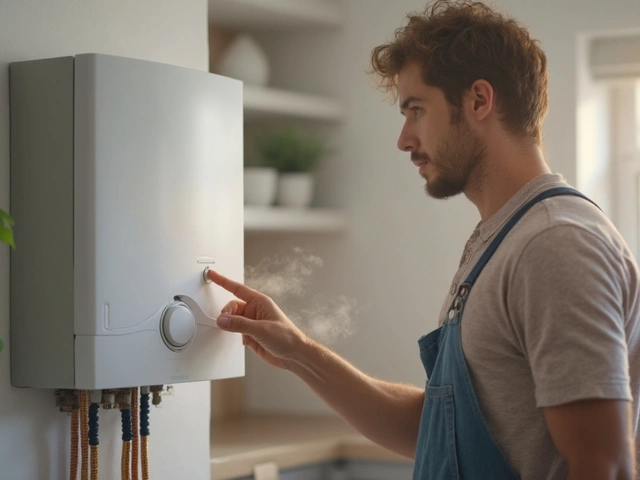
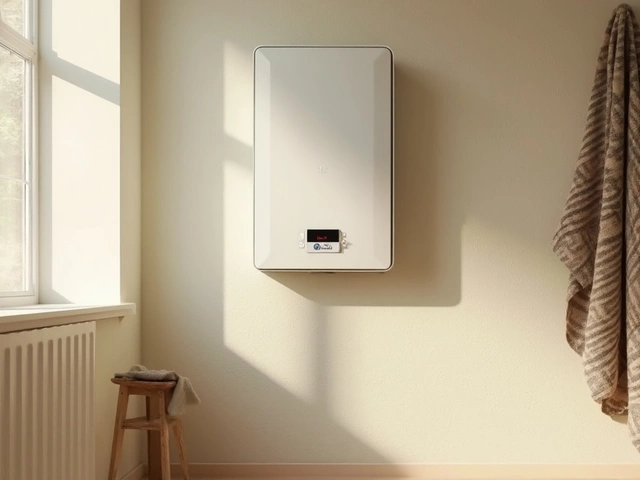
Newer homes often feature tankless water heaters or units with digital LCD screens. These operate differently. They don't always have a physical red button you can see. Instead, they use solid-state relays and microprocessors.
For digital electric tankless units, the "reset" is often software-based. If the unit displays an error code (like E1 or E3), you typically need to cycle the power. Yes, you still turn off the breaker. Wait ten seconds. Turn it back on. This clears the memory buffer and restarts the diagnostic routine. However, if the error persists, it’s usually a sensor failure-like a flow sensor or inlet temperature sensor-that requires a technician with specialized tools.
Some modern smart water heaters allow you to reset via a mobile app. While convenient, the underlying principle remains: ensure the physical connection is safe. If the app says "System Fault," check your breaker anyway. Sometimes a loose connection at the panel causes communication errors that mimic internal faults.
When to Call a Professional vs. DIY
Knowing when to walk away is a skill. You can safely reset a water heater if:
- You are comfortable working with a circuit breaker panel.
- You have a non-contact voltage tester.
- The unit is less than 10 years old.
- There are no signs of leaking water around the base.
Call a licensed plumber or electrician if:
- You smell burning plastic or ozone near the heater.
- The breaker trips immediately upon flipping it back on (indicating a hard short).
- You see rust or corrosion on the terminal screws.
- You are unsure which breaker controls the water heater.
In Bristol, UK, regulations are strict regarding electrical work. While changing a lightbulb is fine, messing with fixed wiring like a water heater connection often requires a Part P notification or certification from a qualified person. If you mess up, it’s not just your safety at risk-it’s your home insurance validity.
Maintenance Tips to Avoid Future Resets
Prevention is cheaper than repair. To keep your thermal cutoff from tripping unexpectedly, adopt these habits:
- Flush Annually: Drain a few gallons from the bottom valve once a year to remove sediment. This keeps the heating elements cool and efficient.
- Check the Anode Rod: Every three to five years, inspect the sacrificial anode rod. If it’s completely corroded, the tank itself starts to rust, leading to electrical shorts.
- Set Temperature Correctly: Keep your thermostat between 120°F and 140°F (49°C - 60°C). Higher settings stress the components and increase scalding risk.
- Inspect Wiring: During annual maintenance, look for frayed wires or loose connections at the junction box. Tighten them if necessary (with power off!).
A well-maintained water heater can last 10 to 15 years. One neglected reset can shorten that lifespan by half.
Can I reset a water heater without turning off the breaker?
Technically, you might reach the button without touching live wires, but it is extremely dangerous. If you slip, drop a tool, or touch a grounded surface while near exposed terminals, you could receive a fatal shock. Always turn off the breaker and verify zero voltage before resetting.
Why did my water heater breaker trip?
A tripped breaker usually indicates an overload or a short circuit. Common causes include a failing heating element drawing too much current, a ground fault due to moisture, or a surge in household voltage. It is a safety mechanism designed to prevent fire.
How long should I wait after resetting the water heater?
After resetting the thermal cutoff and restoring power, wait at least 30 to 60 minutes for the water to heat up. If the breaker trips again within this window, there is likely a persistent electrical fault requiring professional repair.
Is it safe to reset a gas water heater?
Yes, but the process is different. You typically do not need to turn off the main electrical breaker. Instead, you focus on relighting the pilot light or checking the gas supply. Ensure there is no smell of gas before attempting any reset.
What does the red button on a water heater do?
The red button is the high-limit thermal cutoff switch. It acts as a last-resort safety device. If the thermostat fails and the water gets dangerously hot, this switch physically breaks the electrical circuit to stop heating. It must be manually reset once the issue is resolved.