Oven Repair vs. Replace Calculator
Enter Your Details
Fill in the estimated costs to get a recommendation.
Enter values to see if you should repair or replace.
There is nothing quite as frustrating as opening your kitchen door to find the oven light is on, but the temperature gauge reads zero. You have a roast in the fridge, guests are coming over, and you are staring at a blank screen or a dial that refuses to spin. The immediate question isn't just "how do I fix this?" It is "is it worth fixing?" In 2026, with appliance prices fluctuating and parts becoming scarcer for older models, the decision to repair or replace an oven is more complex than it used to be.
You might assume that buying a new oven is always the better long-term investment because of energy efficiency and warranty coverage. But if your current unit only needs a £40 thermostat replaced, spending £500 on a new machine feels like throwing money away. Conversely, patching up a ten-year-old model with failing electronics could lead to a cycle of small repairs that eventually costs more than a brand-new installation. Let's break down the real numbers, the hidden costs, and the specific signs that tell you when to call a technician and when to visit a showroom.
The 50% Rule: A Quick Financial Check
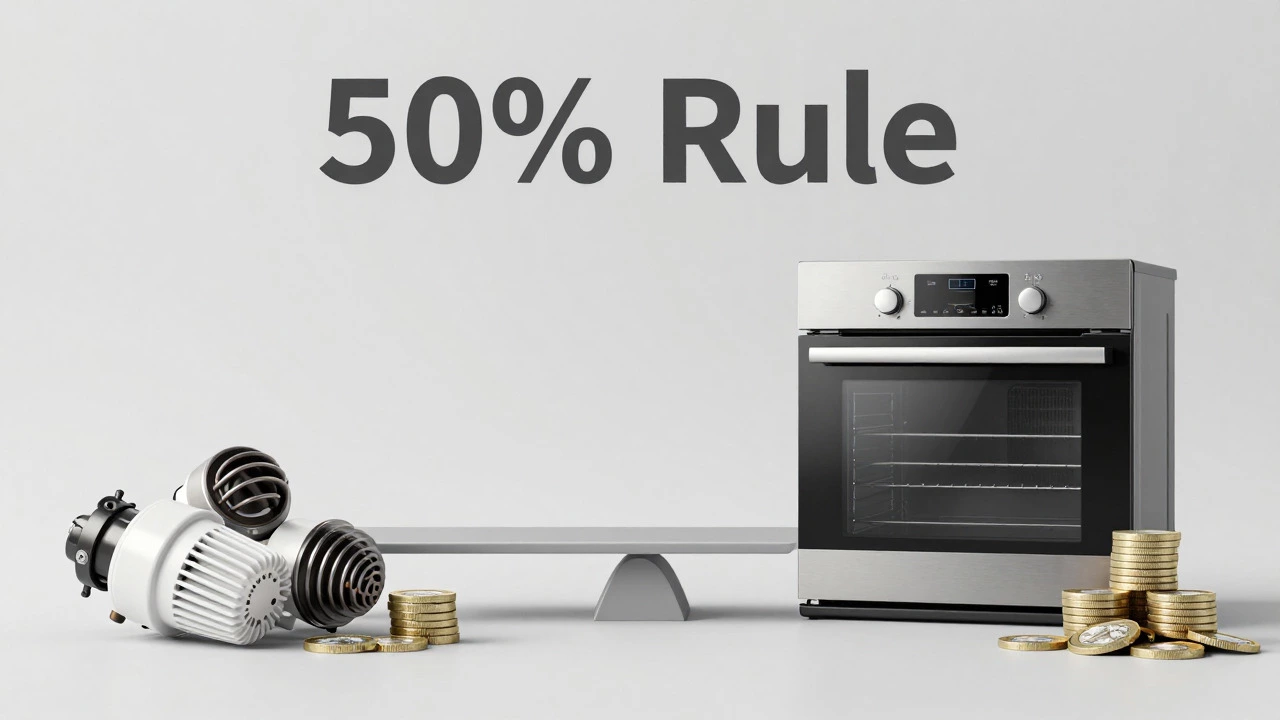
In the world of home appliances, there is a widely accepted heuristic known as the 50% rule. If the cost of repairing your appliance exceeds 50% of the price of a comparable new model, you should generally replace it. This rule exists because newer appliances offer better safety standards, improved energy efficiency, and manufacturer warranties that protect your wallet for the next few years.
However, this rule requires some nuance depending on the type of oven you own. A basic electric single oven might cost between £300 and £450 to buy new in the UK market today. A high-end gas range cooker or a built-in steam oven can easily exceed £1,000 or even £2,000. If your £1,500 range cooker has a faulty heating element costing £80 to replace, the 50% rule clearly points to repair. If your £350 basic oven needs a control board replacement costing £180 plus labour, the math shifts toward replacement.
You also need to factor in the age of the appliance. Most ovens have a lifespan of 10 to 15 years. If your oven is 12 years old and breaks down, even a cheap repair might not be wise. Why? Because other components are likely nearing the end of their life cycle too. Replacing one part now might mean replacing another six months later. At that stage, the cumulative cost of repairs, plus the inconvenience of repeated service visits, outweighs the upfront cost of a new purchase.
Breaking Down Repair Costs in the UK (2026)
To make an informed decision, you need to understand what you are actually paying for when you call a repair engineer. In Bristol and across the UK, repair costs are typically split into two categories: the call-out fee (labour) and the parts.
| Component/Issue | Estimated Part Cost | Estimated Labour (Call-out + Fix) | Total Estimated Cost |
|---|---|---|---|
| Faulty Thermostat | £30 - £60 | £60 - £90 | £90 - £150 |
| Heating Element (Electric) | £20 - £40 | £60 - £90 | £80 - £130 |
| Door Hinge or Seal | £15 - £50 | £60 - £90 | £75 - £140 |
| Control Board / PCB | £80 - £150 | £80 - £120 | £160 - £270 |
| Gas Valve Assembly | £50 - £100 | £80 - £120 | £130 - £220 |
Note that these figures are estimates. Prices vary based on your location, the brand of the oven, and whether you use a third-party independent engineer or the original manufacturer's service team. Manufacturer services often charge higher call-out fees but may offer extended warranty coverage on the repair itself. Independent engineers in areas like Bristol might offer more competitive rates, especially for common brands like Bosch, Siemens, or Hotpoint.
If the diagnosis reveals a simple issue, such as a blown fuse or a loose connection, some engineers might waive the call-out fee or charge a reduced rate. However, if the problem is complex, involving internal wiring or electronic control boards, the labour time increases, driving up the total bill. Always ask for a diagnostic quote before authorizing any work.
When Replacement Makes More Sense
There are specific scenarios where repairing your oven is simply not logical, regardless of the cost. First, consider the energy efficiency rating. Ovens manufactured before 2010 often lack modern insulation and precise temperature controls. An old electric oven might consume significantly more electricity than a modern A-rated model. Over the course of a year, the savings on your energy bill from switching to a new, efficient oven can offset the initial purchase price. For gas ovens, while the fuel cost difference is less dramatic, modern ignition systems are safer and more reliable.
Second, look at the availability of spare parts. As manufacturers discontinue older models, finding genuine replacement parts becomes difficult. Third-party generic parts exist, but they may not fit perfectly or last as long. If your oven is a niche brand or a discontinued model from a major manufacturer, you might face weeks of waiting for a part, or worse, no part at all. In this case, replacement is the only viable option.
Third, consider the aesthetic and functional upgrade. Modern ovens come with features that were unimaginable a decade ago: self-cleaning cycles, steam injection for healthier cooking, precise fan-forced air circulation, and smart connectivity that allows you to preheat your oven from your phone. If your current oven is purely functional but lacks these conveniences, replacement offers a quality-of-life improvement that repair cannot match.
When Repair Is the Smart Choice
On the flip side, there are compelling reasons to keep your existing oven. High-end range cookers and integrated ovens are expensive to replace. If you have a premium Aga, Rangemaster, or Smeg oven, the cost of a new unit can be prohibitive. In these cases, even a £200 repair is a bargain compared to a £2,000+ replacement. These appliances are built to last decades, and with proper maintenance, they can continue to serve you well.
Additionally, if your oven is under warranty, repair is almost always free or low-cost. Most new ovens come with a one-year standard warranty, with options to extend to three or five years. If you purchased an extended warranty, check the terms carefully. Some cover parts but not labour, which can still result in a significant bill. Others cover both. Using your warranty protects your investment and ensures the repair is done by certified technicians using genuine parts.
Finally, environmental considerations play a role. Manufacturing a new oven requires raw materials, energy, and transportation. Extending the life of your current appliance by even two or three years reduces its carbon footprint. If the repair is minor and the oven is otherwise in good condition, choosing repair is the more sustainable choice.
Hidden Costs to Consider
When comparing repair versus replacement, don't just look at the sticker price. There are hidden costs associated with both options.
- Installation Fees: Buying a new oven doesn't mean it's ready to use. Electric ovens require a qualified electrician to install if you are changing the power point or circuit. Gas ovens must be installed by a Gas Safe registered engineer. Installation costs can range from £50 to £150, depending on complexity.
- Removal and Disposal: Who takes away the old oven? Many retailers offer removal services for a fee, or you may need to arrange recycling through your local council. In Bristol, for example, bulky waste collection might involve a small charge or require booking a slot weeks in advance.
- Downtime: How long will you be without an oven? A repair might take 24-48 hours if parts are in stock. Ordering a new oven can take several weeks for delivery and installation. During this time, you might rely on takeaway meals or a microwave, which adds indirect costs.
- Kitchen Modifications: If you replace a freestanding oven with a built-in model, or vice versa, you may need carpentry work to adjust cabinetry. This can add hundreds of pounds to the project.
Step-by-Step Decision Guide
To help you make the final call, follow this simple decision tree:
- Check the Age: Is your oven older than 10 years? If yes, lean towards replacement unless it's a high-end model.
- Get a Diagnostic Quote: Call a reputable engineer for a diagnosis. Ask for the total estimated cost including parts and labour.
- Compare to New Price: Research the price of a comparable new oven online. Add £100-£150 for installation and disposal.
- Apply the 50% Rule: Does the repair cost exceed 50% of the new total cost? If yes, replace.
- Consider Efficiency and Features: Do you want better energy efficiency or modern features? If yes, replace.
- Check Warranty: Is the oven under warranty? If yes, repair.
Frequently Asked Questions
How much does it cost to repair an oven in the UK?
The average cost to repair an oven in the UK ranges from £80 to £250. Simple fixes like replacing a heating element or thermostat typically cost between £80 and £130. More complex issues involving control boards or gas valves can cost between £150 and £270. These prices include both parts and labour.
Is it cheaper to buy a new oven or repair an old one?
It depends on the repair cost relative to the price of a new oven. As a general rule, if the repair costs more than 50% of the price of a new comparable oven, it is cheaper to replace it. For basic ovens, repairs over £100 often justify replacement. For high-end range cookers, repairs up to £300 may still be worthwhile.
What are the most common oven repairs?
The most common oven repairs include replacing faulty thermostats, damaged heating elements, worn door seals, and broken hinges. Electronic control board failures are also frequent in modern digital ovens. These components wear out over time due to heat exposure and regular use.
How long does an oven typically last?
Most household ovens have a lifespan of 10 to 15 years. High-quality range cookers and premium built-in models can last 15 to 20 years or more with proper maintenance. Basic budget models may start showing signs of wear after 7 to 10 years.
Do I need a professional to install a new oven?
Yes. Electric ovens should be installed by a qualified electrician, especially if new wiring is required. Gas ovens must be installed by a Gas Safe registered engineer to ensure safety and compliance with UK regulations. Improper installation can void warranties and pose fire or carbon monoxide risks.
Can I repair my oven myself to save money?
Some simple tasks, like cleaning the oven or replacing a door seal, can be DIY projects. However, internal electrical or gas repairs should be left to professionals. Working with live electricity or gas lines is dangerous and requires specialized tools and knowledge. Incorrect repairs can lead to further damage or safety hazards.