Oven Repair Cost Calculator
Get an accurate estimate of oven repair costs based on your specific situation. This tool uses real-world pricing data from 2025 repair logs across the U.S. and Canada.
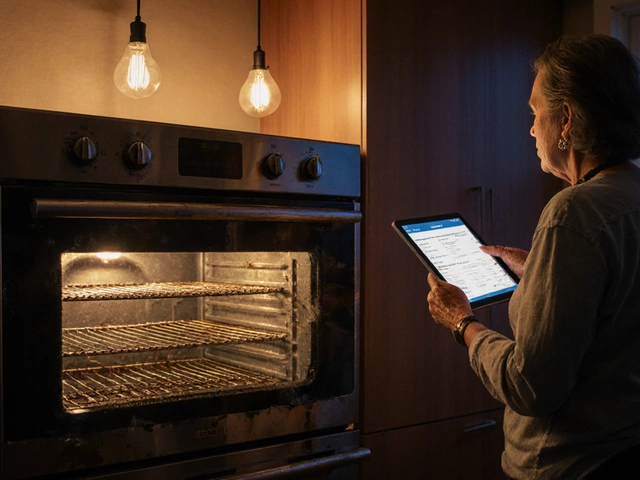
When your oven stops heating or the display goes dark, it’s not just an inconvenience-it’s a daily disruption. You can’t bake cookies, roast chicken, or even warm up leftovers. And before you start thinking about replacing it, you want to know: how much does it cost to fix a broken oven? The answer isn’t one number. It depends on what’s broken, how old your oven is, where you live, and whether you need a part or just a reset.
Common Oven Problems and Their Repair Costs
Ovens fail in predictable ways. Here are the top five issues and what they typically cost to fix, based on service data from 2025 repair logs across the U.S. and Canada.
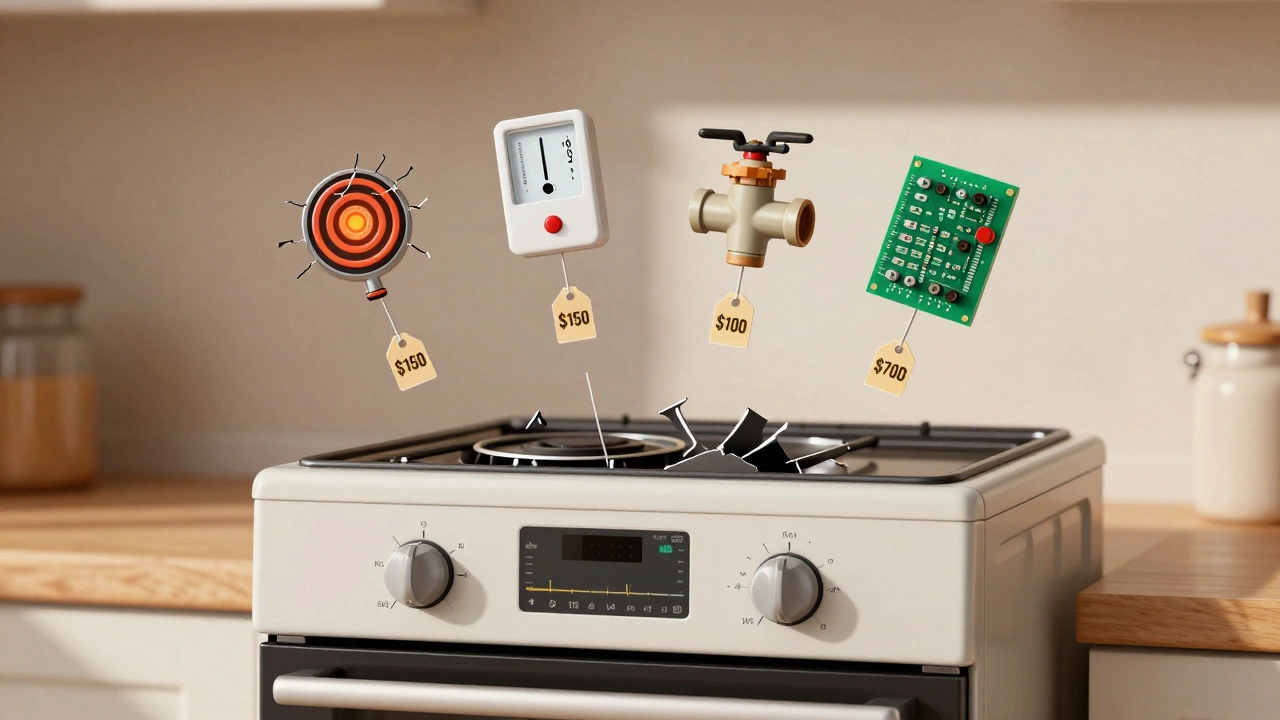
- Broken heating element - This is the most common issue. If the top or bottom element doesn’t glow red, it’s likely burnt out. Replacing it costs $150-$250, including labor. Parts alone are $30-$70, but most people don’t know how to remove and test them safely.
- Faulty thermostat - Your oven heats unevenly or runs too hot. A malfunctioning thermostat can cost $200-$350 to replace. The part itself is $50-$120, but the diagnostic time and recalibration add up. Some models have digital thermostats that need full control board replacement, which pushes the cost higher.
- Igniter failure (gas ovens) - If your gas oven clicks but never lights, the igniter is likely weak or dead. Replacement runs $250-$400. The igniter costs $40-$80, but the labor involves removing the oven bottom, accessing the gas valve, and testing gas flow-work that’s risky if you’re not trained.
- Broken door seal or hinge - Heat escaping from the door? A damaged seal costs $100-$180 to fix. Replacing hinges is cheaper, $80-$150. These aren’t safety hazards, but they waste energy and make cooking less efficient.
- Control board failure - If the display is blank, buttons don’t respond, or the oven turns on by itself, the control board may be fried. This is the most expensive fix: $400-$700. The board alone costs $200-$400, and labor is intensive because it requires disconnecting wiring, removing panels, and sometimes replacing the entire control module.
Why Repair Costs Vary So Much
Not all ovens are created equal. A 2018 Frigidaire and a 2023 Bosch might have the same symptom-a broken element-but wildly different repair prices.
Brand matters. Premium brands like Wolf, Sub-Zero, or Miele use proprietary parts that cost 2-3x more than standard models. A replacement element for a Samsung might be $45. For a Viking, it could be $180. And if the part is discontinued? You might need to order it from Europe, adding 2-3 weeks and $100+ in shipping.
Location also plays a role. In rural areas, technicians drive farther and charge more for travel. In cities like New York or San Francisco, labor rates are higher-$100-$150/hour. In smaller towns, you might pay $70-$90/hour. Most repairs take 1-2 hours, so labor alone can add $70-$300.
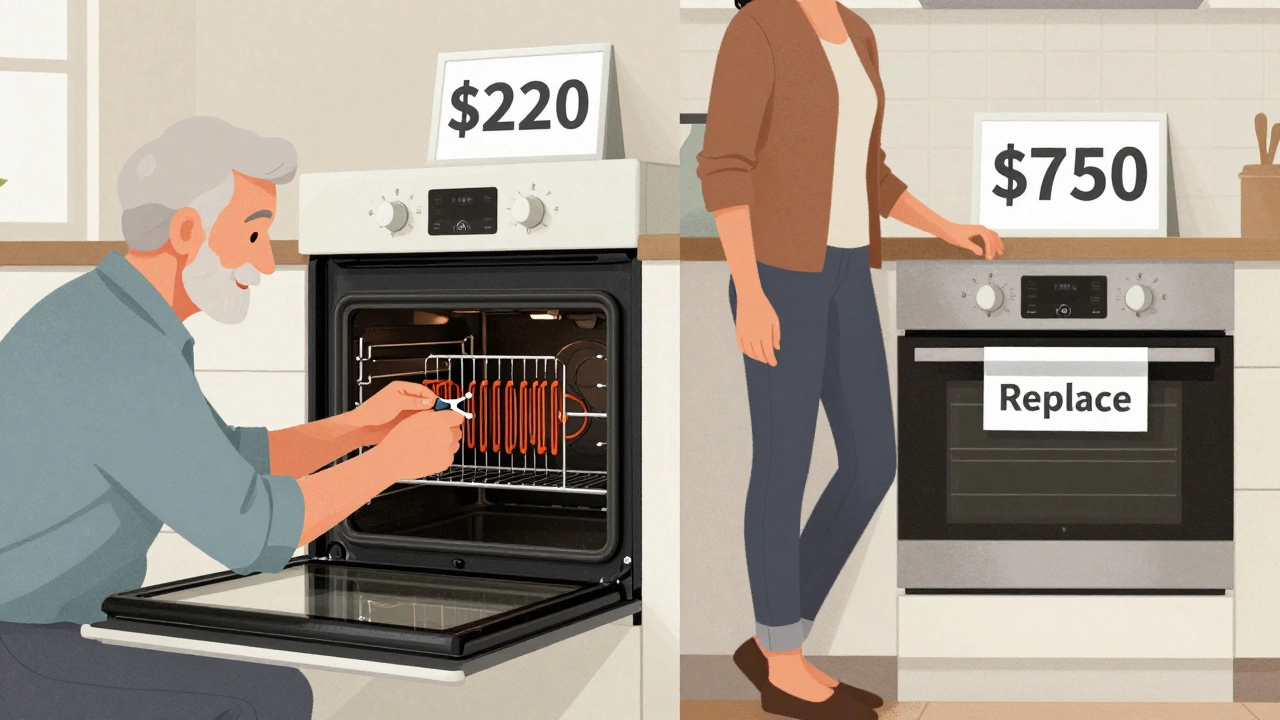
Age is another factor. Ovens older than 10 years are harder to repair. Parts are harder to find. Technicians often recommend replacement if the repair cost exceeds half the price of a new oven. A basic new oven runs $500-$800. If your repair quote is $400+, and your oven is 12 years old, replacement might make more sense.
What’s Included in the Quote?
Some companies give you a lowball estimate-$99 diagnostic fee-then surprise you with $500 in parts and labor. Always ask for a written estimate before work starts.
A good repair quote should include:
- Diagnostic fee (sometimes waived if you proceed with repair)
- Parts cost with itemized list
- Labor rate and estimated hours
- Warranty on parts and labor (most reputable techs offer 30-90 days)
- Travel fee (if outside their service zone)
Watch out for hidden fees: disposal fees, service call charges, or rush fees for weekend service. A trustworthy company will list all of these upfront.
DIY or Call a Pro?
Can you fix it yourself? Sometimes. Replacing a heating element or door seal is doable with YouTube tutorials and basic tools. But there are risks.
Gas ovens? Never attempt repairs without a licensed technician. A gas leak can be deadly. Electrical repairs? If you’re not comfortable turning off the circuit breaker and testing voltage with a multimeter, don’t touch it. One wrong move can fry the whole control board-or start a fire.
Also, if your oven is under warranty (even extended), DIY repairs void it. And if you break something worse while trying to fix it? You’ll pay more to have a pro undo your mess.
Best rule of thumb: If the repair requires removing the oven from its cabinet, disconnecting gas lines, or handling wiring behind the control panel-call a pro.
When It’s Time to Replace Instead of Repair
Here’s a simple decision tree:
- Is your oven over 10 years old? → Yes? Proceed to step 2.
- Is the repair cost more than 50% of a new oven’s price? → Yes? Consider replacement.
- Are you experiencing multiple failures in the last year? → Yes? The oven is wearing out.
- Do you want energy efficiency? → New ovens use 20-30% less energy than models from 2010.
If you answered yes to two or more of these, replacement is likely the smarter long-term choice. A new mid-range oven costs $600-$900 and comes with a 1-year warranty, smart features, and better temperature control.
How to Save Money on Oven Repairs
You don’t have to overpay. Here’s how to cut costs without cutting corners:
- Get multiple quotes - Call 2-3 local appliance repair services. Ask for a flat rate, not an hourly estimate.
- Check for service plans - Some home warranty companies cover oven repairs for $50-$100 per service call. If you have one, use it.
- Ask about refurbished parts - Some shops use certified refurbished control boards or elements. They’re 30-50% cheaper and come with the same warranty.
- Repair during off-season - Winter is peak oven repair time. Scheduling in spring or fall can mean lower prices and faster service.
- Keep it clean - Grease buildup on elements causes early failure. Clean your oven every 3-4 months with baking soda and vinegar. It extends life.
Also, keep your receipt. Some manufacturers offer extended warranties if you register the appliance within 30 days of purchase. If you bought it used, check if the original warranty is transferable.
What to Expect During a Repair Visit
When the technician arrives, they’ll:
- Ask you to describe the problem
- Check the power supply and circuit breaker
- Test voltage to the heating elements
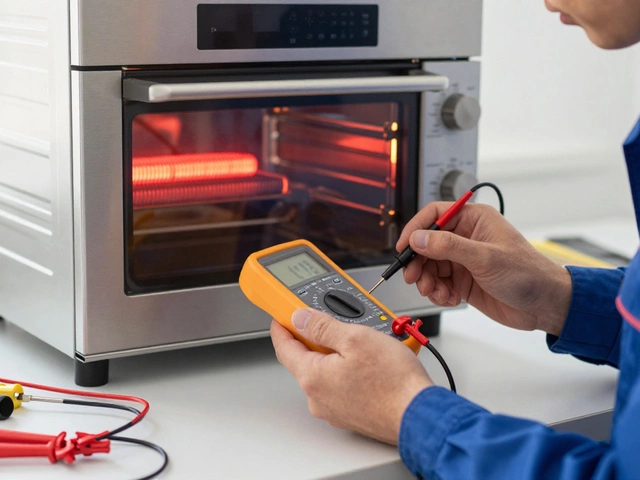
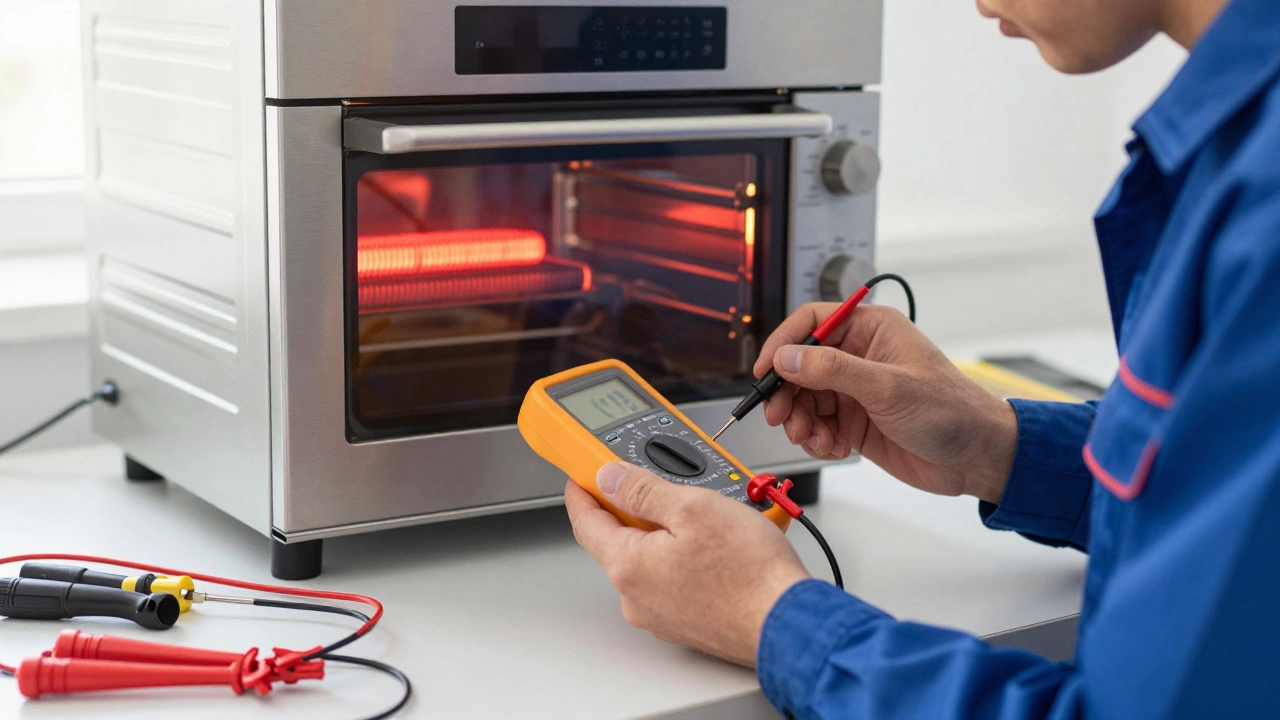
- Use a multimeter to check continuity in the thermostat or igniter
- Look for error codes on digital displays
- Explain the issue and give you options
They shouldn’t start working without your approval. If they say, “I think it’s the board,” ask: “Can you test it first?” A good tech will show you the readings before replacing anything.
Final Thoughts: Is It Worth Fixing?
There’s no single answer to “How much does it cost to fix a broken oven?” But there is a clear pattern: most repairs cost between $150 and $500. If your oven is under 8 years old and the issue is a simple part like an element or thermostat, repair is almost always worth it. If it’s older, expensive to fix, or you’re tired of the drama-replace it.
Don’t let a broken oven ruin your meals. Get a quote, compare your options, and choose based on cost, age, and peace of mind-not just the lowest number.
Is it cheaper to repair or replace a broken oven?
It depends. If your oven is under 8 years old and the repair costs less than half the price of a new one, repair is usually cheaper. For example, a $300 fix on a $700 oven makes sense. But if your oven is 12 years old and the repair is $450, buying a new one for $600-$800 is smarter. New ovens are more energy-efficient, come with warranties, and won’t break down again in 6 months.
Can I fix my oven myself?
Only if it’s a simple issue like a door seal or heating element-and you’re comfortable with basic tools. Never attempt gas line repairs, electrical panel work, or control board replacements yourself. A mistake can cause a fire, gas leak, or permanent damage. YouTube videos help, but they can’t replace training or safety gear.
Do oven repair services offer warranties?
Most reputable repair companies offer a 30- to 90-day warranty on parts and labor. Always ask before they start. If they don’t offer one, it’s a red flag. A warranty means they stand behind their work. Some even offer extended warranties for an extra fee-worth it if you’re repairing an older oven.
Why is oven repair so expensive?
It’s not just labor. Ovens have complex systems: electrical circuits, gas valves, sensors, and digital boards. Technicians need special tools, training, and certification-especially for gas models. Parts are often custom-made and shipped from manufacturers. Plus, travel time, insurance, and overhead add up. A $150 repair covers 2 hours of skilled labor, diagnostic tools, parts markup, and the company’s operating costs.
How long does an oven repair take?
Most repairs take 1 to 2 hours if the part is in stock. If the technician needs to order a rare part, it can take 3-10 business days. Gas oven repairs often take longer because of safety checks. Some shops offer same-day service for common issues like heating elements. Always ask about turnaround time before agreeing to the job.