Dryer Lifespan Estimator
How Long Will Your Dryer Last?
Get an estimate of your dryer's remaining lifespan based on usage patterns and maintenance habits.
Estimated Remaining Lifespan
Key Factors Affecting Your Dryer
Most people assume their tumble dryer will last a decade or more. But if yours is already showing signs of struggle-taking forever to dry clothes, making strange noises, or shutting off mid-cycle-you might be wondering if it’s worth fixing or if it’s time to buy new. The truth? A typical tumble dryer lasts between 8 and 13 years, but that number can drop to 5 or even less if it’s poorly maintained or heavily used.
What Affects How Long Your Dryer Lasts?
Not all dryers are built the same. A budget model from a discount retailer might start showing wear after 5 years, while a high-end Bosch or Miele can run smoothly for 15 years or more. But brand isn’t the only factor. How you use and care for your dryer matters just as much.
Here’s what actually wears out a dryer over time:
- Lint buildup - If you don’t clean the filter after every load, lint blocks airflow. That forces the heating element to work harder, overheats the motor, and can even cause fires.
- Overloading - Stuffing 10 towels into a dryer rated for 7 is asking for trouble. It strains the drum bearings and motor.
- Blocked vent - A clogged external vent (common in homes with long, kinked, or crushed vent pipes) traps hot, moist air inside. That’s bad for the dryer and your walls.
- Hard water - In areas like Bristol, where water is hard, mineral deposits can build up inside the condenser unit of condenser dryers, reducing efficiency and causing early failure.
- Frequency of use - A family of four doing 5-7 loads a week will wear out a dryer faster than a single person doing 2 loads.
Signs Your Dryer Is Approaching End of Life
You don’t need to wait for it to die completely to know it’s time to replace it. Watch for these red flags:
- Clothes still damp after a full cycle - If you’ve cleaned the filter, checked the vent, and it’s still not drying, the heating element or thermostat may be failing.
- Unusual noises - Grinding, squealing, or thumping sounds usually mean worn drum rollers, a damaged belt, or a failing motor. These parts are expensive to replace.
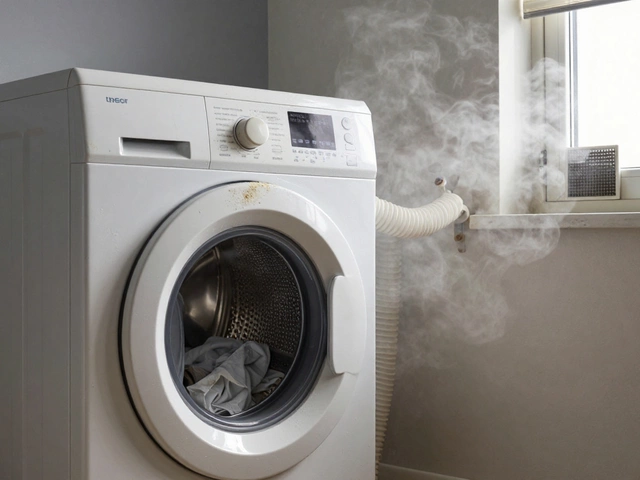
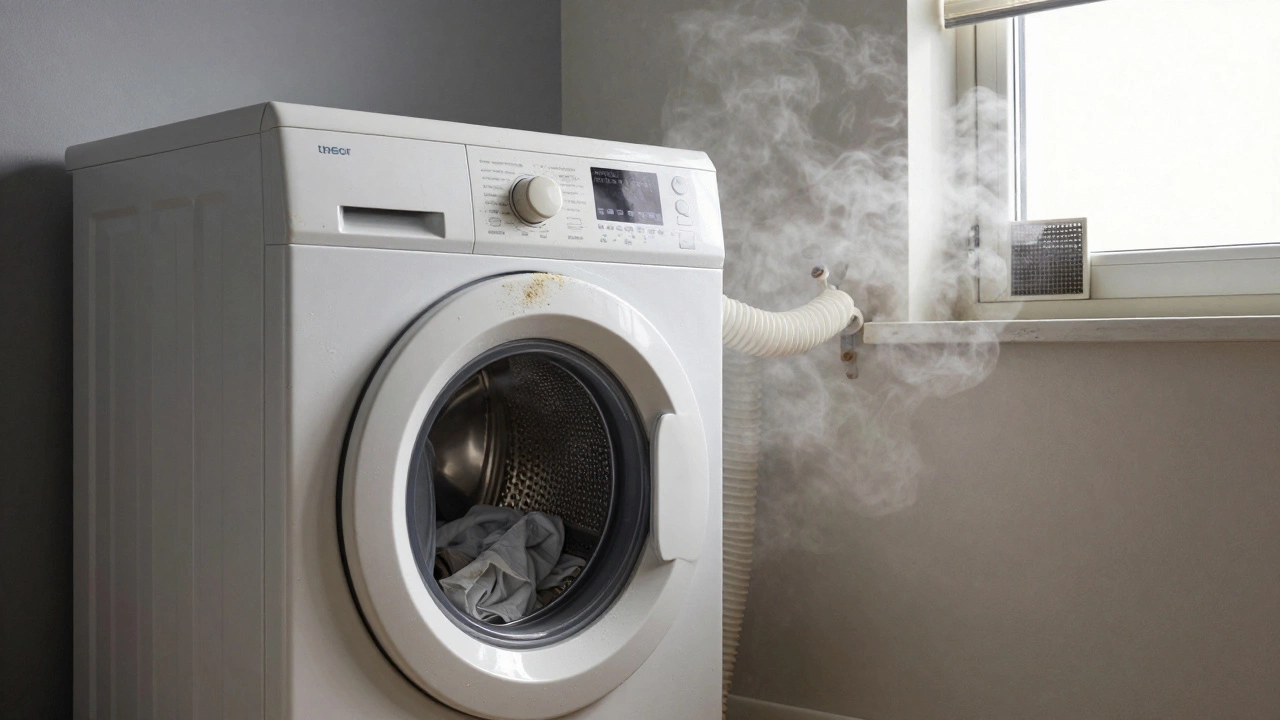
- Excessive heat or burning smell - A little warmth is normal. A hot, acrid smell? That’s overheating. It could be lint near the heating element or a failing thermal fuse.
- Display errors or no power - Modern dryers show error codes. If you’re seeing E10, E21, or “Check Filter” constantly-even after cleaning-it’s often a sign of deeper sensor or control board failure.
- High energy bills - If your electricity usage jumped 20% since last year and your dryer is over 8 years old, it’s likely losing efficiency. Older models can use 50% more power than new A+++ ones.
Repair vs Replace: The Cost Breakdown
Let’s say your 9-year-old dryer isn’t heating. You call a technician. They say it’s the heating element. Replacement part: £45. Labour: £80. Total: £125.
That sounds reasonable-until you realise that drum bearings are also worn, the thermostat is failing, and the control board is glitchy. You’re looking at £250-£350 in repairs. A new mid-range dryer? £450-£600.
Here’s a simple rule: if repair costs exceed 50% of the price of a new model, walk away. And if your dryer is over 10 years old? Even a £50 repair isn’t worth it. You’re just delaying the inevitable.
There’s one exception: if your dryer is a high-end model (like a Miele or Siemens) and the issue is a single, simple part-like a door switch or thermal fuse-it might make sense to fix it. But if it’s a budget brand like Beko or Indesit? Replacement is almost always the smarter move.
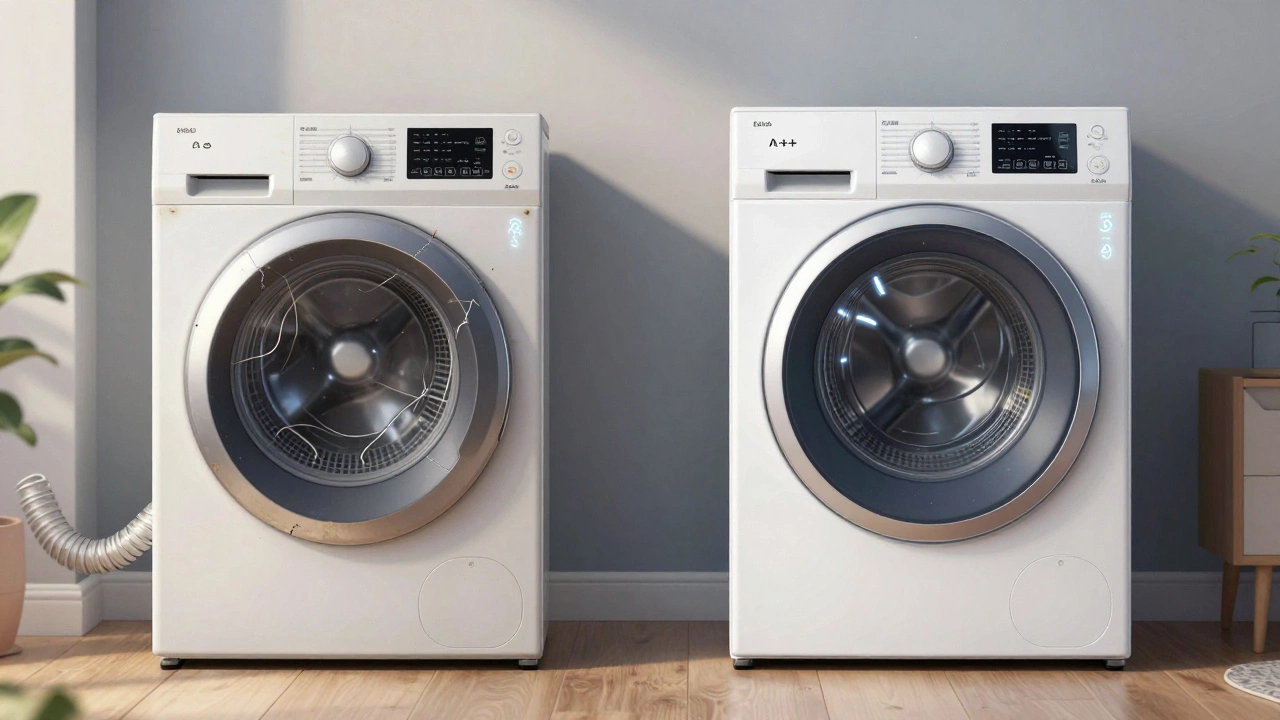
How to Make Your Dryer Last Longer
If you’ve got a dryer that’s still under 8 years old and you want to squeeze out a few more years, here’s what actually works:
- Empty the lint filter after every single load. Seriously. No excuses. A clogged filter can reduce efficiency by up to 30%.
- Check the external vent every 3 months. Go outside, remove the vent cover, and clear out any lint, leaves, or nests. Use a vacuum or a vent cleaning brush.
- Don’t overload it. If you can’t easily fit your hand into the drum after loading, it’s too full.
- Use the moisture sensor setting. Avoid the timer-dry setting if your dryer has a sensor. It stops when clothes are dry, not after a fixed time.
- Run a cleaning cycle every 6 months. Some dryers have a drum cleaning mode. If yours doesn’t, run an empty cycle with a cup of white vinegar and a microfibre cloth to wipe down the drum.
When to Buy a New Dryer
There’s no perfect age to replace your dryer, but here’s a practical guide:
- Under 5 years - Repair if needed. Still under warranty in most cases.
- 5-8 years - Repair only if it’s a minor, cheap fix. Otherwise, start shopping.
- 8-10 years - Begin planning for replacement. Parts are harder to find, and efficiency drops sharply.
- Over 10 years - Replace immediately. Even if it still works, you’re wasting money on electricity and risking breakdowns.
When you’re ready to buy, look for models with an A+++ energy rating. They use 30-40% less electricity than older models. Heat pump dryers are the most efficient, though they cost more upfront. They’re ideal for homes without external vents and work well in damp climates like the UK.

What Happens to Old Dryers?
You can’t just leave your old dryer by the curb. In the UK, dryers are classified as WEEE (Waste Electrical and Electronic Equipment). You must recycle them properly.
Most retailers offer free take-back when you buy a new one. You can also take it to your local recycling centre-Bristol City Council has several drop-off points. Some charities like British Heart Foundation accept working appliances for resale. If your dryer still runs, consider donating it.
Don’t let it end up in landfill. Dryers contain metals, plastics, and electronics that can leach toxins if not handled correctly.
How long should a tumble dryer last on average?
On average, a tumble dryer lasts between 8 and 13 years. High-quality models with good maintenance can reach 15 years, while budget models or those used heavily may fail after just 5 years. Regular cleaning and avoiding overloading are the biggest factors in extending lifespan.
Is it worth repairing a 10-year-old dryer?
Generally, no. By 10 years, most dryers are past their peak efficiency. Repair costs often exceed 50% of a new model’s price, and multiple parts are likely to fail soon after. Even if you fix one issue, others-like worn bearings or a failing control board-are probably just around the corner. Replacing it saves money on energy and avoids future breakdowns.
Why does my dryer take so long to dry clothes?
The most common cause is a clogged lint filter or blocked vent. Other reasons include a failing heating element, a broken thermostat, or overloading the drum. If you’ve cleaned the filter and checked the vent and it’s still slow, the issue is likely internal. For dryers over 8 years old, this often signals the end of its useful life.
Do heat pump dryers last longer than vented ones?
Yes, generally. Heat pump dryers run at lower temperatures and have fewer moving parts that wear out quickly. They also don’t rely on external vents, which eliminates a major failure point. While they cost more upfront, they often last 2-4 years longer than traditional vented or condenser models.
Can I extend my dryer’s life by using it less?
Yes, but only partially. Less frequent use reduces wear on the motor and drum. However, the biggest factor in longevity is maintenance-not usage frequency. A dryer used once a week but never cleaned will fail faster than one used daily but meticulously maintained.
Final Thoughts
Your dryer isn’t a forever appliance. It’s a workhorse that wears out from daily use. But you don’t have to wait for it to die in the middle of winter to realise it’s time for a change. Pay attention to how it’s performing. Keep it clean. And when the repairs start adding up, don’t be stubborn. A new, efficient dryer won’t just save you money-it’ll save you time, stress, and maybe even a fire.