Boiler Service Time Calculator
Estimate your boiler service duration based on key factors from industry experts. This calculator uses real-world data from professional plumbers.
This estimate is based on standard industry practices. Always have a qualified professional perform boiler servicing - cutting corners can lead to dangerous leaks or carbon monoxide risks.
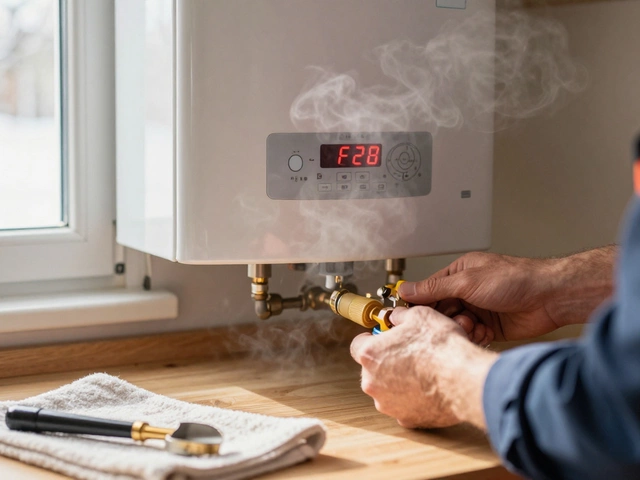
When your boiler starts making strange noises or isn’t heating properly, the first question most homeowners ask is: how long does it take a plumber to service a boiler? The answer isn’t one-size-fits-all. Some jobs finish in under an hour. Others can stretch to three hours or more. It all depends on the condition of your system, its age, and what exactly needs fixing.
Typical Boiler Service Time: 60 to 90 Minutes
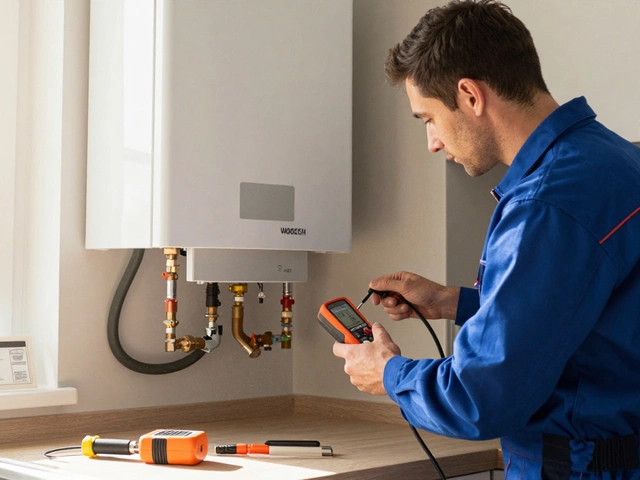
For a standard annual boiler service with no major issues, most qualified plumbers will take between 60 and 90 minutes. This is the sweet spot for routine maintenance. During this time, they’ll check the gas pressure, clean the burner, inspect the heat exchanger, test safety controls, and verify that the flue is clear and functioning properly. They’ll also look for signs of corrosion, leaks, or carbon monoxide buildup. If everything’s in good shape, they’ll leave you with a service certificate - which your insurer or landlord might require.
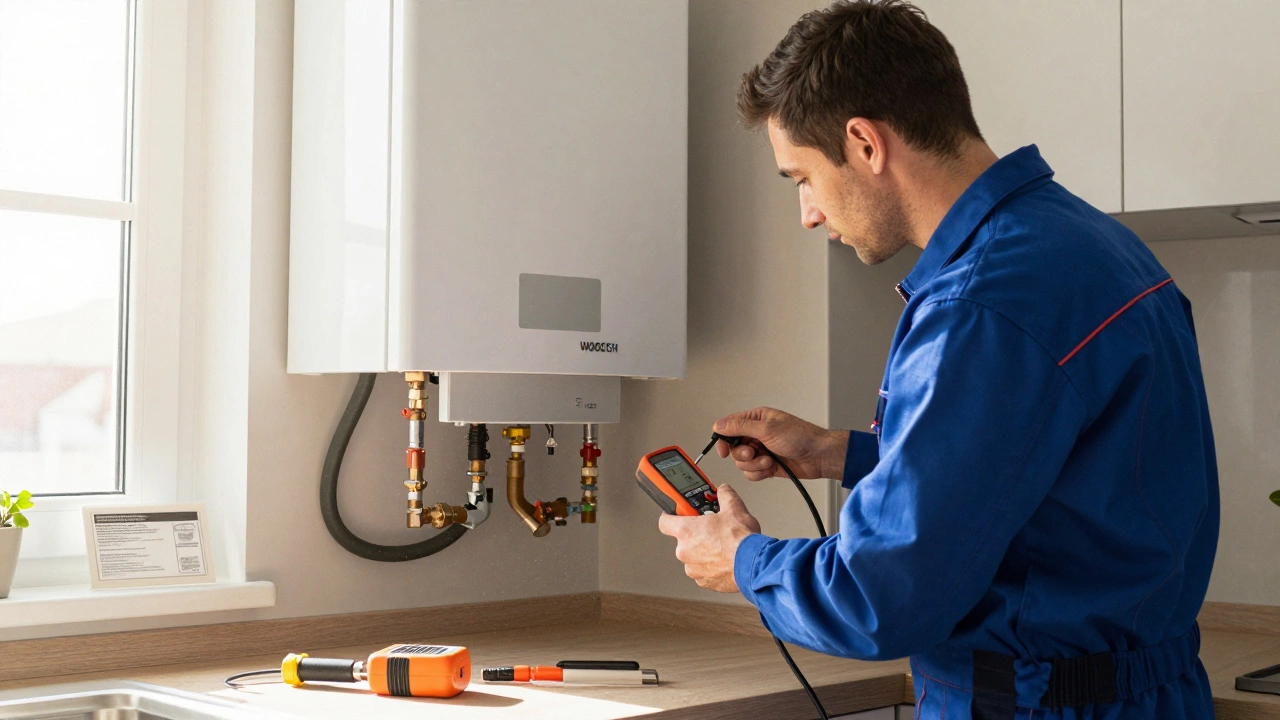
Most modern condensing boilers, like those from Worcester Bosch, Vaillant, or Baxi, are designed for straightforward servicing. If your boiler is less than 10 years old and has been maintained yearly, you’re likely looking at a clean, efficient 75-minute job.
When It Takes Longer: 2 to 3 Hours
Don’t be surprised if your service runs longer. If your boiler hasn’t been serviced in 3+ years, or if you’ve noticed odd smells, unusual noises, or inconsistent heating, expect delays. Common reasons for extended service times include:
- Heavy sludge buildup in the system - requires flushing the entire heating circuit
- Corroded or stuck valves - need replacement or deep cleaning
- Faulty pressure sensors or ignition systems - require diagnostics and parts swapping
- Older non-condensing boilers - harder to access parts, more manual labor
- Multiple leaks or rust spots - each one needs sealing or patching
In these cases, plumbers often have to drain the system, clean pipes with chemical flushes, replace seals, and repressurize everything. A 2005-era boiler with a worn-out pump might take 2.5 hours just to get back to safe operation. One homeowner in Manchester reported a 3-hour service because the plumber found two separate leaks and had to order a replacement pump that arrived the next day.
What’s Included in a Full Boiler Service?
A proper boiler service isn’t just a quick glance. It’s a full diagnostic check. Here’s what a professional should do:
- Turn off and isolate the boiler from gas and electricity
- Remove and clean the main burner and ignition electrodes
- Check the heat exchanger for cracks or corrosion
- Test the gas pressure and flow rate
- Inspect the flue for blockages or exhaust leaks
- Verify the thermostat and timer are working correctly
- Check for carbon monoxide emissions using a gas analyzer
- Examine all pipe joints and valves for leaks
- Flush the system if water quality is poor
- Reset the boiler and run a full test cycle
- Leave a service report with recommendations
Any plumber who skips these steps isn’t doing a full service. Some companies offer “quick checks” for $50 - but those rarely include gas safety testing or flue inspection. Don’t be fooled. A proper service costs $120-$180 in the U.S. and takes time.
Why You Can’t Rush It
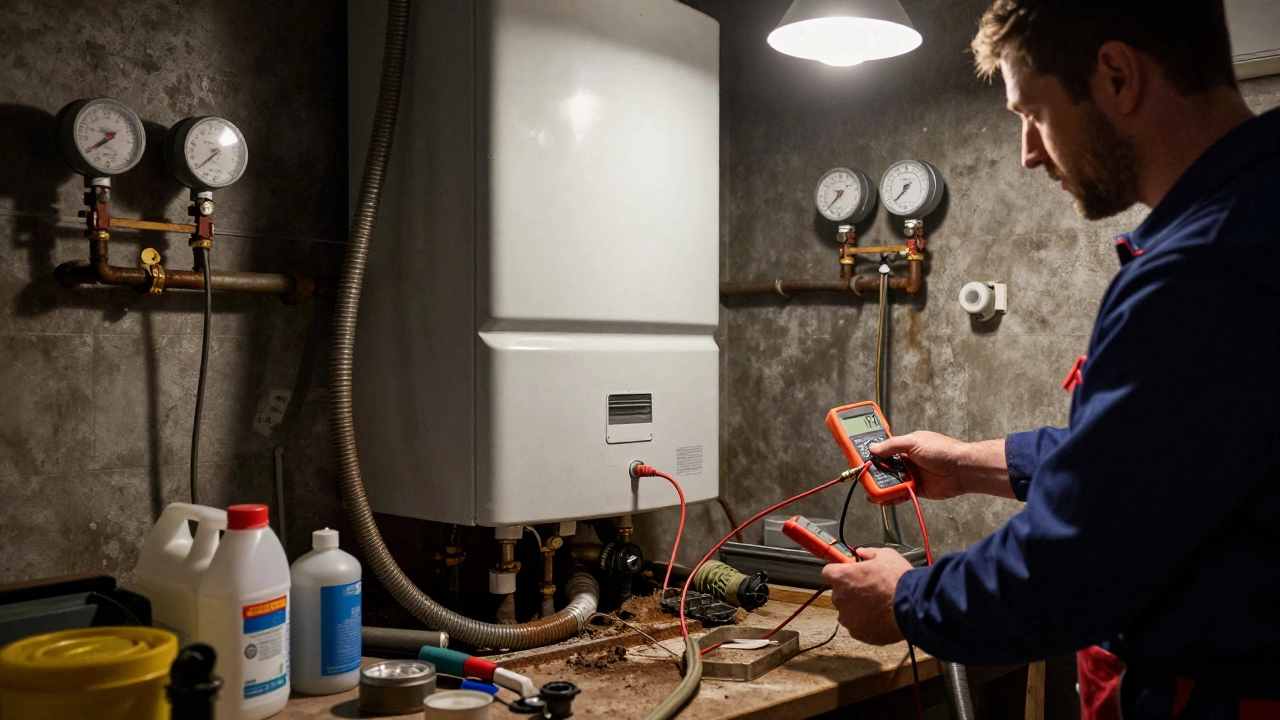
Boilers aren’t like changing a lightbulb. They handle gas, high pressure, and temperatures over 180°F. A rushed job can lead to dangerous leaks, carbon monoxide poisoning, or a complete breakdown in winter. In 2024, the U.S. Consumer Product Safety Commission reported over 1,200 boiler-related incidents - many linked to poor maintenance.
Think of it this way: if a plumber finishes your boiler service in 30 minutes, they either skipped half the checklist… or they’re lying about what they did. Real boiler work requires patience. Tools need to be cleaned, gas lines need to be tested, and safety checks need to be logged.
What to Expect on the Day
When the plumber arrives:
- They’ll ask about recent problems - be ready to describe noises, error codes, or temperature drops
- They’ll wear protective gear - boots, gloves, and sometimes a mask
- They’ll use a gas leak detector and CO meter - if they don’t, walk away
- They’ll show you the service report before leaving
Don’t be afraid to ask questions. A good plumber will explain what they found and why each step matters. If they say, “It’s fine, no need to worry,” without showing you evidence - that’s a red flag.
How Often Should You Service Your Boiler?
Every year. No exceptions. Most manufacturers void warranties if you skip annual servicing. Insurance companies require proof of service before covering boiler failures. And if you live in a cold climate, you don’t want to be without heat in January because you waited too long.
Set a reminder for the same month each year. Many plumbers offer service contracts with priority scheduling and discounted rates. A $150 annual service is cheaper than a $2,000 emergency replacement.
What to Do If Your Boiler Needs More Than a Service
Sometimes, a service reveals bigger problems. Maybe the heat exchanger is cracked. Maybe the pump is dead. Maybe the boiler is 18 years old and barely running. In those cases, the plumber will explain your options:
- Repair it - costs $300-$800, but only delays the inevitable
- Replace it - new boilers cost $2,500-$6,000, but save 30% on energy bills
- Upgrade to a smart model - some new boilers learn your usage and adjust automatically
Don’t panic if they say it’s time to replace. A boiler over 15 years old is past its prime. Modern units are 95%+ efficient. Older ones? Often 70% or less. That’s hundreds of dollars wasted every year.
Final Thoughts
On average, plan for 90 minutes. Budget for up to three hours if your boiler’s older or hasn’t been serviced in years. Don’t rush it. Don’t cut corners. A properly serviced boiler lasts 15-20 years. A neglected one might die in the middle of winter - and leave you with a much bigger bill.
Keep your service records. Know your model number. Ask for a copy of the report. And never accept a service that doesn’t include gas safety testing. Your safety, and your wallet, depend on it.