Bathroom Extractor Fan Airflow Calculator
Select your bathroom dimensions to determine the minimum airflow (L/s) required for proper moisture removal. Based on UK building regulations and the article's recommendations.
Key Considerations
Remember these important factors from the article:
- Fan noise level should be below 30 dB(A) for quiet operation
- Consider models with humidity sensors for automatic operation
- Ensure ducting is short and straight (max 3m with minimal bends)
- Look for timer function (10-15 minutes delay after use)
- Energy rating A or B for long-term savings
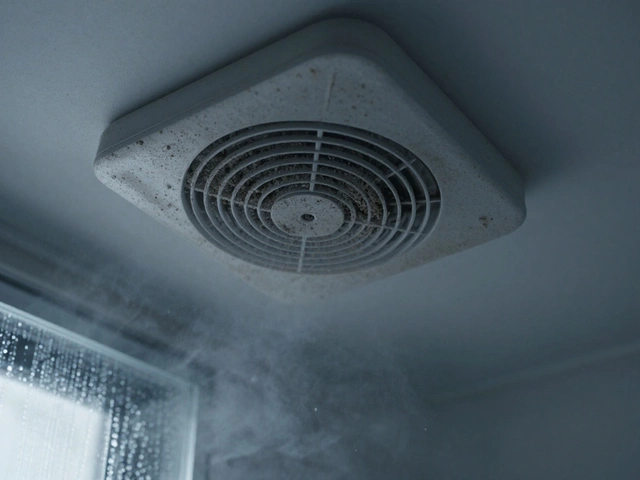
Ever stood in a foggy bathroom after a shower, wondering why the mirror’s still steamed up? You’re not alone. Most people assume their extractor fan is broken - but often, it’s just old, dusty, or poorly installed. The good news? Replacing a bathroom extractor fan is usually simpler than you think. No need to call a professional unless you’re uncomfortable with basic tools. Most homeowners can swap one out in under two hours.
Why Replace Your Extractor Fan?
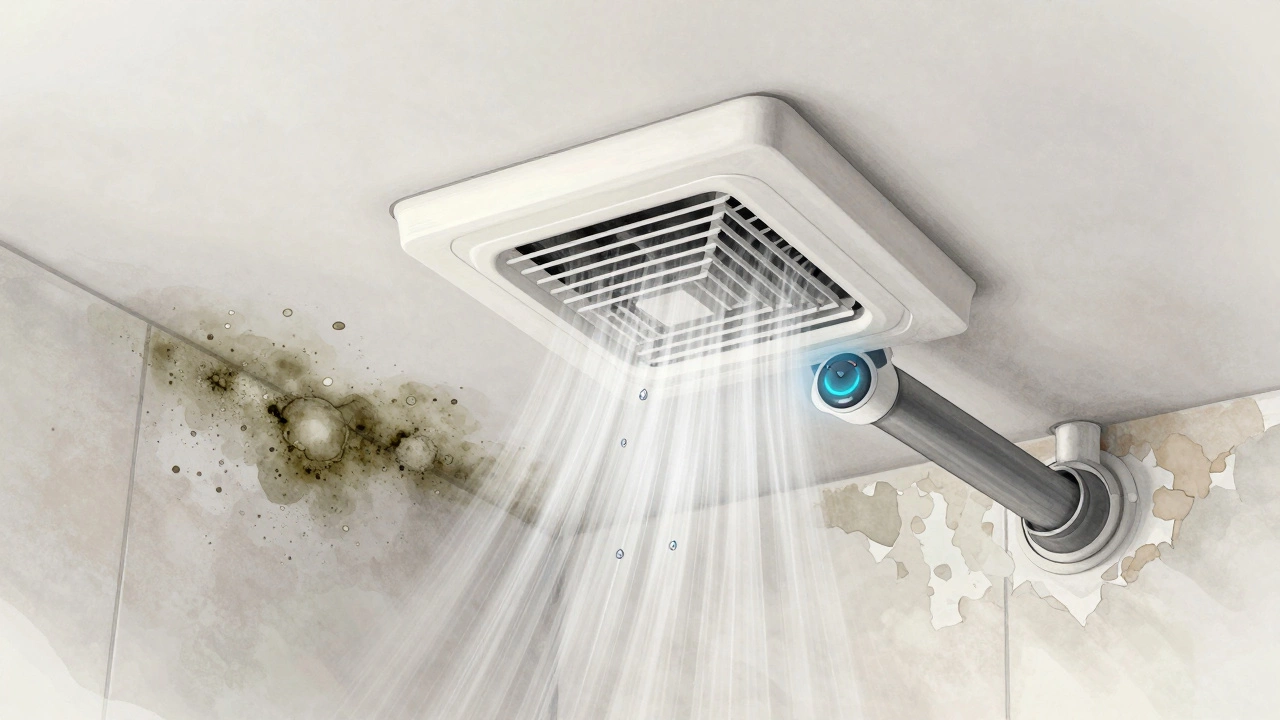
Extractor fans aren’t just about removing steam. They prevent mold, stop peeling paint, and reduce the risk of structural damage from trapped moisture. A fan that’s over 10 years old is likely running slower, making more noise, or not pulling air effectively. Modern fans use less power, are quieter, and often come with humidity sensors that turn on automatically.
If your fan:
- Stops working after a few minutes
- Runs but doesn’t move air
- Is louder than a fridge
- Has visible mold around the grille
…it’s time for a replacement. You’re not fixing a leak - you’re upgrading a system that protects your whole home.
What You’ll Need
You don’t need a toolbox full of fancy gear. Here’s what’s actually required:
- New extractor fan (match the size and airflow - usually 10L/s to 15L/s for standard bathrooms)
- Screwdriver (flathead and Phillips)
- Wire cutters/strippers
- Stud finder (optional, but helpful)
- Masking tape
- Measuring tape
- Work gloves and safety glasses
Most replacement fans cost between £30 and £80. Brands like Extracto a UK-based manufacturer of bathroom ventilation systems known for quiet operation and energy efficiency, Vent-Axia a leading brand in UK bathroom ventilation, offering models with timers and humidity sensors, and Dunns a popular UK supplier of affordable, reliable extractor fans for home use are widely available at DIY stores like B&Q and Screwfix.
Step-by-Step Replacement
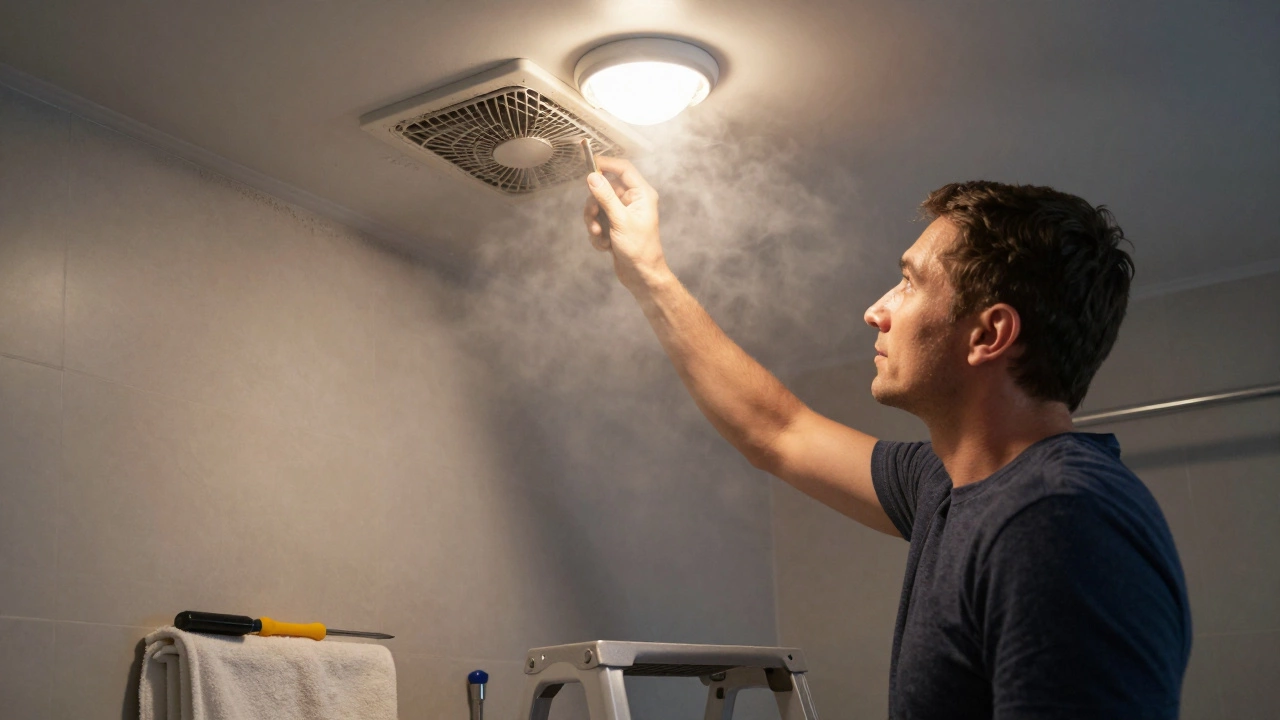
Follow these steps carefully. Turn off power at the main fuse box before you start. This isn’t optional.
- Remove the old fan grille. Most are held by clips or two screws. Gently pull it off.
- Unplug the fan or disconnect the wires. Take a photo of the wiring before you touch anything. Most fans use a simple three-wire setup: live (brown), neutral (blue), and earth (green/yellow).
- Unscrew the fan unit from the ceiling or wall. It’s usually held by four screws. If it’s stuck, wiggle it gently - don’t force it.
- Check the ducting. Is it crushed, kinked, or blocked? If so, replace the section. A clear, straight duct is essential for airflow.
- Fit the new fan. Align the mounting holes. Screw it in. Don’t overtighten - plastic housings can crack.
- Connect the wires. Match colours: brown to brown, blue to blue, earth to earth. Use wire connectors. Wrap the connections in electrical tape.
- Reattach the grille. Clip or screw it back on.
- Turn the power back on. Test it. Run it for five minutes. You should feel strong airflow from the outlet outside.
That’s it. No drywall repair needed unless you’re changing the location. Most replacements fit into the same hole.
Common Mistakes to Avoid
Even experienced DIYers mess this up. Here’s what goes wrong:
- Skipping the power cut - yes, people have been shocked. Always turn off the circuit.
- Using the wrong fan size. A 10L/s fan in a large bathroom won’t cut it. Check the room volume (length × width × height). Multiply by 15 for minimum airflow in L/s.
- Ignoring ducting. A fan can be powerful, but if the duct is 3 metres long with three bends, it won’t work well. Keep ducts short and straight.
- Not sealing gaps. Use silicone around the frame to stop air leaks. Moisture will find any crack.
- Buying a fan without a timer. A fan that runs for 10-15 minutes after you leave the room prevents condensation buildup. Look for models with built-in delay timers.
When to Call a Professional
You don’t need an electrician for most replacements - unless:
- Your wiring looks messy or outdated (pre-1980s homes often have no earth wire)
- The fan is wired into a switched live circuit you don’t understand
- You’re replacing it with a model that needs a dedicated circuit
- You’re installing a fan with a humidity sensor and don’t know how to wire it
In those cases, hire a Part P certified electrician. It’s not expensive - around £80 to £120 for labour. But if you’re unsure, don’t guess. Electricity and water don’t mix.
What to Look for in a New Fan
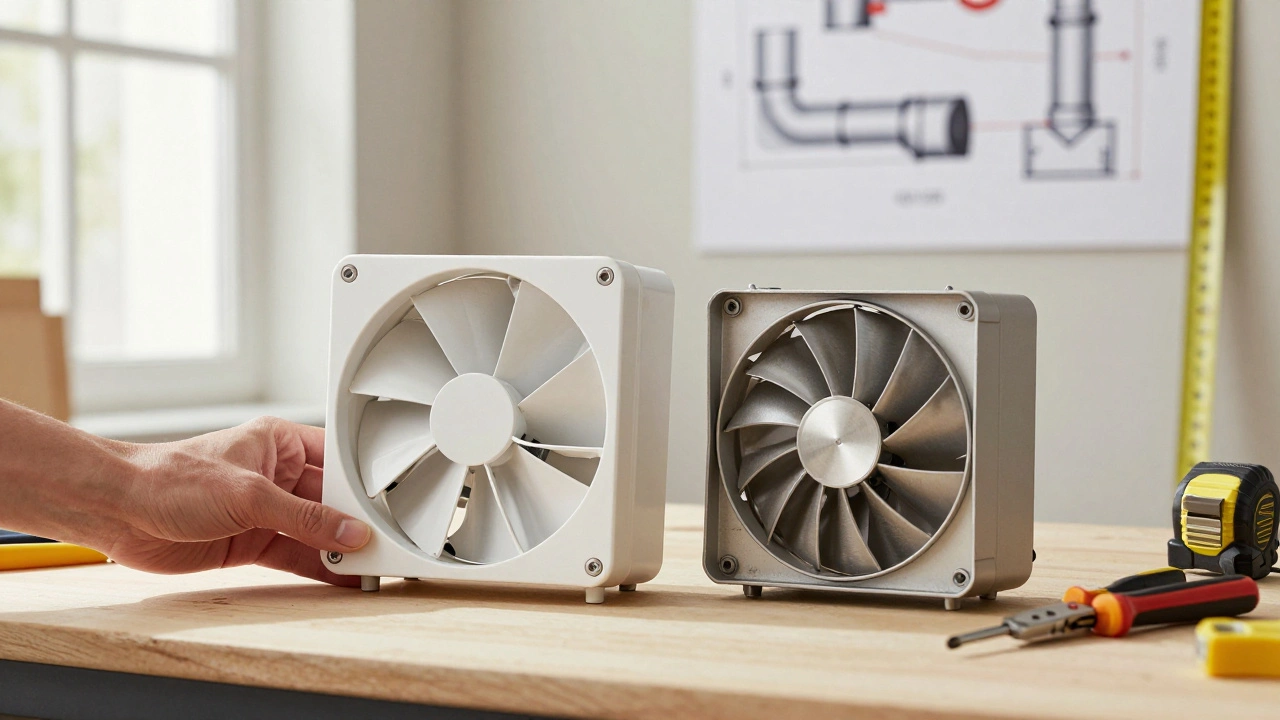
Not all fans are created equal. Here’s what to check:
| Feature | What to Look For | Why It Matters |
|---|---|---|
| Airflow | 10-15 L/s for small bathrooms, 15-25 L/s for larger ones | Too low = condensation. Too high = noise and wasted energy. |
| Noise Level | Below 30 dB(A) - quieter than a whisper | High noise makes people turn it off. Quiet fans get used. |
| Timer Function | 10-15 minute delay after switch-off | Ensures moisture is fully removed even after you leave. |
| Humidity Sensor | Auto-starts when moisture is detected | Best for forgetful users. No switches needed. |
| Duct Size | 100mm (4 inch) standard | Make sure your duct matches. Adapters add resistance. |
| Energy Rating | A or B rating | Low power use saves money over time. |
Real-World Example
A friend in Bristol replaced a 1990s extractor fan with a Vent-Axia Humidistat a modern bathroom extractor fan with automatic humidity sensing and low noise operation. The old one was 20 dB louder and only moved 8L/s. The new one cost £65. It runs silently, kicks in when the mirror fogs, and shuts off after 12 minutes. No more mold on the tiles. No more asking guests if they’re okay in the bathroom. Just clean air.
Final Thoughts
Replacing a bathroom extractor fan isn’t rocket science. It’s a practical, high-impact upgrade that protects your home and saves you money long-term. Most people overestimate the difficulty. With a little care, you’ll have a quiet, efficient fan running in under two hours.
Don’t wait until the ceiling starts peeling. A new fan is cheap, simple, and worth doing yourself. And if you’re ever unsure? Just turn off the power, take a photo of the wiring, and go slow. You’ve got this.
Can I replace my bathroom extractor fan without turning off the electricity?
No. Never work on electrical fixtures without turning off the power at the main fuse box. Even if the fan is controlled by a light switch, the wiring may still be live. Turning off the circuit prevents electric shock and is a legal safety requirement in the UK.
Do I need a special type of fan for a small bathroom?
For bathrooms under 5m², a fan with 10-12 L/s airflow is sufficient. Look for models with a built-in timer or humidity sensor. Avoid oversizing - a fan that’s too powerful can be noisy and draw too much energy. Always match the duct size (usually 100mm) to your existing vent.
Why is my new fan making a rattling noise?
Rattling usually means the fan unit isn’t mounted securely, or the duct is loose. Check the mounting screws - they should be tight but not over-tightened. Also, make sure the duct isn’t touching any joists or pipes. Use foam tape or insulation to cushion the duct if needed. A loose grille can also vibrate - ensure it’s fully clipped in.
Can I install an extractor fan in a bathroom without a window?
Yes - and you should. Building regulations in the UK require bathrooms without windows to have mechanical ventilation. An extractor fan is mandatory. The fan must vent directly to the outside, not into the loft or another room. Always follow Part F of the Building Regulations for ventilation standards.
How long does a bathroom extractor fan last?
Most fans last between 8 and 15 years, depending on use and maintenance. Dust buildup is the biggest killer - clean the grille every 6 months. If the fan starts making grinding noises, runs slowly, or turns off after a few minutes, it’s nearing the end of its life. Replacing it before it fails prevents moisture damage.