Refrigerator Lifespan Calculator
How Long Will Your Fridge Last?
Answer these questions to get an estimate of your refrigerator's remaining lifespan and recommendations.
Estimated Remaining Lifespan
Most people assume their refrigerator will last forever - until it stops cooling, starts making weird noises, or begins leaking water all over the kitchen floor. Then you realize: no, it won’t last forever. So how long should you actually expect your fridge to run? The short answer? 13 to 17 years on average. But that number means very little without context. A fridge bought in 2010 might still be running fine today, while a newer model from 2022 could be on its last legs by 2027. Why? Because lifespan isn’t just about brand or price. It’s about usage, maintenance, and even where you live.
What Determines How Long a Fridge Lasts?
Not all refrigerators are built the same. A basic top-freezer model from a budget brand might last 12 years if you treat it right. A high-end French door fridge with an ice maker and water dispenser? That could be gone in 10. Why? Complexity kills. More moving parts mean more things that can break. A compressor in a simple fridge has one job: cool. A compressor in a smart fridge has to coordinate with sensors, displays, water valves, and dual cooling systems. Each one adds strain.
Then there’s the environment. If your fridge sits in a hot garage, a steamy kitchen, or a cramped pantry with poor airflow, it’s working twice as hard. Every degree above 70°F (21°C) in the room around it cuts into its lifespan. In Bristol, where winters are damp and summers rarely break 25°C, that’s not usually a problem - but if you’ve got your fridge tucked behind a curtain or jammed against a wall with no clearance, you’re asking for trouble.
Usage matters too. How often do you open the door? Do you leave it open while you dig for that leftover curry? Do you shove it full of warm food every night? Heat from hot items forces the compressor to run longer. Every extra minute the motor runs adds wear. One study from the Appliance Manufacturers Association found that households opening fridge doors more than 15 times a day saw a 22% reduction in compressor life compared to those who opened it under 8 times.
Signs Your Fridge Is Approaching the End
You don’t need a technician to tell you when it’s time. Your fridge will tell you - if you know what to listen for.
- Food spoiling faster - Even if the fridge feels cold, the cooling system may be struggling to maintain consistent temps. If your milk goes sour in 3 days, that’s a red flag.
- Condensation inside or outside - A little fog on the door seal? Normal. Water pooling on the floor or heavy frost buildup in the freezer? That’s a sign of failing insulation or a broken defrost timer.
- Loud or unusual noises - A quiet hum? Good. A loud buzzing, clunking, or grinding? That’s the compressor or fan struggling. If you hear it from the next room, it’s not just noisy - it’s dying.
- High energy bills - If your electricity bill jumped 15% over a year and you haven’t changed usage, your fridge is using more power to do less. That’s inefficient. That’s worn out.
- Temperature swings - Use a fridge thermometer. If it bounces between 5°C and 10°C instead of holding steady at 4°C, the thermostat or control board is failing.
These aren’t minor quirks. They’re symptoms of core components wearing out. And once those start failing, repairs get expensive - often more than half the cost of a new unit.
When Repair Makes Sense - and When It Doesn’t
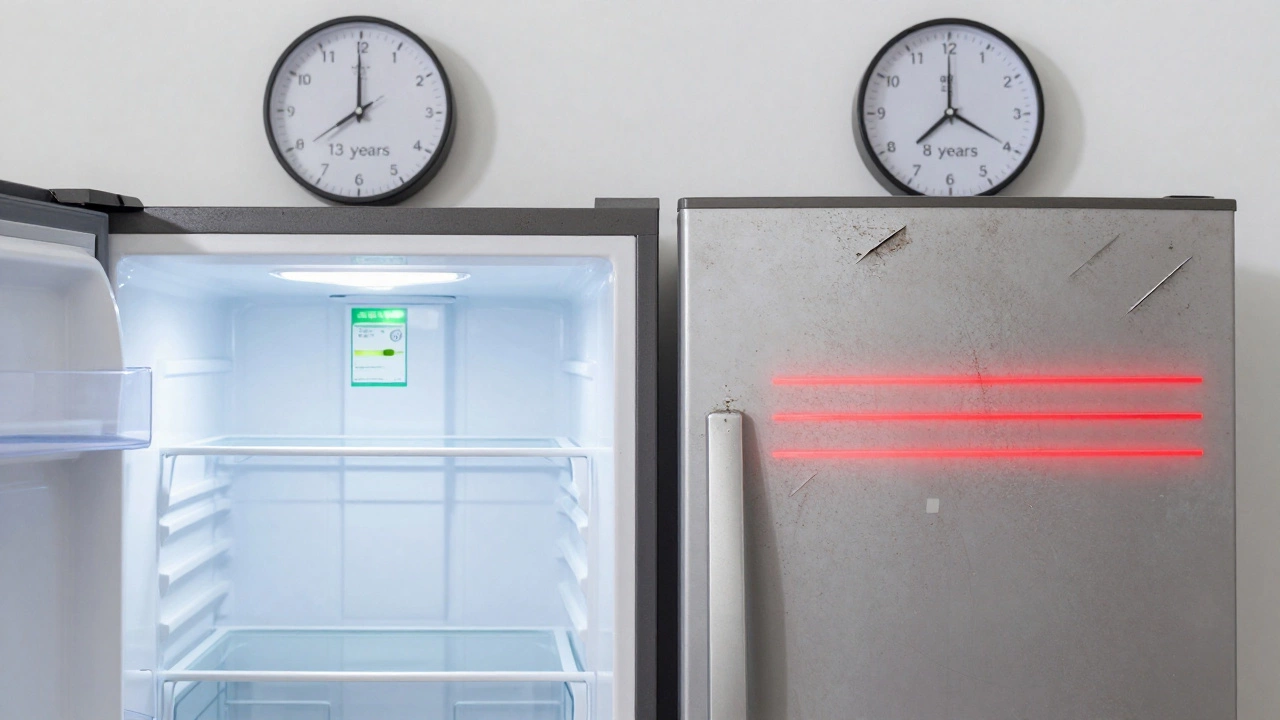
Let’s say your fridge is 8 years old and the compressor stops. You call a technician. They say it’ll cost £350 to replace. Is that worth it? Maybe. But if your fridge is 14 years old and the same thing happens? Probably not.
Here’s the rule of thumb: if the repair costs more than 50% of what a comparable new fridge costs, walk away. A basic fridge now runs £400-£600. So if you’re spending over £200-£300 to fix a fridge older than 10 years, you’re throwing money into a sinking ship.
There are exceptions. If you’ve got a high-end model with custom cabinetry or a built-in design, replacement might be more complicated. In those cases, repairing a 12-year-old unit might still make sense - if the part is still available and the rest of the fridge is in good shape. But for 9 out of 10 standard fridges, replacement is smarter.
Also, don’t forget about energy savings. A fridge from 2010 uses roughly 600 kWh per year. A new Energy Star-rated model uses 400 kWh or less. That’s £30-£50 saved annually on electricity. In 4 years, you’ve paid for a new fridge just by cutting your bill.
How to Make Your Fridge Last Longer
You can’t stop time. But you can slow it down.
- Clean the coils - Dusty condenser coils (usually at the back or bottom) choke the system. Vacuum them every 6 months. In homes with pets or dusty floors, do it every 3 months.
- Check the door seals - If you can slide a piece of paper out of the door easily, the seal is weak. Replace it. A £15 seal kit can save you hundreds in wasted energy.
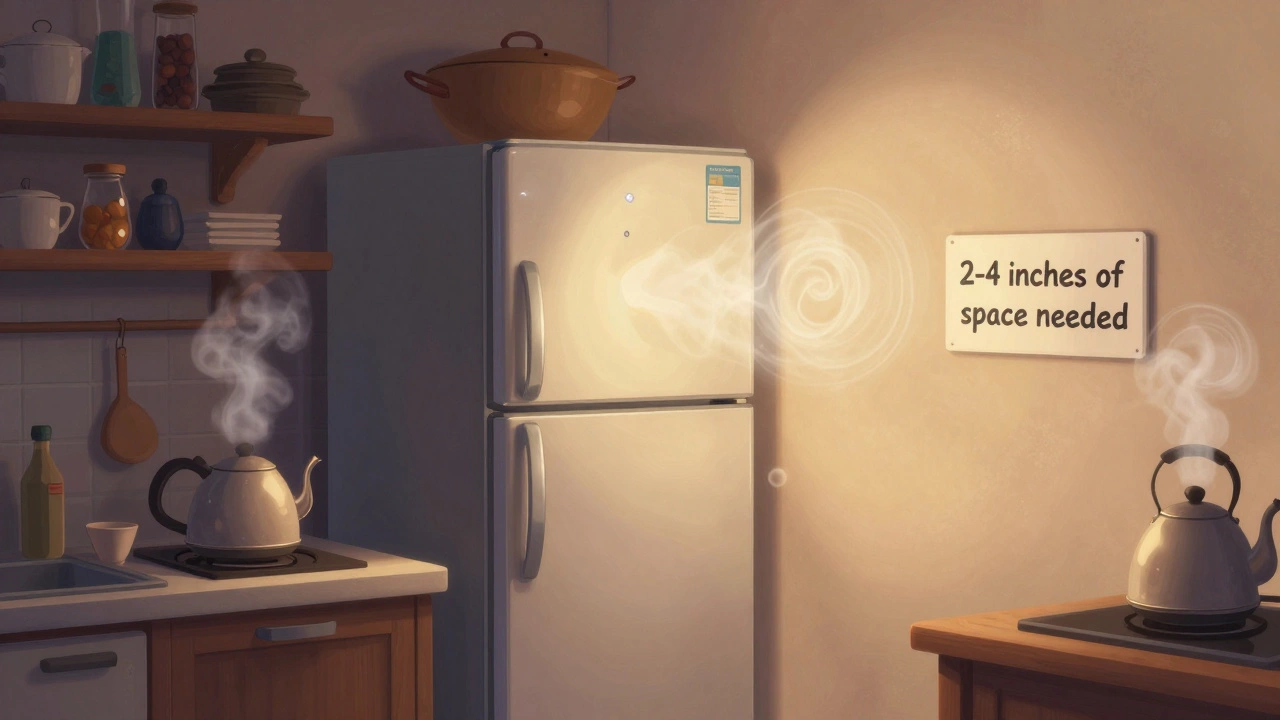
- Keep it 2-4 inches from the wall - Airflow is everything. No clearance? Overheating. Overheating? Shortened life.
- Avoid overfilling - Air needs to circulate. Leave space between items. Don’t stack food like a tower.
- Set the right temperature - 3°C to 5°C for the fridge. -18°C for the freezer. Going colder doesn’t make food last longer - it just wastes power.
- Let hot food cool first - Putting warm leftovers straight in forces the fridge to work overtime. Wait an hour. It’s not that hard.
These steps aren’t magic. But they’re simple. And they add years - not just months.
What About Extended Warranties?
Stores love selling them. But here’s the truth: 85% of fridge failures happen after the manufacturer’s warranty expires - usually around year 5. So if you buy a 2-year extended warranty, you’re paying for coverage during the time when your fridge is still most likely to work fine.
Extended warranties are rarely worth it for fridges. The cost is often £100-£150. That’s enough to cover a compressor replacement or even a new unit if it dies early. But statistically, you’re more likely to pay for it and never use it.
Instead, save that money. Put £10 a month into a "fridge replacement fund." In 3 years, you’ll have £360. That’s enough to buy a decent new fridge without a loan.
What to Look for in a New Fridge
If you’re replacing, don’t just grab the cheapest one. Look for:
- Energy rating - Aim for A++ or A+++ (UK/EU scale). Avoid anything below A.
- Compressor type - Inverter compressors last longer and use less power than traditional ones.
- Refrigerant - R600a is the new standard. It’s more efficient and eco-friendly than older R134a.
- Warranty length - A 5-year warranty on the compressor is a good sign the brand believes in its build.
- Size and layout - Don’t oversize. A fridge that’s too big for your space runs inefficiently. Match it to your household size.
Brands like Bosch, LG, and Samsung consistently rank high in reliability surveys from Which? and Consumer Reports. But even the best brands have bad batches. Read recent reviews - not the ones from 5 years ago.
What Happens When a Fridge Dies?
Throwing it in the bin isn’t an option. Fridges contain refrigerants that are harmful to the environment. In the UK, it’s illegal to dump one without proper recycling.
Most councils offer free collection for old appliances. Or you can take it to a local recycling centre. Many retailers will take your old fridge when they deliver a new one - ask when you buy.
Don’t let a dead fridge become landfill. Recycling it properly means the metals, plastics, and refrigerants get reused. It’s not just about rules - it’s about responsibility.
Final Thought: It’s Not Just About Years
There’s no magic number. A fridge can live 20 years. Or it can die at 8. It depends on how you treat it. How clean it is. How well it breathes. How often you let it work too hard.
If yours is hitting 12 years and still running quietly, keep cleaning the coils and checking the seals. You might get another 5. If it’s 10 years old and already acting up, don’t wait for it to fail completely. Start saving. Start looking. Because when it goes, you won’t want to be scrambling in the middle of summer.
How long should a refrigerator last on average?
On average, a refrigerator lasts between 13 and 17 years. Budget models may last closer to 10-12 years, while higher-end units with better build quality can reach 18-20 years with proper care. The lifespan depends heavily on usage, maintenance, and environmental conditions like room temperature and airflow.
Is it worth repairing a 10-year-old fridge?
Generally, no - unless it’s a high-end model or the repair is minor (like a door seal or thermostat). If the compressor or control board needs replacing, the cost often exceeds 50% of a new unit’s price. At 10+ years, energy efficiency has also dropped significantly. Replacing it usually saves more money in the long run through lower electricity bills.
What are the signs my fridge is about to fail?
Watch for: food spoiling faster than usual, excessive frost or condensation, loud or unusual noises (clunking, buzzing), rising energy bills, or inconsistent temperatures (use a thermometer to check). These indicate failing components like the compressor, thermostat, or seals - not just normal wear.
Can I extend my fridge’s lifespan with regular maintenance?
Yes. Cleaning the condenser coils every 3-6 months, checking door seals for leaks, ensuring 2-4 inches of clearance around the unit, and not putting hot food inside can add 3-5 years to its life. Simple habits make a big difference - most fridges die from neglect, not age.
Should I buy an extended warranty for my fridge?
Usually not. Most fridge failures happen after the manufacturer’s warranty ends (around year 5), but extended warranties typically cover years 6-10 - when the fridge is still reliable. The cost often outweighs the benefit. Instead, set aside £10/month into a replacement fund - you’ll be better off financially.
How do I dispose of an old refrigerator properly in the UK?
It’s illegal to throw a fridge in regular trash. You can book a free collection through your local council, take it to a registered recycling centre, or ask the retailer to take it away when delivering your new one. Always ensure it’s handled by a certified WEEE recycler - this ensures refrigerants are safely removed and materials are reused.
Replacing a fridge isn’t just about buying a new appliance. It’s about making smarter choices - for your wallet, your home, and the planet. Keep it clean. Keep it cool. And when the time comes, don’t wait for the last gasp. Act before it’s too late.