Microwave Safety Check
Based on UK safety guidelines, this tool determines if your microwave issue can be safely fixed yourself. Remember: Never work on high-voltage components without professional training.
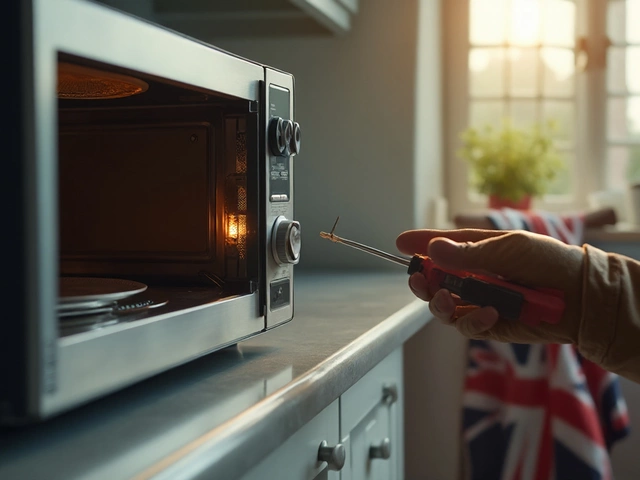
Every year, thousands of people in the UK stare at their broken microwave and think: Can I just fix this myself? It’s not like it’s a complex machine, right? You press a button, it heats food. What could possibly go wrong? The truth is, fixing your own microwave isn’t like replacing a lightbulb. It’s not even like fixing a toaster. Under that plastic shell is a high-voltage system that can kill you-even when the microwave is unplugged.
Why Microwaves Are Dangerously Different
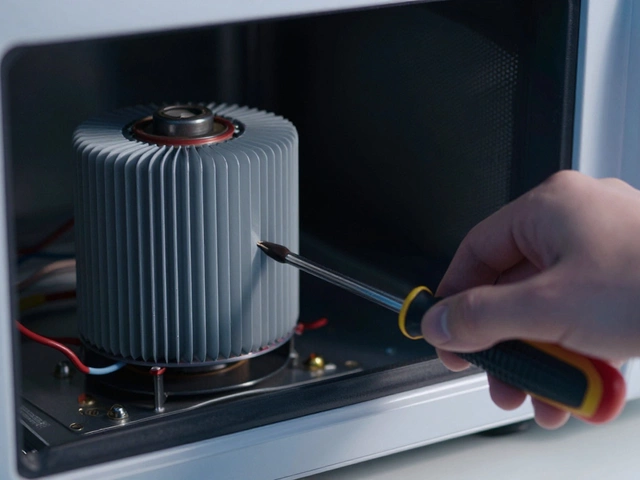
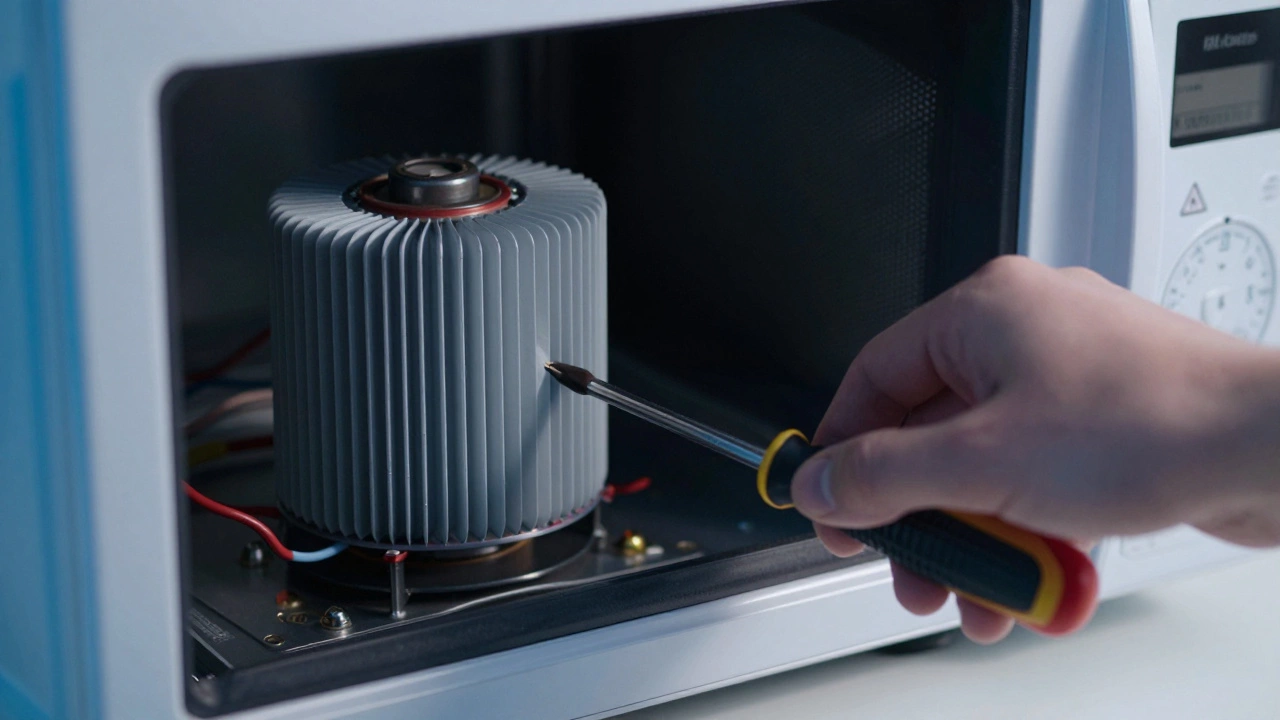
Most home appliances run on 230 volts. Your microwave runs on over 2,000 volts. That’s not a typo. The magnetron-the part that actually generates the microwaves-needs that insane voltage to work. It gets that power from a high-voltage capacitor and transformer, both of which store energy long after you unplug the unit.
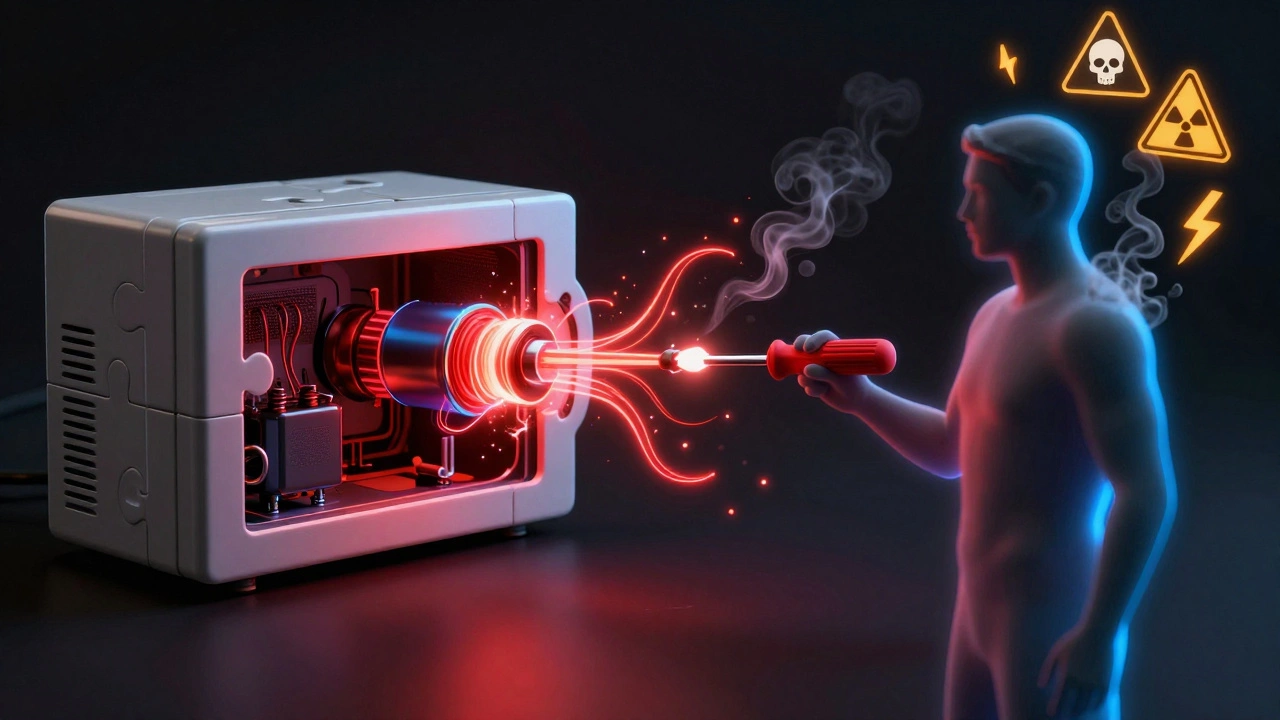
Here’s the scary part: a fully charged capacitor in a microwave can hold enough electricity to stop your heart. Even if you’ve waited hours, even if you think you’ve discharged it, one wrong move with a screwdriver or a multimeter can send a lethal shock through your body. There are documented cases in the UK of people dying while trying to repair their own microwaves. The NHS doesn’t track these incidents officially, but hospital emergency departments see them every year.
What Most People Try to Fix (And Why It’s a Bad Idea)
When your microwave stops heating, the usual suspects are:
- The high-voltage diode
- The magnetron
- The thermal fuse
- The door switch
- The capacitor
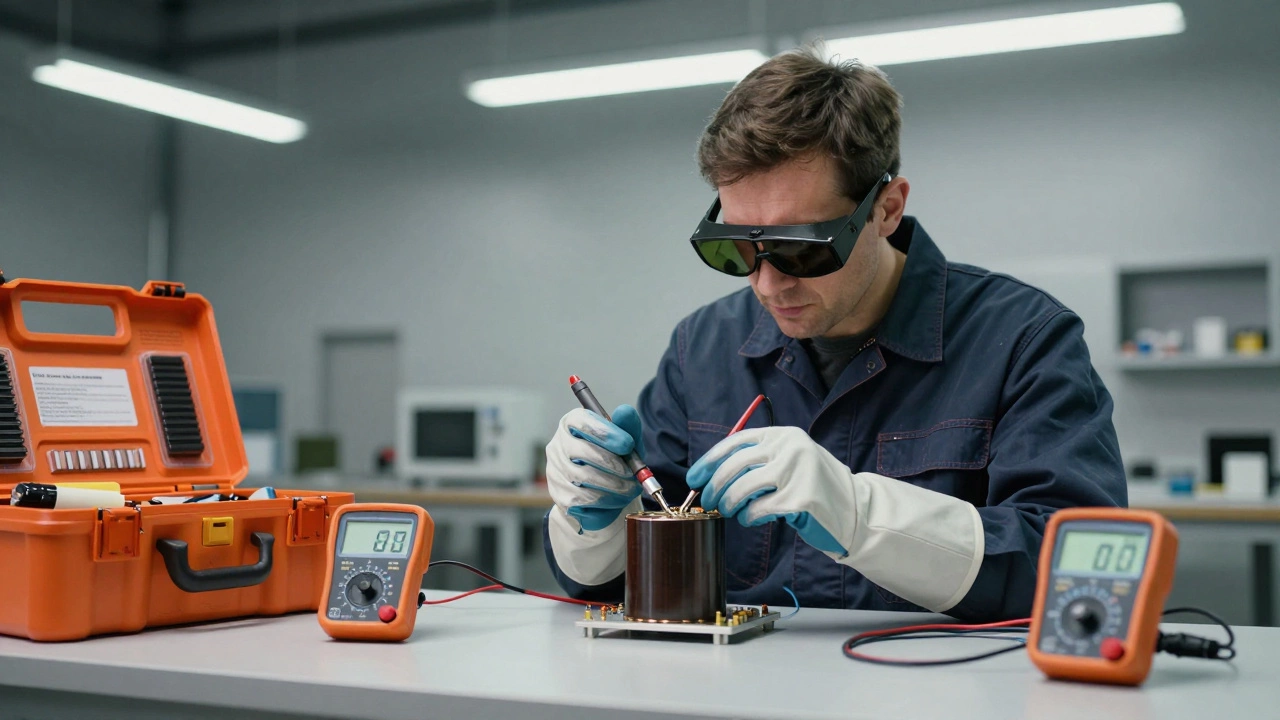
Online videos make it look easy. Someone takes off the cover, touches a few wires, and-boom-the microwave works again. But those videos rarely show what happens before or after. They don’t show the insulated gloves, the discharge tool, the safety goggles, or the fact that the person doing it has 15 years of electrical training. What you’re seeing is a highly edited highlight reel.
Let’s say you think it’s the door switch. You unplug the microwave, open it up, and find the switch. You test it with a multimeter. You replace it. You plug it back in. It works. Great, right? Not so fast. Even if you get it working, you’ve now bypassed critical safety features. A misaligned door switch can let microwaves leak out. That’s not just a repair failure-it’s a radiation hazard. The FDA says even small leaks over time can damage eyes and skin.
The Real Cost of a DIY Fix
People think they’re saving money. A new microwave costs £80 to £200. A repair technician might charge £60 to £120. So why not try? But here’s the hidden cost: medical bills.
Electric shock from a microwave capacitor doesn’t always kill. Sometimes it just causes severe burns, nerve damage, or cardiac arrhythmias. The average NHS treatment cost for a non-fatal high-voltage shock is over £5,000-not including time off work, follow-up care, or long-term complications. That’s more than five new microwaves.
And if you damage the microwave further while trying to fix it? You’ve now spent £120 on parts, £60 on tools you’ll never use again, and still end up buying a new one. You didn’t save money. You lost time, peace of mind, and possibly your health.
When It’s Okay to Open Your Microwave
Not every microwave problem needs a professional. If your microwave turns on but doesn’t heat, that’s a job for a technician. But if the light inside is out, the turntable won’t spin, or the keypad is unresponsive? Those are low-risk fixes.
Replacing the interior light bulb? Safe. Just unplug it, wait 10 minutes, and swap the bulb (use the exact wattage and type-usually 15W or 25W appliance bulb). Replacing the turntable motor? Also safe. It runs on low voltage and is usually accessible without touching any internal wiring. Cleaning the waveguide cover (the mica sheet inside that protects the magnetron)? Totally fine. Just wipe it gently with a damp cloth. Don’t scrub it. Don’t replace it with aluminum foil. That’s how fires start.
These are the only repairs you should ever attempt yourself. Everything else? Leave it to someone who’s trained, insured, and knows how to discharge a capacitor safely.
What a Professional Actually Does
When a qualified appliance technician opens your microwave, here’s what happens:
- They unplug the unit and wait 15 minutes to let any residual charge fade.
- They use a high-voltage discharge tool to safely drain the capacitor.
- They test the diode, magnetron, and capacitor with calibrated meters.
- They check for microwave leakage using a certified RF detector.
- They replace only the faulty part-never guess.
- They reassemble everything and test for proper operation and safety.
They don’t just fix the symptom. They make sure the entire system is safe. And if the microwave is over 8 years old? Most professionals will tell you to replace it. The cost of repair often equals 70% of a new unit’s price. And older models are less efficient, noisier, and more prone to failure.
What to Do Instead
Here’s a simple decision tree:
- If the microwave doesn’t heat, doesn’t turn on, or makes strange noises? Call a technician.
- If the light is out, turntable is stuck, or buttons are unresponsive? You can fix it yourself-only if you’re comfortable with basic tools and know exactly what you’re doing.
- If the microwave is over 8 years old? Replace it. New models are 30% more energy efficient and come with safety features your old one doesn’t have.
Look for local repair services listed on Trustpilot or the APPLIANCES UK directory. Many offer free diagnostics and fixed-price repairs. In Bristol, companies like Appliance Care Bristol or FixIt Fast offer same-day service for under £100. Most include a 90-day guarantee.
Final Warning: Don’t Be the Statistic
There’s no shame in calling a professional. We fix our cars, our boilers, our fridges-we don’t try to rewire them ourselves. Why treat the microwave differently? It’s the one appliance in your home that uses ionizing radiation to cook food. That’s not magic. It’s physics. And physics doesn’t care how confident you are.
If you’re tempted to open it up, pause. Ask yourself: Is saving £80 worth risking your life? The answer isn’t even close.
Replace the microwave. Or hire a technician. Either way, you walk away alive.