When your electric hob sparks, smells like burning plastic, or won’t heat up at all, it’s not just inconvenient-it’s a safety risk. A burnt element isn’t something you can ignore. Many people try to keep using it, hoping it’ll work again. That’s dangerous. The good news? Most burnt electric hobs can be fixed safely and cheaply-if you know what to look for.
First, turn off the power
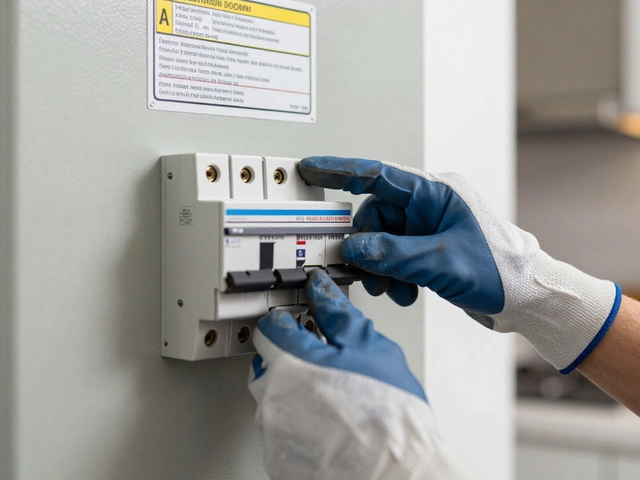
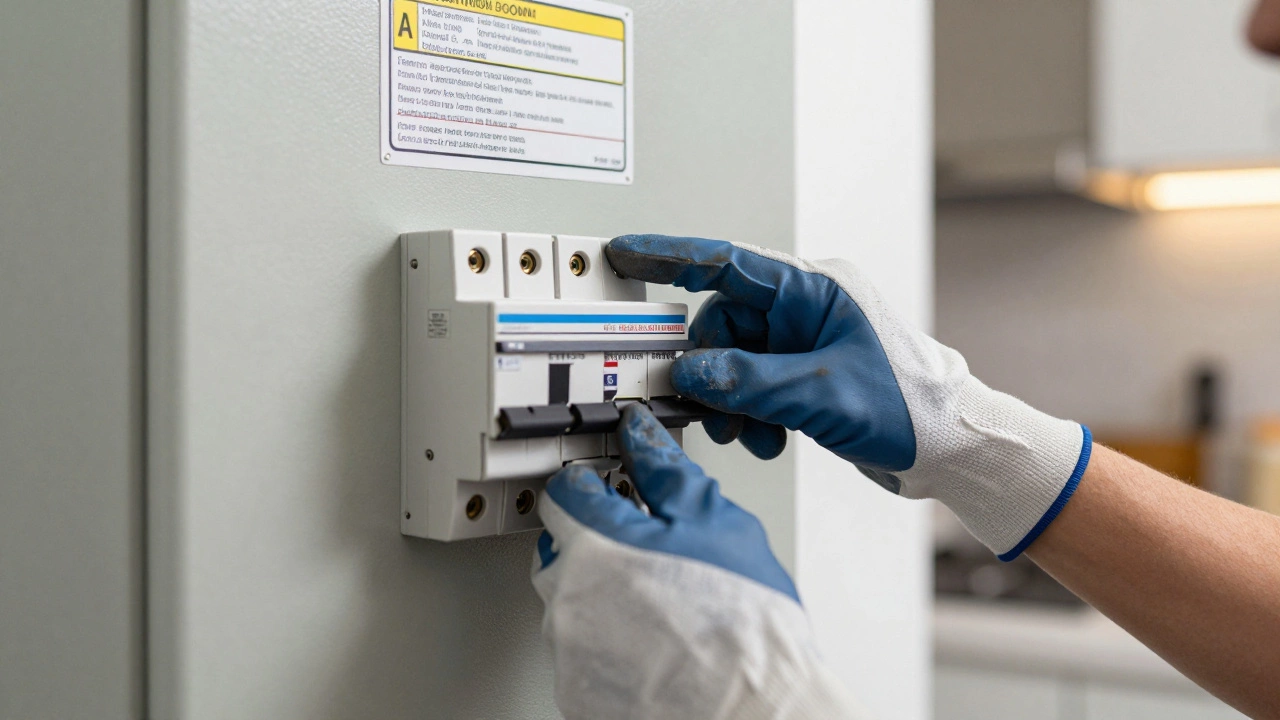
Before you even look at the hob, you must cut the power. Unplugging it won’t always be enough. Most electric hobs are hardwired into your home’s circuit. Go to your breaker box and shut off the circuit that powers the cooktop. If you’re not sure which one, turn off the main switch. Never work on a live appliance. Electric shocks from a hob can be fatal, even if the surface feels cold.
Check for visible damage
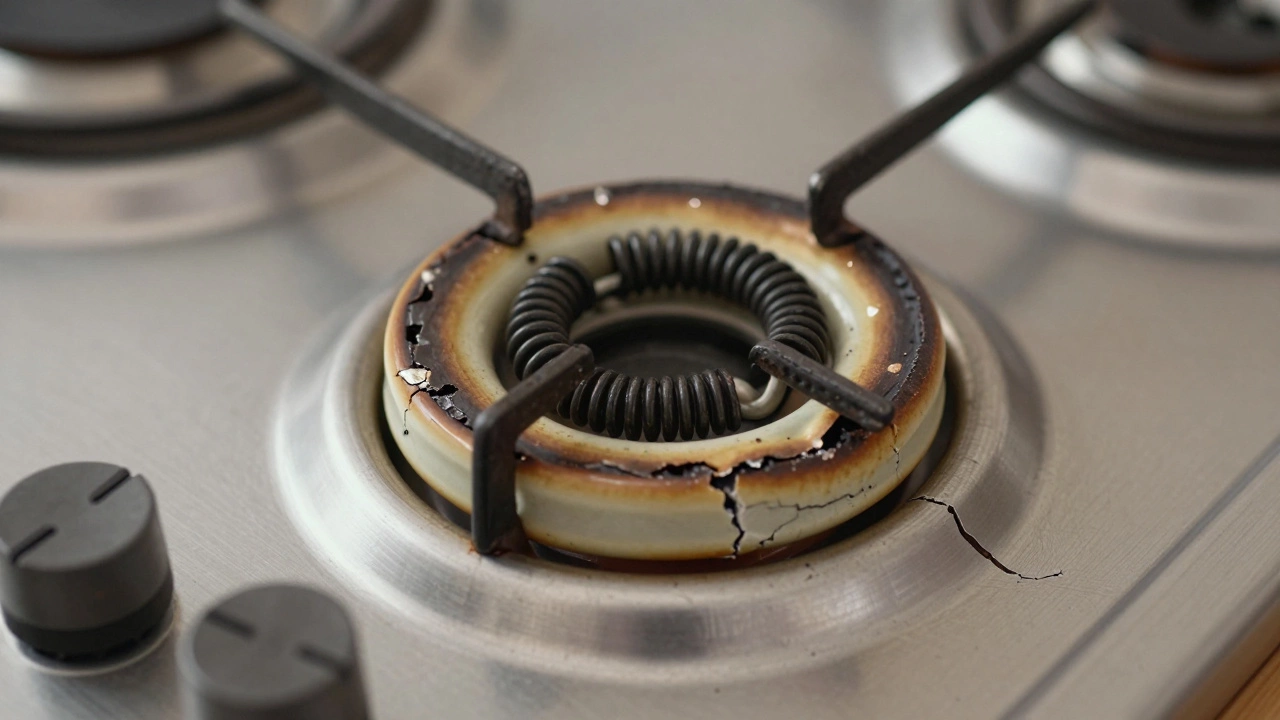
Once the power is off, open the hob’s surface. Most models lift up or have removable panels underneath. Look for dark, charred areas around the heating elements. A burnt element will often have cracked ceramic, blackened metal coils, or melted insulation. If you see any of this, the element is dead. Don’t touch it with your hands-residue can be toxic.
Also check the wiring connected to the element. Frayed wires, melted insulation, or loose terminals are common causes of burnouts. If the wire looks like it’s been melted into the element’s connector, you’ve got a serious issue. That’s not just a failed element-it’s a wiring fault that needs professional help.
Test the element with a multimeter
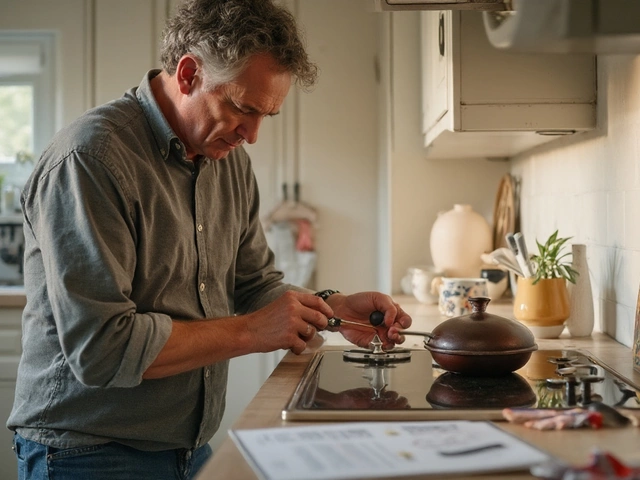
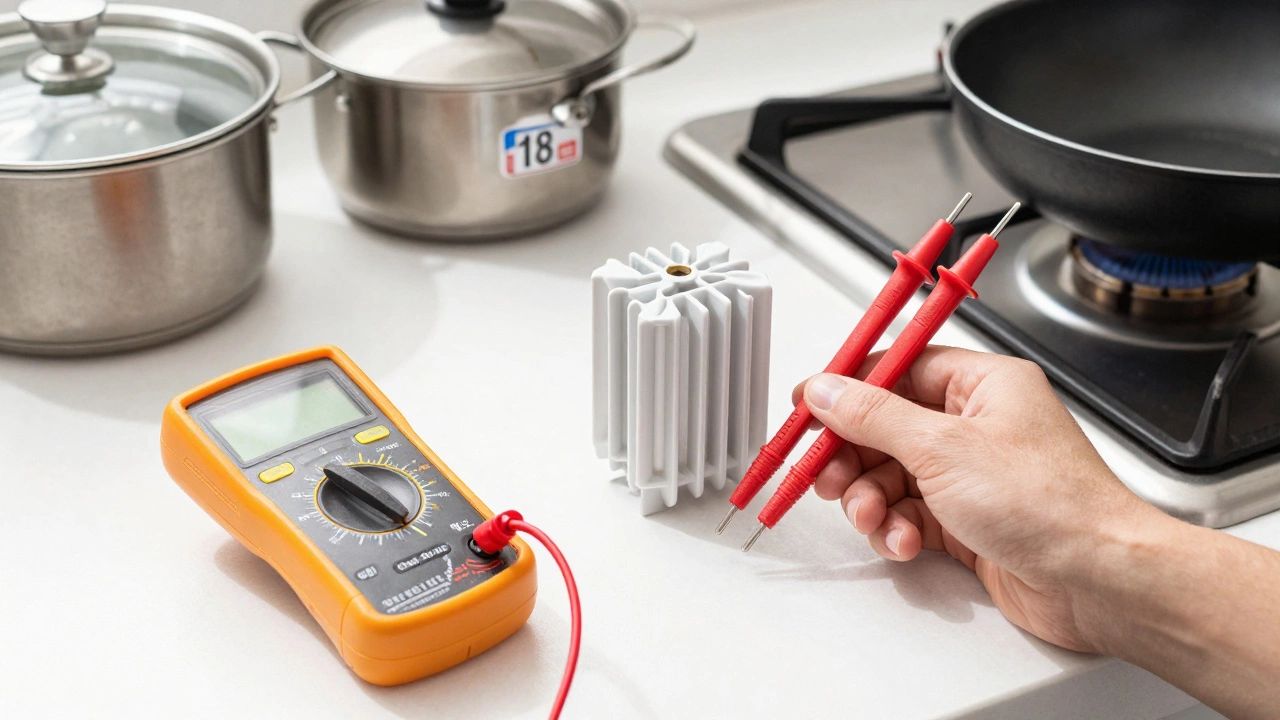
If you have a basic multimeter (under $20 at any hardware store), you can test the element yourself. Set it to measure resistance (ohms, Ω). Remove the element by unscrewing the mounting clips and gently pulling it out. Touch the multimeter probes to the two metal terminals on the back of the element.
A good element usually reads between 30 and 120 ohms. If the meter shows no reading (infinite resistance) or a reading of 0, the element is broken. If it reads within range, the problem might be elsewhere-like the switch, thermostat, or wiring. Don’t assume the element is the culprit just because it looks burnt. Always test.
Replace the burnt element
If the element is faulty, replacing it is usually the fix. Buy the exact replacement part using your hob’s model number. You’ll find it on a sticker inside the hob’s lid or on the back panel. Don’t guess-using the wrong element can cause fire hazards or damage your control board.
Once you have the new part, disconnect the old one by unplugging the connector. Install the new element by plugging it in and securing it with the mounting clips. Make sure the wires aren’t pinched or bent. Turn the power back on and test one burner at a time. If it heats up evenly and doesn’t smell, you’re good.
What if the element isn’t the problem?
Sometimes the element tests fine, but the hob still doesn’t work. That means the issue is deeper. The most common culprits are:
- Infinitely variable switches-these control the heat levels. If one is stuck or burnt out, the burner won’t turn on. You can test these with a multimeter too.
- Thermostats-if your hob cycles on and off randomly, the thermostat might be faulty.
- Control board-if multiple burners fail at once, the main circuit board is likely damaged. This is expensive to replace and often not worth fixing on older models.
- Power supply-check if your hob runs on 240V. If one leg of the circuit is dead, half the burners won’t work. This requires an electrician.
Replacing switches or control boards isn’t for beginners. If you’re not comfortable working with live wiring or circuit boards, stop here. Call a certified appliance technician. It’s cheaper than a house fire.
Why did it burn out in the first place?
Burnt elements don’t just happen. They’re caused by:
- Spills that weren’t cleaned-sugar, grease, or salt can melt onto the element and create a conductive path that overheats the coil.
- Using the wrong cookware-warped pans or metal that doesn’t sit flat cause uneven heating and hot spots.
- Old wiring-homes built before 2000 often have undersized circuits that overheat under heavy load.
- Moisture intrusion-if water got inside the hob (from steam, cleaning, or a leak), it can corrode connections and cause short circuits.
Fixing the element won’t help if the root cause stays. Clean your hob regularly. Never pour water on a hot surface. Use flat-bottomed pots. And if your hob is over 12 years old, consider upgrading-it’s more energy-efficient and safer.
When to call a professional
You should call a technician if:
- The hob smells like burning plastic even after replacing the element
- Sparks fly when you turn it on
- Multiple burners fail at once
- You see melted plastic inside the control panel
- You’re not sure how to safely disconnect the power
Electric hobs aren’t like toasters. They’re connected to high-voltage circuits. A mistake can fry your home’s wiring or start a fire. Certified technicians have the tools, training, and insurance to handle this safely. Don’t risk it.
Preventing future burnouts
Once your hob is fixed, protect it:
- Clean spills immediately-use a damp cloth, not a spray bottle.
- Never leave pots boiling dry.
- Use cookware that matches the burner size.
- Turn off burners when not in use-even if they’re on low.
- Check your home’s electrical panel every 2 years. Look for tripped breakers or warm outlets near the kitchen.
A well-maintained electric hob lasts 15+ years. Neglect turns it into a hazard in under 5.
Can I use a burnt electric hob temporarily?
No. Even if it still heats up, a burnt element can overheat nearby wiring, melt insulation, or cause electrical shorts. The smell or discoloration means the internal structure is damaged. Using it risks fire or shock. Turn it off and fix it.
How much does it cost to replace a hob element?
A replacement element costs between $25 and $70, depending on the brand and model. Labor from a technician adds $80 to $150. If you do it yourself, you only pay for the part. Always buy the exact replacement-generic parts can fail faster or cause damage.
Why does my hob keep burning out elements?
If you’re replacing elements every year or two, something else is wrong. Common causes include dirty cooktop surfaces, using warped pots, poor ventilation causing moisture buildup, or an overloaded circuit. Have an electrician check your home’s wiring and voltage supply. Your hob might be drawing too much current.
Can I replace just one burner on a 4-burner hob?
Yes. Most electric hobs let you replace individual elements. You don’t need to replace the whole unit unless multiple elements are failing or the control board is damaged. Just make sure the replacement matches the wattage and size of the original.
Is it worth repairing an old electric hob?
If your hob is over 10 years old and you’re spending more than $200 on repairs, it’s usually better to replace it. New models are 20-30% more energy-efficient, have better safety features like auto-shutoff, and last longer. If it’s a high-end brand and the issue is just one element, repair makes sense.