Washing Machine Fault Diagnostic Tool
Is your washing machine acting up? Answer a few questions to identify the problem.
Question goes here?
Hint or context for the question.
Diagnosis Result
Quick Tips
- Always unplug before inspecting filters.
- Check power supply first.
- Clean inlet filters annually.
- Level the machine to stop shaking.
There is nothing more frustrating than opening your washing machine to find a pile of wet clothes or hearing a sound that resembles a lawnmower. You’ve just wasted time, water, and energy, and now you’re staring at a broken appliance. Before you call out an engineer in Bristol or anywhere else in the UK, take a breath. Most washing machine faults are simple issues that you can diagnose-and often fix-yourself with a few basic tools and some logical troubleshooting.
This guide walks you through exactly how to diagnose washer problems without guessing. We’ll cover the most common symptoms, from silent machines to violent shaking, and show you where to look first. By following these steps, you’ll save money on unnecessary service calls and get back to doing laundry faster.
Quick Summary / Key Takeaways
- Safety First: Always unplug the machine before inspecting internal components like filters or hoses.
- Check the Basics: 80% of "broken" machines are simply unplugged, paused, or have a blocked filter.
- Listen and Look: Specific sounds (grinding vs. humming) and behaviors (leaking vs. not draining) point to specific parts.
- Error Codes Matter: Modern machines speak to you; learn what their display codes mean.
- When to Call a Pro: If the issue involves the motor, control board, or gas/electric connections, hire a qualified technician.
The Golden Rule: Safety Before Diagnosis
Before you pull out a screwdriver or stick your hand into a dark cavity, remember this: electricity and water don’t mix. Even if the machine seems off, capacitors can hold a charge. Always unplug the washing machine from the wall socket before performing any physical inspection. If you need to move the machine to access the back, tip it slightly rather than lifting it entirely to avoid straining your back or damaging the floor.
If you are checking for leaks, place towels around the base first. This isn’t just about keeping your kitchen dry; it protects you from slipping on wet floors while you work. If you smell burning plastic or see smoke, stop immediately and disconnect the power. These signs indicate an electrical fault that requires professional attention.
Is It Actually Broken? The Basic Checks
It sounds obvious, but many people skip the basics because they feel embarrassed. Trust me, I’ve seen it happen. Start by asking yourself three questions:
- Is it plugged in? Check the mains lead. Sometimes a vacuum cleaner or a foot gets caught behind the machine, pulling the plug loose.
- Is the door locked? Most modern machines won’t start if the door latch isn’t engaged. Listen for the click when you close the door. If it doesn’t click, the latch might be broken or there’s an object preventing closure.
- Is the program selected? Did you press “Start”? Some machines have a delay timer that defaults to a few hours. Check the display to ensure it’s set to start immediately.
If the machine is completely dead-no lights, no display, no sound-the problem might be the power supply cable or the main control board. Try plugging another device into the same socket to rule out a tripped fuse in your consumer unit (fuse box).
Diagnosing Water Issues: Leaks and Lack of Fill
Water problems are usually easy to spot because they leave a trail. But the location of the water tells you where the problem lies.
The Machine Won’t Fill
If the drum stays empty despite the program running, check the inlet hoses. Are they kinked? Is the tap fully open? Next, inspect the inlet valve filters. These small mesh screens sit inside the hose connectors at the back of the machine. Over time, limescale and debris clog them. Unscrew the hoses (with the taps closed!) and clean the filters with a toothbrush. If water flows freely but the machine still doesn’t fill, the inlet valve itself may be faulty.
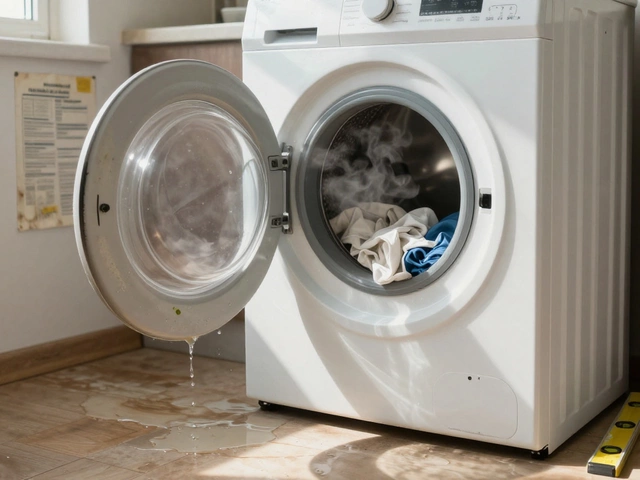
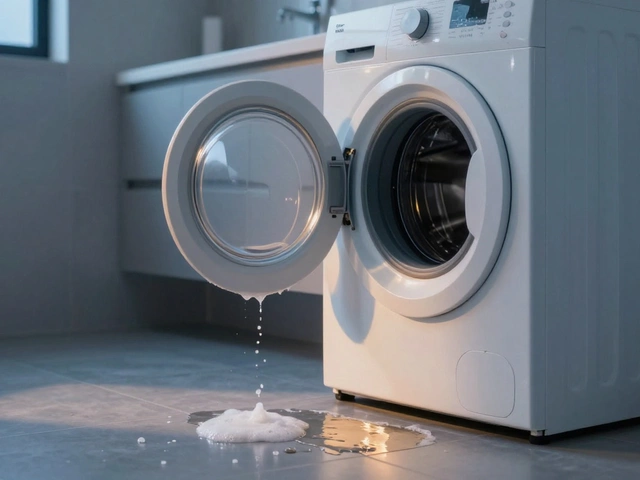
The Machine Leaks
Where is the water coming from?
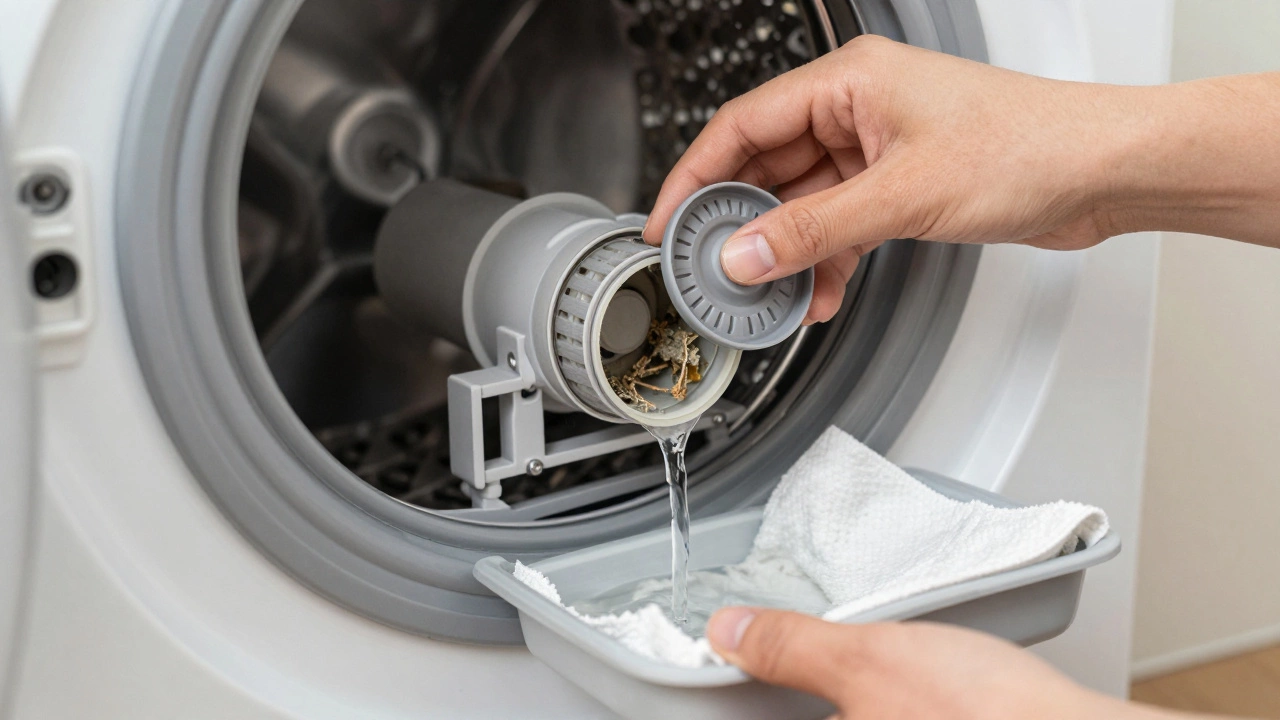
- Underneath the front: This is almost always the drain pump filter. It collects lint and coins. If it’s full, water backs up and leaks out. Locate the small door at the bottom front, place a towel underneath, and unscrew the filter slowly. Let water drain into a tray. Clean the filter and check the pump impeller for obstructions.
- Behind the machine: Check the inlet hoses for cracks or loose connections. Also, inspect the drain hose where it connects to the standpipe or sink. A loose clip or split hose here causes steady dripping.
- Around the door seal: Look inside the rubber gasket (the boot). Small objects like socks, coins, or buttons often get trapped here. They prevent the door from sealing properly, causing spray during the spin cycle. Remove any debris you find.
Spin Cycle Failures: Wet Clothes and Error Codes
If your clothes come out soaking wet, the machine failed to spin or drain. This is one of the most common complaints. Here’s how to narrow it down:
| Symptom | Likely Cause | Action |
|---|---|---|
| Machine stops mid-cycle, no error | Clogged Drain Filter | Clean the pump filter as described above. |
| Humming noise, no movement | Blocked Drain Hose | Check if the drain hose is kinked or too high (>1 meter). |
| Error Code (e.g., E10, UE) | Pressure Switch Fault | Check the air tube connected to the pressure switch for blockages. |
| Grinding noise, then stops | Drain Pump Impeller Jammed | Inspect the pump impeller for foreign objects after cleaning the filter. |
Note that error codes vary by brand. An “E10” on a Bosch might mean “drain issue,” while on a Samsung it could mean “door lock failure.” Always consult your user manual or search “[Your Brand] + [Error Code]” online. For example, LG machines often use “OE” for overflow errors.
Noisy Machines: Identifying the Source
A loud washing machine isn’t always broken, but it’s annoying. The type of noise helps identify the culprit.
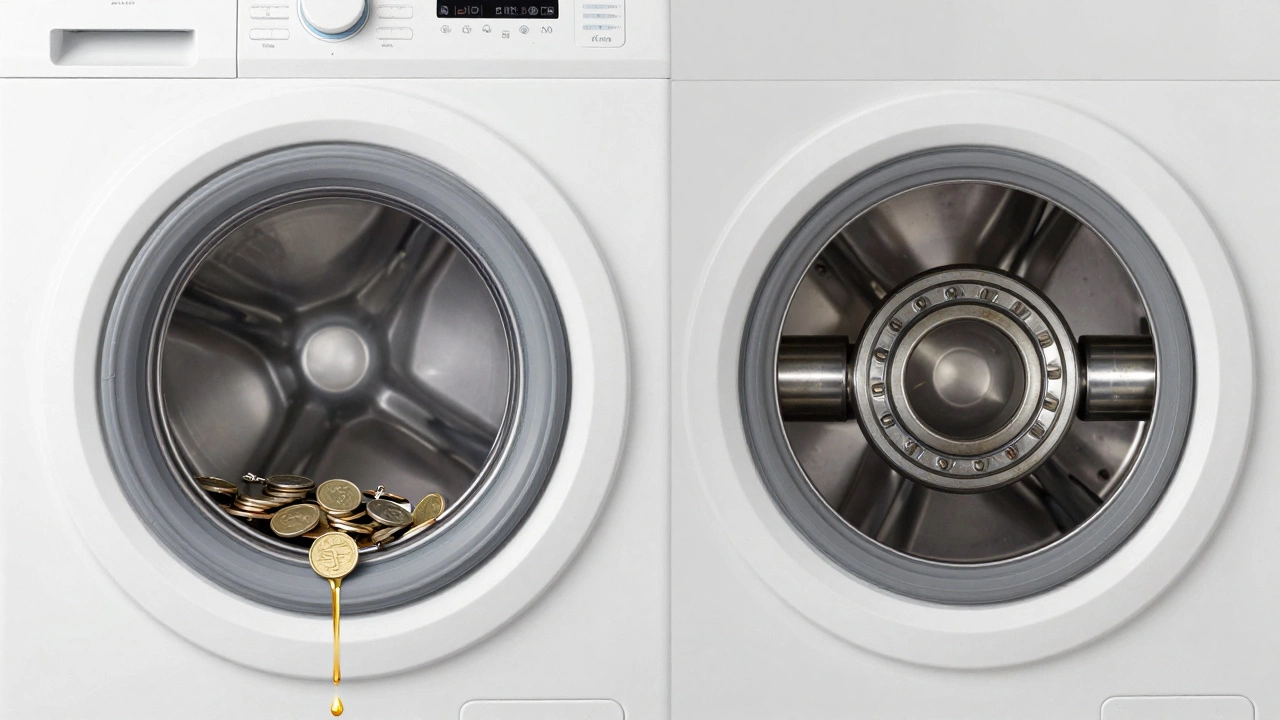
- Screeching or Squealing: This usually happens during the spin cycle. It points to worn-out bearings. Bearings support the drum, and when they fail, metal rubs against metal. This is a major repair requiring drum removal. If the noise increases with speed, the bearings are likely shot.
- Banging or Thumping: This occurs during the wash cycle. It often means the load is unbalanced. One heavy item (like a jeans pair) can throw the drum off balance. Pause the machine, redistribute the clothes evenly, and resume. If it persists with balanced loads, check the suspension springs or shock absorbers.
- Rattling: Small objects like coins or keys trapped in the drum or seal cause rattling. Empty the drum and shake it gently to dislodge anything stuck. If the rattle comes from the back, check for loose screws on the motor mount.
Electrical and Control Board Issues
If the machine has power but behaves erratically-starting and stopping randomly, ignoring settings, or displaying garbled characters-the control board (PCB) might be failing. Moisture damage is a common cause. Inspect the PCB for signs of corrosion or burnt spots. If you see green crusty residue, moisture has entered the board. In some cases, drying it out with compressed air and isopropyl alcohol can help, but replacement is often safer.
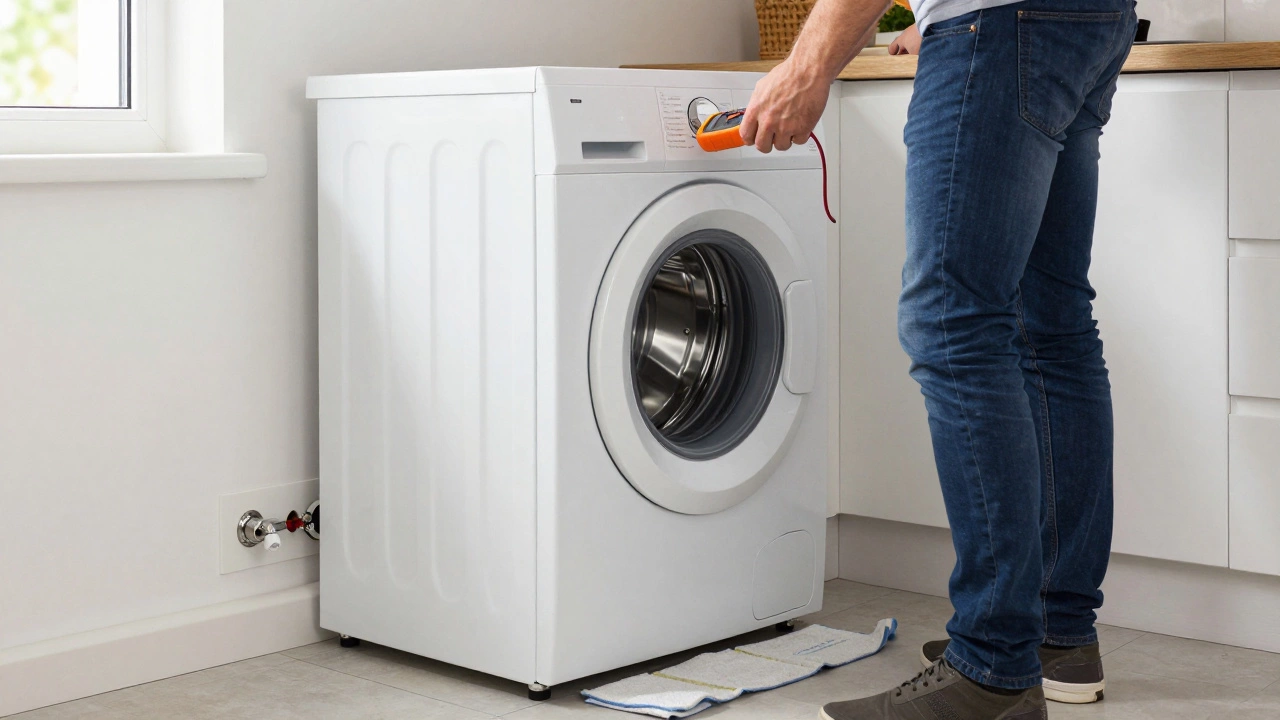
Another electrical issue is the door lock mechanism. If the machine won’t start or unlock after a cycle, test the door lock with a multimeter for continuity. If it’s open-circuit, replace the lock assembly. This is a relatively inexpensive part and easy to swap on most models.
When to Call a Professional Engineer
You can handle filters, hoses, and minor jams. But some repairs require specialized tools and knowledge. Call a qualified engineer if:
- The motor burns out or smells like burnt wiring.
- The control board shows visible burn marks or complex circuit failures.
- You suspect a gas leak (if you have a combined washer-dryer with gas heating).
- The drum bearings need replacement (this requires dismantling the entire cabinet).
- The machine is under warranty (DIY repairs can void coverage).
In the UK, look for engineers accredited by Checkatrade, TrustMark, or the manufacturer’s authorized service network. Avoid unverified “handyman” services for electrical appliances.
Why is my washing machine making a grinding noise?
A grinding noise during the spin cycle typically indicates worn-out drum bearings. These bearings allow the drum to rotate smoothly. When they wear down, metal contacts metal, creating a harsh grinding sound. This is a serious issue that usually requires replacing the bearing kit and often the seals, which is a labor-intensive job best left to professionals.
How do I clean the washing machine filter?
Locate the small access panel at the bottom front of the machine. Place a shallow tray and towels underneath to catch water. Open the panel and slowly unscrew the filter cap. Water will drain out. Once empty, remove the filter, rinse it under running water, and check the pump housing for debris like coins or hair. Reinsert the filter tightly and close the panel.
What does error code E10 mean on a washing machine?
Error code E10 generally indicates a drainage problem. The machine cannot drain water effectively, so it refuses to spin to prevent overflow. Common causes include a clogged drain filter, a kinked drain hose, or a blocked standpipe. Clean the filter and check the hose path before calling for service.
Can I fix a washing machine that won’t lock its door?
Yes, if the issue is mechanical. Check if the door alignment is correct and if there’s debris in the latch area. If the latch looks fine but the machine doesn’t recognize it’s closed, the door lock switch may be faulty. You can test this with a multimeter. Replacing the door lock assembly is a straightforward DIY task for most models.
Is it safe to run a washing machine without leveling it?
No. An unlevel washing machine will vibrate excessively during the spin cycle, leading to noisy operation, potential movement across the floor (“walking”), and premature wear on suspension springs and bearings. Use a spirit level to check all four corners and adjust the feet until the machine is perfectly flat.