Extractor Fan Repair vs. Replace Calculator
Answer 3 quick questions to get a personalized recommendation on whether to repair or replace your extractor fan.
How old is your extractor fan?
What issues are you experiencing?
What's the estimated repair cost?
Your Recommendation
That high-pitched whine from your kitchen ceiling or the sudden silence in your bathroom shower isn't just annoying-it’s a warning. Most homeowners ignore their extractor fans until they stop working entirely, but understanding how long these devices actually last can save you hundreds of pounds in emergency repairs or unnecessary replacements.
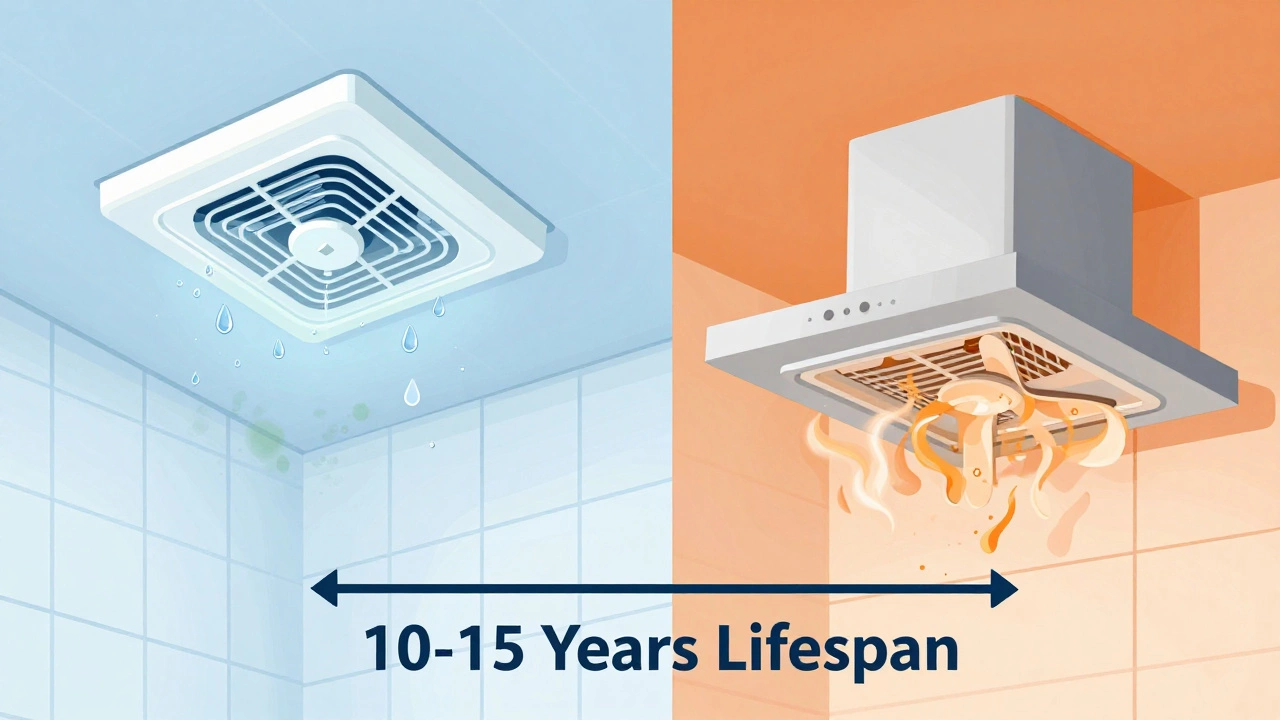
The short answer? A well-maintained extractor fan typically lasts between 10 and 15 years. However, that number swings wildly depending on where it’s installed, how often it runs, and whether you’ve ever cleaned the grease filters. In this guide, we’ll break down exactly what determines the lifespan of your unit, how to spot early signs of failure, and when it makes more sense to call for extractor fan repair versus buying a new model.
What Determines How Long an Extractor Fan Lasts?
Not all fans are created equal. The environment inside a Bristol kitchen is vastly different from a quiet hallway, and your fan’s motor feels every bit of that difference. Several key factors dictate whether your unit hits the 15-year mark or dies after three.
- Usage Frequency: A fan running continuously during cooking cycles wears out faster than one used intermittently. Kitchen hoods often run for hours at a time, while bathroom fans might only cycle for 20 minutes post-shower.
- Air Quality: Grease, steam, and dust act like sandpaper on motor bearings. Kitchens produce heavy grease particulates; bathrooms generate constant moisture. Both degrade components over time.
- Build Quality: Cheap units with plastic housings and basic copper windings fail sooner. Higher-end models with stainless steel blades and sealed ball bearings resist corrosion and friction better.
- Maintenance Habits: This is the biggest variable. A fan cleaned quarterly will outlast a neglected one by a decade, even if they’re the same brand.
If you live in an older property, you might also be dealing with outdated ductwork. Restricted airflow forces the motor to work harder, generating excess heat that cooks the internal wiring. It’s a vicious cycle that shortens life expectancy significantly.
Kitchen vs. Bathroom: Different Lifespans for Different Jobs
You can’t treat a kitchen range hood and a bathroom exhaust fan as the same appliance. They face different enemies.
| Feature | Kitchen Range Hood Fan | Bathroom Exhaust Fan |
|---|---|---|
| Average Lifespan | 7-12 years | 10-15+ years |
| Main Enemy | Grease buildup | Moisture & mold |
| Cleaning Frequency | Monthly (filters) | Quarterly (grille/motor) |
| Common Failure Point | Motor burnout due to clogged filters | Capacitor failure or bearing rust |
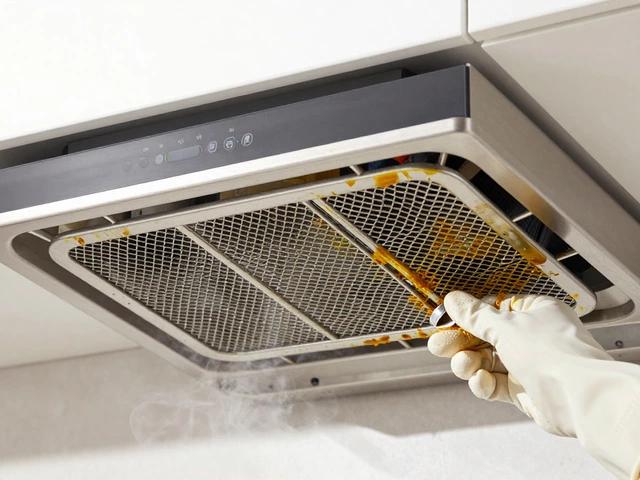
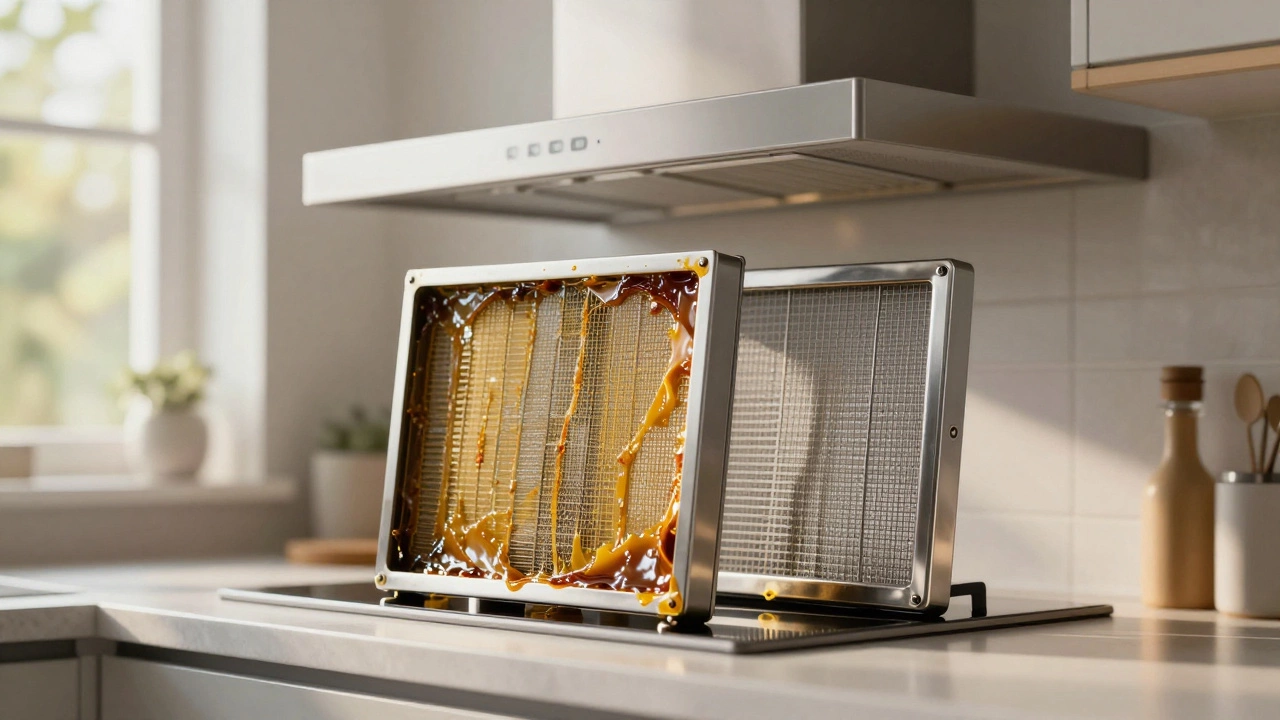
Kitchen fans take a beating. Every time you fry onions or grill steak, microscopic oil particles coat the blades. If you don’t clean the metal mesh filters regularly, that grease hardens into a cement-like layer. The motor struggles to spin through the resistance, overheats, and eventually burns out. I’ve seen plenty of units die at year five simply because the owner never took the filter off.
Bathroom fans face humidity. While they don’t get greasy, the damp air promotes rust on the bearings and electrical corrosion. If your bathroom lacks proper ventilation elsewhere, the fan runs longer, increasing wear. However, because the air is cleaner (no grease), the mechanical parts often survive longer if kept dry.
Signs Your Extractor Fan Is Dying (Before It Stops Completely)
Fans rarely quit without warning. They give you clues. Ignoring these signals leads to total failure, which often requires full replacement rather than a simple fix. Watch for these red flags:
- Increased Noise: A healthy fan hums quietly. If you hear grinding, rattling, or a high-pitched squeal, the bearings are worn or something is loose inside the housing. This is a classic precursor to motor seizure.
- Reduced Airflow: If you hold a tissue near the vent and it doesn’t stick, your suction is weak. This could mean a blocked duct, a failing motor, or a clogged filter. Don’t assume it’s just “old age” yet-check the basics first.
- Frequent Tripping of Breakers: If turning on the fan causes your light switch to flicker or trips the circuit breaker, there’s likely an electrical short or the motor is drawing too much current due to friction.
- Intermittent Operation: Does it start, stop, then start again? Or does it only work on certain speeds? This usually points to a failing capacitor or damaged wiring.
- Visible Dust or Debris Around the Unit: Leaking air around the edges means the seal is broken or the mounting is loose, allowing unfiltered air to bypass the system and dirty the interior.
Notice any of these? You have a window of opportunity. Acting now might save the motor. Waiting another six months usually guarantees a costly replacement.
Repair vs. Replace: When Does It Make Sense?
This is the million-pound question. Just because a fan is noisy doesn’t mean you need to buy a new one. Here’s a practical decision tree to help you choose.
Consider Repair If:
- The unit is less than 8 years old.
- The issue is isolated (e.g., a bad capacitor, a loose blade, or clogged filters).
- The motor still spins freely when disconnected from power (manual test).
- You love the design or placement and don’t want to cut holes in your ceiling/wall.
Consider Replacement If:
- The fan is over 10-12 years old.
- The motor has burned out completely (smell of burnt plastic/wiring).
- The housing is cracked or heavily corroded.
- Newer models offer significantly better efficiency (lower kWh usage) and quieter operation (measured in decibels).
- Repair costs exceed 50% of the price of a new, comparable unit.
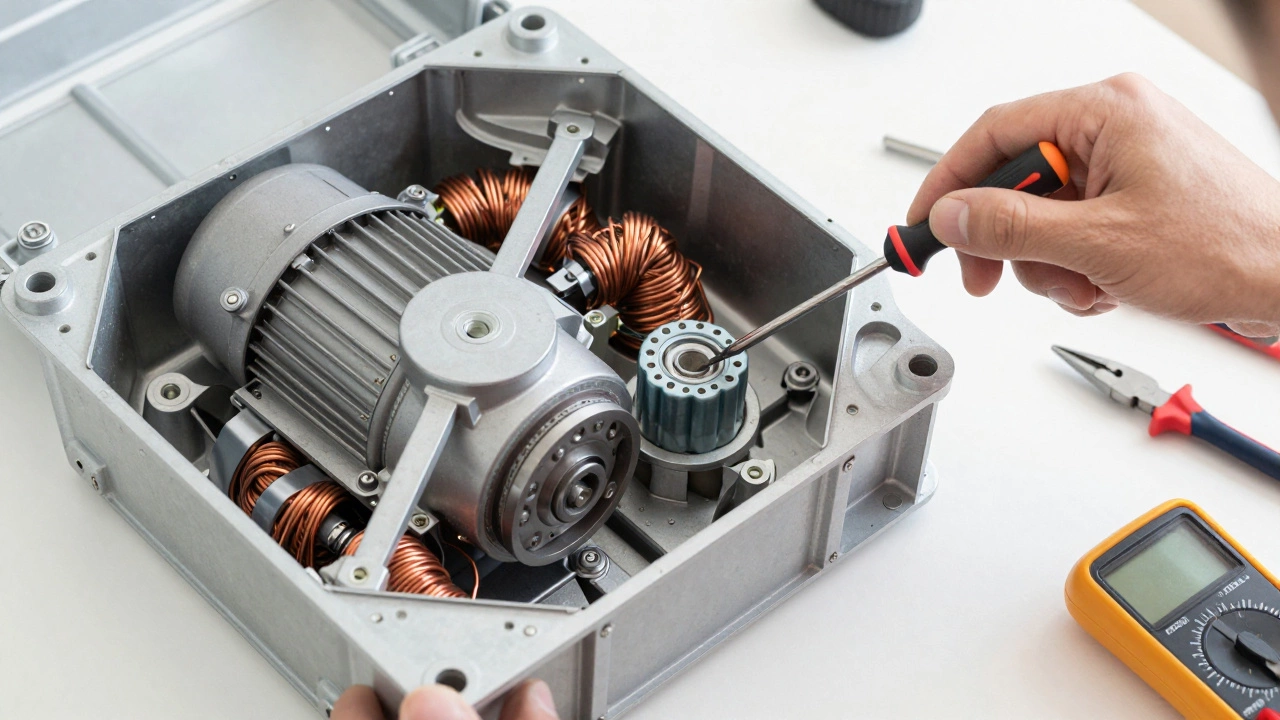
In my experience here in Bristol, many people replace perfectly good motors because they think the whole unit is dead. Often, a technician can swap a capacitor for £30-£50, whereas a new installation runs £150-£300 including labor. Always get a diagnostic quote before committing to a full swap.
How to Extend the Life of Your Extractor Fan
You don’t need to be an engineer to keep your fan running smoothly. Simple, consistent habits add years to its life. Here’s what you should be doing:
1. Clean the Filters Regularly
For kitchen hoods, remove the metal mesh filters monthly. Soak them in warm soapy water or put them in the dishwasher. For charcoal filters (recirculating models), replace them every 3-6 months-they cannot be washed. Clogged filters are the #1 cause of premature motor death.
2. Check the Ductwork Annually
Ensure the external vent flap opens freely. Birds’ nests, leaves, or ice (in winter) can block the exit. If the air has nowhere to go, pressure builds up inside the fan, stressing the motor.
3. Lubricate Bearings (If Applicable)
Some older models have accessible bearings that require occasional drops of machine oil. Most modern fans have sealed bearings, so check your manual. Never force lubrication into a sealed unit-it attracts dust and causes more harm.
4. Use Timers and Humidity Sensors
Install a timer or use a fan with a built-in humidity sensor. Running a bathroom fan for 20 minutes after a shower is enough. Leaving it on for hours wastes energy and wears out the motor unnecessarily. Similarly, don’t leave the kitchen hood on low speed all day.
5. Professional Servicing
Every 3-5 years, consider having a professional inspect the wiring and motor connections. Loose wires can spark, and corroded contacts reduce efficiency. A quick check-up prevents fire hazards and ensures optimal performance.
Understanding the Cost of Neglect
Ignoring your extractor fan isn’t just about inconvenience. Poor ventilation leads to condensation, which breeds black mold in bathrooms and kitchens. Mold removal is expensive and hazardous to health. In kitchens, accumulated grease becomes a fire risk. The UK Fire Service reports numerous incidents where uncleaned range hoods contributed to domestic fires.
Furthermore, an inefficient fan uses more electricity. An old, struggling motor can consume 20-30% more power than a well-maintained one. Over ten years, that adds up to noticeable savings on your energy bill if you keep things clean.
Choosing the Right Replacement
If you decide to replace your unit, don’t just buy the cheapest option. Look for these specifications:
- Airflow Rate (m³/h): Match this to your room size. A small bathroom needs ~50 m³/h; a large kitchen may need 300+ m³/h.
- Noise Level (dB): Aim for under 45 dB for bedrooms/bathrooms. Kitchens can tolerate slightly higher levels, but anything above 60 dB is disruptive.
- Energy Rating: Look for A-rated motors. They cost more upfront but save money long-term.
- Type: Ducted fans are more efficient and durable than recirculating (charcoal) models. If possible, install ducting to the outside.
Brands like Zehnder, Fantech, and Quooker offer reliable units with accessible spare parts. Avoid no-name imports unless you’re comfortable sourcing custom repairs later.
How do I know if my extractor fan motor is dead?
A dead motor usually presents as complete silence despite the switch being on, often accompanied by a burning smell. If you hear a humming sound but no airflow, the motor might be seized or the capacitor failed. Try manually spinning the blade (with power off); if it’s stiff or gritty, the bearings are shot. If it spins freely but won’t start, the electrical component (capacitor or winding) is likely the culprit.
Can I replace just the motor in an extractor fan?
Yes, in most cases. Motors are standardized components. You’ll need to match the voltage (usually 230V in the UK), wattage, and shaft size. Many manufacturers sell replacement kits. However, if the housing is damaged or the wiring is corroded, replacing the entire unit is safer and more cost-effective.
Why is my extractor fan making noise but still working?
Noise usually indicates mechanical wear. Grinding suggests worn bearings. Rattling could mean a loose blade or debris trapped in the housing. Squealing often points to friction between moving parts. While it’s still moving air, this stress will shorten the motor’s life. Cleaning or lubricating might help temporarily, but bearing replacement is often needed.
Is it worth repairing an old extractor fan?
It depends on age and cost. If the fan is under 8 years old and the repair is minor (like a new capacitor or cleaning), yes. If it’s over 10 years old, the energy inefficiency and likelihood of future failures make replacement smarter. Compare the repair quote to 50% of a new unit’s price-if it’s higher, buy new.
How often should I clean my kitchen extractor fan filters?
Metal mesh filters should be cleaned monthly if you cook frequently. Charcoal filters in recirculating models need replacing every 3 to 6 months. Neglecting this is the fastest way to kill your fan’s motor, as the grease buildup creates excessive resistance.