Oven Control Board Diagnostic Tool
This tool helps you determine if your oven's symptoms are likely caused by a bad control board. Enter the symptoms you're experiencing to get guidance on next steps.
Select Symptoms
Enter your symptoms and click "Check Diagnosis" to see if your oven control board is likely faulty.
If your oven won’t heat up, the display is blank, or it turns off randomly, you might be staring at a bad control board. It’s one of the most common reasons electric ovens stop working-but it’s also one of the easiest to misdiagnose. Most people assume it’s the heating element or thermostat. But if those parts check out, and the oven still acts up, the control board is likely the culprit.
What even is a control board?
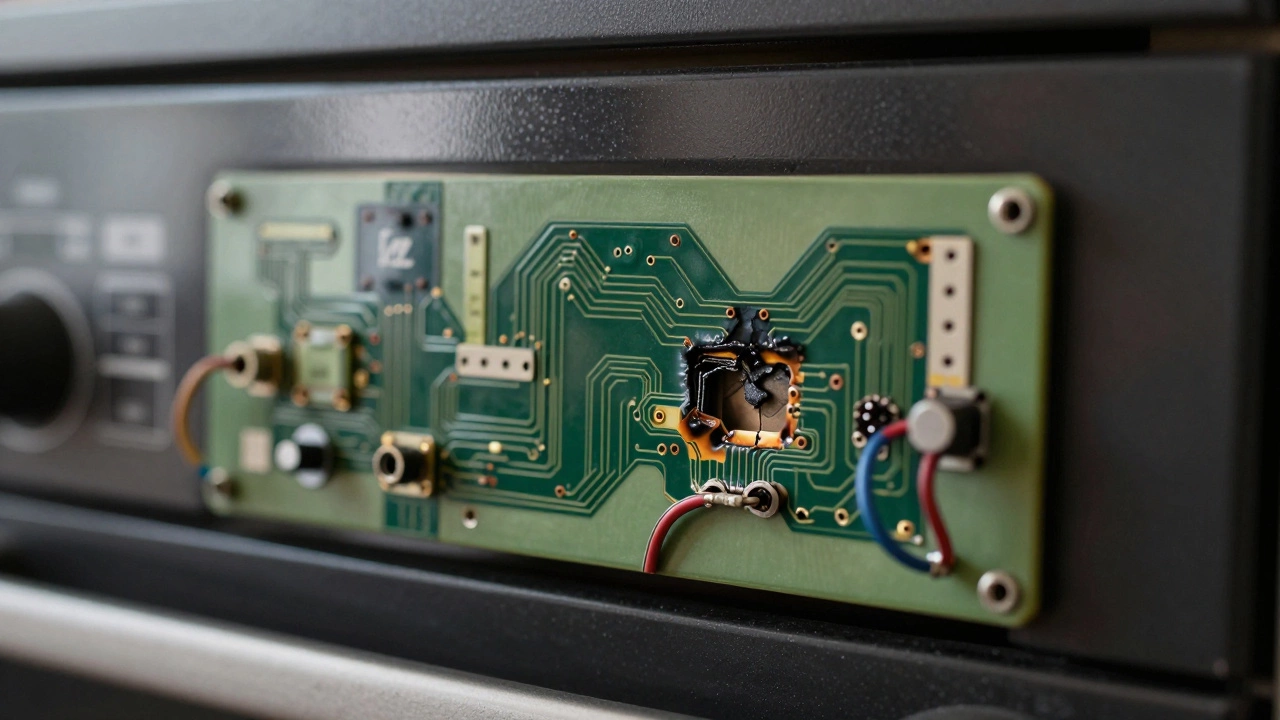
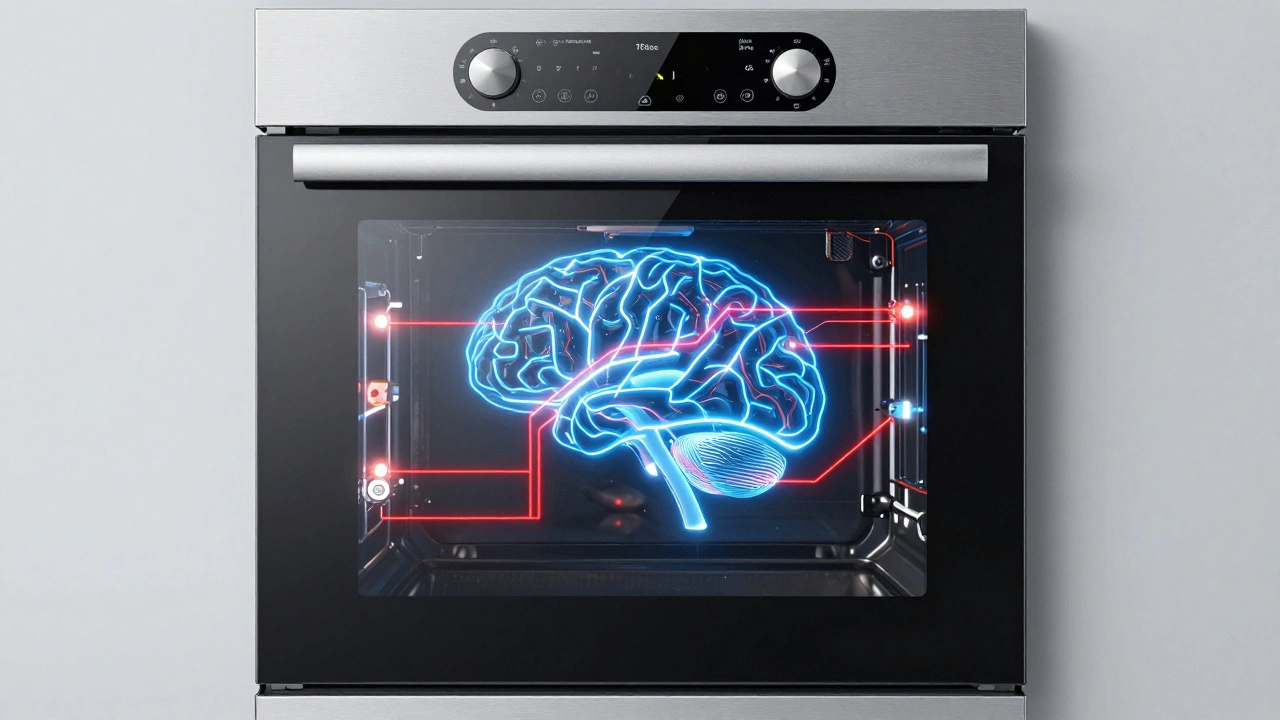
The control board is the brain of your electric oven. It’s a small circuit board, usually hidden behind the control panel or tucked into the back of the oven cavity. It takes input from the knobs, buttons, and temperature sensors, then sends the right electrical signals to the heating elements, fan, and lights. If it fails, nothing works right-even if every other part is brand new.
Modern ovens don’t use mechanical dials anymore. Everything is digital. That means the control board handles everything: setting the temperature, timing the bake cycle, locking the door during self-clean, even displaying error codes. When it goes bad, the oven doesn’t just stop-it starts behaving strangely.
Signs your oven control board is failing
Here are the clearest, most reliable signs you’re dealing with a bad control board:
- The display is dead-no lights, no numbers, nothing. Not even a flicker. If the oven has power (the clock is on, the light works), but the display is completely blank, the board isn’t sending signals.
- Buttons don’t respond-you press ‘Bake’, ‘Broil’, or ‘Convection’, and nothing happens. No beep, no change. If you’ve tried resetting the oven (unplugging it for 10 minutes), and it still doesn’t react, the board isn’t processing input.
- Random shutdowns-the oven turns off mid-bake, or the temperature drops suddenly. This isn’t a thermostat issue. Thermostats fail by keeping heat on too long. A control board fails by cutting power unpredictably.
- Error codes that don’t match known issues-your oven shows E1, F3, or C0, but looking up the code online says it’s for a sensor or element. If you’ve replaced those parts and the code comes back, the board is misreading or misreporting.
- Heating elements won’t turn on-you’ve tested the bake and broil elements with a multimeter and confirmed they have continuity. The power is getting to the board, but the board isn’t sending it out.
These aren’t vague symptoms. They’re specific failures tied to how the board functions. If you’re seeing two or more of these, the odds are very high it’s the control board.
What it’s NOT (common misdiagnoses)
Many people replace their control board when it’s not the problem. Here’s what usually gets blamed on the board-but isn’t:
- Broken heating elements-these are easy to test. Unplug the oven, pull out the element, and use a multimeter to check for continuity. If it reads open (infinite resistance), it’s dead. Replace it before assuming the board is faulty.
- Faulty thermostat or temperature sensor-if your oven is off by 50°F or more, it’s likely the sensor. You can test it by measuring resistance. At room temperature, most sensors read between 1000 and 1100 ohms. If it’s way off, swap it out.
- Tripped thermal fuse-this safety device cuts power if the oven overheats. It’s usually located near the broil element. If the oven won’t turn on at all, check this first. It’s cheap ($10-$20) and easy to replace.
- Loose wiring-vibrations over time can loosen connections behind the control panel. Unplug the oven, remove the panel, and wiggle the wires going into the board. If any come loose, reseat them. Corrosion or burnt connectors are also a red flag.
Always rule out these simpler fixes before buying a new control board. They’re cheaper, easier, and often the real issue.
How to test the control board
You can’t test a control board like you test a heating element. There’s no simple continuity check. But here’s how to narrow it down:
- Unplug the oven for at least 15 minutes. This resets the board’s memory. Plug it back in. Does it work? Sometimes a glitch clears itself.
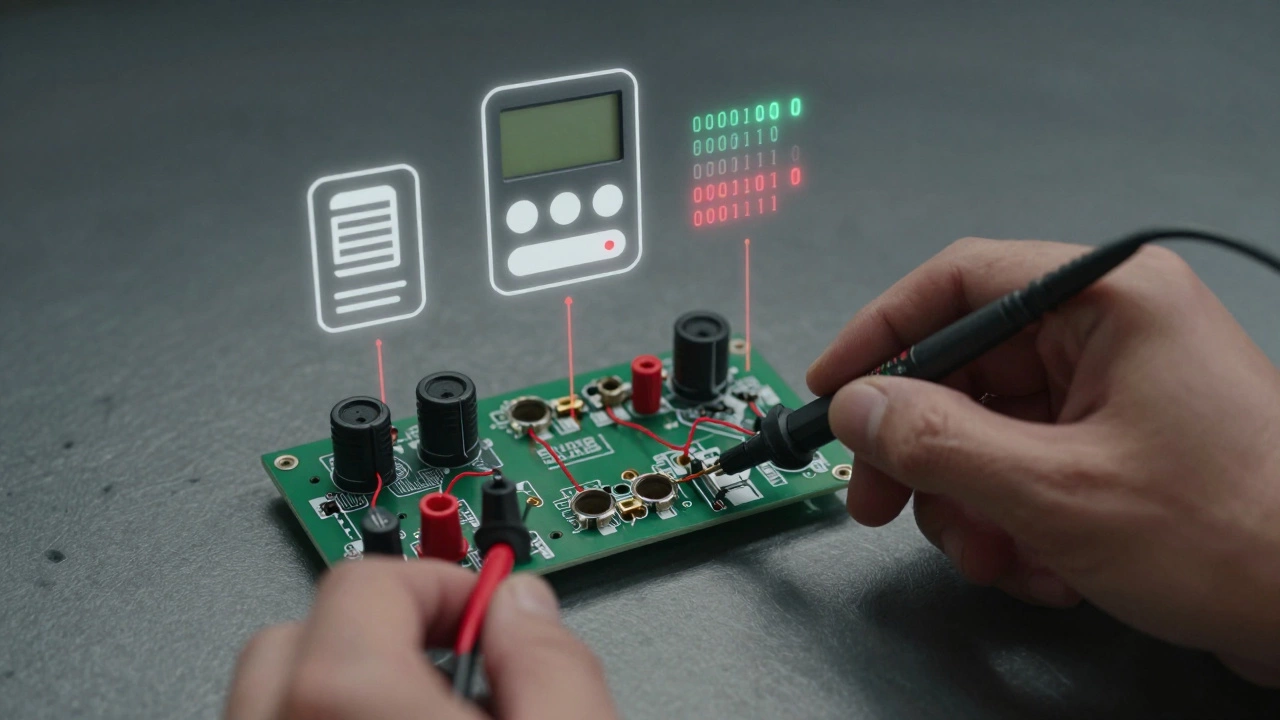
- Check for power at the board-use a multimeter to test for 120V or 240V (depending on your model) at the input terminals. If there’s no power, the issue is upstream (fuse, outlet, breaker).
- Check the output wires-with the oven set to bake, probe the wires going to the bake element. If you get voltage at the board’s output but nothing reaches the element, the board is sending power-but the wire is broken. If you get no voltage at all, the board isn’t outputting.
- Compare symptoms to the manual-every oven model has a service manual. Look up your model number (usually on a sticker inside the door frame). If the symptoms match a known board failure, you’re likely right.
If you have power going in, but nothing coming out-and the other parts are good-then the board is bad.
Replacing the control board
If you’ve confirmed the board is faulty, replacement is straightforward:
- Find the exact model number of your oven. Use it to search for the control board online. Don’t guess-boards from similar models often don’t fit.
- Order the part from a trusted supplier like Repair Clinic, Appliance Parts Pros, or the manufacturer.
- Unplug the oven. Remove the control panel by unscrewing the front or top trim. Take a photo of the wiring before disconnecting anything.
- Disconnect each wire one at a time, and plug it into the same terminal on the new board. No polarity to worry about-just match the labels.
- Reassemble, plug in, and test.
Most replacements take under an hour. The part costs $80-$200 depending on the brand. A professional repair will charge $300-$500. If you’re comfortable with basic tools, you can save a lot.
Why control boards fail
Control boards don’t last forever. Here’s why they die:
- Heat damage-ovens get hot. If the board is mounted too close to the heating elements or the insulation has degraded, heat cooks the circuitry over time.
- Power surges-a lightning strike or faulty wiring can fry the board. If you’ve had recent power issues in your home, this is likely.
- Moisture or grease buildup-if you’ve had a spill or steam leak near the control panel, corrosion can creep in. This is common in older ovens or those without proper ventilation.
- Age-most boards last 8-12 years. If your oven is 15+ years old, replacement is a normal part of maintenance.
There’s no way to prevent failure entirely, but keeping the oven clean, using surge protectors, and ensuring good ventilation can extend its life.
Should you repair or replace?
If your oven is under 8 years old and the control board is the only issue, repair it. The cost is usually less than 30% of a new oven.
If it’s over 12 years old, consider replacement. New ovens have better energy ratings, smarter features (Wi-Fi, convection modes), and longer warranties. A new mid-range oven costs $600-$1000. If your repair costs more than half that, it’s not worth it.
Also think about repair history. If you’ve replaced the heating element, thermostat, and now the board-all within two years-you’re chasing failures. At that point, a new oven is the smarter investment.