Electric Hob Installation Checker
Is Your Hob Installation Safe?
Answer these questions to determine if you need a qualified electrician for your electric hob replacement.
According to UK Building Regulations Part P, all electric hob installations must be performed by a qualified electrician registered with a competent person scheme (NICEIC, ELECSA, Stroma).
Replacing an electric hob isn’t like swapping out a broken light bulb. It’s not something you can just unplug, lift out, and drop a new one in. If you’re thinking about doing it yourself, you’re probably wondering: do you need an electrician to replace an electric hob? The short answer? Yes. Always. And here’s why.
Electric hobs aren’t plug-and-play appliances
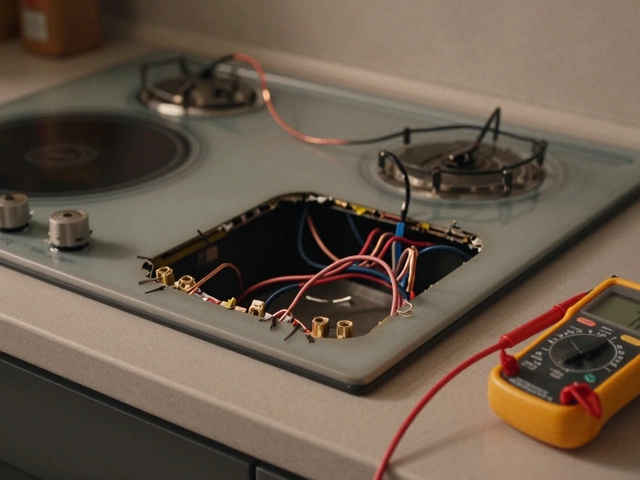
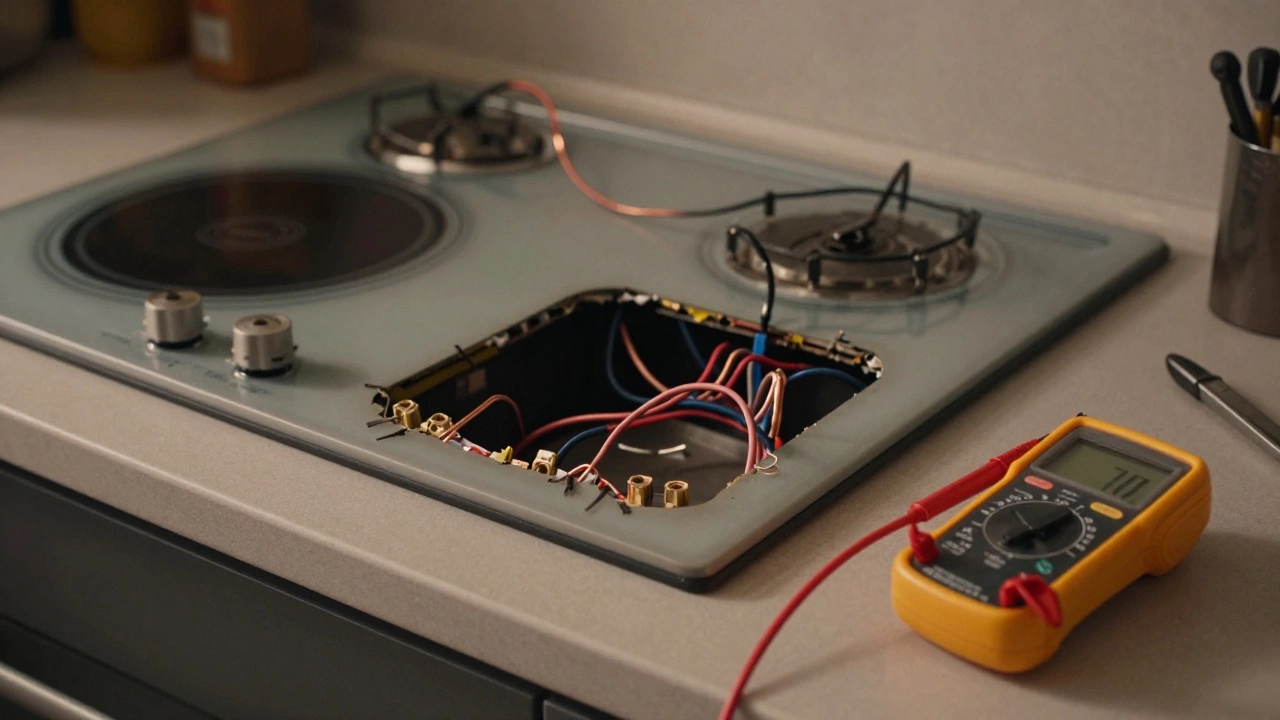
Most people assume that because an electric hob looks like a big cooker, it works like a toaster or kettle-plug it in, turn it on. But that’s not true. Electric hobs are hardwired directly into your home’s main electrical circuit. They don’t have a standard plug. Instead, they connect to a dedicated circuit, usually with a 32A or 45A breaker, running through a junction box behind the kitchen cabinet or under the countertop.
This isn’t just about convenience. It’s about safety. A standard UK plug socket can only handle up to 13 amps. Most electric hobs pull between 30 and 45 amps. If you tried to plug one into a regular outlet, you’d trip the breaker instantly-or worse, melt the wiring, start a fire, or blow out your entire kitchen circuit.
Building regulations in the UK require it
In the UK, any work involving fixed electrical installations-like rewiring a hob-is covered by Part P of the Building Regulations. This law says that if you’re replacing or installing a new electric hob, the work must be certified by a qualified electrician registered with a competent person scheme (like NICEIC, ELECSA, or Stroma).
Even if you’re just swapping a broken hob for an identical model, you still need certification. Why? Because the electrician has to check the circuit’s capacity, the cable size, the earthing, and the isolation switch. If any of those are wrong, the new hob could overheat, cause a short, or become a shock hazard.
And if you don’t get it done right? The council can fine you. Your home insurance might be invalidated. And if a fire happens later, you could be held legally responsible-even if you didn’t mean to cut corners.
What happens if you try to do it yourself?
Some people think, “I’ve changed a light switch before. How hard can this be?” But a light switch handles 10 amps. An electric hob handles 40. The tools, the risks, and the consequences are completely different.
Here’s what can go wrong if you DIY:
- You connect the wrong cable to the wrong terminal-causing a live wire to touch metal, turning your hob into a shock trap.
- You use 2.5mm cable when you need 6mm or 10mm-overheating the wires inside the wall.
- You forget to install an isolation switch near the hob-making it impossible to cut power safely during a fault.
- You don’t test the earth continuity-meaning a fault won’t trip the breaker, and you could get electrocuted.
These aren’t hypotheticals. In 2024, the Health and Safety Executive reported 1,200 electrical incidents in UK homes linked to DIY work. Over 60% involved cooking appliances. Most were avoidable.
What does a qualified electrician actually do?
It’s not just about screwing in wires. A good electrician will:
- Turn off the main power and lock out the circuit to prevent accidental re-energizing.
- Check the existing circuit: cable size, breaker rating, and age of the wiring.
- Verify the junction box is rated for the hob’s load and is properly sealed.
- Test earth continuity and insulation resistance with a multimeter.
- Confirm the isolation switch is within 2 metres of the hob (as per UK wiring regulations).
- Fit the new hob, connect it correctly, and test all zones for even heating and safety.
- Issue a Minor Electrical Works Certificate or Electrical Installation Certificate-legally required paperwork.
That’s not just a service. That’s a safety audit.

How much does it cost to hire an electrician?
Prices vary depending on location, complexity, and the type of hob. In Bristol, replacing a standard 4-zone electric hob with a like-for-like model usually costs between £150 and £250. That includes the electrician’s time, testing, certification, and disposal of the old unit.
It’s more if:
- You’re upgrading to a higher-power hob (like a 7kW induction model) and need a new circuit installed.
- Your kitchen wiring is old-maybe from the 1970s-and needs rewiring.
- The junction box is hidden behind tiles or in a hard-to-reach spot.
But here’s the thing: that £200 is a small price to pay compared to the cost of a house fire, a failed insurance claim, or a hospital visit from an electric shock.
What about induction hobs? Do they need special treatment?
Induction hobs are even more sensitive than traditional electric ones. They don’t just use electricity-they use magnetic fields to heat the pan directly. That means they’re more efficient, but also more vulnerable to electrical noise and grounding issues.
If the earth connection is weak, an induction hob can interfere with your Wi-Fi, smart appliances, or even medical devices like pacemakers. A qualified electrician will test for electromagnetic compatibility and ensure the circuit is clean and stable.
Plus, many induction hobs come with smart features-Bluetooth, app control, child locks-that require proper grounding to function safely. DIY installations often break these features, or worse, make them dangerous.
What if your hob is broken and you need a quick fix?
Some people think, “I’ll just leave the old one in until I can afford an electrician.” That’s risky. A faulty hob can develop hidden issues:
- Cracked ceramic glass can let moisture in-causing short circuits.
- Loose terminals can arc and spark behind the panel.
- Failed heating elements can overload the circuit, tripping the breaker repeatedly.
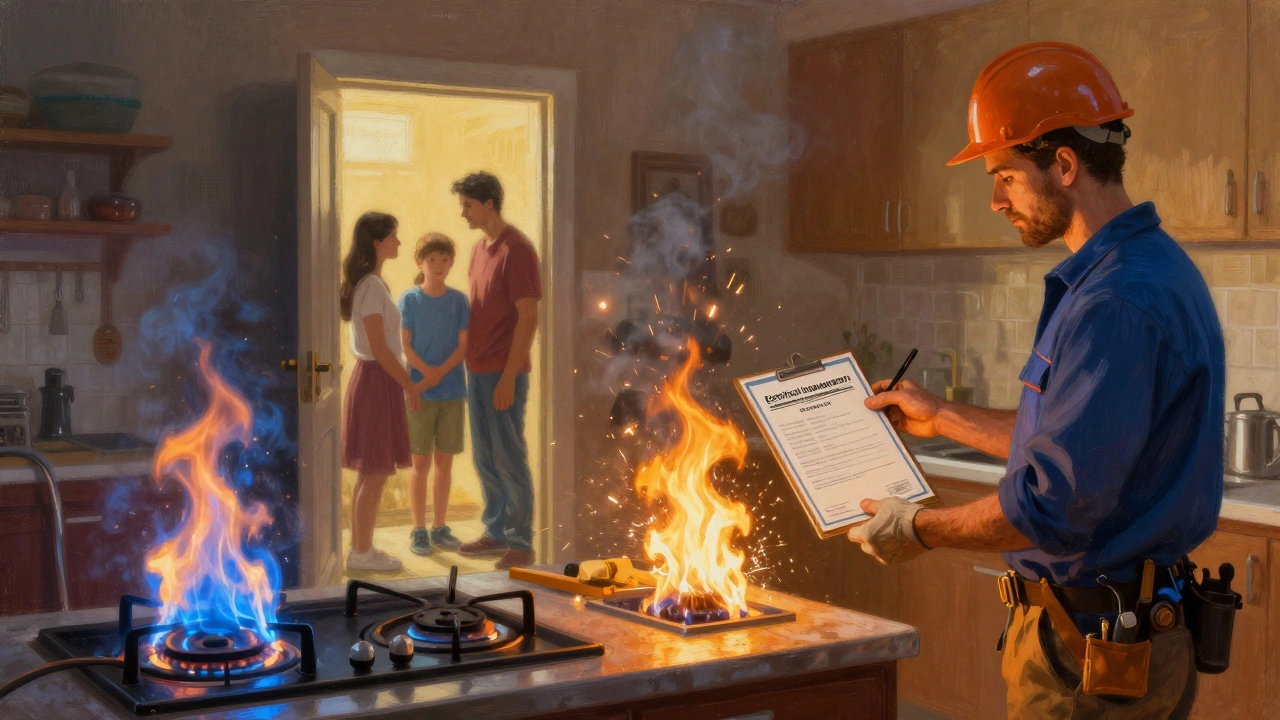
Don’t wait. If your hob is acting up-sparking, buzzing, not heating evenly, or tripping the breaker-turn it off at the main switch and call an electrician immediately. Don’t use it again until it’s been checked.
When can you skip the electrician?
Only one situation: if your new hob is a plug-in model. But these are rare. Most plug-in hobs are small, portable units (like 2-zone camping hobs) designed for temporary use. They’re not meant for permanent kitchen installation.
If you’re buying a new hob and see a plug on the back, double-check the manual. If it says “hardwired installation only,” then no-don’t plug it in. Even if it fits a socket, it’s not safe or legal.
What about gas hobs? Do they need a plumber?
Yes. And that’s another reason to stick with professionals. Gas hob installation requires a Gas Safe registered engineer. Electric hobs need a qualified electrician. Neither job is a DIY project. Mixing the two-like trying to install a gas hob yourself because you’re “good with tools”-is how people end up in hospital.
Respect the systems. Each one has its own rules, risks, and certifications. Don’t assume skills from one area transfer to another.
Final advice: Don’t gamble with electricity
Electricity doesn’t care if you’re handy, busy, or broke. It doesn’t pause for a weekend project or a tight budget. It flows at 230 volts, 50Hz, and it doesn’t forgive mistakes.
Replacing an electric hob isn’t about saving money. It’s about protecting your family, your home, and your future. A £200 electrician visit is cheaper than a £50,000 fire repair. It’s cheaper than losing your insurance. It’s cheaper than the stress of a legal dispute.
So skip the YouTube tutorials. Don’t risk your life for a few pounds. Hire a qualified electrician. Get the certificate. Sleep easy.
Can I replace my electric hob myself if I turn off the power?
Turning off the power is a good first step, but it’s not enough. Electric hobs are hardwired and require testing of earth continuity, cable sizing, and circuit load. Even if you disconnect the old one and connect the new one, you still need a qualified electrician to certify the installation under UK Building Regulations. Without that certification, your work is illegal and unsafe.
Is it cheaper to replace the hob myself?
You might save £100-£150 on labour, but you risk much more. If your installation fails safety checks, you’ll need to pay an electrician anyway to fix it. If it causes a fire or damages your wiring, repairs could cost thousands. Insurance claims may be denied. Fines from local councils can reach £5,000. The real cost of DIY isn’t just money-it’s safety and legal liability.
Do I need a new circuit for a new electric hob?
It depends. If your old hob was 3kW and your new one is 7kW, you likely need a new circuit with thicker cables and a higher-rated breaker. Most older homes have 30A circuits, but modern induction hobs often require 40A or 45A. A qualified electrician will test your existing setup and advise whether an upgrade is needed.
Can I use a plug-in electric hob instead?
Only if it’s designed as a portable, temporary unit. Most plug-in hobs are low-power (under 3kW) and meant for occasional use, like in a caravan or studio flat. They’re not suitable for permanent kitchen installation. If your new hob has a plug but the manual says “hardwired only,” then you must have it installed by an electrician. Forcing a plug-in hob into a fixed circuit is dangerous and violates UK electrical standards.
What happens if I don’t get a certificate after replacement?
Without a certificate, your installation isn’t legally compliant. If you sell your home, the buyer’s surveyor will flag it as a safety risk. Your home insurance may be voided if a fire occurs. Local councils can inspect and demand you pay for a full rewire. In extreme cases, you could face prosecution under Building Regulations. The certificate isn’t paperwork-it’s proof you didn’t put your family at risk.