
Fridge Repair or Replace Calculator
Assess Your Fridge Situation
Enter your fridge details to determine if repair or replacement is the best option.
Recommendation
Annual Energy Savings
Nothing hits harder than walking into the kitchen and finding your fridge silent, warm, and everything inside starting to spoil. It doesn’t matter if it’s a 2-year-old model or a 15-year-old workhorse-when the fridge suddenly stops working, panic sets in fast. You’re not imagining things. Something really did go wrong. And chances are, it’s not as complicated-or expensive-as you think.
It’s Not the Power
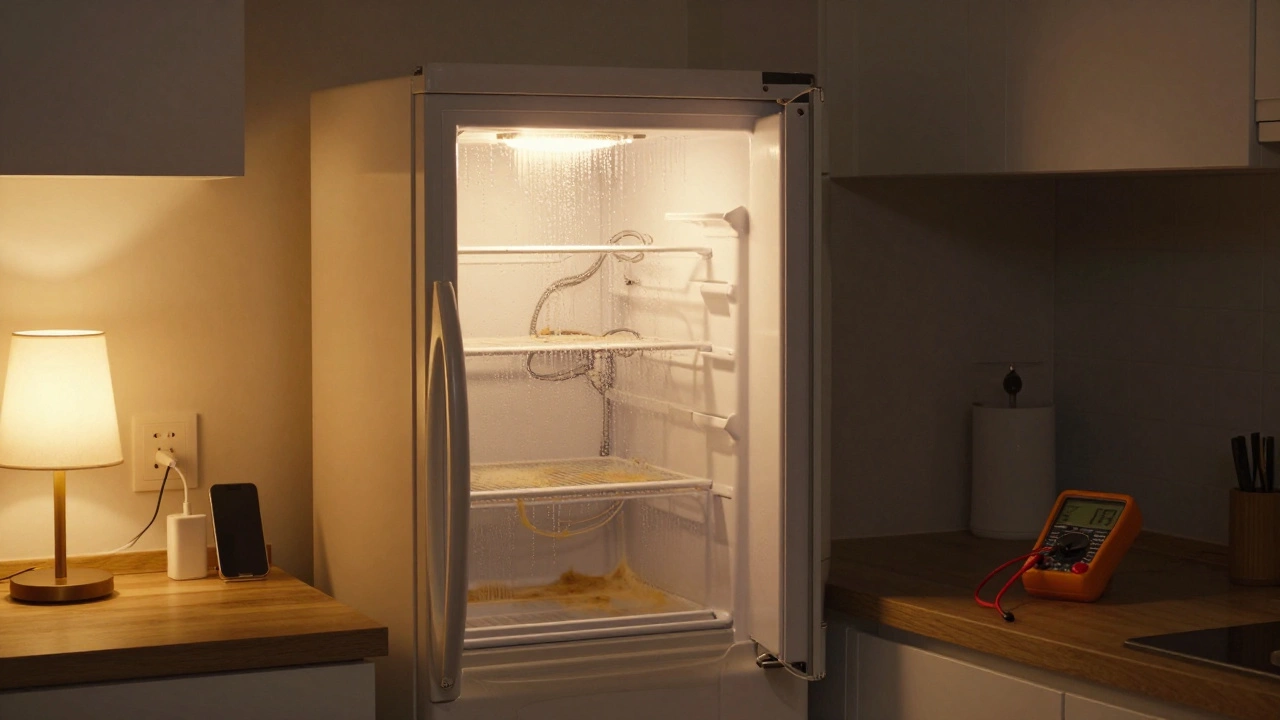
First, check the obvious: is the fridge even getting electricity? Plug something else into the same outlet-a lamp, a phone charger-to see if it works. If not, the problem might be a tripped breaker or a blown fuse. Go to your fuse box and look for the circuit labeled "kitchen" or "refrigerator." Reset it if needed. But if the outlet is fine and the fridge still won’t turn on, the issue is deeper than a power cut.Some fridges have a built-in reset button, usually hidden behind the kickplate or inside the control panel. Consult the manual if you still have it. If not, unplug the fridge for 5 minutes, then plug it back in. This simple reset can fix minor glitches in the control board. If the fridge hums back to life, you got lucky. If not, keep reading.
The Compressor Is the Heart-And It’s Failing
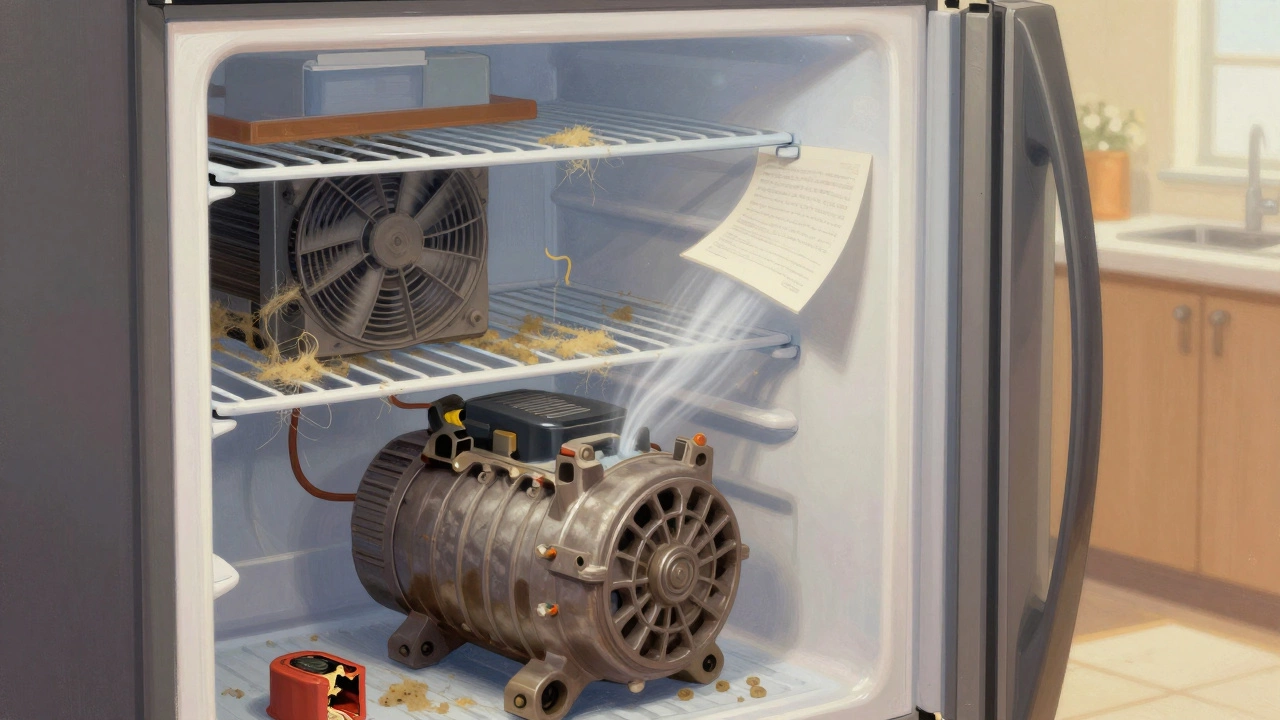
The compressor is the part that makes your fridge cold. It’s a small motor buried at the back or bottom of the unit. When it’s working, you’ll hear a low, steady hum. If you hear nothing-not even a click-when you turn the thermostat up, the compressor might be dead.Compressors don’t just die for no reason. They usually fail because they’ve been overworked. If your fridge is in a hot garage, jammed full of food, or has dirty coils, it has to work harder. Over time, that stress burns out the motor. A compressor that’s gone won’t just stop cooling-it’ll also stop making any noise at all. You won’t hear it kick in, even after waiting 10 minutes.
Replacing a compressor costs £400-£700 in the UK. That’s often more than the value of the fridge, especially if it’s older than 8 years. Most repair technicians will tell you to replace the whole unit. But before you do, check the start relay. It’s a cheap part-£15-£30-that can mimic a dead compressor. If the relay is faulty, the compressor never gets the signal to turn on. You can swap it yourself if you’re handy. Just unplug the fridge, remove the back panel, locate the small plastic box attached to the compressor, and replace it with the same model.
Dirty Coils Are the Silent Killer
Most people don’t know their fridge has coils. They’re metal tubes that run along the back or underneath, and they’re supposed to release heat from inside the fridge. But over time, dust, pet hair, and kitchen grease build up on them. That insulation traps heat, forcing the compressor to run longer and hotter. Eventually, it overheats and shuts down.If your fridge is older than 5 years and you’ve never cleaned the coils, this is likely your problem. Pull the fridge out from the wall. Use a vacuum with a brush attachment or a coil cleaning brush (available at hardware stores) to gently remove the grime. Do this every 6 months. It’s the single best thing you can do to extend your fridge’s life. A clean coil system can cut energy use by 20% and prevent premature compressor failure.
The Thermostat Is Broken
The thermostat controls when the compressor turns on and off. If it’s faulty, it might think the fridge is cold enough-even when it’s not. You’ll notice the fridge isn’t cooling, but the light still works. The fan might even be running. But the compressor stays silent.Test it with a multimeter. Set it to continuity mode. Unplug the fridge. Remove the thermostat (usually behind a panel in the top of the fridge compartment). Touch the probes to the terminals. If the meter doesn’t beep when you turn the dial, the thermostat is dead. Replacement units cost £25-£50. You can install it yourself in under an hour. Just match the wires exactly as they came out. A wrong connection can fry the whole system.
Evaporator Fan Failure
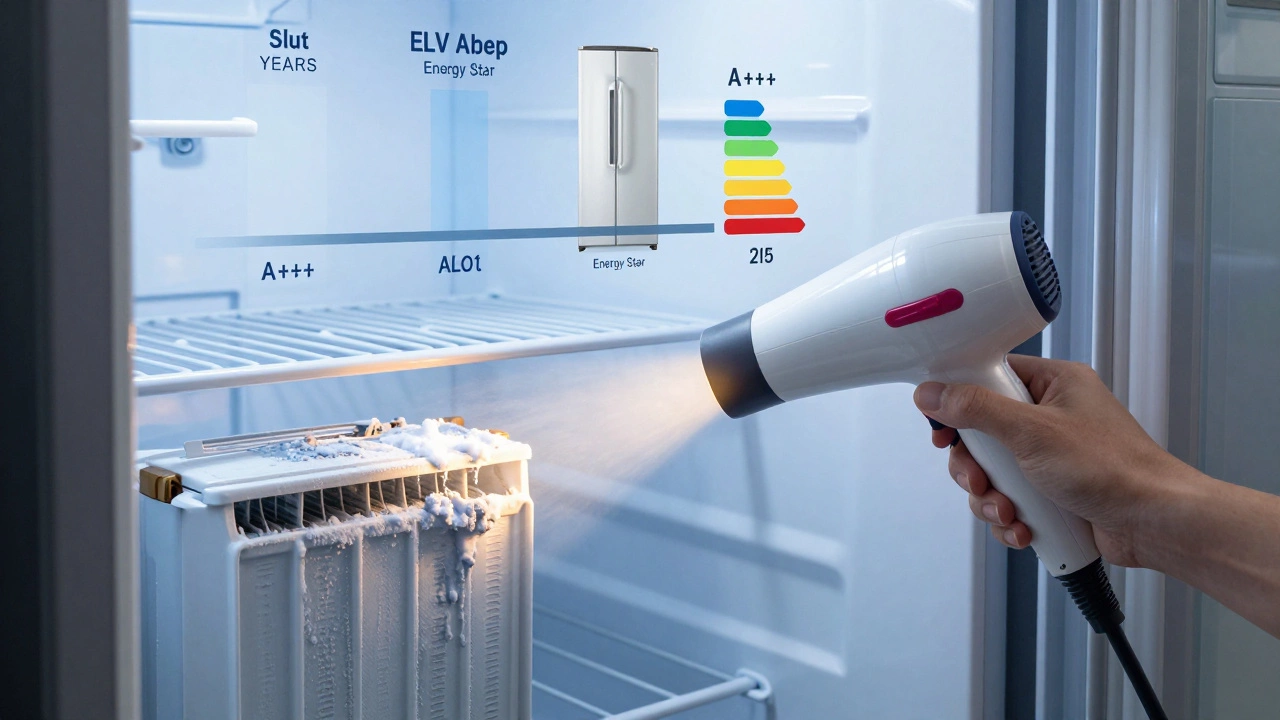
The evaporator fan circulates cold air from the freezer into the fridge. If it stops, the freezer might still be cold, but the fridge section stays warm. You’ll hear a faint buzzing from the back when the compressor runs, but no airflow.To check it, unplug the fridge. Remove the back panel in the freezer compartment. Look for a small fan. If it’s covered in ice (common in frost-free models with defrost problems), use a hairdryer on low to melt it. If the fan blades don’t spin freely after thawing, the motor is gone. Replace the fan assembly. It’s a £60-£100 part, but easy to install. Just disconnect the old wires, plug in the new one, and reassemble.
Defrost System Gone Wrong
Modern fridges don’t need manual defrosting. They have a timer, heater, and thermostat that melt ice off the evaporator coils every 6-12 hours. If any part of this system fails, ice builds up and blocks airflow. The fridge doesn’t cool, but the freezer might still work.Signs? Frost on the back wall of the freezer. Water pooling under the fridge. The fridge section stays above 8°C even after 24 hours. You can test the defrost heater with a multimeter. If it has no continuity, it’s dead. The defrost timer or thermostat can also fail. Replacing the heater costs £40-£80. But if the timer is the issue, you’ll need to replace the whole control board-£150-£250. That’s a sign the fridge is nearing end-of-life.
Door Seals Are Worn Out
A bad seal doesn’t make the fridge stop working entirely, but it makes it work harder than it should. Cold air leaks out. Warm air rushes in. The compressor runs constantly. Eventually, it overheats and shuts off as a safety measure.Test your seal by closing a piece of paper in the door. If you can pull it out easily, the seal is weak. Look for cracks, stiffness, or gaps. Replace the gasket. It’s a £20-£40 DIY job. Just peel off the old one, stick in the new one, and press it into place. Make sure it’s seated all the way around. A good seal can reduce energy use by 15% and stop the compressor from overworking.
When to Call a Pro-or Just Replace It
If you’ve checked all the above and nothing works, it’s time to decide: fix or replace? Here’s the rule of thumb:- If your fridge is under 5 years old and the compressor is the issue-call a technician. It might be under warranty.
- If it’s 5-8 years old and the repair cost is over £200-think twice. Energy-efficient models now use 40% less power.
- If it’s older than 8 years-replace it. Even if the fix works, another part will fail soon. Plus, old fridges leak refrigerant and cost more to run.
Look for Energy Star-rated models. In the UK, A+++ rated fridges use less than 150 kWh per year. Older models can use 600 kWh or more. That’s £100+ extra on your bill each year. The new unit pays for itself in 2-3 years.
Prevent This From Happening Again
Don’t wait for another breakdown. Do this every 3 months:- Unplug the fridge and clean the coils at the back or bottom.
- Check the door seal with the paper test.
- Keep the fridge ⅔ full-not empty, not stuffed. Air needs to circulate.
- Set the temperature to 3°C in the fridge and -18°C in the freezer. Anything colder wastes energy.
- Don’t put hot food inside. Let it cool first.
These small habits can add 5-7 years to your fridge’s life. And if you’ve been ignoring maintenance, the sudden stop wasn’t bad luck-it was inevitable.