Dishwasher Diagnostic & Repair Cost Estimator
Select all issues you are currently experiencing with your dishwasher.
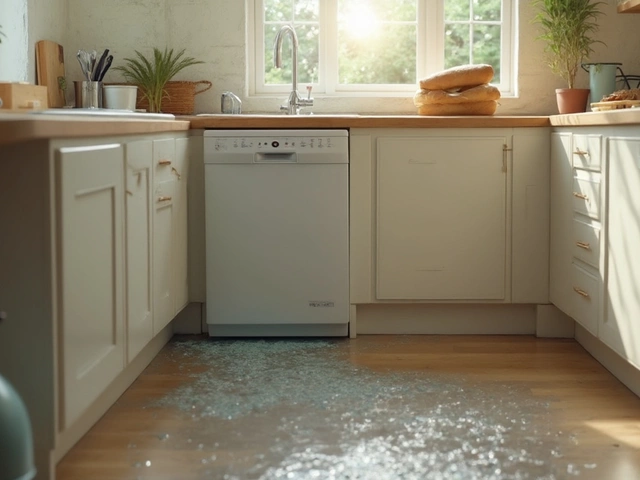
It’s 8 PM. You’ve just finished dinner, the kitchen is a mess of plates and pots, and you load everything into your dishwasher. You press start, listen to the hum for ten minutes, open the door, and find... standing water. Or worse, completely dry dishes with food stuck to them. It’s frustrating, expensive to replace, and often unnecessary.
The truth is, most dishwashers don’t die suddenly. They fail slowly, part by part. And in my experience fixing appliances across Bristol, about 80% of "broken" dishwashers just need one small component swapped out. Knowing what usually fails can save you hundreds of pounds and days of waiting for a technician.
The Door Seal: The Silent Leak Culprit
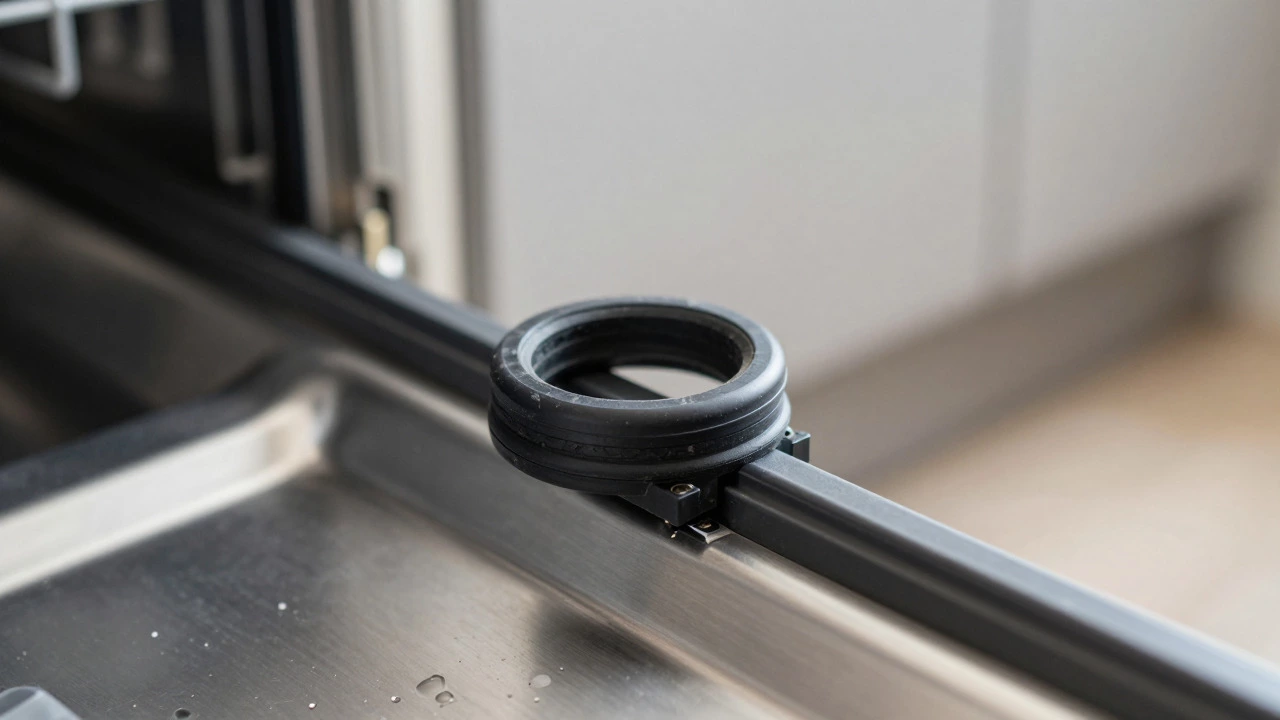
If your dishwasher is leaking onto the kitchen floor, your first suspect should be the door gasket (also known as the door seal or rubber boot). This black rubber ring sits around the edge of the door and creates a watertight barrier when closed.
This part fails because it’s constantly exposed to heat, detergent chemicals, and physical compression. Over time, the rubber hardens, cracks, or gets pushed out of its channel. A common mistake people make is assuming a leak means a broken pump. But if you see water pooling specifically under the front corners of the machine, it’s almost always the seal.
How to check: Close the door on a piece of paper. If you can pull the paper out easily without resistance, the seal isn’t gripping properly. Look closely at the rubber for tears, gaps, or food debris trapped inside the folds. Cleaning it might help temporarily, but if it’s cracked, replacement is the only fix. These seals cost between £15 and £40 depending on the brand.
The Drain Pump: When Water Stands Still
A dishwasher that doesn’t drain is useless. The drain pump is responsible for pushing dirty water out through the hose into your sink’s plumbing. This is arguably the most critical mechanical part in the machine.
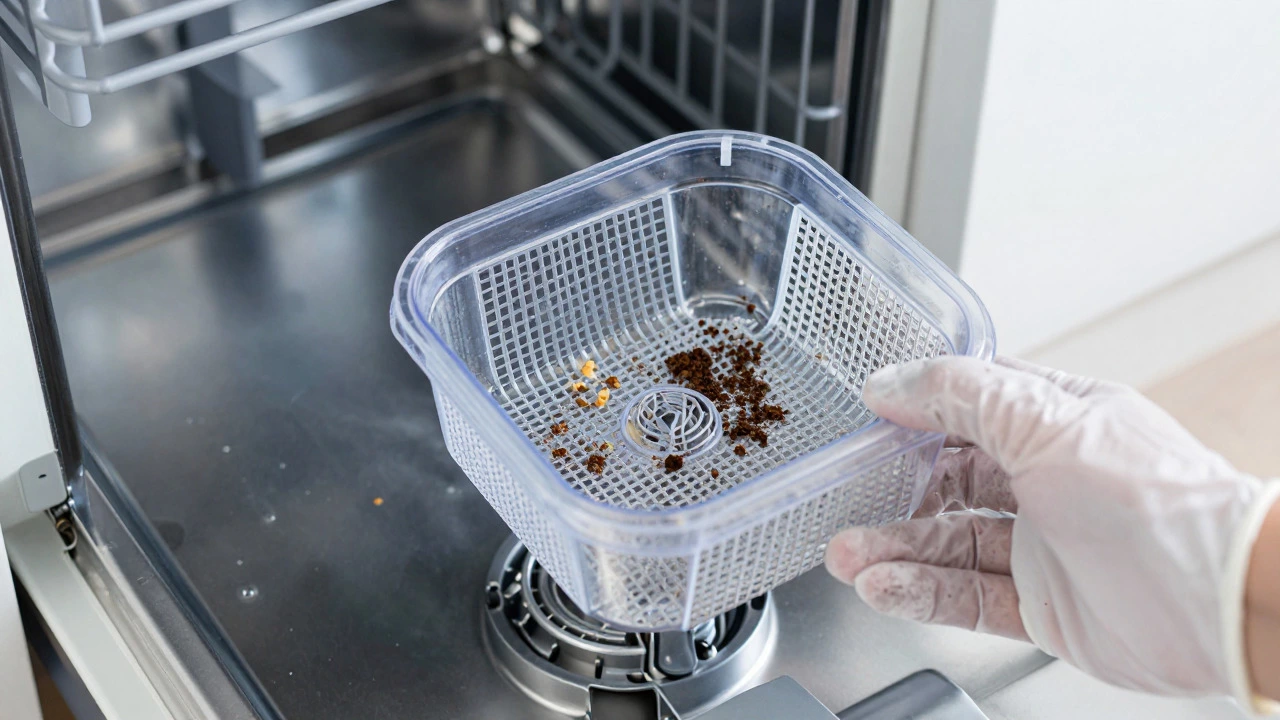
Pumps fail for two main reasons: blockages or motor burnout. Modern kitchens produce tiny particles-glass shards from wine bottles, plastic bits from packaging, coffee grounds-that slip past the filter and jam the impeller blades. If you hear a humming noise but no water movement, the pump motor might be running but physically blocked. If you hear nothing, the motor windings may have burned out due to age or electrical surge.
Before replacing the pump, always check the drain hose for kinks and clean the coarse filter at the bottom of the tub. If those are clear and the pump still doesn’t spin, you’ll likely need a new pump assembly. For brands like Bosch or Siemens, these pumps are modular and relatively easy to swap if you’re handy with a screwdriver.
| Symptom | Likely Cause | Difficulty to Fix |
|---|---|---|
| Water on floor (front) | Door Gasket / Seal | Easy |
| Standing water after cycle | Drain Pump or Clogged Filter | Medium |
| Dishes not clean, cloudy glass | Circulation Pump or Hard Water Scale | Medium |
| No power / Display dead | Control Board or Thermal Fuse | Hard |
| Loud grinding noise | Broken Impeller or Foreign Object | Medium |
The Circulation Pump: Why Dishes Stay Dirty
If your dishwasher drains fine but leaves food residue on every plate, the issue is likely the circulation pump. Unlike the drain pump, this pump sprays hot water through the spray arms during the wash cycle.
In areas with hard water, like parts of Bristol and the South West, limescale builds up rapidly on the pump shaft and bearings. This friction causes the motor to overheat and eventually seize. You might notice the spray arms aren’t spinning, or they’re spinning weakly. Another sign is cloudy glassware, which indicates poor rinsing pressure.
Regular maintenance here involves running a descaling cycle every few months using citric acid or a dedicated dishwasher cleaner. If the pump has already failed, replacement costs range from £60 to £120 for the part alone. Interestingly, many modern models combine the circulation and drain functions into a single dual-pump unit, simplifying repairs but increasing the cost of the single component.
Heating Element: The Warmth Problem
Dishwashers rely on high temperatures to sanitize dishes and aid drying. The heating element, usually located at the bottom of the tub, heats the water to around 60-70°C. When this fails, you get cold, wet dishes.
Heating elements fail primarily due to mineral buildup. In hard water regions, calcium deposits coat the element, insulating it from the water. The element then overheats itself and burns out. Visually, you might see white crusty scales on the metal coil. If the element is coated in thick scale, cleaning it with vinegar might restore function temporarily, but if the filament is broken, it needs replacing.
A quick test: run a hot wash cycle, wait 30 minutes, then carefully touch the inside wall of the tub (be careful, it’s hot). If it’s cool, the heater isn’t working. Replacement elements are cheap (£20-£30) but require removing the lower rack and unscrewing the old unit, which can be tricky if it’s corroded.
Control Board and Electronics: The Brain Freeze
Newer dishwashers are essentially computers with water hoses. The control board manages cycles, temperature, and water levels. Electronic failures are less common than mechanical ones but more expensive to fix.
Symptoms of control board failure include: the display flickering, random error codes (like E15 or E24), the machine stopping mid-cycle, or buttons becoming unresponsive. Moisture intrusion is the enemy here. If a leak occurred previously, water could have seeped into the electronic compartment, causing corrosion on the circuit traces.
Before condemning the board, try resetting the appliance by unplugging it for 10 minutes. Sometimes, a temporary glitch mimics hardware failure. If the problem persists, professional diagnosis is recommended because identifying specific burnt capacitors or resistors requires technical expertise. Replacing a full control panel can cost upwards of £150, making it a borderline case for buying a new machine if the dishwasher is over seven years old.
Spray Arms: Blocked Jets Mean Bad Washes
Sometimes the problem isn’t internal mechanics but simple obstruction. The spray arms rotate to distribute water. If the small holes are clogged with eggshells, seeds, or plastic film, water pressure drops significantly.
Check the spray arms regularly. Remove them and inspect the jets. Use a toothpick or needle to clear any debris. Also, ensure the arms spin freely by hand. If they’re stiff, the central bearing might be worn. This is a free fix that solves 20% of "poor cleaning" complaints I see.
When to Repair vs. Replace
Deciding whether to fix or buy new depends on age and cost. As a rule of thumb:
- Under 5 years old: Almost always worth repairing. Parts are covered under warranty or cheap enough to justify.
- 5-8 years old: Repair if the part is under £80. If multiple components fail (e.g., pump and seal), consider replacement.
- Over 8 years old: Lean towards replacement unless it’s a high-end model. Energy efficiency in newer models also saves money long-term.
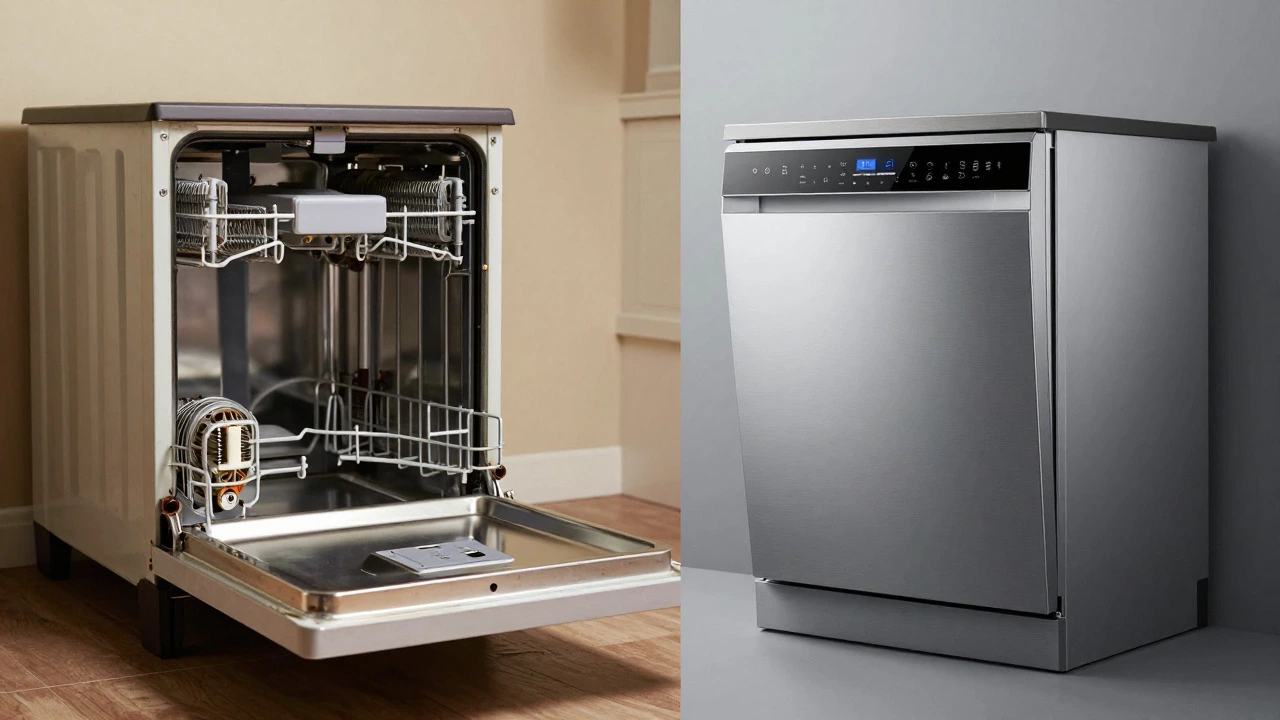
In Bristol, labor rates for appliance repair average £60-£90 per hour. Add part costs, and a complex repair can hit £200+. Compare that to a decent new dishwasher costing £300-£500, and the math often favors upgrading older units.
Why is my dishwasher leaking from the bottom?
Leaking from the bottom is usually caused by a cracked sump, a loose drain hose connection, or a faulty door seal allowing water to escape internally and pool at the base. Check the door gasket first, as it’s the easiest to fix. If the seal is intact, inspect the drain hose clamps for tightness.
How do I know if my dishwasher pump is broken?
If your dishwasher finishes its cycle but water remains at the bottom, or if you hear a humming sound without water movement, the pump is likely failing. First, clean the filter and check for kinks in the drain hose. If those are clear, the pump motor or impeller is probably damaged and needs replacement.
Can I fix a dishwasher heating element myself?
Yes, replacing a heating element is moderately difficult but doable for DIYers. You need to remove the lower rack, unscrew the old element, disconnect the wires, and install the new one. Ensure the power is disconnected at the fuse box before starting. If the element is heavily scaled, clean it first to prevent premature failure of the new part.
Why are my dishes coming out cloudy?
Cloudy dishes are typically caused by hard water minerals depositing on glass during the rinse cycle. This isn’t necessarily a mechanical failure. Use a rinse aid dispenser, run a descaling cycle with citric acid, or install a water softener. If the problem persists, check if the heating element is reaching the correct temperature, as low heat prevents proper rinsing.
Is it worth repairing an old dishwasher?
If your dishwasher is over 7-8 years old, repair costs often approach the price of a new, more energy-efficient model. However, if the issue is minor (like a door seal or spray arm blockage), it’s definitely worth fixing. Major component failures like control boards or dual pumps in older units usually signal it’s time to upgrade.